Boil water advisory: what to do, how to boil water and what is safe to use
What a boil water advisory means, how long to boil water, what is safe for drinking, teeth, ice, formula, dishes and pets, and what to do when it is lifted.
By PreparedStates editors · Updated October 22, 2026 · Sourced to the CDC, EPA and Ready.gov
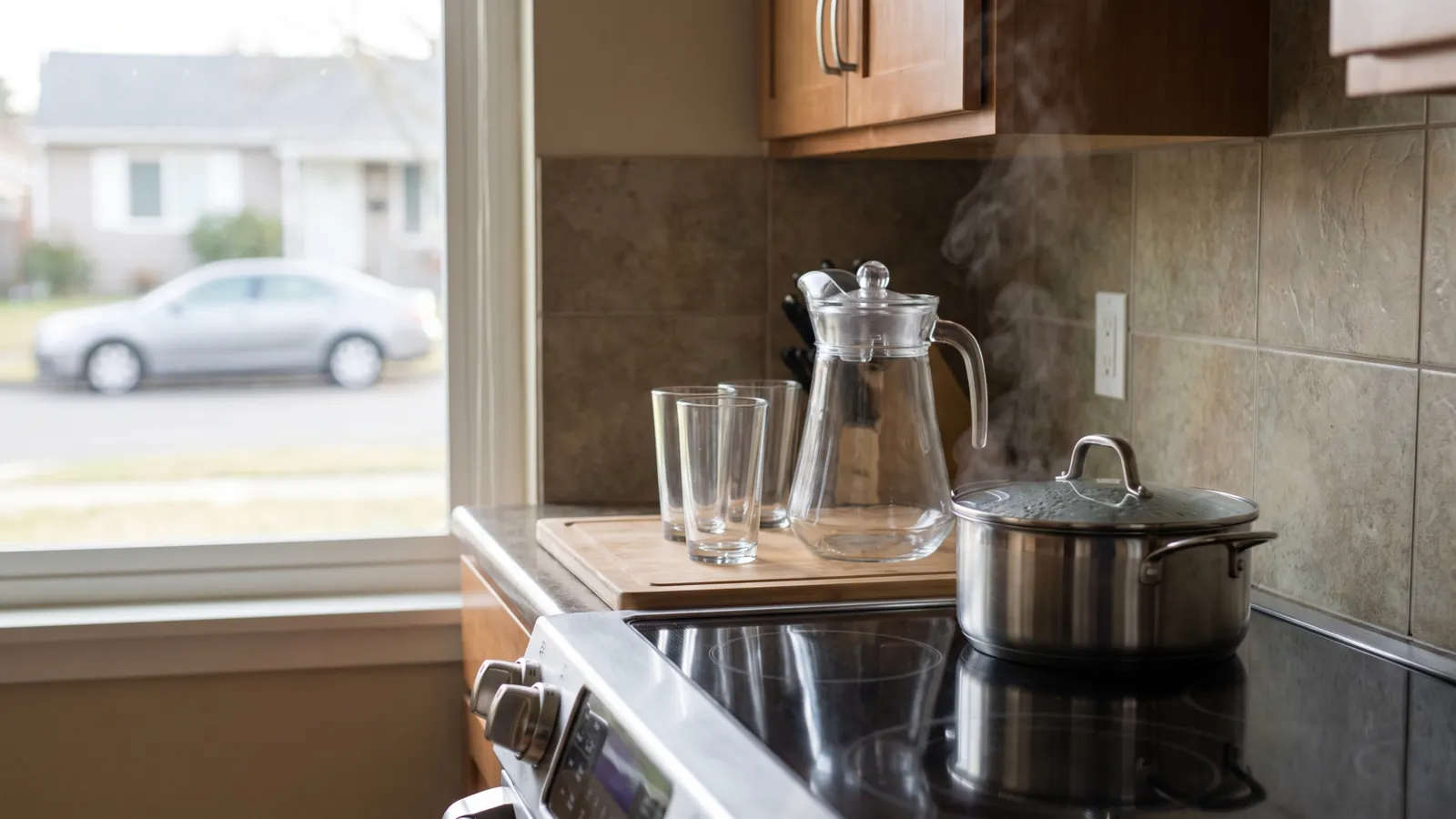
- A boil water advisory tells you to use bottled water or boil your tap water first. Boiling kills germs that could make you sick.
- Bring water to a full rolling boil for 1 minute, or 3 minutes above 6,500 feet (EPA says above 5,000 feet). Let it cool.
- Use bottled or boiled water for drinking, cooking and brushing teeth. Boil your tap water even if it has been through a home filter.
- Do not use water or ice from fridge or freezer dispensers, and give pets bottled water or boiled water that has cooled.
- You can usually wash hands with soap and tap water, and wash clothes as usual. Follow your local officials' advice.
What a boil water advisory means
The CDC says water utilities or government agencies issue drinking water advisories if tap water is, or could be, contaminated with harmful germs, chemicals, toxins or radioactive materials. A boil water advisory tells you to boil your tap water before using it, because boiling kills germs in the tap water that could make you sick. If local officials issue one, use commercially bottled water or boil your tap water.
There are three types of advisory: boil water, do not drink and do not use. The CDC says officials typically issue do not drink advisories when tap water is, or could be, contaminated with harmful chemicals or toxins, and that boiling such water will not make it safe. Recommendations depend on the type of germ or chemical in the water, so carefully follow your local officials' advice.
How to boil water
If commercially bottled water is not available, the CDC says to boil your tap water. To kill germs, bring water to a full rolling boil for 1 minute, and at elevations above 6,500 feet, boil for 3 minutes. EPA's emergency guidance uses a lower altitude: boil for at least one minute, and for three minutes above 5,000 feet. So above 5,000 feet, a 3-minute boil follows both agencies.
A CDC fact sheet says to start counting when the water comes to a constant boil. To avoid burns, let boiled water cool before you use it, then store it in clean, sanitized containers with tight covers (see our water storage comparison). The CDC says to boil your tap water even if you filter it, including water that has been through a home water filter or a pitcher that filters water.
If the water is cloudy, the CDC says to filter it first through a clean cloth, paper towel or coffee filter, or let it settle, and then draw off the clear water. To improve the flat taste of boiled water, pour it from one container to another and let it stand for a few hours, or add a pinch of salt for each quart or liter. If the power is out and you boil water on a camp stove or grill, Ready.gov says they should always be used outdoors and at least 20 feet away from windows.
Drinking, cooking, ice and baby formula
The CDC says to use commercially bottled water or boiled water for drinking and to prepare and cook food. Brush your teeth with boiled or commercially bottled water, not tap water that you have not boiled first. During any type of advisory, do not drink or use water from appliances connected to your water line, including the water and ice dispensers in your refrigerator or freezer.
The CDC says breastfeeding is the best option for feeding an infant, and that if you feed your child formula you should provide ready-to-use formula if possible. When powdered formula is the only option, a CDC fact sheet says to use bottled water or boiled tap water to prepare it until officials say your tap water is safe to drink. Sanitize all baby bottles, and clean infant feeding items with bottled, boiled or treated water and soap before each use.
CDC's communication toolbox for water systems says not to use ice from ice trays, ice dispensers or ice makers, to throw out all ice made with tap water, and to make new ice with bottled, boiled or disinfected water. It says to use bottled, boiled or disinfected water to make coffee as well.
Hands, bathing, laundry, pets and plants
In many cases you can use tap water and soap to wash your hands during a boil water advisory, but the CDC says to follow your local officials' advice. When bathing or showering, be careful not to swallow any water. Use caution with babies and young children, and consider giving them a sponge bath to reduce the chance of them swallowing water.
The CDC says it is safe to wash clothes as usual, and that you can use tap water for houseplants and gardens, including plants you eat. Clean washable toys and surfaces with commercially bottled water, boiled water or water that has been disinfected with bleach. For pets, the CDC says to give commercially bottled water or boiled water that has cooled, because pets can get sick from some of the same germs as people or spread germs to people.
Washing dishes, with or without a dishwasher
The CDC says that if possible you should use disposable plates, cups and utensils during a boil water advisory. Dishwashers are generally safe to use if they have a sanitizing cycle or reach a final rinse temperature of at least 150°F (66°C). Check the manual or contact the manufacturer to find out what temperature your dishwasher reaches.
To wash dishes by hand, the CDC gives the steps below. They call for unscented household liquid bleach, in the amount shown.
- Wash and rinse the dishes as you normally would using hot water
- In a separate basin, add 1 teaspoon of unscented household liquid bleach for each gallon of warm water
- Soak the rinsed dishes in the water for at least one minute
- Let the dishes air dry completely before using them again
If you cannot boil water: bleach and tablets
The CDC says boiling is the best way to kill germs in water. You can kill most germs with chemical disinfectants such as unscented household chlorine bleach, but they do not work as well as boiling for some germs, including the parasites Cryptosporidium and Giardia. Use only regular, unscented chlorine bleach: EPA says not to use scented, color safe, or bleaches with added cleaners. If the water is cloudy, filter or settle it first, as described above.
Follow the instructions on the bleach label for disinfecting drinking water first. If the label has none, check the active ingredient: in the United States it will typically be between 5% and 9% sodium hypochlorite. For bleach in that range, the CDC says to add 8 drops per gallon of water, or 2 drops for 1 quart or 1 liter, and double that if the water is cloudy, murky, colored or very cold. Stir well and let the water stand for at least 30 minutes before you drink it.
For tablets or drops, follow the instructions on the label or package. The CDC says chemical disinfectants kill viruses and bacteria but may not kill parasites, so check what a product covers before you rely on purification tablets. If you are pregnant, have thyroid problems or a hypersensitivity to iodine, the CDC says to avoid drinking water disinfected with iodine. Our guide to making water safe has more detail from the CDC and EPA, including other bleach strengths.
When the advisory is lifted
Your water system will tell you when the advisory is lifted and what to do next, so follow its notice. CDC's Drinking Water Advisory Communication Toolbox (2016 edition) is a set of templates that water systems adapt for their customers. Its sample notice says an advisory stays in effect until the water system and other agencies determine the situation is corrected, and that customers will be notified when it is lifted. The steps below come from its sample questions and answers, so treat them as typical examples and use your utility's own instructions where they differ.
The sample says to flush your faucets after an advisory: run the cold and hot taps at every faucet, starting with the highest one in your home and working down, with adequate ventilation. It leaves the number of minutes blank for the water system to fill in, so use the time in your utility's notice. It also says to read the owner's manual for directions to clean appliances such as water softeners and filter units, and that all water filters should be replaced after the advisory has been lifted. Anyone changing the cartridges should wear gloves and wash their hands afterwards.
To flush a refrigerator water dispenser and ice maker connected to a filter, the sample says to run the water for the time your utility gives, throw away all ice, let the ice maker container fill up completely one more time and throw away that ice, clean the container and replace the filter. If the water is discolored, flush pipes by running the water from all of your taps until it is clear, and do not wash clothes until the water runs clear at the tap. A strong smell is probably chlorine, because water systems often increase chlorine levels to disinfect the pipes. If the water sputters, there is air in your lines, so turn on the tap slowly and run the water until the sputtering stops.
Boiling only deals with germs. The CDC says boiling water that contains harmful chemicals or toxins will not make it safe to use. During a do not drink advisory, use commercially bottled water for drinking and cooking, brushing teeth, washing fruits and vegetables, preparing food, mixing baby formula, making ice and giving water to pets. During a do not use advisory, do not drink or use tap water for any purpose as long as the advisory is in effect.
Common questions
How long do I boil water during a boil water advisory?
The CDC says to bring water to a full rolling boil for 1 minute, or 3 minutes at elevations above 6,500 feet, then let it cool. EPA's emergency guidance uses 5,000 feet for the 3-minute boil, so boiling for 3 minutes above that altitude covers both.
Can I brush my teeth with tap water during a boil water advisory?
Not unless you have boiled it. The CDC says to brush your teeth using boiled water or commercially bottled water, and not tap water that you have not boiled first.
Is it safe to shower or take a bath?
The CDC says to be careful not to swallow any water when bathing or showering. For babies and young children it suggests a sponge bath to reduce the chance of them swallowing water, and it says to follow your local officials' advice.
Can I use my dishwasher during a boil water advisory?
The CDC says dishwashers are generally safe if they have a sanitizing cycle or reach a final rinse temperature of at least 150°F (66°C). Check the manual or ask the manufacturer what temperature yours reaches.
Does a water filter or filtering pitcher make tap water safe?
Not during a boil water advisory. The CDC says to boil your tap water even if you filter it, including water that has been through a home water filter or a pitcher that filters water.
Can I give my pets tap water?
The CDC says to give pets commercially bottled water or boiled water that has cooled. It says pets can get sick from some of the same germs as people or spread germs to people.
Get one calm email when it matters
Seasonal checklists and gear price drops. No spam, unsubscribe any time.
Keep reading
 How to make water safe to drink in an emergency: boiling, bleach, filters and tabletsHow to make water safe to drink in an emergency: boiling times, exact unscented bleach amounts, what filters a…
 How much water to store for an emergency: per person, per pet and for how longHow much water to store for an emergency: 1 gallon per person per day, pets, which containers to use, when to …
 Flood preparedness: flood watch vs warning, what to do and how flood insurance worksFlood watch vs warning, how little moving water can sweep a car away, the 30-day flood insurance wait, and wha…
 Emergency kit checklist: what to include, how much to keep and where to store itA plain-English emergency kit checklist built on Ready.gov's basic kit and extra items, with how many days of …