How to make water safe to drink in an emergency: boiling, bleach, filters and tablets
How to make water safe to drink in an emergency: boiling times, exact unscented bleach amounts, what filters and tablets remove, and what nothing can fix.
By PreparedStates editors · Updated October 22, 2026 · Sourced to the CDC, EPA and Ready.gov
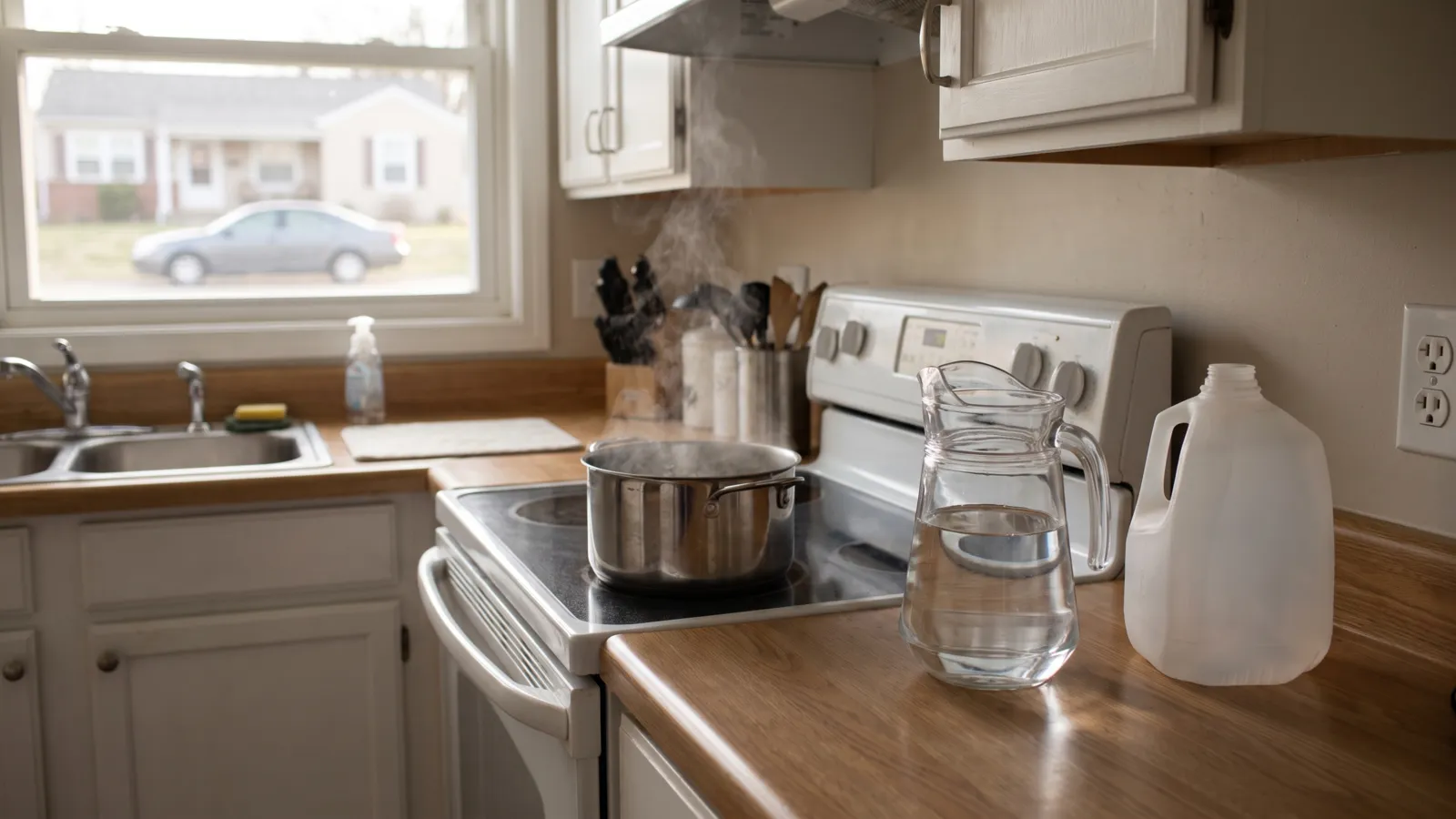
- Bring clear water to a rolling boil for 1 minute and let it cool. Above 5,000 feet (EPA) or 6,500 feet (CDC), boil 3 minutes.
- Can't boil? Use the label's drinking-water directions, or 8 drops of unscented 5% to 9% bleach per gallon, doubled if cloudy; wait 30 minutes.
- Most portable filters remove parasites but not viruses or bacteria, so disinfect after filtering. Iodine or chlorine tablets will not kill Cryptosporidium.
- Boiling and disinfecting cannot make water containing fuel, toxic chemicals or radioactive materials safe. Use another source.
Start with the safest water you have
The CDC calls unopened, commercially bottled water the safest and most reliable source of water in an emergency, and says that after an emergency your tap water may not be available or safe to use. EPA says to use bottled water or water you have properly prepared and stored, and to boil water if you do not have bottled water. Follow recommendations from your health department for boiling or treating your water. The CDC also says never to use water from radiators or boilers that are part of your home heating system for drinking, cooking or hygiene.
If you are planning ahead, our guide on how much water to store will help you avoid needing any of these methods. It also shows how to clean and sanitize containers, which you will need for the treated water.
The order to follow
The steps below put the official advice in order. Each one is explained in the sections that follow.
- Use stored or commercially bottled water first
- If the water is cloudy, let it settle or strain it through a clean cloth, paper towel or coffee filter, then draw off the clear water
- Boil it: a rolling boil for 1 minute, or 3 minutes at higher elevations (see below)
- If you cannot boil it, disinfect it with plain unscented bleach and let it stand for at least 30 minutes
- Let it cool and store it in clean, sanitized containers with tight covers
Clear it first: settle and strain cloudy water
EPA says disinfection does not work as well when water is cloudy or colored. If the water is cloudy, the CDC says to first filter it through a clean cloth, paper towel or coffee filter, or let it settle, and then draw off the clear water. EPA says to let it settle first and then filter it.
Do not use water with floating material in it or water that has a dark color or questionable odor, EPA says.
Boiling
The CDC says boiling is the best way to kill germs in water. Bring clear water to a rolling boil for 1 minute, or for 3 minutes at elevations above 6,500 feet. EPA uses a lower altitude: boil for at least one minute, and for three minutes above 5,000 feet (1,000 meters). If you live above 5,000 feet, a 3-minute boil follows both agencies.
Let the boiled water cool, then store it in clean, sanitized containers with tight covers. Boiled water can taste flat. The CDC says to pour it from one container to another and let it stand for a few hours, or add a pinch of salt for each quart or liter. If you boil water on a camp stove or grill, Ready.gov says they are for outdoor use only.
Bleach: the exact amounts
Use only regular, unscented chlorine bleach that is suitable for disinfection. EPA says not to use scented bleach, color-safe bleach or bleach with added cleaners, and to use fresh bleach or bleach stored at room temperature for less than one year. The CDC says to follow the instructions on the bleach label for disinfecting drinking water first. If the label has none, check the active ingredient: in the United States it will typically be between 5% and 9% sodium hypochlorite. For clear water, the CDC gives these amounts of 5% to 9% bleach:
- 1 quart or 1 liter of water: add 2 drops of bleach (0.1 mL)
- 1 gallon of water: add 8 drops of bleach (1/2 mL), or a little less than 1/8 teaspoon
- 5 gallons of water: add 40 drops of bleach (2 1/2 mL), or 1/2 teaspoon
Bleach: cloudy water, standing time and EPA's table
If the water is cloudy, murky, colored or very cold, the CDC says to add double the amount of bleach listed above. Stir it well, and let the water stand for at least 30 minutes before you drink it. EPA adds that the water should then have a slight chlorine odor. If it does not, repeat the dose and let it stand for another 15 minutes before use. If the chlorine taste is too strong, EPA says to pour the water from one clean container to another and let it stand for a few hours.
EPA's table splits the dose by bleach strength. For 6% bleach it gives 8 drops per gallon, the same as the CDC, and for 8.25% bleach it gives 6 drops per gallon. Both agencies give 2 drops for 1 quart or 1 liter. Both are official figures, and EPA's smell check applies either way. Weaker bleach needs much more: the CDC's table for 1% bleach is 10 drops per quart or liter and 40 drops per gallon. Store the disinfected water in clean, sanitized containers with tight covers.
Filters and tablets: what they do and don't remove
The CDC says portable water filters do not remove all types of germs from water, and that a filter will not remove viruses. To remove bacteria it must have an absolute pore (hole) size of 0.3 micron or smaller, and to remove parasites such as Giardia or Cryptosporidium, an absolute pore size of 1 micron or smaller. Most filters remove parasites but not viruses or bacteria, so the CDC says to add a chemical disinfectant such as iodine, chlorine or chlorine dioxide after filtering. Check the package before you rely on a water filter.
For tablets or drops, follow the instructions on the label or package of chlorine dioxide, chlorine or iodine products. The CDC says chemical disinfectants kill viruses and bacteria but may not kill parasites. Iodine and chlorine tablets kill most germs but will not kill Cryptosporidium, while chlorine dioxide tablets will as long as you follow the instructions correctly. Check which type you are buying when you compare purification tablets.
Iodine is not for everyone. The CDC says that if you are pregnant, have thyroid problems or have a hypersensitivity to iodine, you should avoid drinking water disinfected with iodine, and that no one should drink it for more than a few weeks at a time.
What each method covers, and what none can fix
Boiling and disinfecting deal with germs. They do not remove everything. The CDC says you cannot make water containing fuel, toxic chemicals or radioactive materials safe by boiling or disinfecting it, and EPA says boiling or disinfection will not destroy heavy metals, salts and most other chemicals.
If you know or suspect your water contains fuel or toxic chemicals, the CDC says to use bottled water or a different source of water and to contact your health department for specific advice. The list below sums up what the CDC and EPA say each method does.
- Boiling: the best way to kill germs, but it does not destroy heavy metals, salts or most other chemicals
- Unscented household bleach: kills most germs, but does not work as well as boiling against the parasites Cryptosporidium and Giardia
- Most portable filters: remove parasites, but not viruses or bacteria, so add a disinfectant after filtering
- Iodine and chlorine tablets: kill most germs, but not Cryptosporidium
- Chlorine dioxide tablets: kill Cryptosporidium if you follow the instructions correctly
- No method can make water containing fuel, toxic chemicals or radioactive materials safe
The CDC says you cannot make water containing fuel, toxic chemicals or radioactive materials safe by boiling or disinfecting it. EPA says not to use water with floating material in it or water that has a dark color or questionable odor. If the water looks or smells wrong, or comes from a source that worries you, use a different source.
Common questions
How long should I boil water to make it safe?
The CDC says to bring clear water to a rolling boil for 1 minute, or 3 minutes at elevations above 6,500 feet. EPA says three minutes above 5,000 feet, so above 5,000 feet a 3-minute boil follows both.
How much bleach do I add to a gallon of water?
Follow the bleach label's drinking-water directions if it has them. Otherwise the CDC says 8 drops of unscented 5% to 9% bleach per gallon of clear water, doubled if the water is cloudy, murky, colored or very cold, then at least 30 minutes of standing. EPA lists 8 drops for 6% bleach and 6 drops for 8.25% bleach.
Can I use scented or color-safe bleach?
No. EPA says to use only regular, unscented chlorine bleach, and not scented bleach, color-safe bleach or bleach with added cleaners.
Does a water filter make water safe to drink?
Not on its own. The CDC says portable filters do not remove all types of germs, and most remove parasites but not viruses or bacteria. It says to add a chemical disinfectant after filtering.
Do purification tablets kill everything?
No. The CDC says chemical disinfectants kill viruses and bacteria but may not kill parasites. Iodine and chlorine tablets will not kill Cryptosporidium, but chlorine dioxide tablets will if you follow the instructions correctly.
Can boiling remove chemicals from water?
No. EPA says boiling or disinfection will not destroy heavy metals, salts and most other chemicals, and the CDC says water containing fuel or toxic chemicals cannot be made safe this way.
Get one calm email when it matters
Seasonal checklists and gear price drops. No spam, unsubscribe any time.
Keep reading
 How much water to store for an emergency: per person, per pet and for how longHow much water to store for an emergency: 1 gallon per person per day, pets, which containers to use, when to …
 Emergency kit checklist: what to include, how much to keep and where to store itA plain-English emergency kit checklist built on Ready.gov's basic kit and extra items, with how many days of …
 Power outage checklist: what to do before, during and afterA calm power outage checklist from Ready.gov and CDC: what to prepare, how to protect food, medicines and medi…
 Hurricane preparedness checklist: what to do before, during and after a stormHurricane season dates, watch vs warning, how to find your evacuation zone, storm surge, supplies, and what to…