Emergency kit checklist: what to include, how much to keep and where to store it
A plain-English emergency kit checklist built on Ready.gov's basic kit and extra items, with how many days of supplies to keep and how to maintain your kit.
By PreparedStates editors · Updated October 22, 2026 · Sourced to Ready.gov and the American Red Cross
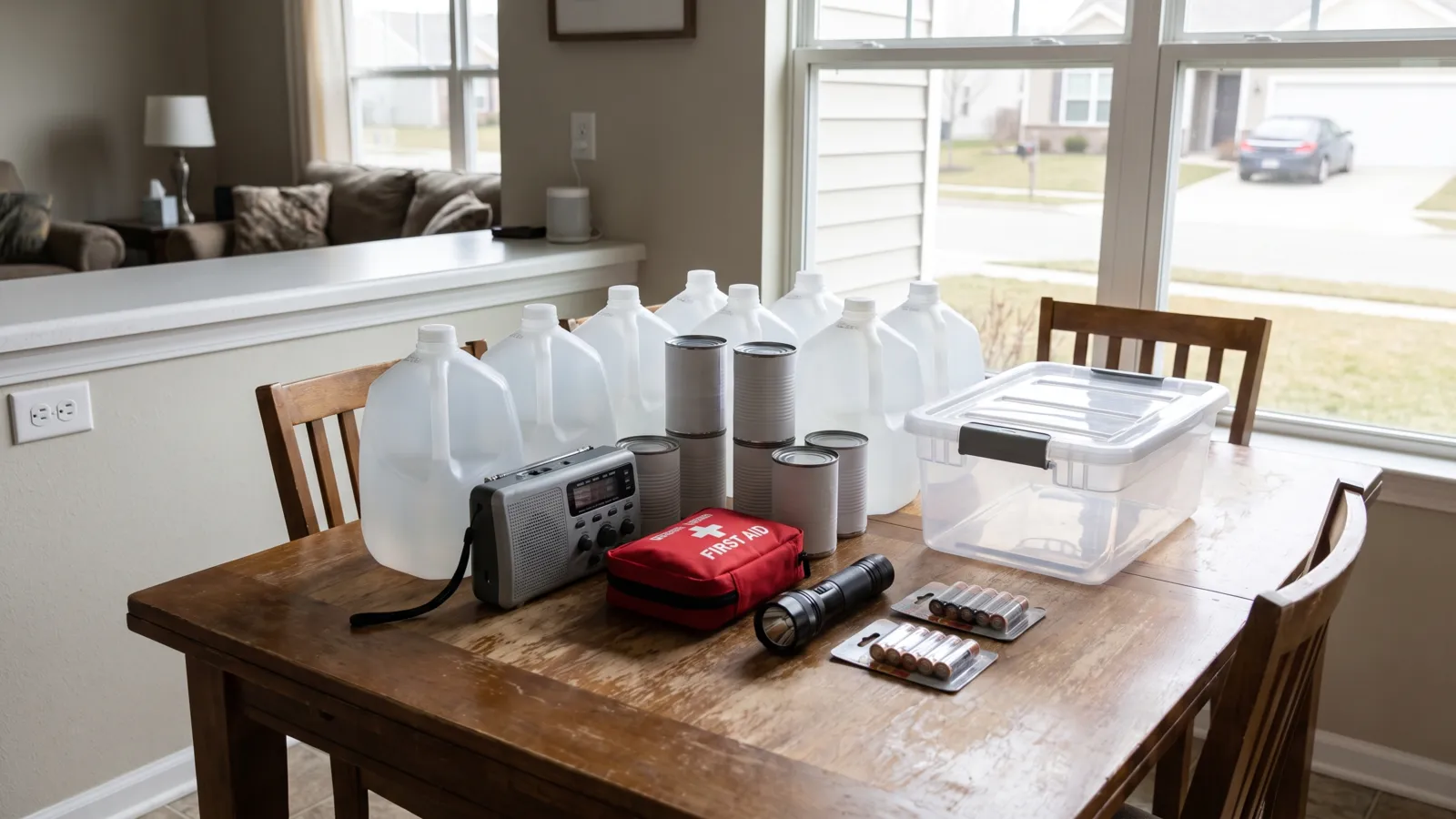
- Build your kit around water (one gallon per person per day), non-perishable food, a radio, a flashlight, a first aid kit and extra batteries.
- Plan for several days at least. The Red Cross lists a 3-day supply of food and water for evacuation and a 2-week supply at home.
- Add medications, glasses, cash, copies of documents, warm clothing, and items for babies, kids and pets as your household needs.
- Keep canned food cool and dry, replace expired items, and re-think your needs every year.
- Keep your main kit where you can grab it fast, plus a kit in your car and supplies for at least 24 hours at work.
How many days should your kit cover?
Ready.gov says that after an emergency, you may need to survive on your own for several days. Being prepared means having your own food, water and other supplies to last that long. The American Red Cross puts numbers on food and water: a 3-day supply for evacuation and a 2-week supply for home. Its water rate matches Ready.gov's: one gallon per person, per day.
You do not have to buy everything at once. Ready.gov's food page suggests stocking canned foods, dry mixes and other staples that do not need refrigeration, cooking, water or special preparation, and says you may already have many of the suggested foods on hand. For a ready-made starting point for the grab-and-go kit, see our go-bag comparison and the go-bag checklist.
The basic kit
This is Ready.gov's basic disaster supplies kit. Water comes first: one gallon per person per day for several days, for drinking and sanitation. Our guides on how much water to store and emergency food storage cover the two biggest items in detail, and the water storage and emergency food kit comparisons show what is on the market.
For the electronics, Ready.gov lists a NOAA Weather Radio with tone alert as well as a cell phone with chargers and a backup battery. Compare weather radios and flashlights and lanterns, and keep a first aid kit and a power bank in the kit.
- Water: one gallon per person per day for several days, for drinking and sanitation
- Food: at least a several-day supply of non-perishable food
- Battery-powered or hand-crank radio and a NOAA Weather Radio with tone alert
- Flashlight
- First aid kit
- Extra batteries
- Whistle to signal for help
- Dust mask to help filter contaminated air
- Plastic sheeting, scissors and duct tape to shelter in place
- Moist towelettes, garbage bags and plastic ties for personal sanitation
- Wrench or pliers to turn off utilities
- Manual can opener for food
- Local maps
- Cell phone with chargers and a backup battery
Additional items to add
Ready.gov's second list covers things that many households need but that are not part of the basic kit. Work through it with your own family in mind and skip what does not apply. A fire extinguisher and a sleeping bag or warm blanket for each person are on the list, and so are copies of important papers saved electronically or in a waterproof, portable container.
The American Red Cross's list names a few things Ready.gov does not: a multi-purpose tool, a 7-day supply of medications, family and emergency contact information, an emergency blanket, and an extra set of car keys and house keys. It also says to add the unique things each member of your family may need.
- Soap, hand sanitizer and disinfecting wipes to disinfect surfaces
- Prescription medications
- Non-prescription medications such as pain relievers, anti-diarrhea medication, antacids or laxatives
- Prescription eyeglasses and contact lens solution
- Infant formula, bottles, diapers, wipes and diaper rash cream
- Pet food and extra water for your pet
- Cash or traveler's checks
- Important family documents such as copies of insurance policies, identification and bank account records
- Sleeping bag or warm blanket for each person
- Complete change of clothing appropriate for your climate and sturdy shoes
- Fire extinguisher
- Matches in a waterproof container
- Feminine supplies and personal hygiene items
- Mess kits, paper cups, plates, paper towels and plastic utensils
- Paper and pencil
- Books, games, puzzles or other activities for children
For kids, pets and medical needs
Your household may need more than the standard lists. The items below come from Ready.gov's kit, pets and disability pages. For babies, Ready.gov's food page says to use ready-to-feed formula, and to use bottled water or boiled water to mix formula only as a last resort.
Ready.gov says to have two kits for your pet, a larger one for sheltering in place and a lightweight one for evacuating, and to talk to your veterinarian about your pet's emergency medical needs. If someone in your home uses medical equipment that needs electricity, Ready.gov says to talk to your doctor or health care provider about keeping it running in a power outage, and you can ask your power provider to put you on a list for priority power restoration. A cooler can hold chemical ice packs for medicines that need to stay cold.
- Kids: books, games, puzzles or other activities for children
- Babies: formula, bottles, diapers, wipes and diaper rash cream
- Pets: several days' supply of food in an airtight, waterproof container, plus a water bowl and several days' supply of water
- Pets: an extra supply of the medicine your pet takes regularly, and copies of registration information, in waterproof containers
- Pets: a backup leash, collar and ID tag, and a sturdy carrier, ideally one for each pet
- Pets: pet litter and a litter box if appropriate, a picture of you and your pet together, and a favorite toy, treat or bedding
- Medical: several days' supply of prescription medicines, and extra eyeglasses, contacts, hearing aids and batteries
- Medical: a list of all medications, dosage and any allergies
- Medical: a cooler and chemical ice packs to chill medicines that need to be refrigerated
- Medical: a list of the style and serial number of your medical devices, and a backup supply of oxygen if you use it
Where to keep your kits
Ready.gov says to keep your home kit in a designated place and have it ready in case you have to leave your home quickly, and to make sure all family members know where it is. To pack it, store items in airtight plastic bags and put the whole kit in one or two easy-to-carry containers, such as plastic bins or a duffel bag.
Since you do not know where you will be when an emergency happens, Ready.gov says to prepare supplies for home, work and cars. Be prepared to shelter at work for at least 24 hours, with food, water, medicines and comfortable walking shoes in a grab-and-go case. In case you are stranded, keep a kit of emergency supplies in your car too. Our winter car emergency kit guide covers what to add for cold weather.
Keeping your kit up to date
A kit only helps if the contents are still good. Ready.gov's maintenance advice is short, and the list below sums it up along with its rules for stored water and damaged cans. For pet kits, Ready.gov says to review them regularly so the contents, especially foods and medicines, are fresh.
Pick one date each year to go through the whole kit. Swap out anything old, restock what you used, and check that the medicines, clothes and people on the list still match your household. Recharge or replace batteries at the same time.
- Keep canned food in a cool, dry place
- Store boxed food in tightly closed plastic or metal containers
- Replace expired items as needed
- Replace stored water every six months unless it is commercially bottled
- Do not eat food from cans that are swollen, dented or corroded, even if it looks safe to eat
- Re-think your needs every year and update your kit as your family's needs change
Ready.gov says you may already have many of the suggested emergency foods on hand. Gather what you already have, check the dates, and then fill the gaps one item at a time. Skip anything on the lists above that does not fit your household.
Common questions
What should be in an emergency kit?
Ready.gov's basic kit starts with water, non-perishable food, a radio, a flashlight, a first aid kit and extra batteries. It adds items such as a whistle, a dust mask, a manual can opener and local maps.
How many days of supplies should I keep?
Ready.gov says several days. The American Red Cross lists a 3-day supply of food and water for evacuation and a 2-week supply for home.
How often should I check my emergency kit?
Ready.gov says to replace expired items as needed and to re-think your needs every year. It also says to replace stored water every six months unless it was commercially bottled.
Where should I keep my emergency kit?
Ready.gov says to keep it in a designated place where you can grab it if you have to leave quickly, and to tell every family member where it is.
Do I need a kit in my car and at work?
Ready.gov says to keep a kit of emergency supplies in your car in case you are stranded, and to be prepared to shelter at work for at least 24 hours.
Do pets need their own emergency kit?
Ready.gov says to have two kits for your pet: a larger one for sheltering in place and a lightweight one for evacuating. Its list includes food, water, medicine, documents, a leash, a collar and an ID tag.
Get one calm email when it matters
Seasonal checklists and gear price drops. No spam, unsubscribe any time.
Keep reading
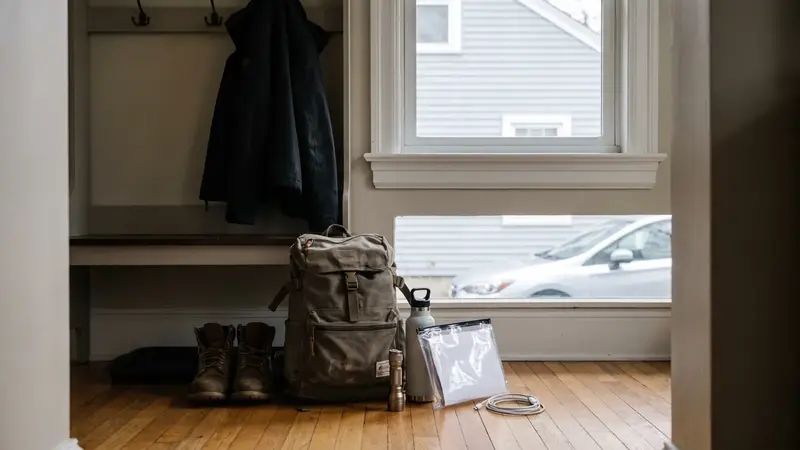 Go-bag checklist: what to pack in case you have to evacuateWhat to pack in a go-bag: documents, medications, cash, chargers, per-person items, kids and pets, and how it …
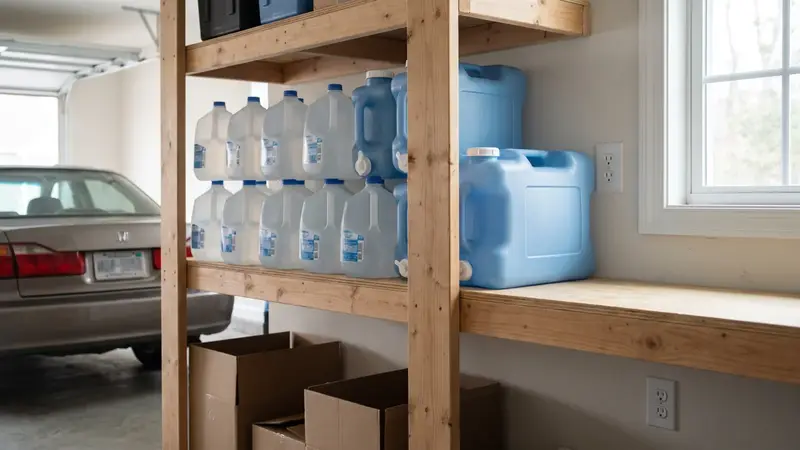 How much water to store for an emergency: per person, per pet and for how longHow much water to store for an emergency: 1 gallon per person per day, pets, which containers to use, when to …
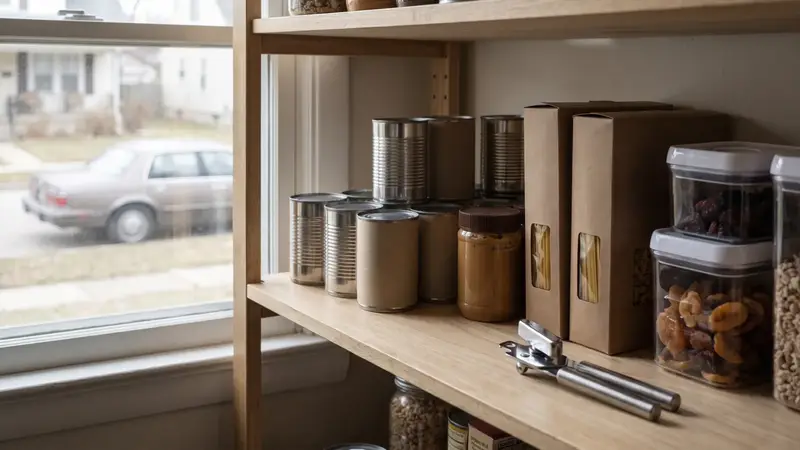 Emergency food storage: how much to store, what to buy and how to keep it safeHow much emergency food to store, from a 3-day kit to two weeks at home: no-cook foods, calories, special diet…
 Power outage checklist: what to do before, during and afterA calm power outage checklist from Ready.gov and CDC: what to prepare, how to protect food, medicines and medi…