Frozen pipes: how to prevent them and what to do if they freeze
How to keep pipes from freezing and what to do if they do: insulate, let faucets drip, thaw safely with a hair dryer, and never use a flame. Official sources.
By PreparedStates editors · Updated October 22, 2026 · Sourced to the American Red Cross, CDC and Ready.gov
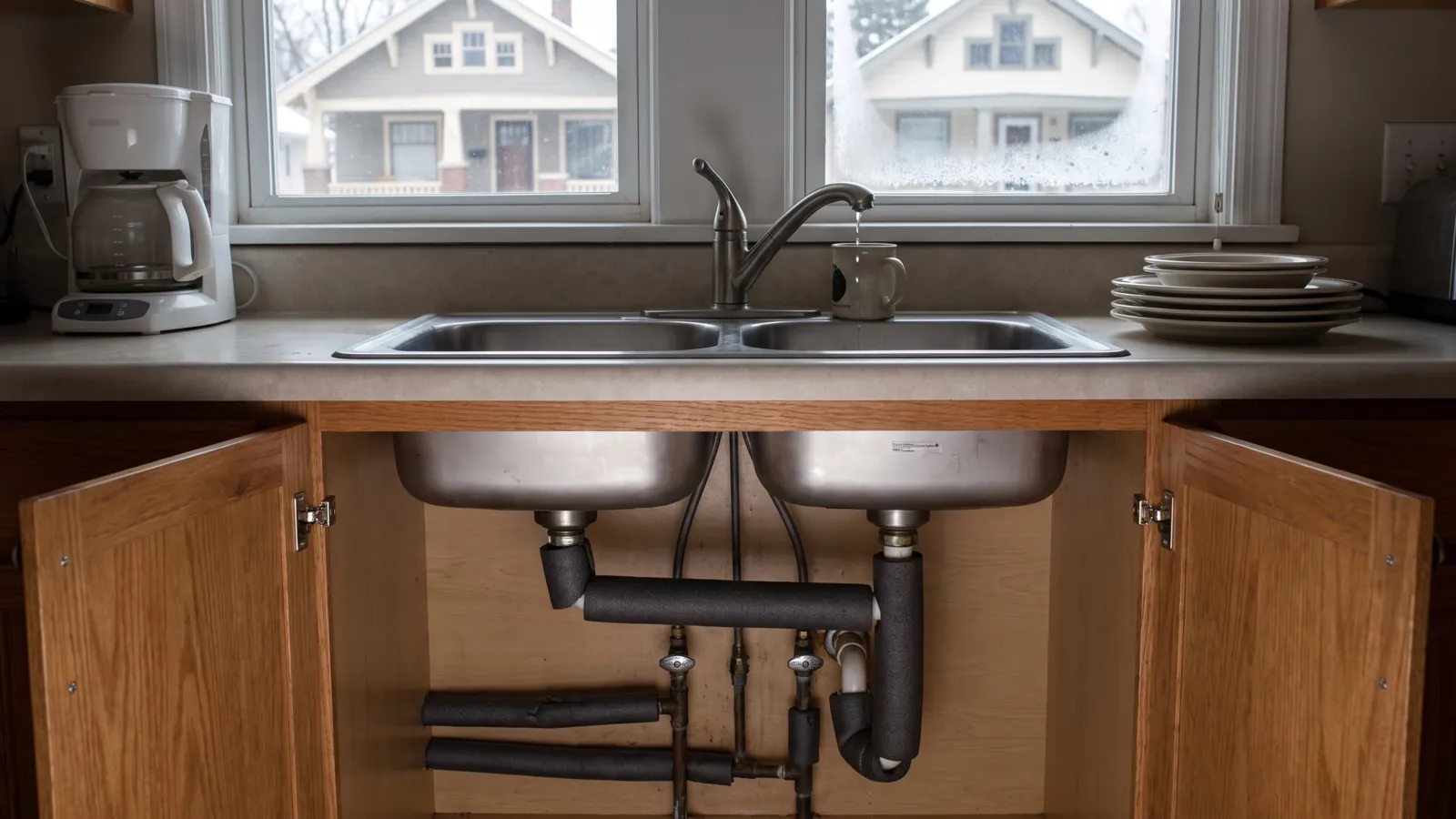
- Insulate pipes in basements, crawl spaces, attics, garages and along exterior walls, and keep garage doors closed if supply lines run there.
- In very cold weather, open cabinet doors under sinks and let cold water drip from faucets served by exposed pipes.
- If you leave home in cold weather, keep the heat on and set it no lower than 55°F.
- To thaw a frozen pipe, keep the faucet open and apply heat with a hair dryer or heating pad. Never use an open flame.
- If you cannot find, reach or thaw the frozen pipe, call a licensed plumber.
Why pipes freeze and burst
Water expands as it freezes, the Red Cross explains, and that expansion puts tremendous pressure on whatever contains it, including metal or plastic pipes. No matter the strength of a container, expanding water can cause pipes to break.
Ready.gov lists learning how to keep pipes from freezing as part of preparing your home for winter weather. The Red Cross says the pipes that freeze most frequently fall into three groups.
- Pipes exposed to severe cold, like outdoor hose bibs, swimming pool supply lines and water sprinkler lines
- Water supply pipes in unheated interior areas such as basements, crawl spaces, attics, garages or kitchen cabinets
- Pipes that run against exterior walls with little or no insulation
Before cold weather: protect outdoor lines
Start outside. The Red Cross says to drain swimming pool and sprinkler supply lines following the manufacturer's or installer's directions. It says not to put antifreeze in those lines unless directed, because antifreeze is environmentally harmful and dangerous to humans, pets, wildlife and landscaping. Remove, drain and store hoses used outdoors.
Then close the inside valves that supply outdoor hose bibs, and open the outside hose bibs to allow the water to drain. Keep the outside valve open so that any water remaining in the pipe can expand without causing the pipe to break.
Insulate the pipes you can reach
The Red Cross says to add insulation to attics, basements and crawl spaces, which will maintain higher temperatures in those areas. Look in the garage and under kitchen and bathroom cabinets too, because both hot and cold water pipes in these areas should be insulated. CDC also says to insulate any water lines that run along exterior walls so your water supply is less likely to freeze.
The Red Cross suggests considering a pipe sleeve, or UL-listed heat tape, heat cable or similar materials on exposed water pipes. It notes that even ¼ inch of newspaper can provide significant protection in areas that usually do not have frequent or prolonged temperatures below freezing. It also suggests considering relocating exposed pipes to provide increased protection from freezing.
When a hard freeze is forecast
Keep garage doors closed if there are water supply lines in the garage. Open kitchen and bathroom cabinet doors to allow warmer air to circulate around the plumbing, and move any harmful cleaners and household chemicals up out of the reach of children. CDC gives the same advice about opening the cabinet doors beneath kitchen and bathroom sinks so heated air can reach the pipes.
When the weather is very cold outside, let the cold water drip from the faucet served by exposed pipes. The Red Cross says running water through the pipe, even at a trickle, helps prevent pipes from freezing. CDC similarly says to leave all water taps slightly open so they drip continuously.
Keep the thermostat set to the same temperature during the day and at night. The Red Cross says this may mean a higher heating bill, but it can prevent a much more costly repair if pipes freeze and burst. If you will be going away during cold weather, leave the heat on, set to a temperature no lower than 55°F.
Storms and power outages: plan for heat and water
According to Ready.gov, a winter storm can last a few hours or several days, and it can cut off heat, power and communication services. CDC says to keep the temperature inside your home warm, and the Red Cross says to be ready to live without power, gas and water. Our stay warm without power guide covers heating safely during an outage.
The Red Cross also says you may lose access to drinking water, so set aside at least one gallon of drinking water per person per day. Ready.gov's basic kit list uses the same figure, one gallon per person per day for several days, for drinking and sanitation. If your home becomes too cold, the Red Cross suggests going to a friend's house, a public library or a warming center.
Walk the house before the freeze
A quick walk-through before the first hard freeze can catch weak spots. The Red Cross says to check around the home for areas where water supply lines run through unheated spaces, and to look in the garage and under kitchen and bathroom cabinets. Use the list below as a prompt, and note anything that still needs insulation.
Pair the walk-through with a simple plan for the coldest nights. Decide who will open the cabinet doors and set faucets to drip, make sure the heat will stay on if you travel, and keep some drinking water on hand in case a pipe does freeze. Every item below comes from the Red Cross and CDC advice above.
- Outdoors: drain and store hoses, drain pool and sprinkler lines, close the inside valves to hose bibs
- Attic, basement and crawl space: add insulation
- Garage: insulate supply pipes and keep the door closed
- Under sinks: insulate hot and cold pipes, and open cabinet doors in a hard freeze
- Exterior walls: insulate any water lines that run along them
- Exposed pipes: let cold water drip in very cold weather
- Thermostat: same temperature day and night, no lower than 55°F if you are away
- Water supply: keep drinking water on hand
How to tell a pipe is frozen, and how to thaw it
If you turn on a faucet and only a trickle comes out, suspect a frozen pipe. The Red Cross says likely places include pipes against exterior walls, or where your water service enters your home through the foundation. Check all other faucets in your home too, because if one pipe freezes, others may freeze as well.
Keep the faucet open while you treat the pipe. As the frozen area begins to melt, water will begin to flow through it, and the running water helps melt the ice in the pipe. CDC says to thaw the pipes slowly with warm air from an electric hair dryer.
Apply heat until full water pressure is restored. The Red Cross lists these ways to apply heat to the section of pipe.
- An electric heating pad wrapped around the pipe
- An electric hair dryer
- A portable space heater, kept away from flammable materials
- Towels soaked in hot water, wrapped around the pipe
If you cannot thaw it, or a pipe has burst
The Red Cross says to call a licensed plumber if you are unable to locate the frozen area, if the frozen area is not accessible, or if you cannot thaw the pipe. CDC says that if you cannot thaw your pipes, or they have broken open, you should use bottled water or get water from a neighbor's home.
As an emergency measure, CDC says snow can be melted for water if no other water is available. It notes that bringing water to a rolling boil for one minute will kill most germs but will not get rid of chemicals sometimes found in snow. Our make water safe guide explains your other options.
Ready.gov's basic emergency kit list includes a wrench or pliers (to turn off utilities), so keep a pair where you can reach them. After a major winter storm, NWS says to check with your local water company to ensure your water is safe to drink, cook and clean with.
The Red Cross says not to use a blowtorch, kerosene or propane heater, charcoal stove, or other open flame device. CDC gives the same warning about torches, and says to thaw pipes slowly with warm air from an electric hair dryer instead.
Common questions
How do I know if a pipe is frozen?
If you turn on a faucet and only a trickle comes out, the Red Cross says to suspect a frozen pipe. Likely places include pipes against exterior walls and where your water service enters your home through the foundation.
Should I leave a faucet dripping in freezing weather?
When the weather is very cold, the Red Cross says to let cold water drip from the faucet served by exposed pipes. Running water through the pipe, even at a trickle, helps prevent freezing.
What temperature should I leave the heat at when I'm away?
The Red Cross says to leave the heat on, set to a temperature no lower than 55°F.
Can I thaw a frozen pipe with a hair dryer?
Yes. Both the Red Cross and CDC list an electric hair dryer, and CDC says to thaw the pipe slowly with warm air. Keep the faucet open while you do it.
Does opening cabinet doors really help?
The Red Cross says opening kitchen and bathroom cabinet doors allows warmer air to circulate around the plumbing. Move any harmful cleaners and household chemicals out of the reach of children first.
When should I call a plumber?
The Red Cross says to call a licensed plumber if you cannot locate the frozen area, cannot reach it, or cannot thaw the pipe.
Sources (7)
- American Red Cross: Preventing & Thawing Frozen Pipes
- CDC: Preparing for a Winter Storm
- CDC: Protect Yourself During and After Winter Storms
- Ready.gov: Winter Weather
- Ready.gov: Build A Kit
- American Red Cross: Winter Storm Preparedness & Blizzard Safety
- National Weather Service: Caution! Winter Storm Dangers Linger
Get one calm email when it matters
Seasonal checklists and gear price drops. No spam, unsubscribe any time.
Keep reading
 Winter storm preparedness checklist: before, during and afterA plain-English winter storm checklist: watch vs warning, home prep, supplies, staying warm, shoveling and car…
 How to stay warm without power in winter, safelyStay warm in a winter power outage safely: keep heat in, dress in layers, never heat with an oven or grill, kn…
 How to make water safe to drink in an emergency: boiling, bleach, filters and tabletsHow to make water safe to drink in an emergency: boiling times, exact unscented bleach amounts, what filters a…
 Power outage checklist: what to do before, during and afterA calm power outage checklist from Ready.gov and CDC: what to prepare, how to protect food, medicines and medi…