Power outage checklist: what to do before, during and after
A calm power outage checklist from Ready.gov and CDC: what to prepare, how to protect food, medicines and medical devices, and what to do when power returns.
By PreparedStates editors · Updated October 22, 2026 · Sourced to Ready.gov and CDC
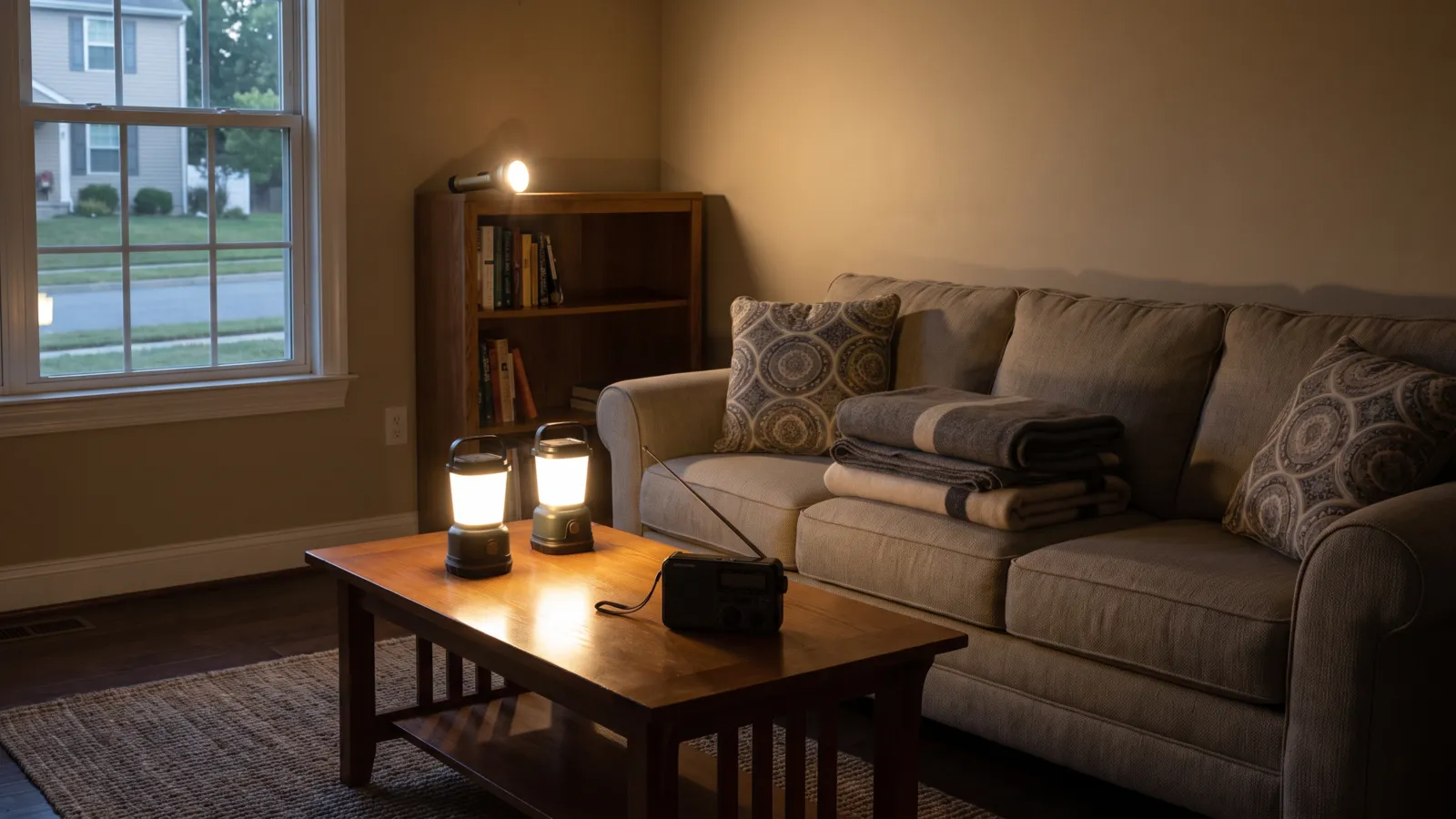
- Before: list what needs electricity, keep a flashlight for every person, and ask your provider for a plan for powered medical devices and cold medicines.
- During: keep the fridge and freezer closed, unplug appliances, and use flashlights instead of candles.
- Use generators, camp stoves and grills only outdoors, at least 20 feet from windows. Keep generators that far from doors and vents too.
- After: throw out fridge perishables after 4 hours without power or a cold source, and check refrigerated medicines.
- Install CO detectors with battery backup on every level of your home, and never heat your home with a gas stove or oven.
What a power outage can disrupt
A power outage is when the electrical power goes out unexpectedly. Ready.gov says an outage may disrupt communications, water and transportation. It can also close grocery stores, gas stations, ATMs and banks, cause food spoilage and water contamination, and prevent the use of medical devices.
Ready.gov also notes that extended outages may affect a whole community. The steps below work the same way whether the lights are off for an hour or for several days. Do the 'before' steps once, and you will be ready for all of it.
Before: list what runs on electricity
Start with an inventory. Ready.gov suggests you list the items you need that rely on electricity, then plan for batteries or other power sources, such as a portable charger or power bank. Think about phones, medical equipment, lights and anything else your household would struggle without.
Keep a flashlight for every household member, and find out whether your home phone works when the power is out and how long its battery backup lasts. Keep extra batteries for radios and flashlights too. Ready.gov says the Emergency Alert System and NOAA Weather Radio also provide emergency alerts, so a battery-powered weather radio is worth having.
Ready.gov's winter guidance adds two reminders that apply to any outage: keep in mind each person's specific needs, including medication, and remember the needs of your pets. Add both to your list now, while it is quiet.
- A flashlight for every person, plus spare batteries
- A power bank or portable charger for phones
- A radio with spare batteries
- Appliance thermometers for the fridge and freezer
- A cooler, and water containers or gel packs in the freezer
- Enough nonperishable food and water
- Supplies for pets
Before: plan for medical devices and medicines
If anyone in your home uses a medical device that plugs in, or medicine that has to stay cold, make a plan before an outage. Ready.gov advises you to talk to your medical provider about a power outage plan for electrically powered devices and refrigerated medicines. Ask how long each medicine can be stored at higher temperatures, and get specific guidance for any medication that is critical for life.
CDC adds that some drugs need refrigeration to keep their strength, including many liquid drugs. Ask your provider what backup is suitable before you buy any portable power station for a medical device. If there is an emergency, call 911.
- Ask your provider for a plan for any powered medical device
- Ask about refrigerated medicines and how long they last at higher temperatures
- Get specific guidance for life-critical medication
- Write the plan down and keep it where everyone can find it
Before: alarms, and somewhere to go
Install carbon monoxide (CO) detectors with battery backup in central locations on every level of your home. Ready.gov describes CO as a colorless, odorless gas that can kill you, your family and pets. Battery backup matters because the alarm keeps working when the power is out. See our guide to carbon monoxide alarms for options.
Also decide where you would go if your home gets too hot or too cold. Ready.gov says to check with local officials about heating and cooling locations open near you, and to go to a community location with power if heat or cold is extreme.
During: protect food, appliances and people
Keep the refrigerator and freezer doors closed. Ready.gov says a refrigerator keeps food cold for about four hours and a full freezer keeps its temperature for about 48 hours. Use coolers with ice if you need to, and check temperatures with a thermometer. Our food safety guide explains what to keep and what to throw out.
Turn off or unplug appliances and electronics. Power may return with momentary surges or spikes that can cause damage.
For light, CDC recommends battery-powered flashlights and lanterns rather than candles, gas lanterns or torches, to lower the risk of fire. If you have to use candles, keep them away from anything that can catch fire, and always stay near lit candles. CDC also says to keep a fire extinguisher handy and make sure your family knows how to use it. Good flashlights and lanterns make this easy.
- Keep fridge and freezer doors shut
- Turn off or unplug appliances and electronics
- Use flashlights and lanterns, not candles
- Run generators, camp stoves and charcoal grills only outdoors, at least 20 feet from windows
- Keep a generator at least 20 feet from doors and vents too
- Never use a gas stovetop or oven to heat your home
- Never touch a fallen power line
During: heat and cold
In hot weather, know the signs of heat illness. CDC calls heat stroke the most serious heat illness. It says body temperature may rise to 106°F or higher within 10 to 15 minutes, and that heat stroke can cause death or permanent disability if emergency care is not given.
With no air conditioning, CDC says to contact your local health department or find an air-conditioned shelter in your area. Even a few hours at a shopping mall or public library can help, and so can cool showers or baths. CDC adds that you should not rely solely on fans, because when temperatures are really hot they won't prevent heat-related illness.
In cold weather, never heat your home with a gas stovetop or oven. CDC says hypothermia is a medical emergency, and that a temperature below 95°F means getting medical attention immediately. Our guide to staying warm without power covers safer options.
During: water, power lines and fuel
CDC says safe water for drinking, cooking and personal hygiene includes bottled, boiled or treated water, and that water purification systems may not be working fully when power goes out. Our guide to making water safe has the steps.
Never touch a fallen power line, and do not drive through standing water if downed power lines are in it. CDC also says not to try to siphon gasoline, because it can cause serious injury or illness. If you use a generator, read our generator safety guide first.
After: food, medicine and getting back to normal
When in doubt, throw it out. CDC says to throw out perishable food in your refrigerator (meat, fish, cut fruits and vegetables, eggs, milk and leftovers) after 4 hours without power or a cold source, and any food with an unusual odor, color or texture. If you have a thermometer, Ready.gov adds a second test: throw away any food that has been at 40 degrees or higher for two hours or more. Whichever rule you hit first, the food goes.
Medicine needs the same care. If the power was out for more than a day, Ready.gov says to discard any medication that should be refrigerated, unless the drug's label says otherwise, and to consult your doctor or pharmacist immediately for a new supply. CDC adds that if a life depends on a refrigerated drug that has been at room temperature, use it only until a new supply is available.
Once things are back to normal, refill what you used: batteries, water, ice packs and any medicines. Then fix whatever slowed you down this time, so the next outage is easier.
- Check the fridge thermometer reads 40°F or below
- Throw out fridge perishables after 4 hours without power or a cold source
- Throw out food held at 40°F or higher for two hours or more
- Throw out food with an unusual odor, color or texture
- Discard refrigerated medicine if the power was out more than a day, unless the label says otherwise
- Call your doctor or pharmacist about replacements
Never use a gas stovetop or oven to heat your home. Ready.gov says it raises the risk of carbon monoxide poisoning, fires and burns, and it can damage the appliance. Generators, camp stoves and charcoal grills belong outdoors, at least 20 feet away from windows. CDC adds that a generator should never be less than 20 feet from any window, door or vent.
Common questions
How long will the food in my fridge and freezer last in a power outage?
CDC says food stays safe for up to 4 hours in a refrigerator, 48 hours in a full freezer and 24 hours in a half-full freezer, as long as you keep the doors closed.
Should I unplug things during a power outage?
Yes. Ready.gov says to turn off or disconnect appliances, equipment and electronics, because power may return with momentary surges or spikes that can cause damage.
What should I do if someone relies on a powered medical device?
Talk to their medical provider before an outage about a plan for electrically powered devices and refrigerated medicines. If there is an emergency during an outage, call 911.
Are candles safe to use when the power is out?
CDC recommends battery-powered flashlights and lanterns instead. If you do use candles, keep them away from anything that can catch fire and stay near them.
Where can I go if my home gets too hot or too cold?
Ready.gov says to check with local officials about open heating and cooling locations, and to go to a community location with power if heat or cold is extreme.
How many flashlights do I need?
Ready.gov suggests one for every household member, plus extra batteries for flashlights and radios.
Get one calm email when it matters
Seasonal checklists and gear price drops. No spam, unsubscribe any time.
Keep reading
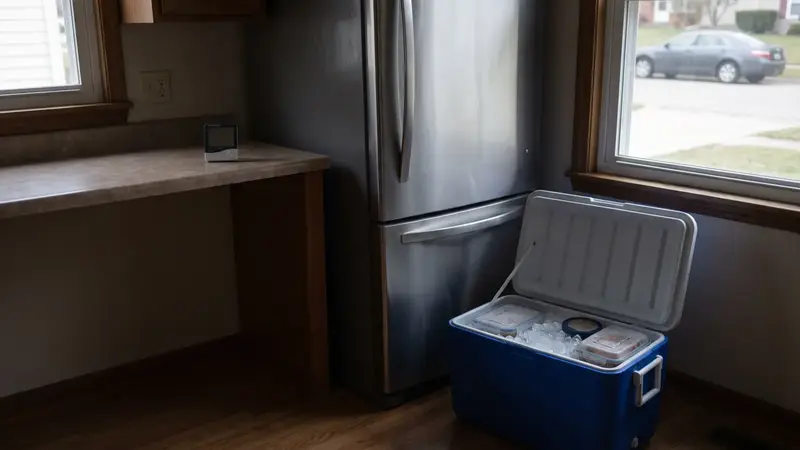 Food safety in a power outage: how long food lasts and what to throw outHow long food stays safe in the fridge and freezer without power, what to throw out, and when you can refreeze…
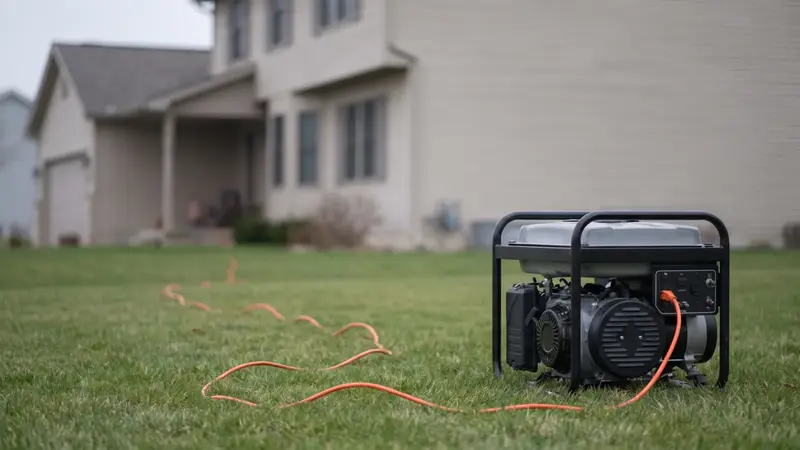 Portable generator safety: where to run it, carbon monoxide and cordsHow to use a portable generator safely in an outage: 20 feet from windows, never in a garage, CO alarms, outdo…
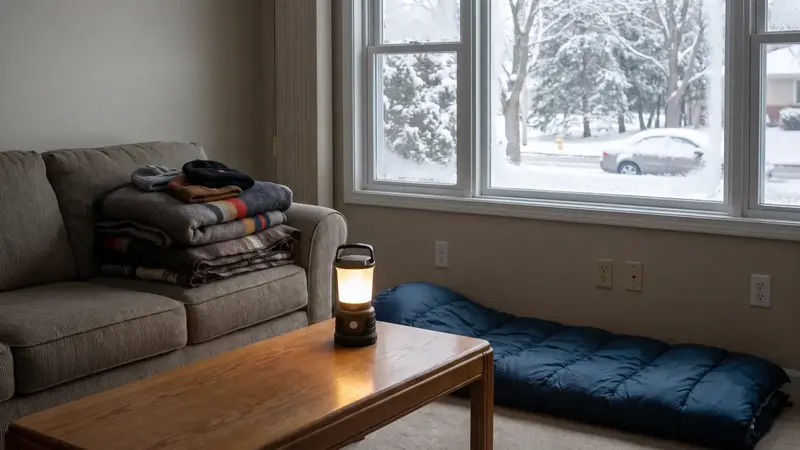 How to stay warm without power in winter, safelyStay warm in a winter power outage safely: keep heat in, dress in layers, never heat with an oven or grill, kn…
 Winter storm preparedness checklist: before, during and afterA plain-English winter storm checklist: watch vs warning, home prep, supplies, staying warm, shoveling and car…