How to stay warm without power in winter, safely
Stay warm in a winter power outage safely: keep heat in, dress in layers, never heat with an oven or grill, know hypothermia signs and where to go.
By PreparedStates editors · Updated October 22, 2026 · Sourced to Ready.gov, CDC and CPSC
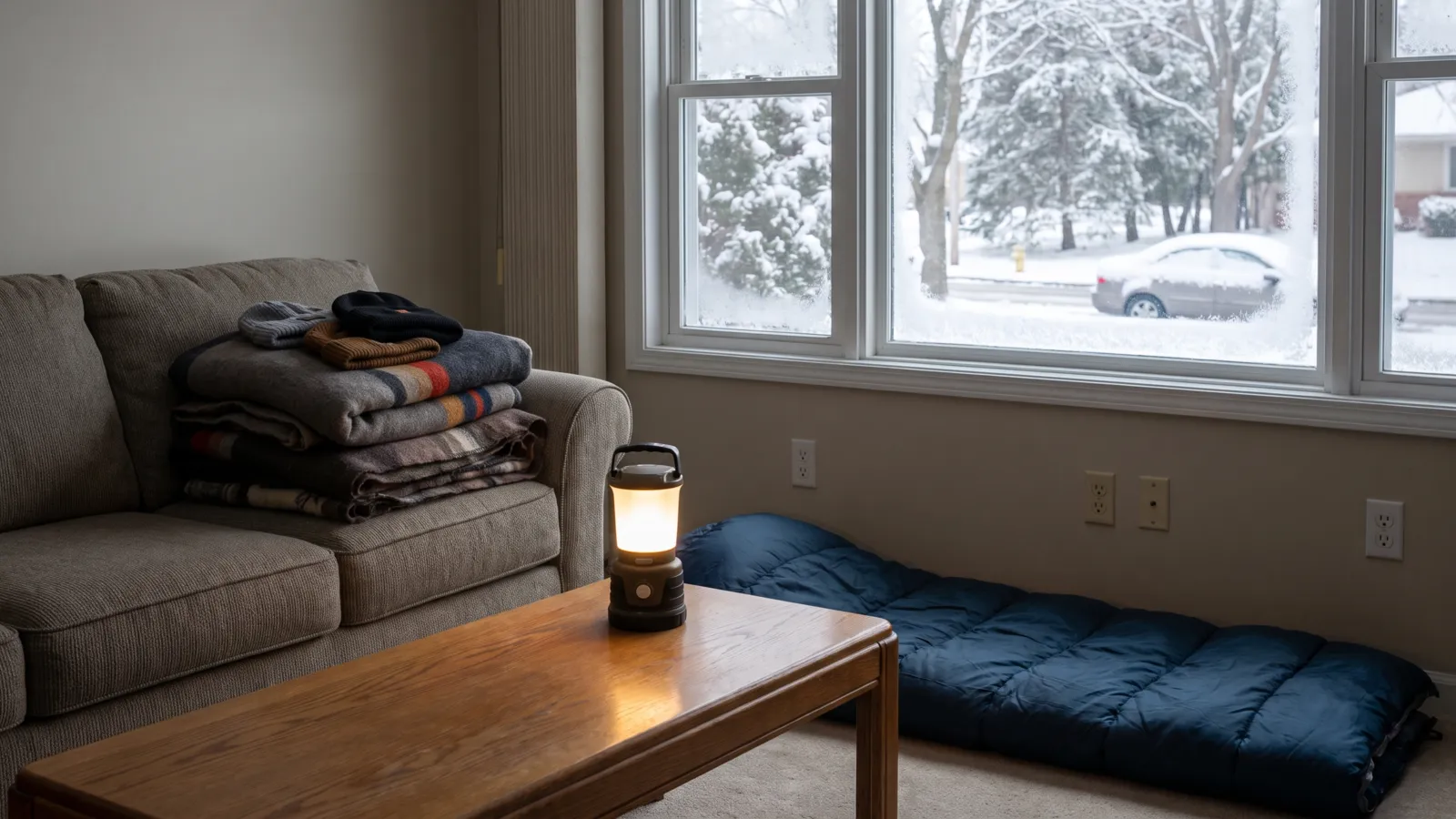
- Close off rooms you do not need, stay together in one, and stuff towels into cracks under doors to keep heat in.
- Wear layers: wool, silk or polypropylene underneath, insulation in the middle, a wind-resistant outer layer. Stay dry.
- Never heat your home with a gas stove or oven. Never run generators, grills or camp stoves indoors.
- Hypothermia signs include shivering, confusion, slurred speech and drowsiness. Seek medical attention; a body temperature below 95 degrees is an emergency.
- If cold is extreme, go to a community location with power. Check with local officials about heating locations.
Plan a heat source that does not need power
Ready.gov says a winter storm can last a few hours or several days, and can cut off heat, power and communication services. It puts older adults, children, sick individuals and pets at greater risk. That is why it advises you to gather supplies in case you need to stay home for several days without power, and to keep in mind each person's specific needs, including medication.
CDC says to have at least one heat source in case the power goes out. It lists extra blankets, sleeping bags and warm winter coats first. They need no fuel and give off no fumes. CDC also lists a code-compliant fireplace with plenty of dry firewood, and portable space heaters or kerosene heaters, but those come with strict safety rules, covered below.
Keep extra batteries for radios and flashlights, and a weather radio for alerts. Remember the needs of your pets.
Keep the heat you have
CDC's advice is to keep as much heat as possible inside your home, with one exception: some gas-fueled heaters, such as vent-less gas fireplaces, require some ventilation. Otherwise, avoid opening doors or windows unnecessarily. Close off unneeded rooms, and stuff towels or rags in cracks under doors. At night, close draperies or cover windows with blankets.
In practice, that means picking one room to stay in and closing off the rest. Sleeping bags and emergency blankets add warmth without any heat source at all. Our guide to frozen pipes covers what to do about water lines.
- Close off rooms you do not need
- Stay together in one room
- Stuff towels or rags into cracks under doors
- Close drapes or cover windows with blankets at night
- Avoid opening doors or windows unnecessarily
Dress in layers and stay dry
CDC's layering advice is written for going outside, but the same logic works in a cold house. For the inner layer, wear fabrics that hold more body heat and do not absorb moisture. Wool, silk or polypropylene will hold more body heat than cotton. The insulation layer retains heat by trapping air close to your body, and CDC says natural fibers like wool, goose down or fleece work best.
The outermost layer protects you from wind, rain and snow. It should be tightly woven and preferably water and wind resistant. CDC also warns that wet clothing chills the body quickly, so change out of damp clothes. Hand warmers can help with fingers and toes.
What never to use for heat indoors
Never heat your home with a gas stovetop or oven. CDC puts it plainly: turning on the stove for heat is not safe. Ready.gov says it raises the risk of carbon monoxide (CO) poisoning, fires and burns, and can damage the appliance.
The same goes for anything that burns fuel. CDC says never to use generators, grills or other gasoline, propane or charcoal-burning devices inside your home, garage or carport. Ready.gov says generators, camp stoves and charcoal grills should always be used outdoors and at least 20 feet away from windows, and CDC says a generator should be at least 20 feet from any window, door or vent. If you use a generator for power, read our generator safety guide.
CO is a colorless, odorless gas that can kill. CDC lists the most common symptoms as headache, dizziness, weakness, nausea, vomiting, chest pain and confusion. Install working CO detectors with battery backup on every level of your home. See our guide to carbon monoxide alarms.
- A gas stove or oven
- A generator
- A gas or charcoal grill
- A camp stove
- A fireplace or wood stove that is not vented to the outside
- A kerosene heater without proper ventilation
Fireplaces, kerosene heaters, candles and space heaters
CDC says to use fireplaces, wood stoves or other combustion heaters only if they are properly vented to the outside, and to make sure you have proper ventilation if you must use a kerosene heater. For light, use battery-powered flashlights or lanterns rather than candles. If you do use candles, never leave them burning unattended.
Electric space heaters need power, so they help once the lights come back on. CDC says to choose models with automatic shut-off switches and non-glowing elements, keep them at least 3 feet from drapes, furniture and bedding, and avoid using extension cords. CPSC says to plug them directly into a wall outlet and never leave them on while you sleep.
Warning signs of hypothermia
Ready.gov defines hypothermia as an unusually low body temperature, and says a temperature below 95 degrees is an emergency. Signs in adults include shivering, exhaustion, confusion, fumbling hands, memory loss, slurred speech and drowsiness. CDC says not to ignore shivering, because it is an important first sign that your body is losing heat. In babies, CDC says to look for bright red, cold skin and very low energy.
CDC says to seek immediate medical attention for signs of hypothermia. If you cannot get help right away, go to a warm room, remove any wet clothing and warm the center of the body first: chest, neck, head and groin. Once body temperature has risen, keep the person dry and wrapped in warm blankets, including the head and neck.
CDC says infants less than one year old should never sleep in a cold room. It also says if you are over 65, check the temperature in your home often during extremely cold weather. CDC also says hypothermia can occur even at cool temperatures, above 40 degrees Fahrenheit, if someone gets chilled by rain, sweat or cold water.
Frostbite: the other cold-weather risk
Ready.gov says to learn the signs of, and basic treatments for, frostbite and hypothermia. Frostbite causes loss of feeling and color around the face, fingers and toes. The signs are numbness, and skin that is white or grayish-yellow, firm or waxy.
For treatment, Ready.gov says to go to a warm room, soak in warm water and use body heat to warm the area. Do not massage it or use a heating pad. CDC says to seek medical attention as soon as possible and to use warm-to-touch water. Because frostbitten skin may be numb, CDC also says not to warm it with a fireplace, radiator or stove, and not to walk on frostbitten feet or toes unless necessary.
When to leave: warming centers
If heat or cold is extreme, Ready.gov says to go to a community location with power. Check with local officials about heating and cooling locations open near you. These are often called warming centers.
CDC lists older adults with inadequate food, clothing or heating, and babies sleeping in cold bedrooms, among the people at higher risk of hypothermia. If that describes someone in your household, it is a good reason to look up your nearest heating location now.
For a longer storm, see our winter storm preparedness guide. For the whole outage plan, use our power outage checklist.
Never use a gas stove or oven to heat your home. Ready.gov says it increases your risk of carbon monoxide poisoning, and it can also cause fires and burns. If you start to feel dizzy or sick, get outside to fresh air and call 911.
Common questions
How can I stay warm in my house without electricity?
Keep heat in: close off unneeded rooms, stuff towels under doors and cover windows at night. Wear layers, use blankets and sleeping bags, and keep clothing dry.
Is it safe to heat my house with a gas oven or stove?
No. Ready.gov and CDC both say never to use a gas stove or oven to heat your home, because of the risk of carbon monoxide poisoning, fires and burns.
Can I use a camp stove or charcoal grill indoors for heat?
No. Ready.gov says generators, camp stoves and charcoal grills belong outdoors, at least 20 feet away from windows.
What are the signs of hypothermia?
In adults: shivering, exhaustion, confusion, fumbling hands, memory loss, slurred speech or drowsiness. In babies: bright red, cold skin and very low energy. CDC says to seek immediate medical attention for signs of hypothermia.
Is it safe for a baby to sleep in a cold room?
CDC says infants less than one year old should never sleep in a cold room.
When should I go to a warming center?
Ready.gov says to go to a community location with power if heat or cold is extreme. Ask local officials which heating locations are open.
Sources (9)
- Ready.gov: Winter Weather
- Ready.gov: Power Outages
- CDC: Safety Guidelines, During and After a Winter Storm
- CDC: Preventing Hypothermia
- CDC: Recognizing Hypothermia
- CDC: What to Do to Protect Yourself During a Power Outage
- CDC: Avoiding Carbon Monoxide Poisoning
- CPSC: There's a Chill in the Air, Stay Warm Safely
- CPSC Safety Alert: Portable Generator Hazards
Get one calm email when it matters
Seasonal checklists and gear price drops. No spam, unsubscribe any time.
Keep reading
 Power outage checklist: what to do before, during and afterA calm power outage checklist from Ready.gov and CDC: what to prepare, how to protect food, medicines and medi…
 Winter storm preparedness checklist: before, during and afterA plain-English winter storm checklist: watch vs warning, home prep, supplies, staying warm, shoveling and car…
 Portable generator safety: where to run it, carbon monoxide and cordsHow to use a portable generator safely in an outage: 20 feet from windows, never in a garage, CO alarms, outdo…
 Frozen pipes: how to prevent them and what to do if they freezeHow to keep pipes from freezing and what to do if they do: insulate, let faucets drip, thaw safely with a hair…