Portable generator safety: where to run it, carbon monoxide and cords
How to use a portable generator safely in an outage: 20 feet from windows, never in a garage, CO alarms, outdoor cords, and why you must never backfeed.
By PreparedStates editors · Updated October 22, 2026 · Sourced to Ready.gov, CPSC, CDC and OSHA
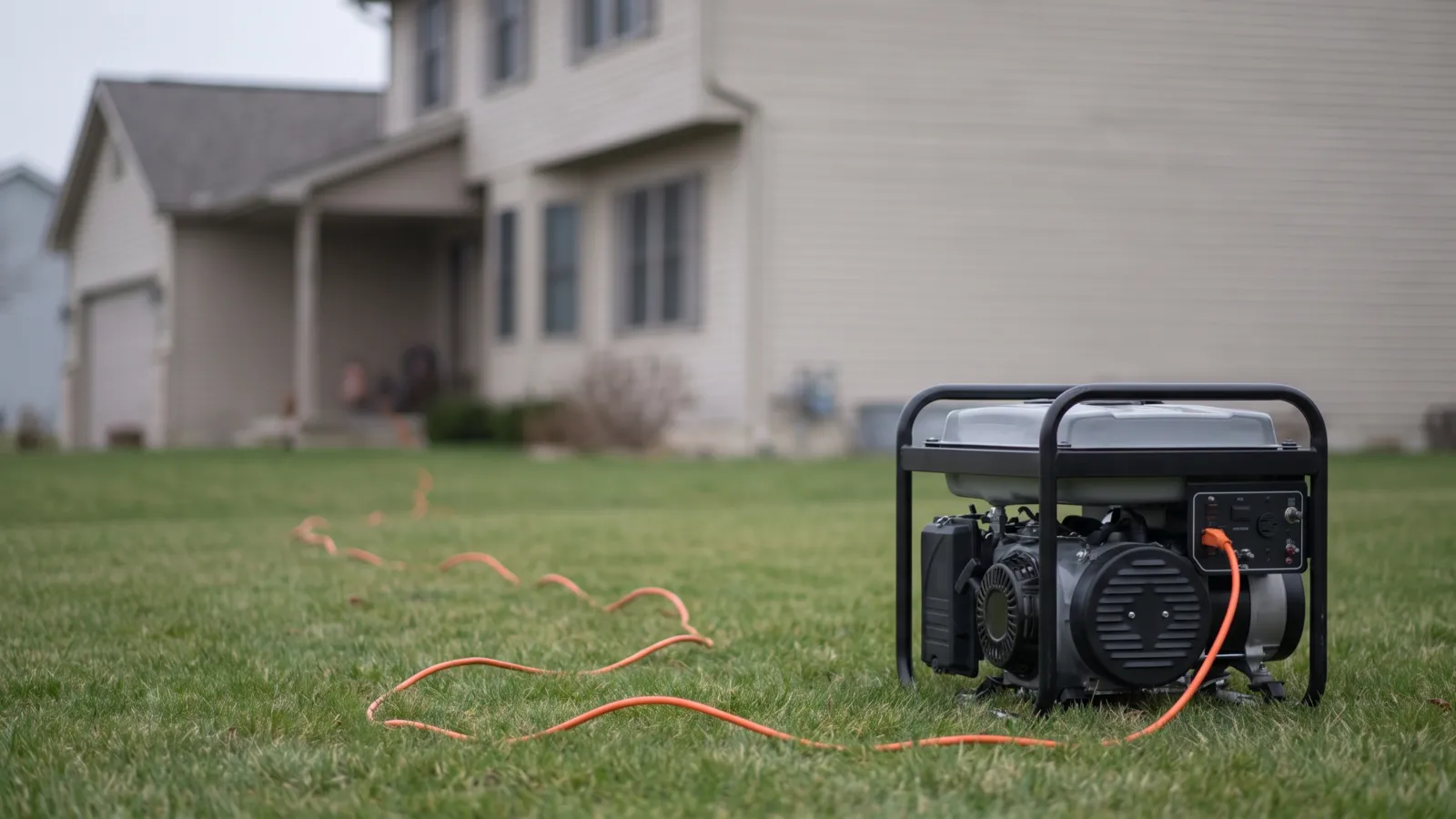
- Run a portable generator outdoors only, at least 20 feet from windows, doors, vents and attached garages.
- Never run one in a garage, basement, crawlspace or shed, even with doors and windows open.
- Install battery-backed carbon monoxide alarms. CO is colorless and odorless, so you cannot smell exhaust.
- Use heavy-duty outdoor extension cords, keep the generator dry, and let it cool before refueling.
- Never plug a generator into a wall outlet. Power house wiring only through a transfer switch fitted by a qualified electrician.
Why generator safety matters
A generator can keep a fridge, a few lights and a phone charger running when the grid is down. It can also hurt people if it is used the wrong way. The U.S. Consumer Product Safety Commission (CPSC) names the main hazards as carbon monoxide (CO) poisoning from the toxic engine exhaust, electric shock or electrocution, and fire and burns.
CPSC says most generator incidents reported to it involve CO poisoning from generators used indoors or in partially enclosed spaces. It also says a gasoline-powered generator used during winter weather-related power outages can produce as much CO as hundreds of cars. The rules below are short, and they are the same across Ready.gov, CPSC, CDC and OSHA.
Where to put it: outdoors, 20 feet away
Ready.gov says generators and fuel should always be used outdoors and at least 20 feet away from windows, doors and attached garages. CPSC adds that you should point the exhaust away from any nearby buildings. That includes a carport: CDC says never to use generators, grills or other gasoline, propane or charcoal-burning devices inside your home, garage or carport.
OSHA also says to leave 3 to 4 feet of clear space on all sides and above the generator for ventilation. And do not use a generator outdoors if its position near doors, windows or vents could let CO build up in occupied spaces. CPSC says to use extension cords long enough to place the generator outdoors and far away from windows, doors and vents.
Never indoors, and never in the garage
CPSC is clear: never use a generator inside homes, garages, crawlspaces, sheds or similar areas, even when using fans or opening doors and windows for ventilation. CDC says the same: never use a generator inside your home or garage, even if doors and windows are open.
The reason is speed. CPSC says that in a confined space a generator can produce high levels of CO within minutes. Deadly levels can quickly build up and can linger for hours, even after the generator has shut off. You cannot see or smell CO, so CPSC warns that even if you do not smell exhaust fumes, you may still be exposed.
CDC's power outage advice lines up with this. It says never to use a generator or any gasoline-powered engine inside your home, basement or garage, or less than 20 feet from any window, door or vent. It also says never to leave the motor running in a vehicle parked in an enclosed or partially enclosed space, such as a garage.
Carbon monoxide alarms and warning signs
Install working CO detectors on every level of your home, and CDC says to put them near every sleeping area too. CPSC specifies battery-operated alarms, or plug-in alarms with battery back-up, so they keep working in a power outage, and says to test the batteries monthly. See our guide to carbon monoxide alarms for what to look for.
CDC lists the most common symptoms of CO poisoning as headache, dizziness, weakness, nausea, vomiting, chest pain and confusion. Do not wait for symptoms: CDC warns that people who are sleeping or who have been drinking alcohol can die from CO poisoning before ever having symptoms. CPSC says that if you feel sick, dizzy or weak while using a generator, get to fresh air right away and do not delay. CDC says that if someone shows signs of CO poisoning, call 911 or your local Poison Control Center at 1-800-222-1222.
Keep it dry to avoid shock
Ready.gov says to keep the generator dry and protected from rain or flooding, because touching a wet generator or devices connected to one can cause electrical shock. CPSC notes the risk is higher in wet conditions.
If you must run a generator when it is wet outside, CPSC says to protect it from moisture without moving it indoors or near openings to the building. Use an open, canopy-like structure on a dry surface where water cannot reach it or puddle under it. Dry your hands before touching it. OSHA also recommends ground fault circuit interrupters (GFCIs), especially in or around wet or damp locations.
OSHA also says to make sure a generator is properly grounded and the grounding connections are tight, following the manufacturer's instructions. Never handle a generator's electrical components if you are wet or standing in water. Do not use electrical equipment that has been submerged in water until it has been thoroughly dried out and properly evaluated.
Extension cords, loads and backfeeding
Ready.gov says to connect the generator to appliances with heavy-duty extension cords. CPSC adds the details: use cords designed for outdoor use, and make sure each cord's wattage rating exceeds the total wattage of everything connected to it. Check the whole length of each cord for cuts or tears, check that the plug has all three prongs, and protect the cord from being pinched or crushed in a window or doorway.
OSHA says to plug appliances directly into the generator using the manufacturer's supplied cords, or extension cords that are grounded (3-pronged). Never use frayed or damaged cords, and do not overload a generator, because it can overheat and become a fire hazard.
Never try to power your house wiring by plugging the generator into a wall outlet, a practice CPSC calls backfeeding. It is extremely dangerous: it presents an electrocution risk to utility workers and neighbors served by the same utility transformer, and it bypasses some built-in household circuit protection. OSHA says you should never attach a generator directly to a building's electrical system unless a qualified electrician has properly installed it with a transfer switch. If you want to power house circuits, ask an electrician to fit one.
Fuel and refueling
Turn the generator off and let it cool before you refuel. Ready.gov and CPSC both warn that fuel spilled on hot engine parts can ignite, and OSHA notes that generators stay hot for long periods after they are stopped. CPSC also says never to store fuel for your generator in the home. Gasoline, propane, kerosene and other flammable liquids belong outside living areas, in properly labeled, non-glass safety containers.
Finally, follow the manufacturer's instructions. If you only need to charge phones and run a couple of lights, a power bank or a portable power station may be all you need. If you do want an engine unit, our generator comparison covers the options.
A short setup routine
CPSC says danger labels are required on all portable generators made or imported on or after May 14, 2007. The label reads that using a generator indoors can kill you in minutes, and that you should only use it outside and far away from windows, doors and vents. Read it, and read the manual, before the first time you start the engine.
Run through the list below each time. It takes a couple of minutes, and it covers the points above. Our power outage checklist shows where a generator fits in the wider plan.
- Test your CO alarms and check their batteries
- Set the generator outdoors, at least 20 feet from windows, doors, vents and attached garages
- Point the exhaust away from buildings, with clear space on all sides
- If it is wet outside, run it on a dry surface under an open, canopy-like cover
- Use outdoor-rated, heavy-duty cords with the right wattage rating
- Never plug it into a wall outlet
- Turn it off and let it cool before refueling
- Keep fuel outside living areas in labeled containers
No ventilation trick makes indoor use safe. CPSC says never to use a generator inside homes, garages, crawlspaces, sheds or similar areas, even when using fans or opening doors and windows. If you cannot place it outdoors, away from windows and doors, leave it off.
Common questions
How far from the house should a portable generator be?
Ready.gov says outdoors only, at least 20 feet away from windows, doors and attached garages, and CDC adds vents to that list. CPSC also says the exhaust should point away from any nearby buildings.
Can I run a generator in my garage with the door open?
No. CDC and CPSC both say never to use a generator in a garage, even if doors and windows are open.
Can I plug a generator into a wall outlet to power my house?
No. CPSC calls this backfeeding and says it is extremely dangerous, with an electrocution risk to utility workers. Use a transfer switch installed by a qualified electrician.
What kind of extension cord should I use with a generator?
CPSC says heavy-duty cords designed for outdoor use, with a wattage rating above the total of everything plugged in, all three prongs on the plug, and no cuts or tears.
Can I use a generator in the rain?
OSHA says to keep a generator dry and not use it in the rain or wet conditions. If you must, CPSC says to run it under an open, canopy-like structure on a dry surface, never indoors or near openings to the building.
What are the signs of carbon monoxide poisoning?
CDC lists headache, dizziness, weakness, nausea, vomiting, chest pain and confusion. Get to fresh air and call 911 or Poison Control at 1-800-222-1222.
Get one calm email when it matters
Seasonal checklists and gear price drops. No spam, unsubscribe any time.
Keep reading
 Power outage checklist: what to do before, during and afterA calm power outage checklist from Ready.gov and CDC: what to prepare, how to protect food, medicines and medi…
 How to stay warm without power in winter, safelyStay warm in a winter power outage safely: keep heat in, dress in layers, never heat with an oven or grill, kn…
 Winter storm preparedness checklist: before, during and afterA plain-English winter storm checklist: watch vs warning, home prep, supplies, staying warm, shoveling and car…
 Hurricane preparedness checklist: what to do before, during and after a stormHurricane season dates, watch vs warning, how to find your evacuation zone, storm surge, supplies, and what to…