Pet emergency kit: what to pack, where to go and what to do after a disaster
How to build a pet emergency kit and plan: what to pack, ID and microchips, what shelters and hotels allow, pet-friendly places to stay and aftercare.
By PreparedStates editors · Updated October 22, 2026 · Sourced to Ready.gov, the CDC and the Red Cross
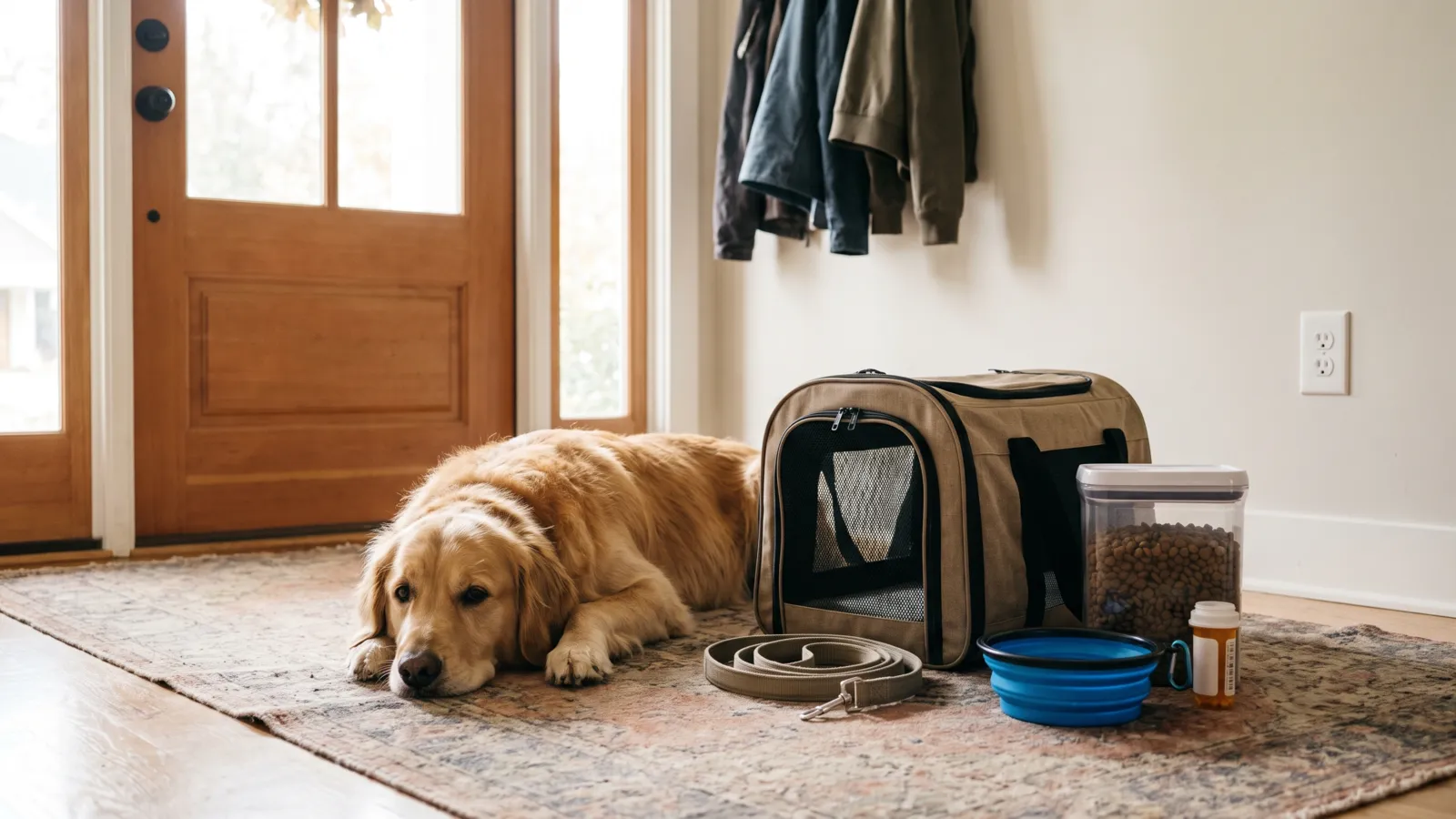
- Pack two pet kits, a larger one for sheltering in place and a lightweight one to evacuate, and check them regularly.
- If officials ask you to evacuate, your pet should too. Many public shelters and hotels do not allow pets, so plan where to go.
- Put a collar and ID tag on your pet, microchip it, and register the chip with the manufacturer. Keep your contact details up to date.
- Ready.gov says to keep several days' supply of food and water. The CDC's kit list says a 2-week supply of each for every animal.
- After a disaster, keep pets leashed or in a carrier. Changed scents and landmarks can leave pets confused and lost.
Why your pet needs a plan of its own
Ready.gov says pets need to be included in your family's emergency plan. If local officials ask you to evacuate, that means your pet should evacuate too. If you leave your pets behind, they may end up lost, injured or worse.
The CDC says leaving pets out of evacuation plans can put pets, pet owners and first responders in danger. Pets left behind are likely to be injured or lost, even if you try to create a safe place for them. Build the pet side of your family emergency plan at the same time as the people side.
What goes in a pet emergency kit
Ready.gov says to do what you do for your family's emergency supply kit and think first about the basics for survival, such as food and water. It suggests two kits: a larger one if you are sheltering in place and a lightweight one for if you need to evacuate. Review them regularly so the contents, especially foods and medicines, stay fresh.
Ready.gov says to keep several days' supply of food and water, but the CDC's pet kit checklist lists a 2-week supply of each for every animal. The CDC also lists a 1-month supply of flea, tick and heartworm preventative, and says to ask your veterinarian for help putting the kit together. For the water, see our comparison of water storage containers; the lists below cover the rest.
- Food in an airtight, waterproof container, with feeding instructions
- Water and a water bowl
- A manual can opener if your pet eats canned food
- An extra supply of regular medicine in a waterproof container
- A first aid kit; talk to your veterinarian about what suits your pet
- A collar with ID tag and a harness or leash, plus backups
- Registration information and other documents in a waterproof container, and electronically
- A traveling bag, crate or sturdy carrier, ideally one for each pet
- Litter and litter box if appropriate, newspapers, paper towels, trash bags and household chlorine bleach for sanitation
- Grooming items such as pet shampoo and conditioner
- A photo of you and your pet together, to help document ownership
- Information on medical conditions, behavior problems and your veterinarian's name and number
- Favorite toys, treats or bedding to reduce stress
ID, microchips and records
The CDC says to make sure your pets wear collars and tags with up-to-date contact information and other identification. It calls microchipping one of the best ways to ensure you and your pet are reunited if you are separated. Always register the microchip with the manufacturer and keep your contact information up to date with the microchip company. Write your pet's name, your name and your contact information on each pet carrier too.
Ready.gov says to keep your address and phone number up to date and include an emergency contact outside of your immediate area. For records, the CDC lists photocopied veterinary records, a rabies certificate, vaccinations, a medical summary, prescriptions, registration information and recent photographs of each pet, plus a waterproof container for the documents. The Red Cross adds that many pet shelters require proof of current vaccinations to reduce the spread of disease.
Evacuating with pets: what shelters allow
Ready.gov says many public shelters and hotels do not allow pets inside, so know a safe place to take your pets before disasters happen. Its evacuation guidance says to take your pets with you but understand that only service animals may be allowed in public shelters. The CDC says many disaster evacuation centers, such as Red Cross evacuation centers, do not accept pets and other animals.
The Red Cross also says hotels and shelters may not accept animal guests, other than service animals. For its own shelters, it says workers will do all they can to accommodate household pets, but depending on the situation pets may need to be housed in a different location with support from animal welfare groups, and service animals that assist people with disabilities are always welcome. Because rules vary, the CDC says to contact your local emergency management office and ask if they offer accommodations for owners and their pets.
If your pet does go to an evacuation center, the CDC says owners of dogs, cats and ferrets should provide proof of vaccination against rabies when entering. It also says to keep pets caged or on a leash, and to walk dogs on a leash outside the shelter in designated areas and always clean up after them.
Pet-friendly hotels, boarding and other places to stay
The Red Cross says to know which hotels and motels along your evacuation route will accept pets in an emergency, and to call ahead for reservations if you know you may need to evacuate. Ask if no-pet policies could be waived in an emergency. The CDC suggests contacting pet-friendly hotels, particularly along evacuation routes, as well as local veterinary clinics and boarding facilities, local animal shelters, and family or friends outside the evacuation area.
Keep a phone list of the friends, relatives, boarding facilities, animal shelters or veterinarians who can care for your animals, the Red Cross says. The CDC adds that you should find a veterinarian or animal hospital near where you may be seeking temporary shelter and add their contact information to your kit. Be prepared to house animals separately, even if they are more comfortable together.
Practice, buddies and staying home
Ready.gov and the CDC both recommend a buddy system: plan with a neighbor, friend or relative who can care for or evacuate your pets if you cannot. The CDC says to train your pet to get in and stay in their carrier by making it a comfortable place, and to practice car rides in a vehicle similar to the one you would evacuate in. Know where your pet might hide when stressed or scared, and keep a leash or carrier near the exit.
If you are staying put, the CDC says to choose a pet-friendly safe room, preferably an interior room with no or few windows. Remove any toxic chemicals or plants, and close off small areas where frightened cats could get stuck, such as vents or beneath heavy furniture. Ready.gov says to bring pets indoors at the first sign or warning of a storm or disaster.
If you have horses, goats or pigs, Ready.gov says to make sure all animals have some form of identification, evacuate them earlier whenever possible and map primary and secondary routes in advance. It also says to make available the vehicles and trailers you need and to ensure your destination has food, water, veterinary care and handling equipment.
After a disaster: going home
The CDC says that after an emergency, familiar scents and landmarks may have changed and pets can become confused and lost. Keep them on a leash or in a carrier when they are being transported or when you go outside. Snakes and other wildlife and downed power lines can be hazards for pets and people, especially after flooding.
When you return, the CDC says to check your home for sharp objects, spilled chemicals and exposed wiring. Animals' behavior may change dramatically after a flood, flash flood, thunderstorm or hurricane, and normally quiet and friendly animals may become irritable. The Red Cross says to watch your animals closely and keep them under your direct control, since fences and gates may have been damaged.
If your pet is missing, and keeping pets healthy
The CDC says to make sure your family is in a safe location before you begin your search. If you are in a shelter that houses pets, tell one of the pet caretakers and give them a missing pet flyer, and post flyers in the area once conditions are safe. The CDC says the local humane society, an animal welfare organization, the county or state animal response team and local animal control can find local shelters or organizations that may have located your pet. If your pet has a microchip, call the microchip company to say your pet is missing.
The CDC also says to avoid stagnant water, especially after flooding, and not to let pets play in or drink contaminated water. Contact a veterinarian if you notice any signs of stress, discomfort or illness in your pets.
The CDC says pets left behind during a disaster are likely to be injured or lost, even if you try to create a safe place for them, and it says never to leave a pet chained outdoors. If you are unsure how to care for your pet in an emergency, Ready.gov says to contact your local emergency management office, animal shelter or animal control office for advice and information.
Common questions
Should I take my pets if I have to evacuate?
Yes. Ready.gov says that if local officials ask you to evacuate, your pet should evacuate too, because pets left behind may end up lost, injured or worse. The Red Cross puts it this way: if it is not safe for you to stay, it is not safe for them either.
Do emergency shelters take pets?
Many do not, other than service animals. Ready.gov says only service animals may be allowed in public shelters, and the CDC says many evacuation centers do not accept pets. The Red Cross says its shelter workers will do all they can to accommodate household pets, though they may need to be housed in a different location, and the CDC says to ask your local emergency management office about accommodations for owners and pets.
How much food and water should I pack for my pet?
Ready.gov says several days' supply of each. The CDC's pet kit checklist lists a 2-week supply of food and a 2-week supply of water for each animal. These pages do not give daily amounts per pet, so the CDC's advice is to ask your veterinarian for help putting the kit together.
Is a microchip enough to get my pet back?
The CDC calls microchipping one of the best ways to be reunited with your pet, but says to register the chip with the manufacturer and keep your contact information up to date. It also says pets should wear collars and tags with up-to-date contact information.
How do I find a pet-friendly hotel in an emergency?
Do it before you need one. The Red Cross says to find out which hotels and motels along your evacuation route accept pets, call ahead for reservations and ask whether no-pet policies could be waived in an emergency. The CDC also suggests asking your local emergency management office about accommodations.
What should I do if my pet goes missing after a disaster?
Make sure your family is safe first. Then tell the pet caretakers at your shelter, post missing pet flyers once conditions are safe, and ask the local humane society, animal control or the county or state animal response team to help find shelters that may have your pet. If your pet is microchipped, call the microchip company.
Get one calm email when it matters
Seasonal checklists and gear price drops. No spam, unsubscribe any time.
Keep reading
 How to make a family emergency plan: steps, questions and a communication planHow to make a family emergency plan: Ready.gov's four steps, the questions to ask, a communication plan, meeti…
 Emergency kit checklist: what to include, how much to keep and where to store itA plain-English emergency kit checklist built on Ready.gov's basic kit and extra items, with how many days of …
 Go-bag checklist: what to pack in case you have to evacuateWhat to pack in a go-bag: documents, medications, cash, chargers, per-person items, kids and pets, and how it …
 Flood preparedness: flood watch vs warning, what to do and how flood insurance worksFlood watch vs warning, how little moving water can sweep a car away, the 30-day flood insurance wait, and wha…