Winter car emergency kit: what to keep in your car and what to do if you're stranded
What to keep in your car for winter and what to do if you get stranded: stay with the car, clear the exhaust pipe, run the engine safely. Official sources.
By PreparedStates editors · Updated October 22, 2026 · Sourced to Ready.gov, the National Weather Service, CDC and the American Red Cross
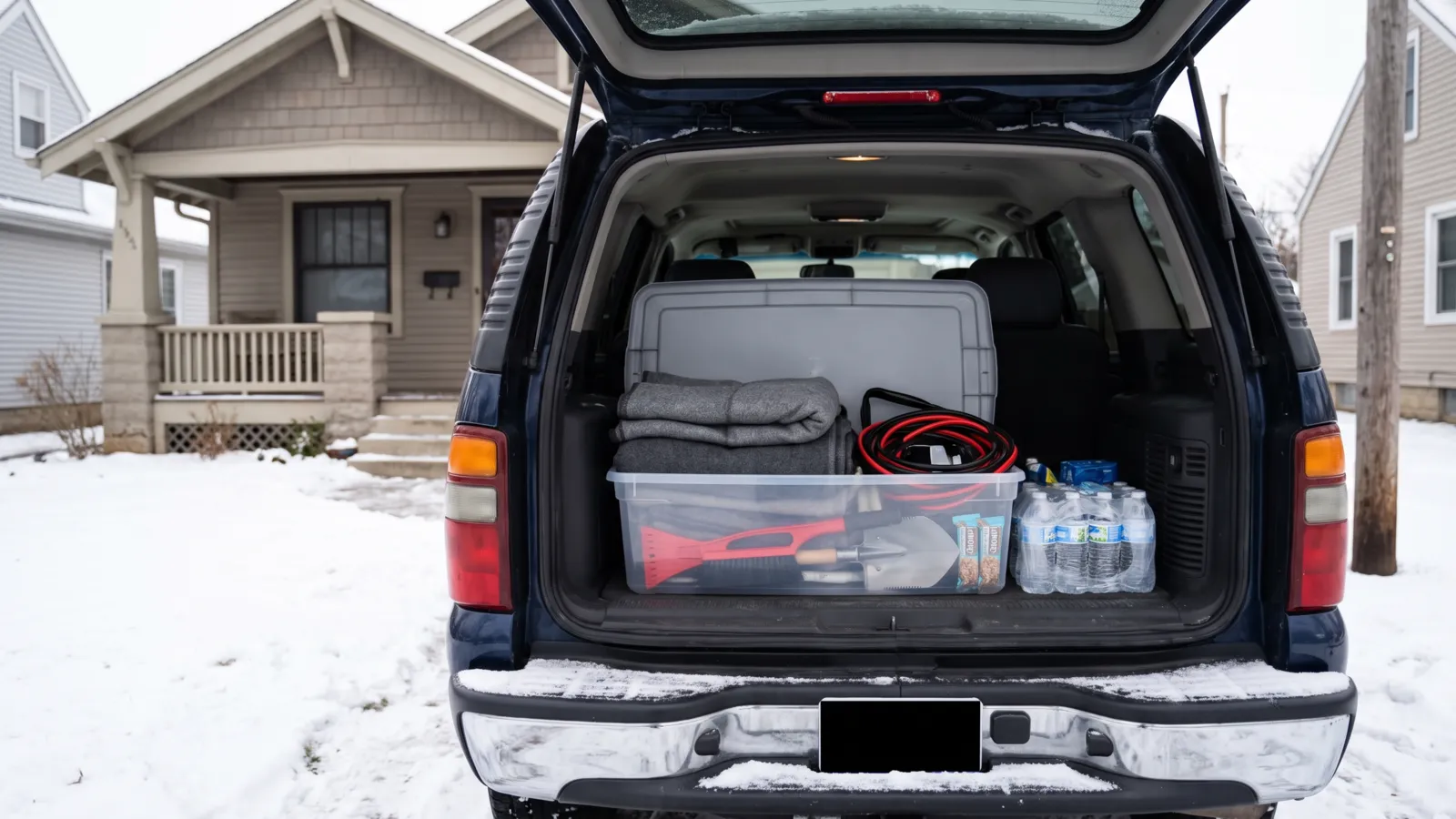
- Pack blankets, warm clothing, a flashlight, a phone charger, water, snacks, first aid supplies, a scraper, a shovel and sand or cat litter.
- If you are stranded, stay with the car, tie a bright cloth to the antenna, and raise the hood once the snow stops.
- Run the engine and heater about 10 minutes each hour, crack one window, and keep the exhaust pipe clear of snow.
- Keep the gas tank near full, and have a mechanic check the battery, brakes, heater, exhaust and antifreeze before winter.
- Drive in bad weather only if absolutely necessary, and tell someone your route and when you expect to arrive.
Decide whether you need to drive at all
Ready.gov says to drive in bad weather only if absolutely necessary, and to stay off roads if at all possible. For long trips, plan carefully and listen to the radio or television for up-to-date weather forecasts and road conditions. NWS adds that you can call 511 for the latest traffic and road conditions, and that every state offers this Department of Transportation service.
If you do go, tell someone your destination, your route and when you expect to arrive, as the Red Cross advises. Plan to travel during daylight and, if possible, take another person with you. Before leaving, check the weather reports for all areas you will be passing through, and watch out for sleet, freezing rain, freezing drizzle and dense fog. NWS says not to leave the house without a fully charged mobile phone, a car charger and an emergency supplies kit in your car.
Get the car ready before winter
NWS says to fully check and winterize your vehicle before the winter season begins. Ready.gov suggests having a mechanic check your antifreeze levels, battery and ignition system, exhaust system, and heater and defroster. The same list includes brakes, lights, oil, the thermostat, and windshield wiper equipment and washer fluid level. CDC adds a fall routine: service the radiator or check the antifreeze, switch to a wintertime wiper fluid, and make sure your tires have adequate tread and air pressure.
Keep your gas tank full. Ready.gov says a full tank also keeps the fuel line from freezing, and CDC says keeping it near full helps avoid ice in the tank and fuel lines. Ready.gov also advises good winter tires with enough tread, or any chains or studs required in your local area, and our tire inflator comparison can help with pressure checks.
Turn off cruise control on slippery, icy or snowy roads. Ready.gov explains that if you lose traction or start to skid, cruise control will accelerate to maintain your speed, causing your wheels to spin even faster. CDC says never to pour water on your windshield to remove ice or snow, because this can cause the windshield to shatter. NWS says to clear your vehicle completely of ice and snow before you start, since flying snow from cars causes accidents.
What to keep in your car
Ready.gov, CDC and NWS each publish a winter car list, and they overlap heavily. Ready.gov's basics are jumper cables, flares or a reflective triangle, an ice scraper, a car cell phone charger, a blanket, a map, and cat litter or sand for better tire traction. CDC and NWS add items such as a flashlight, a battery-powered radio, water and snacks, a first aid kit, a shovel, and tow chains or rope.
The Red Cross says to bring enough for each person: blankets or a sleeping bag, rain gear, extra sets of dry clothing, mittens, socks and wool hats. It also lists canned fruit, nuts and high energy snacks, warm broth in a thermos, several bottles of water, and plastic bags for sanitation. Our emergency blanket comparison covers the warmth side of the kit.
Do not count on the car itself for heat. CDC says to always carry extra warm clothing and blankets, because the car could break down. Check and restock the kit before you leave on a winter trip, and replenish anything you have used.
- Charged phone, car charger and spare batteries
- Blankets or sleeping bags, extra warm clothing, hats and mittens
- Flashlight and battery-powered radio, with extra batteries
- Water and high-calorie, non-perishable snacks
- First aid kit
- Windshield scraper and brush, and a shovel
- Sand or cat litter for traction
- Jumper cables
- Flares or a reflective triangle
- A brightly colored cloth or flag to signal for help
- Tow rope or chains
- Road maps and a compass, so you do not depend on a phone battery
If you must drive: skids, visibility and black ice
NWS says to slow down, because even if roads just look wet they could still be slick. It describes black ice as patchy ice on roadways that cannot easily be seen, and says it is most dangerous in the early morning due to below freezing nighttime temperatures. If the temperature is near freezing, NWS says to drive like you're on ice, because you may be.
If you start to skid, NWS says to remain calm, ease your foot off the gas and turn your wheels in the direction you want the front of the car to go. With anti-lock brakes, apply steady pressure to the brake pedal and never pump the brakes. If you cannot see well, pull over and stop until visibility improves, then turn off your lights and use your parking brake so another car does not mistakenly follow your tail lights.
If you get stranded: stay with the car
Stay in the vehicle. NWS says that if you leave it, you will become disoriented quickly in wind-driven snow and cold. CDC says staying in your car is often the safest choice when poor visibility or ice-covered roads strand you. The Red Cross says not to leave the vehicle to search for assistance unless help is visible within 100 yards (91 meters).
Make yourself easy to find. Tie a brightly colored cloth, preferably red, to the antenna or door, and raise the hood after the snow stops falling. At night, turn on the dome light while the engine is running so that you can be seen. If anyone is in danger, call 911.
Run the engine safely and keep the exhaust pipe clear
Official guidance is to run the engine and heater for about 10 minutes each hour. CDC says to open one window slightly to let in air, and the Red Cross specifies a downwind window. CDC also says to make sure snow is not blocking the exhaust pipe, which reduces the risk of carbon monoxide poisoning.
NWS puts it simply: clear snow from the exhaust pipe to avoid gas poisoning. It also says to ensure the exhaust pipe is clear before you drive your car once the storm has passed. Our carbon monoxide alarm comparison covers protection at home.
Stay warm and alert while you wait
CDC says to move anything you need from the trunk into the passenger area, and to wrap your entire body, including your head, in extra clothing, blankets or newspapers. The Red Cross adds that you can huddle together for warmth, and use maps and even the removable floor mats to help trap body heat. It also suggests light exercises, such as clapping your hands and moving your arms and legs, to keep up circulation.
Drink fluids to avoid dehydration, which the Red Cross says can make you more susceptible to the ill effects of cold. Do not eat snow, because CDC says it will lower your body temperature. Avoid overexertion: the Red Cross warns that shoveling snow or pushing a vehicle can bring on a heart attack or make other medical conditions worse. Watch for signs of frostbite and hypothermia, which our winter storm preparedness guide explains.
The Red Cross says not to leave the vehicle to search for assistance unless help is visible within 100 yards (91 meters). NWS gives the reason: if you leave your vehicle, you will become disoriented quickly in wind-driven snow and cold.
Common questions
How long should I run my engine when stranded in snow?
NWS, CDC and the Red Cross all say about 10 minutes each hour. Use the heater while the engine runs, open a window slightly, and keep the exhaust pipe clear of snow.
Should I stay in my car or walk for help in a snowstorm?
Stay in the car. The Red Cross says not to leave unless help is visible within 100 yards (91 meters), and NWS says you will become disoriented quickly in wind-driven snow and cold.
What should be in a winter car emergency kit?
Official lists include blankets, warm clothing, a flashlight, a phone charger, water, snacks, a first aid kit, a scraper, a shovel, jumper cables and sand or cat litter for traction. Check and restock it before you leave.
Why keep the gas tank full in winter?
Ready.gov says a full tank keeps the fuel line from freezing and gives you fuel in case of evacuation or power outages. CDC says a near-full tank helps avoid ice in the tank and fuel lines.
Is it safe to use cruise control on icy roads?
No. Ready.gov says to disable cruise control on slippery, icy or snowy roads, because it will accelerate to hold your speed if you lose traction.
How do I signal for help if I am stranded?
Tie a brightly colored cloth, preferably red, to your antenna or door, and raise the hood after the snow stops falling. At night, turn on the dome light while the engine is running.
Sources (8)
- Ready.gov: Car Safety
- Ready.gov: Winter Weather
- National Weather Service: Prepare! Don't Let a Winter Storm Take You by Surprise
- National Weather Service: What To Do If You're Caught in a Winter Storm
- National Weather Service: Caution! Winter Storm Dangers Linger
- CDC: Preparing for a Winter Storm
- CDC: Protect Yourself During and After Winter Storms
- American Red Cross: Winter Storm Preparedness & Blizzard Safety
Get one calm email when it matters
Seasonal checklists and gear price drops. No spam, unsubscribe any time.
Keep reading
 Winter storm preparedness checklist: before, during and afterA plain-English winter storm checklist: watch vs warning, home prep, supplies, staying warm, shoveling and car…
 Go-bag checklist: what to pack in case you have to evacuateWhat to pack in a go-bag: documents, medications, cash, chargers, per-person items, kids and pets, and how it …
 How to stay warm without power in winter, safelyStay warm in a winter power outage safely: keep heat in, dress in layers, never heat with an oven or grill, kn…
 Emergency kit checklist: what to include, how much to keep and where to store itA plain-English emergency kit checklist built on Ready.gov's basic kit and extra items, with how many days of …