Power outage plan for electric medical devices and refrigerated medicines
How to plan for a power outage if you use electric medical devices or refrigerated medicine: questions to ask, backup power and utility priority lists.
By PreparedStates editors · Updated October 22, 2026 · Sourced to Ready.gov, the FDA, the CDC, the Red Cross and HHS
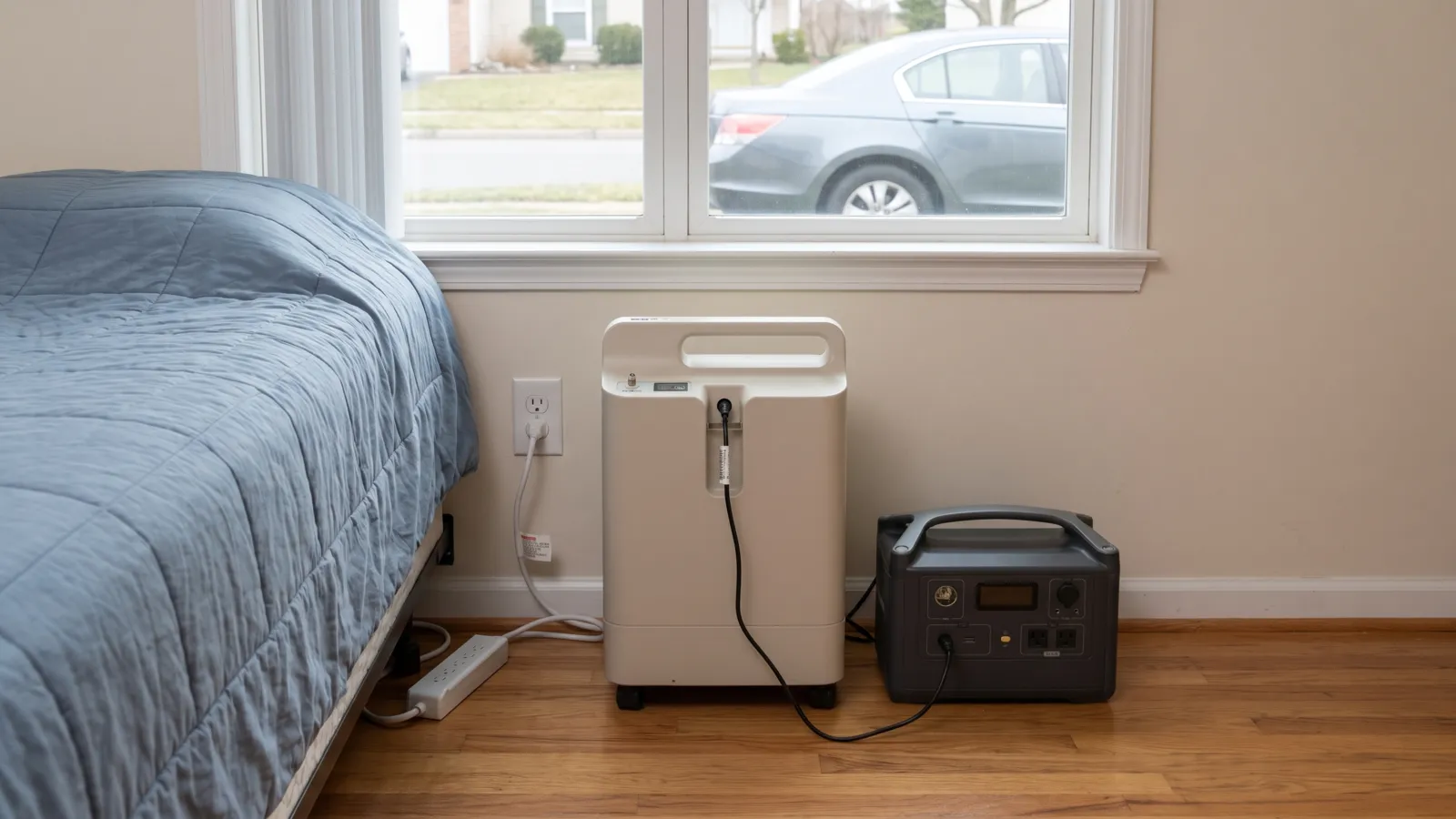
- Talk to your doctor or medical provider now about a power outage plan for electric medical devices and refrigerated medicines.
- Ask your device maker how long its backup lasts, whether it can use another power source, and how to switch from battery to electric power.
- Ask your power provider to put you on a list for priority power restoration, and ask local emergency management about registries.
- Power out a day or more: discard refrigerated medicine unless the label says otherwise. If a life depends on it, use it only until replaced.
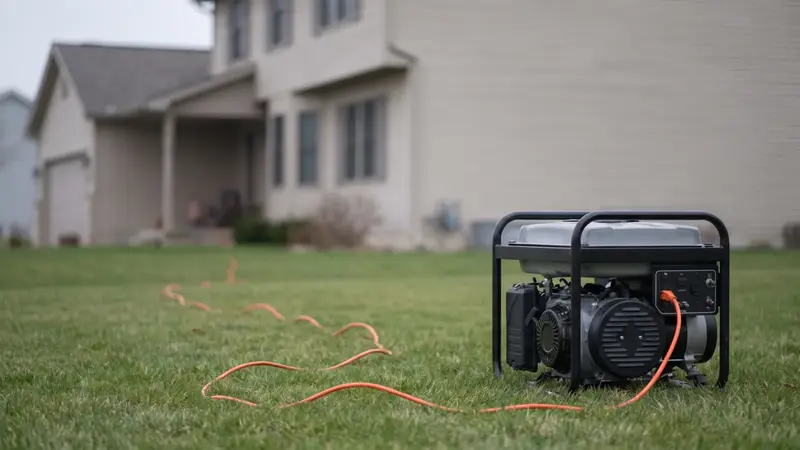
- Run a generator only outdoors and at least 20 feet from windows, doors and attached garages.
Start with your doctor or care team
Ready.gov says a power outage may prevent use of medical devices. It tells you to talk to your medical provider about a power outage plan for medical devices powered by electricity and refrigerated medicines. Find out how long your medication can be stored at higher temperatures, and get specific guidance for any medications that are critical for life.
The CDC tells clinicians to help patients plan how they will manage medications that require refrigeration, like insulin, or medical devices that require electricity, like nebulizer machines, ventilators and oxygen concentrators. Ready.gov says to ask your doctor or health care provider what you may be able to do to keep powered equipment running. This guide is not medical advice: your device instructions and your doctor's plan come first.
Ready.gov also says to take an inventory of the items you need that rely on electricity. Our power outage checklist covers the rest of the household.
Questions to ask about your device
The FDA publishes a booklet called Home Use Devices: How to Prepare for and Handle Power Outages for Medical Devices that Require Electricity. It asks you to gather answers from your device manufacturer or medical provider and write them down. Its questions include these:
If you use more than one medical device, the FDA says to complete a booklet for each device and ask your healthcare professional to help you. It also says to update the booklet as your treatment, doctors, caregivers or personal contacts change.
- Does my device have a back-up system, and how long will it operate?
- Can my device operate on another power source, and what type?
- Could I be harmed if my device stops for a short period of time, and if so, how long?
- How long can my device work without power?
- What happens if I lose power in the middle of a treatment?
- Do I need extra medical supplies that would last for a minimum of 3 days?
- Can my device use batteries, how many does it take, and how long will it last on battery power?
- How do I switch from battery to electric power?
- Does my device or do my supplies have to be kept at a certain temperature?
Backup power: what to plan and how long it lasts
Ready.gov says to take an inventory of the items you need that rely on electricity, then plan for batteries and other alternative power sources to meet your needs when the power goes out. If you use a power wheelchair or other battery-operated medical or assistive technology device, it says to purchase an extra battery and keep extra batteries charged at all times. The official pages we reviewed do not give a runtime: the FDA booklet has you get that answer from your device manufacturer or medical provider.
The FDA booklet has a blank for each of these: what type of batteries your device uses, how many it takes, how long the device will last on battery power, and how to switch from battery to electric power. It also asks whether you have a functioning flashlight with an extra supply of batteries. Whether a portable power station or power bank suits your device is a question for your manufacturer: the FDA asks "Can my device operate on another power source? If yes, what type?"
If you use a generator, Ready.gov says generators and fuel should always be used outdoors and at least 20 feet away from windows, doors and attached garages. The CDC says to use a battery-powered or battery backup CO detector in your home when running one. See our generator safety guide and our carbon monoxide alarm comparison.
Tell your utility and local emergency managers
Ready.gov says you can ask your power provider to put you on a list for priority power restoration. It also says to ask your local energy utility for priority access in the event of power loss, because power restoration is life-sustaining for someone in the home. The FDA booklet says to notify your local power company, local fire department, family and friends, and health care providers when power is lost and restored.
Ready.gov adds that many city and county emergency management agencies maintain voluntary registries for people with disabilities to self-identify in order to receive targeted assistance during emergencies and disasters. Contact your local emergency management office to find out more.
The HHS emPOWER Program is a partnership between HHS's Administration for Strategic Preparedness and Response and the Centers for Medicare and Medicaid Services. It provides data, mapping and artificial intelligence tools to help communities protect at-risk Medicare beneficiaries, including people who rely on electricity-dependent medical and assistive equipment. Its data come from Medicare claims, and the program pages we reviewed describe tools used by public health authorities and their partners, plus a public map, not a household sign-up. Your utility and local emergency management office are where to ask.
Refrigerated medicines and insulin
The CDC says some drugs require refrigeration to keep their strength, including many liquid drugs. When the power is out for a day or more, it says to throw away any medication that should be refrigerated, unless the drug's label says otherwise. Ready.gov gives a similar rule for power that is out more than a day, and says to consult your doctor or pharmacist immediately for a new supply.
The CDC adds that if a life depends on the refrigerated drug, but the medications have been at room temperature, use them only until a new supply is available. Replace all refrigerated drugs as soon as possible. Talk to your doctor or pharmacist about an emergency supply, and keep a cooler and chemical ice packs to chill medicines that need to be refrigerated. Our cooler comparison covers the options.
For insulin, the FDA says product labels recommend storing it in a refrigerator at approximately 36°F to 46°F. Insulin in vials or cartridges supplied by the manufacturers, opened or unopened, may be left unrefrigerated at a temperature between 59°F and 86°F for up to 28 days and continue to work, but insulin that has been diluted or removed from the manufacturer's original vial should be thrown away within two weeks. Try to keep insulin as cool as possible and away from direct heat and sunlight, and if you use ice, avoid freezing it, because the FDA says not to use insulin that has been frozen. Once you have access to properly stored insulin, the FDA says to throw away any vials that were exposed to extreme temperatures and replace them as soon as possible, and to always follow your doctor's instructions when possible.
What to keep in your plan and kit
The FDA booklet suggests a personal emergency file with the instructions and manuals for your device, medical records, insurance cards, your plan of treatment, and contact information for your health care providers, pharmacy, family, friends and medical transportation services. Ready.gov's advice for people with disabilities includes the items below.
Ready.gov also says to create a support network of people who can help you in a disaster, and to inform them where you keep your emergency supplies. If you are on dialysis or other life-sustaining medical treatment, know the location and availability of more than one facility that can help you. Our first aid kit comparison and family emergency plan guide can help with the rest.
- Several days supply of prescription medicines
- A list of all medications, dosage and any allergies
- A list of the style and serial number of medical devices, with special operating instructions
- A backup supply of oxygen
- Copies of insurance and Medicare cards
- A medical alert tag or bracelet
Stay or go, and checks when power returns
The Red Cross says to plan how and when you will evacuate safely to maintain needs such as power-dependent medical devices, and to keep your car gas tank at least half full. During an outage, it says to evacuate if your home is too hot or too cold, or if you have medical devices that need power. It adds that communities often provide warming or cooling centers and power charging stations.
The FDA booklet lists things not to do when the power goes out: perform an action to the device that you are not sure of, assume your device is working correctly, leave home without your device, or forget your power outage booklet. After power returns, it says to check your device and not to use it if you find signs of damage, including power cords, or incorrect device settings.
Ready.gov says to use a generator only outdoors and away from windows. The CDC says never to use a generator, pressure washer or any gasoline-powered engine inside your home, basement or garage, or less than 20 feet from any window, door or vent. If you cannot keep a device running safely, call 911 for a medical emergency and follow the plan you made with your doctor.
Common questions
What should I do if I rely on an electric medical device and the power goes out?
Use the plan you made with your doctor and device supplier. The FDA booklet says to notify your local power company, fire department, family and friends, and health care providers when power is lost, and the Red Cross says to evacuate if you have medical devices that need power.
How do I get on a priority list with my utility?
Ready.gov says you can ask your power provider to put you on a list for priority power restoration. It also suggests asking your local energy utility for priority access, because power restoration is life-sustaining for someone in the home.
How long can insulin stay out of the refrigerator?
The FDA says insulin in vials or cartridges supplied by the manufacturers may be left unrefrigerated at 59°F to 86°F for up to 28 days and continue to work. Insulin that has been diluted or removed from the original vial should be thrown away within two weeks. It says not to use insulin that has been frozen.
Should I throw out refrigerated medicine after a power outage?
The CDC says to throw away refrigerated medication when the power is out for a day or more, unless the drug's label says otherwise. If a life depends on the drug and it has been at room temperature, it says to use it only until a new supply is available.
Can I run a generator to keep my medical device on?
Ready.gov says generators and fuel should always be used outdoors and at least 20 feet away from windows, doors and attached garages. Ask your manufacturer whether your device can operate on another power source, and what type.
What is the HHS emPOWER Program?
It is a partnership between HHS's Administration for Strategic Preparedness and Response and the Centers for Medicare and Medicaid Services. It provides data, mapping and AI tools to help communities protect at-risk Medicare beneficiaries, including people who rely on electricity-dependent medical and assistive equipment. The program pages describe data and tools for public health authorities and communities, not a household sign-up, so ask your utility and local emergency management office.
Sources (10)
- Ready.gov: Power Outages
- Ready.gov: People with Disabilities
- FDA: Home Use Devices: How to Prepare for and Handle Power Outages
- FDA: Information Regarding Insulin Storage in an Emergency
- CDC: What to Do to Protect Yourself During a Power Outage
- CDC: Heat and Medications, Guidance for Clinicians
- CDC: Prescriptions (Prepare Your Health)
- American Red Cross: Power Outage Safety
- HHS emPOWER Program
- HHS emPOWER Program: Frequently Asked Questions
Get one calm email when it matters
Seasonal checklists and gear price drops. No spam, unsubscribe any time.
Keep reading
 Power outage checklist: what to do before, during and afterA calm power outage checklist from Ready.gov and CDC: what to prepare, how to protect food, medicines and medi…
 Portable generator safety: where to run it, carbon monoxide and cordsHow to use a portable generator safely in an outage: 20 feet from windows, never in a garage, CO alarms, outdo…
 Food safety in a power outage: how long food lasts and what to throw outHow long food stays safe in the fridge and freezer without power, what to throw out, and when you can refreeze…
 Extreme heat safety: heat exhaustion vs heat stroke and how to stay cool in a power outageHeat exhaustion vs heat stroke signs and what to do, why a fan is not enough when it is very hot, heat alert t…