Tornado preparedness: watch vs warning, where to shelter and what to do after
Tornado watch vs warning, where to shelter in a house, apartment, mobile home or car, how to get NOAA Weather Radio and WEA alerts, and what to do afterward.
By PreparedStates editors · Updated October 22, 2026 · Sourced to the National Weather Service, Storm Prediction Center, Ready.gov and FEMA
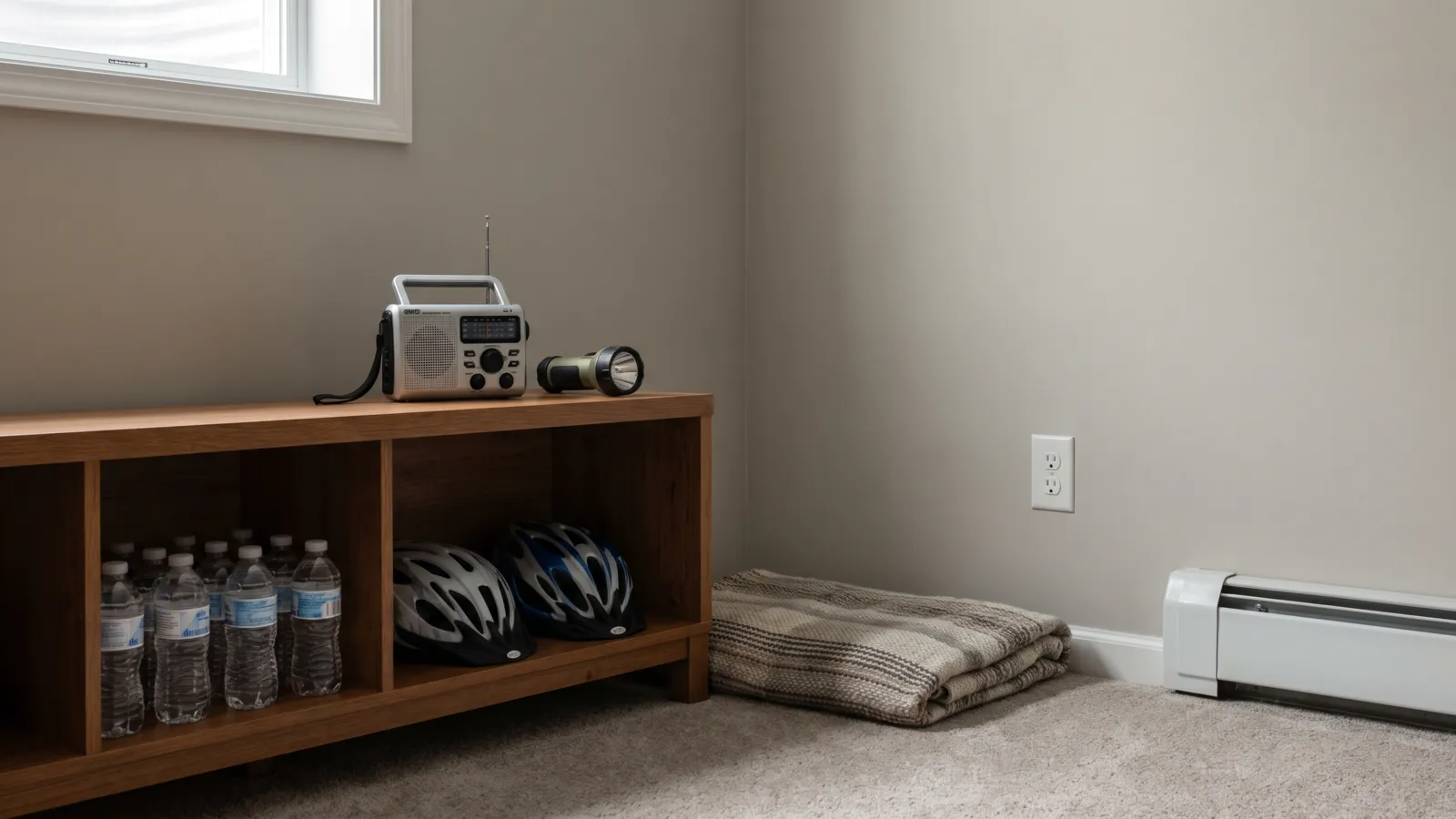
- A tornado watch means be prepared: tornadoes are possible. A warning means take action: one has been sighted or indicated by radar.
- In a house or apartment with no basement, go to the lowest floor, in a small center room or interior hallway with no windows.
- Get out of a mobile home. Most tornadoes can destroy even tied-down mobile homes, so move to the closest substantial shelter.
- There is no safe option in a car. Drive to the closest shelter if you can, and avoid sheltering under a bridge.
- Get alerts on your phone: Wireless Emergency Alerts need no signup and are free. NOAA Weather Radio needs a special receiver or scanner.
Tornado watch vs tornado warning
A tornado watch means be prepared: tornadoes are possible in and near the watch area. The Storm Prediction Center (SPC) issues watches, and describes one as a cluster of counties where tornadoes and other kinds of severe weather are possible in the next several hours. The National Weather Service says the watch area is typically large, covering numerous counties or even states.
A tornado warning means take action: a tornado has been sighted or indicated by weather radar, and there is imminent danger to life and property. Warnings are issued by your local forecast office. They typically cover a much smaller area, around the size of a city or small county.
In a watch, the National Weather Service says to review and discuss your emergency plans, take inventory of your supplies and check your safe room. Be ready to act quickly if a warning is issued or you suspect a tornado is approaching. In a warning, move to an interior room on the lowest floor of a sturdy building and avoid windows.
Know the signs and make a plan
Ready.gov says to know your area's tornado risk and the signs of a tornado, including a rotating, funnel-shaped cloud, an approaching cloud of debris, or a loud roar like a freight train. The National Weather Service adds that tornadoes can occur at any time of day or night and at any time of the year.
Identify and practice going to a safe shelter, such as a safe room built using FEMA criteria or a storm shelter built to ICC 500 standards. Include your pets in your family's emergency plan, and gather supplies for a long-term stay at home. Our emergency kit checklist covers what to stock.
Get alerts: NOAA Weather Radio and Wireless Emergency Alerts
Ready.gov says to sign up for your community's warning system, and notes that the Emergency Alert System (EAS) and NOAA Weather Radio also provide emergency alerts. If your community has sirens, become familiar with the warning tone.
NOAA Weather Radio All Hazards is a nationwide network of radio stations broadcasting continuous weather information. It requires a special radio receiver or scanner capable of picking up the signal. Our weather radio comparison covers receivers.
Wireless Emergency Alerts (WEA) are short emergency messages sent to your phone. The National Weather Service says no signup is required, and FEMA says WEA messages are free and do not count towards texting limits on your wireless plan. Tornado warnings are among the warnings sent this way.
Where to shelter in a house or apartment
The best protection is a safe room built using FEMA criteria or a storm shelter built to ICC 500 standards. Ready.gov says the next best protection is a small, interior, windowless room or basement on the lowest level of a sturdy building. The National Weather Service says to go to your basement, safe room, or an interior room away from windows, and not to forget pets if time allows.
If your house has a basement, the SPC says to get in the basement and under some kind of sturdy protection, such as a heavy table or work bench, or cover yourself with a mattress or sleeping bag. Do not shelter under spots where very heavy objects such as pianos or refrigerators rest on the floor above. If you have no basement, or you live in a dorm or an apartment, it says to go to the lowest floor, to a small center room like a bathroom or closet, under a stairwell, or to an interior hallway with no windows. Crouch as low as possible to the floor, facing down, and cover your head with your hands.
Stay away from windows, doors and outside walls, and use your arms to protect your head and neck. Ready.gov also says to put materials such as furniture and blankets around or on top of you.
Mobile homes
The SPC's advice for a mobile or manufactured home is to get out. Even if your home is tied down, it is not as safe as an underground shelter or a permanent, sturdy building, and the SPC says most tornadoes can destroy even tied-down mobile homes. The National Weather Service lists a mobile home, along with a tent, among places that are not safe to shelter.
During a tornado warning, the National Weather Service says that if you are in a mobile home, a vehicle or outdoors, you should move to the closest substantial shelter and protect yourself from flying debris. The SPC says to go to a shelter or a nearby permanent structure using your tornado evacuation plan, and that your plan could include staying with someone who is in a sturdy permanent structure if a tornado threat is forecast.
In a car, outdoors, at school or at work
Ready.gov says there is no safe option when caught in a tornado in a car, just slightly less dangerous ones. The National Weather Service says the best course of action is to drive to the closest shelter. If the tornado is visible, far away and traffic is light, Ready.gov and the SPC say you may be able to drive out of its path by moving at right angles to the tornado. In a tornado emergency, which is the National Weather Service's highest alert level, it says not to try to outrun an approaching tornado in a vehicle, and to shelter in place.
If you are caught by extreme winds or flying debris, park the car as quickly and safely as possible, out of the traffic lanes. Stay in the car with the seat belt on, put your head down below the windows, and cover your head with your hands and a blanket, coat or other cushion if possible. If you can safely get noticeably lower than the roadway, Ready.gov says to leave your car and lie in that area, covering your head with your hands. The National Weather Service names a ditch or ravine as an option if you cannot reach a safe shelter.
Avoid seeking shelter under bridges, which can create deadly traffic hazards while offering little protection against flying debris. If you are outside, get into a sturdy building immediately if a tornado is approaching, because sheds and storage facilities are not safe. If you cannot, the SPC says to lie flat and face-down on low ground, protect the back of your head with your arms, and get as far away from trees and cars as you can. At school or work, follow your tornado drill and stay away from windows and large open rooms such as cafeterias, gymnasiums or auditoriums.
After the tornado
Keep listening to local news or a NOAA Weather Radio, because multiple rounds of thunderstorms capable of producing tornadoes are possible during severe weather outbreaks. Let your family and close friends know you are okay. The National Weather Service says text messages or social media are more reliable than phone calls, and Ready.gov says to save your calls for emergencies.
Once the threat has ended, check to see if your property has been damaged. When walking through storm damage, wear long pants, a long-sleeved shirt and sturdy shoes. Ready.gov also lists thick-soled shoes and work gloves for cleanup, and appropriate face coverings or masks if you are cleaning mold or other debris. Stay out of damaged buildings.
Stay clear of fallen power lines or broken utility lines, and contact local authorities if you see power lines down. Contact your healthcare provider if you are sick and need medical attention. If you come across injured people and you are properly trained, provide first aid until emergency response teams arrive, ideally with a stocked first aid kit. Also be aware of insurance scammers if your property has been damaged.
The Storm Prediction Center says opening the windows is absolutely useless, a waste of precious time, and can be very dangerous. Ready.gov says to avoid seeking shelter under bridges, which can create deadly traffic hazards while offering little protection against flying debris.
Common questions
What is the difference between a tornado watch and a tornado warning?
A watch means tornadoes are possible in and near the watch area, so be prepared. A warning means a tornado has been sighted or indicated by weather radar, so take action immediately.
Where should I go during a tornado if I live in an apartment?
The SPC says to go to the lowest floor, to a small center room like a bathroom or closet, under a stairwell, or to an interior hallway with no windows. Crouch low, facing down, and cover your head with your hands.
Is a mobile home safe during a tornado?
No. The SPC says to get out: even a tied-down mobile home is not as safe as an underground shelter or a permanent, sturdy building, and most tornadoes can destroy one. Move to the closest substantial shelter.
Should I open the windows during a tornado?
No. The SPC says opening the windows is absolutely useless, a waste of precious time, and can be very dangerous.
Do I have to sign up for Wireless Emergency Alerts?
No. The National Weather Service says no signup is required, and FEMA says the messages are free and do not count towards your texting limits.
What should I do if a tornado catches me in my car?
There is no safe option in a car. Drive to the closest shelter if you can. If not, the National Weather Service says to get down in your car and cover your head, or leave the car and shelter in a low-lying area such as a ditch or ravine.
Sources (10)
- Ready.gov: Tornadoes
- National Weather Service: Tornado safety
- National Weather Service: Tornado watch vs warning
- National Weather Service: During a tornado
- National Weather Service: After a tornado
- National Weather Service: NOAA Weather Radio All Hazards
- National Weather Service: Wireless Emergency Alerts
- FEMA: Wireless Emergency Alerts
- Storm Prediction Center: Tornado FAQ
- Storm Prediction Center: About the SPC
Get one calm email when it matters
Seasonal checklists and gear price drops. No spam, unsubscribe any time.
Keep reading
 Emergency kit checklist: what to include, how much to keep and where to store itA plain-English emergency kit checklist built on Ready.gov's basic kit and extra items, with how many days of …
 Power outage checklist: what to do before, during and afterA calm power outage checklist from Ready.gov and CDC: what to prepare, how to protect food, medicines and medi…
 Go-bag checklist: what to pack in case you have to evacuateWhat to pack in a go-bag: documents, medications, cash, chargers, per-person items, kids and pets, and how it …
 Hurricane preparedness checklist: what to do before, during and after a stormHurricane season dates, watch vs warning, how to find your evacuation zone, storm surge, supplies, and what to…