Earthquake preparedness: Drop, Cover and Hold On, and what to do after
What to do in an earthquake: Drop, Cover and Hold On, how to secure heavy items, what to do indoors, outdoors or driving, plus gas leaks and aftershocks.
By PreparedStates editors · Updated October 22, 2026 · Sourced to Ready.gov, the CDC and the American Red Cross
- Drop onto your hands and knees, cover your head and neck, and hold on until the shaking stops.
- Indoors, stay put, avoid doorways and do not run outside. Outdoors, move to an open area away from buildings and power lines.
- In a car, pull over, stop and set your parking brake. In bed, turn face down and cover your head and neck with a pillow.
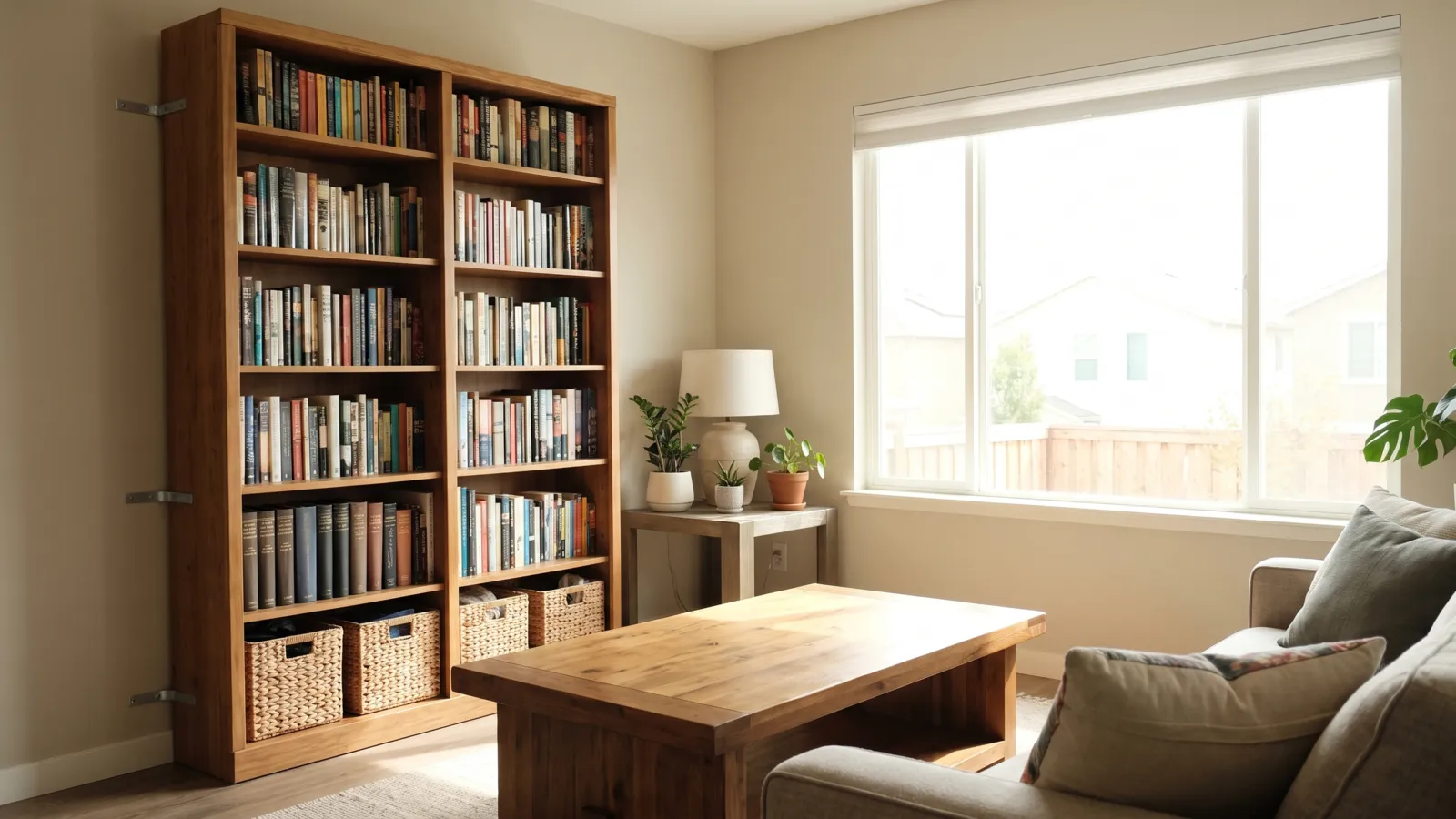
- Secure bookcases, refrigerators, water heaters, televisions and wall hangings, and keep heavy objects on low shelves.
- Afterward, expect aftershocks. If you smell gas, leave, call emergency authorities and avoid anything that could cause a spark.
Drop, Cover and Hold On
If an earthquake happens, Ready.gov says to protect yourself right away. Drop where you are onto your hands and knees. Cover your head and neck with one arm and hand. Hold until the shaking stops.
If a sturdy table or desk is nearby, crawl underneath it and hold on with one hand, ready to move with it. If not, crawl next to an interior wall, away from windows, and hold your head and neck with both arms and hands.
Ready.gov also says to practice how to protect yourself during earthquakes, with family and coworkers.
Indoors, in bed, outdoors or driving
If you are inside, stay and do not run outside, and avoid doorways. If you are in bed, turn face down and cover your head and neck with a pillow.
If you are outside, stay there. Move to an open area away from buildings, trees, streetlights and power lines, then drop and cover until the shaking stops. If you are in a car, pull over and stop, and set your parking brake. The Red Cross adds that you should stay in your vehicle and avoid stopping near buildings, trees, overpasses and utility wires.
Ready.gov has guidance for mobility aids too. If you use a cane, drop, cover and hold on, or sit on a chair or bed and cover your head and neck with both hands. If you use a walker or wheelchair, lock your wheels if applicable. If you use a walker, carefully get as low as possible. Then bend over, cover your head and neck with your arms, a book or a pillow, and hold on until the shaking stops.
Secure heavy items before the shaking
Ready.gov says to secure heavy items in your home like bookcases, refrigerators, water heaters, televisions and objects that hang on walls. Store heavy and breakable objects on low shelves.
It also suggests you consider improvements to your building to fix structural issues that could cause collapse. Consider an earthquake insurance policy too, because standard homeowner's policies do not cover earthquake damage.
Make a family emergency communications plan that has an out-of-state contact, and plan a meeting place in case you get separated. Our emergency kit checklist covers the supplies, and Ready.gov notes that being prepared allows you to avoid unnecessary trips and address minor medical issues at home. You can also sign up for earthquake alerts to be notified before an earthquake happens.
- Secure bookcases, refrigerators, water heaters, televisions and wall hangings
- Keep heavy and breakable objects on low shelves
- Agree on a meeting place and an out-of-state contact
- Pack food and water for several days, a flashlight, a fire extinguisher and a whistle
- Sign up for earthquake alerts
- Practice Drop, Cover and Hold On with family and coworkers
Right after the shaking
Expect aftershocks to follow the main shock of an earthquake. If you feel one, drop, cover and hold on again.
If you are in a damaged building, go outside and quickly move away from the building, and do not enter damaged buildings. Check yourself to see if you are hurt, and help others if you have training. If you are sick or injured, contact your healthcare provider, and for a medical emergency call 9-1-1.
If you are trapped, send a text or bang on a pipe or wall, and use a whistle instead of shouting. Cover your mouth with your shirt. If you are in an area that may experience tsunamis, go inland or to higher ground immediately after the shaking stops. Avoid floodwater, which can contain chemicals, sewage and debris.
Gas leaks and other hazards
Ready.gov lists damage to the building, leaking gas and water lines, and downed power lines as serious hazards after an earthquake. Ready.gov says natural gas leaks and explosions cause a significant number of fires after disasters.
If you smell gas or suspect a leak, the CDC says to leave your house or building and contact emergency authorities right away. Don't turn on the lights, light matches, smoke, or do anything that can cause a spark. Ready.gov adds that if you smell gas or hear a blowing or hissing noise, you should open a window and get everyone out quickly.
Ready.gov says to turn off the gas using the outside main valve if you can, and call the gas company from a neighbor's home. If you turn off the gas for any reason, only a qualified professional can turn it back on, so never try to do it yourself. Don't return to the building until you are told it is safe.
Learn your gas, electric and water shut-offs
Gas shut-off steps differ by meter, so Ready.gov says to call your gas company. Make sure everyone in your household knows the proper shut-off procedure for your meter, and do not actually turn off the gas when you practice.
Electrical sparks can ignite leaking gas, so Ready.gov also says to teach all responsible household members how to shut off the electricity. For your safety, always shut off all the individual circuits before shutting off the main circuit.
Water matters too. Ready.gov says it is important that everyone in your household learn how to shut off the main water valve to the house. Cracked lines may pollute the water supply to your house, so it is a good idea to shut off your water until authorities say it is safe to drink.
If the power is out afterward
Downed power lines are one of the hazards after an earthquake. If you reach for a generator, the CDC says never to use generators, pressure washers, or other gasoline, propane, natural gas, or charcoal-burning devices inside your home, basement, garage or camper, or even outside near an open window, door or vent. Carbon monoxide can build up indoors and poison the people and animals inside. Ready.gov describes it as a colorless, odorless gas that can kill you, your family and pets.
Ready.gov says generators and fuel should always be used outdoors and at least 20 feet away from windows, doors and attached garages. It also says to install carbon monoxide detectors with battery backup in central locations on every level of your home. Our generator safety guide goes further.
Staying informed and cleaning up
Once you are safe, pay attention to local news reports for emergency information through a battery-operated radio, TV, social media or cell text alerts. A hand-crank or weather radio can be one of those sources. Use texts or social media to tell others you are safe, since texts may be more reliable than calls and save battery.
Be careful when cleaning up. Wear protective clothing, including a long-sleeved shirt, long pants, work gloves and sturdy thick-soled shoes. Don't remove heavy debris by yourself, use an appropriate mask if cleaning mold or other debris, and keep children out of cleanup work. People with asthma and other lung conditions or immune suppression should not enter buildings with indoor water leaks or mold growth that can be seen or smelled.
If you are inside, Ready.gov says to stay and not run outside, and to avoid doorways. Drop, cover and hold on where you are: under a sturdy table or desk if one is close, or next to an interior wall away from windows.
Common questions
What does Drop, Cover and Hold On mean?
Drop onto your hands and knees, cover your head and neck with an arm and hand (under a sturdy table or desk if one is nearby), and hold on until the shaking stops.
Should I stand in a doorway during an earthquake?
No. Ready.gov says to stay where you are inside, not run outside, and avoid doorways.
What should I do if an earthquake hits while I am in bed?
Ready.gov says to turn face down and cover your head and neck with a pillow.
What should I do if I am driving in an earthquake?
Ready.gov says to pull over and stop, and to set your parking brake. The Red Cross says to stay in your vehicle and avoid stopping near buildings, trees, overpasses and utility wires.
What do I do if I smell gas after an earthquake?
Leave the building and contact emergency authorities right away. Do not turn on lights, light matches or do anything else that can cause a spark.
Does homeowners insurance cover earthquake damage?
Ready.gov says standard homeowner's policies do not cover earthquake damage, so it suggests you consider a separate earthquake insurance policy.
Get one calm email when it matters
Seasonal checklists and gear price drops. No spam, unsubscribe any time.
Keep reading
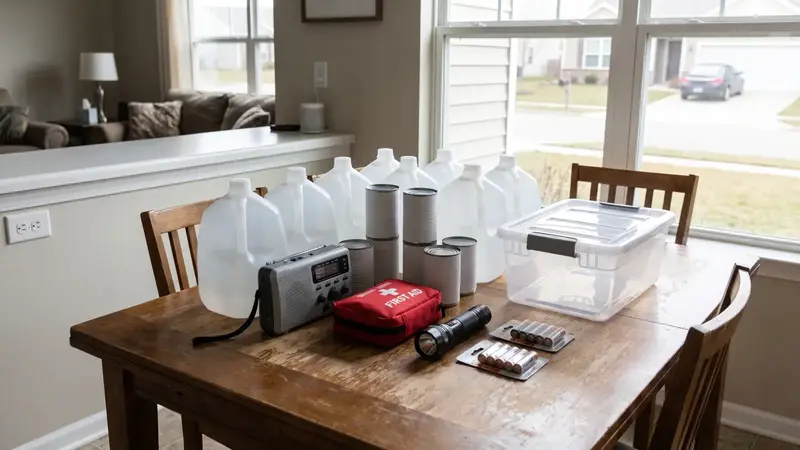 Emergency kit checklist: what to include, how much to keep and where to store itA plain-English emergency kit checklist built on Ready.gov's basic kit and extra items, with how many days of …
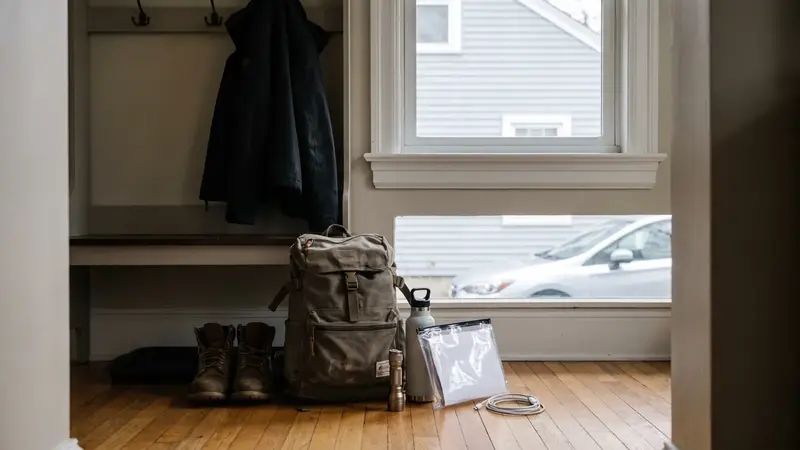 Go-bag checklist: what to pack in case you have to evacuateWhat to pack in a go-bag: documents, medications, cash, chargers, per-person items, kids and pets, and how it …
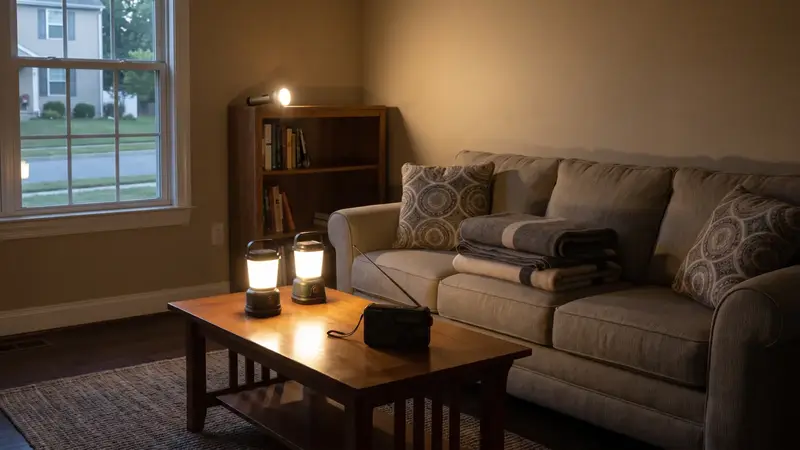 Power outage checklist: what to do before, during and afterA calm power outage checklist from Ready.gov and CDC: what to prepare, how to protect food, medicines and medi…
 How much water to store for an emergency: per person, per pet and for how longHow much water to store for an emergency: 1 gallon per person per day, pets, which containers to use, when to …