How to shut off gas, water and electricity in an emergency
Where your gas, water and electric shutoffs are, when to use them, when not to shut off gas, and why only a professional turns the gas back on.
By PreparedStates editors · Updated October 22, 2026 · Sourced to Ready.gov, FEMA and CDC
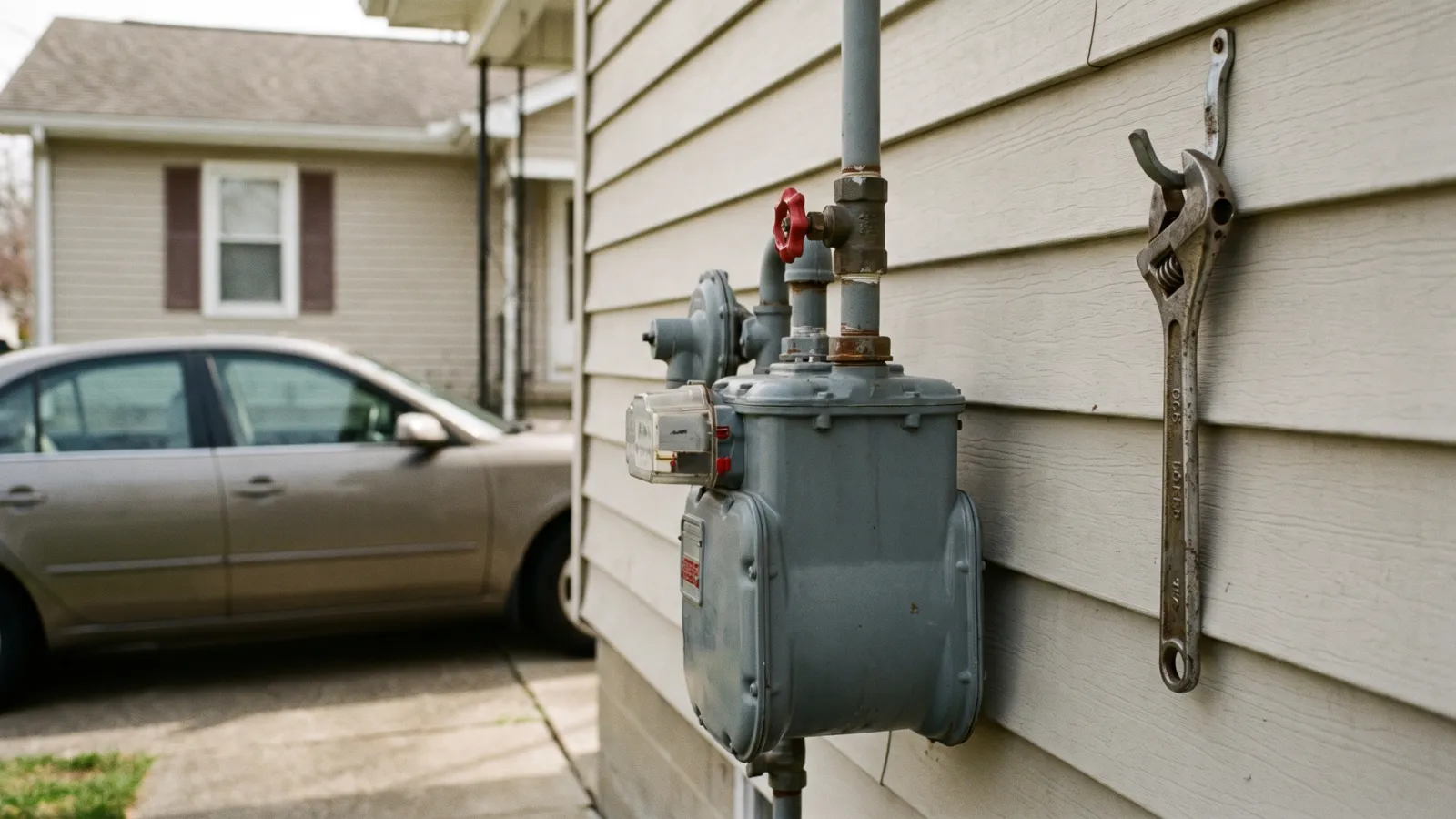
- Find your gas, water and electric shutoffs now, tag them, and make sure everyone in your household knows where they are.
- Smell gas or hear hissing? Get everyone out, shut the outside main valve if you can, and call the gas company from a neighbor's home.
- Only a qualified professional can turn gas back on. Never try it yourself.
- Shut off the main water valve if lines may be cracked. Turn off electricity only if it is safe, never while standing in water.
- Keep a wrench or pliers in your kit, and practice finding the valves without actually turning off the gas.
Know your shutoffs before you need them
Ready.gov says natural gas leaks and explosions cause a significant number of fires after disasters, so all household members should know how to shut off natural gas. FEMA's earthquake guide asks you to identify the locations of your electrical panel and your water and gas shut-off valves, learn how to shut off each utility, and make sure all family members are trained. Ready.gov also says everyone should learn how to shut off the main water valve and the electricity.
Keep the tools handy. Ready.gov's basic emergency kit list includes a wrench or pliers to turn off utilities. FEMA advises keeping a gas shut-off wrench readily available, preferably near the shut-off valve.
Natural gas: when to shut it off
Ready.gov says that if you smell gas or hear a blowing or hissing noise, you should open a window and get everyone out quickly. Turn off the gas using the outside main valve if you can, and call the gas company from a neighbor's home. FEMA adds that a rapidly spinning gas meter is also a direct indication of a gas leak.
Meters differ. Ready.gov says there are different gas shut-off procedures for different gas meter configurations, so call your gas company to learn yours. As one example, FEMA's earthquake guide says to turn the valve clockwise from vertical, aligned with the piping, to horizontal, perpendicular to the piping.
FEMA says not to use matches, lighters, candles, camp stoves, barbecues, electrical equipment (including telephones) or appliances until you are sure there are no gas leaks. They may create sparks that could ignite leaking gas and cause an explosion and fire. Ready.gov makes the same point about electricity: electrical sparks can ignite natural gas if it is leaking.
Natural gas: when not to shut it off
Do not shut gas off just to practice. Ready.gov says to make sure everyone knows the proper shut-off procedure for your meter, but not to actually turn off the gas when practicing. FEMA's earthquake guide says to turn the gas off only if you smell or hear leaking gas or see the meter turning quickly.
The reason is that you cannot turn it back on. Ready.gov says that if you turn off the gas for any reason, only a qualified professional can turn it back on, and never to attempt it yourself. FEMA says you will have to wait for the local utility to turn the gas back on and relight the gas appliances in your home, so shut off the gas only if necessary. After a fire, Ready.gov also says not to try to reconnect utilities yourself.
Water: find and tag the main valve
Ready.gov says to find the shut-off valve for the main water line that enters your house and tag it for easy identification. Check that it closes completely: Ready.gov warns that a valve may be rusted open or may not close all the way, and says to replace it if so. FEMA's earthquake guide shows turning the valve clockwise to shut off water to the home at the main water valve or the water meter.
Ready.gov gives two reasons to shut it. Cracked lines may pollute the water supply to your house, so it is a good idea to shut off your water until authorities say it is safe to drink. And the effects of gravity may drain the water in your hot water heater and toilet tanks unless you trap it in your house by shutting off the main house valve. The main house valve is not the street valve in the cement box at the curb, which Ready.gov says is extremely difficult to turn and requires a special tool.
If you shut the water off, your stored water becomes your supply. See our guide on how much water to store.
Electricity: breakers first, then the main
Ready.gov says to locate your electrical circuit box and, for your safety, always shut off all the individual circuits before shutting off the main circuit. FEMA's earthquake guide gives the same order: when time permits, turn off individual breakers or fuses first, then the main breaker or fuse. When there is an immediate hazard, FEMA says to go directly to the main.
FEMA says that if you suspect electrical wiring damage or observe sparking, turn off power to your home at the main breaker panel by switching the main breaker to off. CDC says that if you see frayed wiring or sparks when power is restored, or smell something burning but see no visible fire, you should immediately shut off the electrical system at the main circuit breaker.
In an outage, Ready.gov says to disconnect appliances and electronics to avoid damage from electrical surges. If you use a generator, CDC says not to connect it to your home's electrical circuits without the approved, automatic-interrupt devices. A generator that is on line when service is restored can become a major fire hazard and may endanger line workers, so read our generator safety guide.
Floods, storms and evacuations
Water and electricity do not mix. Ready.gov says not to touch electrical equipment if it is wet or if you are standing in water, and to turn off the electricity to prevent electric shock if it is safe to do so. CDC says to turn off the power at the main breaker or fuse on the service panel if circuits and equipment are wet or in or near water. It adds not to enter standing water to reach the main power switch, and to call an electrician to turn it off.
CDC says to turn off gas, power and water when power lines are down, water is in your home, or before you evacuate, and to do so if you have time when ordered to evacuate. Ready.gov's evacuation page is more specific: if there is damage to your home and you are instructed to do so, shut off water, gas and electricity before leaving. It also says to leave freezers and refrigerators plugged in unless there is a risk of flooding.
Afterward, CDC says never to turn power on or off yourself, or use an electric tool or appliance, while standing in water. Do not turn the power back on until a qualified electrician has inspected the equipment, and keep appliances out of service until they are completely dry. See our flood preparedness guide.
A quick plan for your household
Do these now, while nothing is wrong. Practice finding each shutoff, but do not turn the gas off. Add the steps to your family emergency plan.
- Call your gas company and ask how to shut off gas at your meter
- Find and tag the main water valve, and check that it closes completely
- Locate the electrical panel and learn the order: individual breakers, then the main
- Put a wrench or pliers in your emergency kit, and keep a gas shut-off wrench near the gas valve
- Show every responsible household member where each shutoff is
- Save your gas company's number so you can call from a neighbor's home if you smell gas
Once gas is off, only a qualified professional can turn it back on, and Ready.gov says never to try it yourself. The reasons official pages give for shutting it off are a gas smell or a blowing or hissing noise (Ready.gov), a meter turning quickly (FEMA), and, in a flood, water in your home, downed power lines or an evacuation (CDC). Ready.gov says not to actually turn off the gas when practicing.
Common questions
Should I shut off my gas during a power outage?
The Ready.gov and CDC power outage pages we read do not list it as a step. Ready.gov says to get everyone out and turn it off at the outside main valve, if you can, when you smell gas or hear a blowing or hissing noise. FEMA's earthquake guide says to turn it off only if you smell or hear leaking gas or see the meter turning quickly.
Can I turn my gas back on myself?
No. Ready.gov says only a qualified professional can turn gas back on, and never to attempt it yourself.
Do I turn off the individual breakers or the main breaker first?
Ready.gov says to shut off all the individual circuits before the main circuit. FEMA gives the same order when time permits, and says to go straight to the main when there is an immediate hazard.
What if my breaker box is in a flooded area?
CDC says not to enter standing water to reach the main power switch. Call an electrician to turn it off.
Where is my main water shut-off valve?
Ready.gov says to find the valve for the main water line that enters your house and tag it. It is not the street valve in the curb box, which needs a special tool and is extremely difficult to turn.
What tool do I need to shut off utilities?
Ready.gov's kit list includes a wrench or pliers to turn off utilities. FEMA says to keep a gas shut-off wrench readily available, preferably near the shut-off valve.
Get one calm email when it matters
Seasonal checklists and gear price drops. No spam, unsubscribe any time.
Keep reading
 Earthquake preparedness: Drop, Cover and Hold On, and what to do afterWhat to do in an earthquake: Drop, Cover and Hold On, how to secure heavy items, what to do indoors, outdoors …
 Flood preparedness: flood watch vs warning, what to do and how flood insurance worksFlood watch vs warning, how little moving water can sweep a car away, the 30-day flood insurance wait, and wha…
 How to make a family emergency plan: steps, questions and a communication planHow to make a family emergency plan: Ready.gov's four steps, the questions to ask, a communication plan, meeti…
 Power outage checklist: what to do before, during and afterA calm power outage checklist from Ready.gov and CDC: what to prepare, how to protect food, medicines and medi…