Smoke alarm placement: where to put them, how to test them and when to replace them
Where to put smoke alarms: every level, inside each bedroom and outside sleeping areas, plus testing, batteries, 10-year replacement and hearing-loss alarms.
By PreparedStates editors · Updated October 22, 2026 · Sourced to the U.S. Fire Administration, Ready.gov, the CPSC and the Red Cross
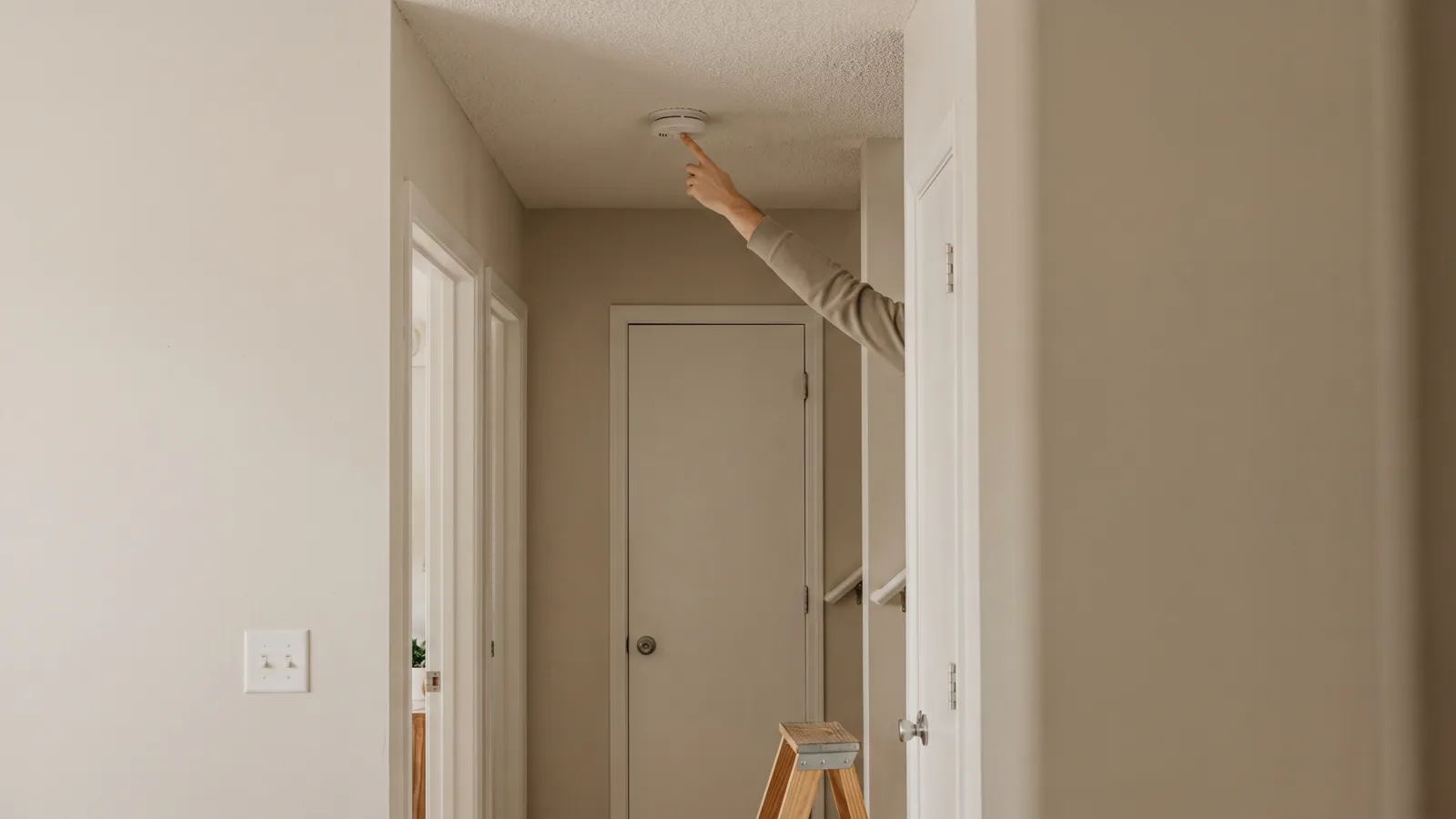
- Put smoke alarms on every level, including the basement, inside every bedroom, and outside each separate sleeping area.
- Mount them on the ceiling or high on the wall, and follow the manufacturer's instructions for the best spot.
- Test every alarm monthly, replace 9-volt batteries at least once a year, and replace the whole alarm every 10 years.
- Choose interconnected alarms, so that when one sounds, they all sound.
- If you are deaf or hard of hearing, use alarms with a vibrating pad, flashing light or strobe light.
Where to put smoke alarms in your home
USFA says to install smoke alarms in every bedroom, outside each separate sleeping area, and on every level of the home, including the basement. The CPSC and the Red Cross give the same advice. USFA adds that a closed door may slow the spread of smoke, heat and fire.
In existing homes where alarms are not yet in place, the Red Cross says to install them at a minimum on every level and outside each sleeping area. It adds that if a fire occurs inside a bedroom, dangerous gases can cause heavier sleep, so for the best protection you should install interconnected alarms in each bedroom and throughout the home.
- Every level of the home, including the basement
- Inside every bedroom
- Outside each separate sleeping area
- Consider placing alarms along your escape path
Ceiling, wall and places to avoid
USFA says to put smoke alarms on the ceiling or high on the wall, and to check the manufacturer's instructions for the best place for your alarm. The CPSC says that in general you should place alarms in the center of a ceiling, or 6 to 12 inches below the ceiling if you mount them on a wall.
Some spots are best avoided. The CPSC says not to place an alarm too close to a kitchen appliance or fireplace, and to avoid locating alarms near bathrooms, heating appliances, windows or ceiling fans. To prevent nuisance alarms, another CPSC leaflet says to install alarms at least 10 to 15 feet from the kitchen range.
Garages are different. USFA says smoke alarms are not required, or designed for use, in garages, and that they can sound there because of changes in temperature and humidity, dust, fumes and insects. Heat alarms respond to high temperatures rather than smoke and are ideal for garages, and many models can be connected to your home's fire detection system.
Which type of smoke alarm to choose
There are two basic types of smoke alarm: ionization and photoelectric. USFA says they detect different types of fires, so it recommends every home and place where people sleep have both types, or dual-sensor alarms that contain both. The CPSC adds that ionization alarms respond quickly to flaming fires, while photoelectric alarms respond more quickly to smoldering fires.
USFA says to choose interconnected alarms, so that when one sounds, they all sound. The CPSC says interconnected alarms are typically connected with a wire, but newer wireless technology can interconnect them without wires. Only qualified electricians should install hardwired smoke alarms.
Alarms run on a disposable 9-volt battery, a nonreplaceable 10-year lithium-ion battery, or your home's electrical system. Hardwired alarms usually have a backup battery, and the CPSC says alarms with battery back-up still protect you during power outages. Your city, county or state may require a specific type of alarm, so check with your local fire marshal. Our smoke alarm comparison lists the options.
Testing, batteries and replacement
USFA says a smoke alarm only works when it is properly installed and regularly tested, and that an alarm with a dead or missing battery is the same as having no alarm at all. The CPSC says smoke alarms most often fail to alarm because of missing, drained or disconnected batteries. Take care of your alarms according to the manufacturer's instructions.
Use the test button. The Red Cross says the test feature tests all electronic functions and is safer than testing with a controlled fire such as matches, lighters or cigarettes. It also says to vacuum cobwebs and dust from your alarms monthly. If an alarm begins to chirp, signaling low battery power, the CPSC says to replace the batteries immediately.
Ready.gov gives different numbers. Its escape plan page says to test alarms twice a year, and its home fires page says to replace batteries twice a year unless you use 10-year lithium batteries. Testing monthly, as USFA, the CPSC and the Red Cross advise, more than covers a twice-a-year test. On batteries, the Red Cross says changing them twice a year will not hurt, but fresh batteries typically last at least a year, so more frequent replacement is not necessary unless the alarm begins to chirp.
Alarms wear out, too. USFA says they need to be replaced 10 years from the manufacture date, and the Red Cross notes that smoke alarms become less sensitive over time. Here is USFA's routine for each type of alarm.
- 9-volt battery: test monthly, replace the batteries at least once every year, replace the entire alarm every 10 years
- 10-year lithium-ion battery: test monthly, replace the entire alarm according to the manufacturer's instructions
- Hardwired: test monthly, replace the backup battery at least once every year, replace the entire alarm every 10 years
Nuisance alarms: what to do instead of removing the battery
If a smoke alarm sounds while you are cooking or taking a shower with lots of steam, USFA says not to remove the battery. Open a window or door and press the hush button, wave a towel at the alarm to clear the air, or move the entire alarm several feet away from the kitchen or bathroom. The Red Cross adds that if nuisance alarms are a persistent problem, you should look for a different type of smoke alarm and make sure alarms are installed in the correct areas of the home.
Smoke alarms for people who are deaf or hard of hearing
USFA says there are alarms for people with hearing loss. These alarms may have strobe lights that flash and/or vibrate to alert those who are unable to hear standard smoke alarms when they sound. If you are deaf or hard of hearing, USFA says to use alarms with a vibrating pad, flashing light or strobe light, which start when your alarm sounds.
Ready.gov says alarms with a vibrating pad or flashing light are available for the hearing impaired, and audible alarms are available for visually impaired people. USFA's advice for older adults is that if you cannot hear your smoke alarm, consider getting one that has a different sound or comes with a bed shaker or strobe light. The CPSC adds that children, older adults and the hearing-impaired may sleep through a fire alarm or may need assistance in escaping, so practice your escape plan at night as well as during the day.
USFA also says to interconnect your alarms so that when one sounds, they all sound, and that caregivers should check the smoke alarms of anyone who cannot do it themselves. The Red Cross now offers fire safety videos and resources in ASL to meet the needs of the Deaf and Hard of Hearing community. See our older adults preparedness guide for more.
Free alarms, carbon monoxide alarms and your escape plan
USFA says some fire departments will install battery-operated smoke alarms in your home at no cost, so contact your local fire department's nonemergency phone number. The Red Cross also lets you sign up for a home fire safety visit, including a free smoke alarm installation, from your local Red Cross, though availability depends on your location.
Pair smoke alarms with carbon monoxide alarms. The Red Cross says to install carbon monoxide alarms in central locations on every level of your home and outside sleeping areas, and to replace their batteries at the same time as your smoke alarm batteries. See our carbon monoxide alarm comparison and carbon monoxide poisoning guide.
When a smoke alarm sounds, USFA says you may have less than 2 minutes to get everyone outside and safe. The CPSC says working smoke alarms and a fire escape plan together increase your protection in a fire, so make and practice a home fire escape plan.
USFA says disabling a smoke alarm or removing the battery can be a deadly mistake. If an alarm sounds while you cook, open a window or door and press the hush button, or wave a towel at the alarm.
Common questions
How many smoke alarms do I need?
The official pages count places rather than give one number. You need an alarm in every bedroom, outside each separate sleeping area, and on every level of the home, including the basement.
Should a smoke alarm go on the ceiling or the wall?
USFA says the ceiling or high on the wall. The CPSC says the center of a ceiling, or 6 to 12 inches below the ceiling on a wall, and the manufacturer's instructions have the final say.
How often should I test my smoke alarms?
USFA, the CPSC and the Red Cross all say to test every alarm monthly, using the test button. Ready.gov's escape plan page says twice a year, so testing monthly covers both.
How often should I change smoke alarm batteries?
USFA, the CPSC and the Red Cross say at least once a year for 9-volt and backup batteries, and right away if an alarm chirps. Ready.gov's home fires page says twice a year. The Red Cross says changing them that often will not hurt, but fresh batteries typically last at least a year.
When should I replace the whole smoke alarm?
USFA says to replace them 10 years from the manufacture date, and the CPSC and the Red Cross also say every 10 years. USFA says alarms with a 10-year lithium-ion battery should be replaced according to the manufacturer's instructions.
Do I need a smoke alarm in the garage?
USFA says smoke alarms are not required, or designed for use, in garages. It says heat alarms are ideal for garages.
Sources (10)
- USFA: Smoke Alarms
- USFA: Heat Alarms
- USFA: Fire safety for people with disabilities
- USFA: Fire safety for older adults
- Ready.gov: Home Fires
- Ready.gov: Practice Your Home Fire Escape Plan
- CPSC: Smoke Alarms, Why, Where, and Which (Pub. 559)
- CPSC: Smoke Alarms Can Save Your Life (Pub. 557)
- Red Cross: Fire Safety Equipment
- Red Cross: Home Fire Safety
Get one calm email when it matters
Seasonal checklists and gear price drops. No spam, unsubscribe any time.
Keep reading
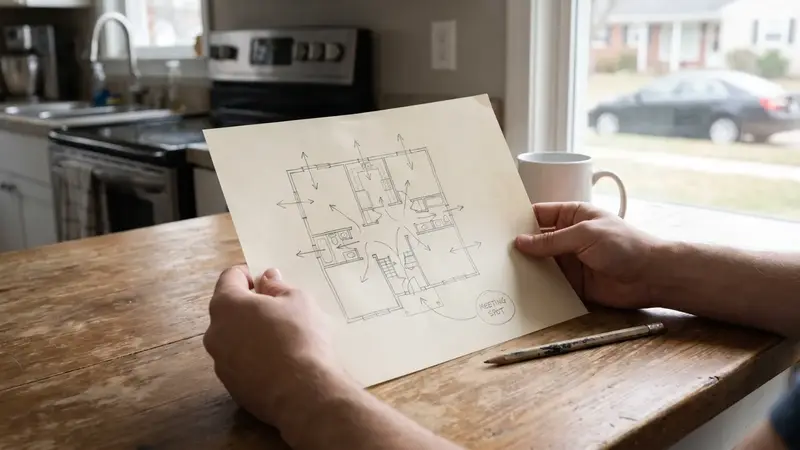 Home fire escape plan: how to make one, practice it and get out safelyHow to make a home fire escape plan: two ways out of every room, an outside meeting place, escape ladders, dri…
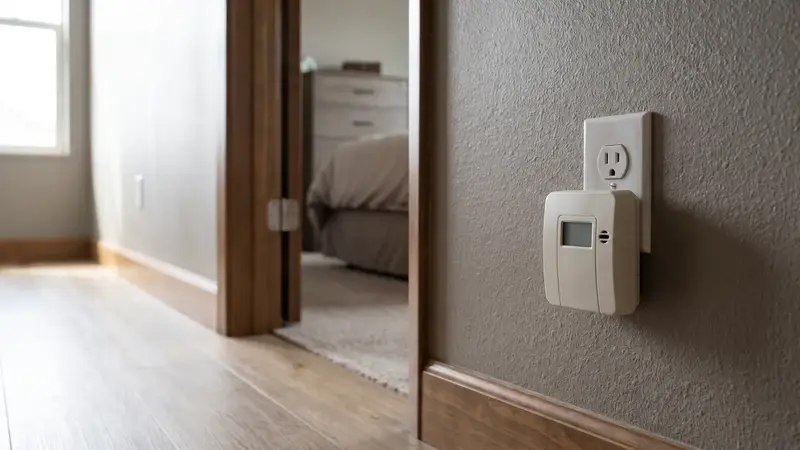 Carbon monoxide poisoning: symptoms, sources, alarms and what to doWhat CO poisoning feels like, who is most at risk, common sources in winter and outages, where to put CO alarm…
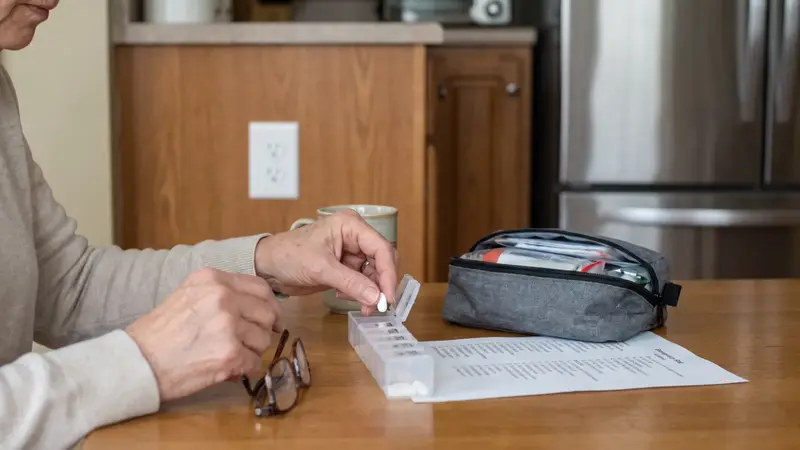 Emergency preparedness for older adults: how to make a plan and a kitHow older adults can prepare for emergencies: assess needs, build a support network, plan for medicines and de…
 Space heater safety: clearance, plugs and what to do in a winter power outageHow to use a space heater safely: keep it 3 feet from anything that can burn, plug it into the wall, never run…