Space heater safety: clearance, plugs and what to do in a winter power outage
How to use a space heater safely: keep it 3 feet from anything that can burn, plug it into the wall, never run it while you sleep, and heat safely in an outage.
By PreparedStates editors · Updated October 22, 2026 · Sourced to CPSC, Ready.gov, the U.S. Fire Administration, CDC and EPA
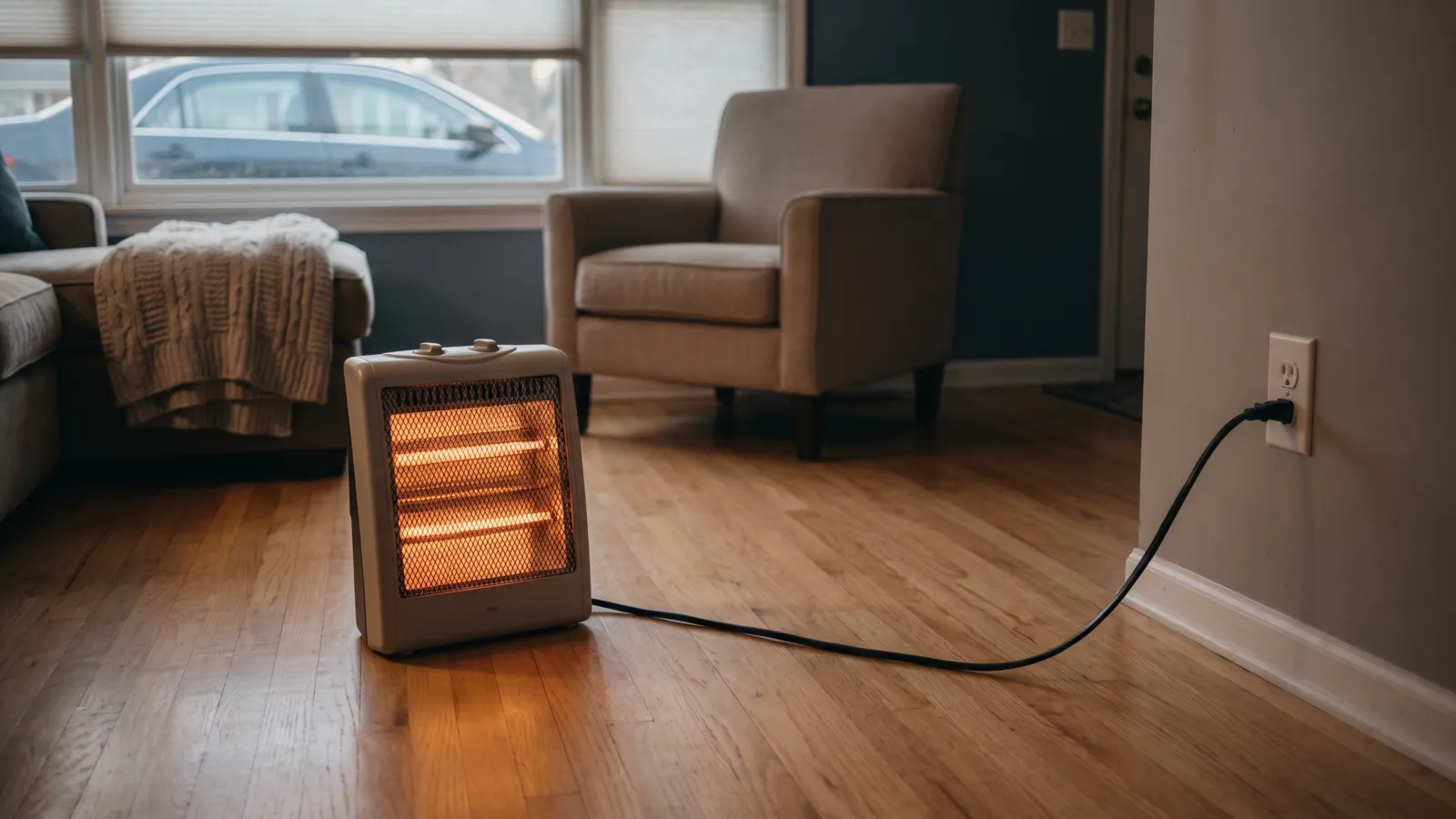
- Keep space heaters at least three feet from drapes, furniture, bedding and anything else that can burn.
- Plug electric space heaters directly into a wall outlet, never into an extension cord or power strip.
- Do not leave a heater running unattended or while you sleep. Turn it off when you leave the room.
- Buy a heater tested by a recognized lab that switches itself off if it falls over.
- Never heat your home with a gas oven or stove, and keep battery-backed carbon monoxide alarms working.
Why the three-foot rule matters
Portable heaters are a small share of home heating fires but a large share of the deadly ones. The United States Fire Administration (USFA) says home portable heater fires were only 3% of all home heating fires annually for 2017-2019, but they accounted for 41% of fatal heating fires in homes. The Consumer Product Safety Commission (CPSC) estimates that portable heaters, including electric space heaters, are involved in an average of 1,600 fires per year from 2020 to 2022. The rules below come mostly from CPSC, Ready.gov and USFA.
CPSC says to keep portable heaters at least three feet away from drapes, furniture, bedding and other combustible materials to prevent fires. A CPSC safety blog adds that the three feet applies to the front, sides and rear of the heater. USFA gives the same distance for every heat source, including fireplaces, wood stoves, radiators, space heaters and candles.
Where you put the heater matters too. CPSC says to place it on a stable, flat surface, where it cannot be knocked over.
Plug it into the wall, nothing else
CPSC says to plug electric space heaters directly into a wall outlet and never into an extension cord or power strip. Its 2023 winter release gives the reason: to prevent overloading and causing a fire. Its winter safety poster puts it more briefly: use a wall outlet and never a power strip.
While the heater runs, check often whether the plug, cord, wall outlet or faceplate is hot. If it is, CPSC says to turn the heater off and have a qualified electrician inspect. Ready.gov adds that worn, old or damaged appliance cords should be replaced immediately, and that cords should not run under rugs or furniture.
Never leave it running unattended or while you sleep
CPSC's winter poster says not to leave a space heater running unattended or while sleeping. USFA says to turn space heaters off when leaving the room or going to bed. Treat switching it off as part of your bedtime routine.
Heat can also harm people directly. A CPSC staff report found that portable heaters can present a hyperthermia (overheating) hazard, particularly for children, people with disabilities and senior citizens, who may be more susceptible because of their limited ability to act or react to the elevated ambient temperature. CPSC says not to leave portable heaters running unattended in a confined space around infants or individuals with reduced physical, sensory or mental capabilities.
Choosing a heater: lab testing and tip-over shutoff
Ready.gov says to only buy heaters evaluated by a nationally recognized laboratory, such as Underwriters Laboratories (UL). It also says to check that the heater has a thermostat control mechanism and will switch off automatically if it falls over.
If your heater is old, check it against these points before you need it. CPSC also says to check whether a product has been recalled before you use it, at cpsc.gov/recalls. If it has, stop using it immediately and contact the recalling company for a refund, repair or replacement.
Fuel-burning heaters and carbon monoxide
Kerosene and gas heaters add a second hazard. EPA lists unvented kerosene and gas space heaters among the sources of carbon monoxide (CO), and CDC calls CO an odorless, colorless gas that kills without warning. CPSC says never to operate unvented fuel-burning appliances in any room where people are sleeping, and CDC says not to use portable flameless chemical heaters indoors.
For kerosene heaters, Ready.gov says to use only crystal clear K-1 kerosene, never overfill, and use the heater in a well-ventilated room away from curtains and other flammable items. CPSC says never to use gasoline, and to turn the heater off and let it cool before refueling. CDC adds that you should check with your local fire department to make sure kerosene heaters are legal in your area.
Alarms and an extinguisher: your backup
CPSC says to install smoke alarms on every level of the home and inside each bedroom, and CO alarms on every level and outside sleeping areas. Alarms should be battery-operated or have battery backup in case of a power outage, and interconnected alarms are best because when one sounds, they all sound. CPSC says to test the alarms every month and replace batteries at least once every year, or install alarms with sealed, 10-year batteries.
CDC adds that if you use a fireplace, wood stove or kerosene heater, you should install a smoke detector and a battery-operated CO detector near the area to be heated, test them monthly and replace batteries twice a year. Twice a year also meets CPSC's at-least-once-a-year rule, and EPA says to read the manufacturer's use and care booklet for maintenance guidelines. CDC also says to keep a multipurpose, dry-chemical fire extinguisher nearby. See our CO alarm comparison and fire extinguisher comparison.
Space heaters in a winter power outage
CDC lists portable space heaters or kerosene heaters as one of the heat sources to have for a power outage, alongside extra blankets, sleeping bags and warm winter coats. It also says that if you plan to use a wood stove, fireplace or space heater, you should be extremely careful and follow the manufacturer's instructions. Ready.gov says to check with local officials about heating and cooling locations open near you.
Never use a gas stove or oven to heat your home. Ready.gov says it increases your risk of carbon monoxide poisoning and can also increase the risk of fires, burns and damage to the appliance. CDC says that if conditions are too cold, you can seek shelter with friends or at a community shelter.
Generators and power stations: what official pages do and don't say
Can you run an electric space heater from a generator or a portable power station? None of the official pages we read says it is safe, so do not assume it is. What CPSC does say is to plug an electric space heater directly into a wall outlet, never into an extension cord or power strip.
Ready.gov says a portable generator must be used outdoors, at least 20 feet from windows, doors and attached garages, and connected to appliances with heavy-duty extension cords. A heater run that way would be on the extension cord CPSC rules out. Never bring a generator indoors for heat. CPSC says never to power house wiring by plugging a generator into a wall outlet, and CDC says not to connect generators to your home's electrical circuits without the approved, automatic-interrupt devices.
No official page we read covers running a space heater from a portable power station. For any space heater in an outage, CDC says to be extremely careful and follow the manufacturer's instructions. Our generator safety guide and stay warm without power guide cover the rest.
Ready.gov says never to heat your home with a gas stovetop or oven. CDC also says never to burn charcoal indoors, never to use a portable gas camp stove indoors, and never to use a generator inside your home or garage, even if doors and windows are open. If you cannot get warm safely, CDC says to seek shelter with friends or at a community shelter.
Common questions
How far should a space heater be from furniture and curtains?
CPSC says at least three feet from drapes, furniture, bedding and other combustible materials. A CPSC safety blog applies that distance to the front, sides and rear of the heater.
Can I plug a space heater into an extension cord or power strip?
No. CPSC says to plug electric space heaters directly into a wall outlet and never into an extension cord or power strip, to prevent overloading and causing a fire.
Is it safe to leave a space heater on overnight?
No. CPSC says not to leave a heater running unattended or while sleeping, and USFA says to turn space heaters off when leaving the room or going to bed.
What should I look for when choosing a space heater?
Ready.gov says to buy a heater evaluated by a nationally recognized laboratory such as UL, with a thermostat control and an automatic shutoff if it falls over.
Can I use a space heater during a power outage?
CDC lists portable space heaters among heat sources to have, but says to be extremely careful and follow the manufacturer's instructions. Never use a gas oven or stovetop to heat your home.
Can I run a space heater on a generator or power station?
No official page we read says it is safe, so do not assume it is. CPSC says space heaters go directly into a wall outlet, never an extension cord, while a portable generator must stay outdoors at least 20 feet from windows, doors and attached garages and connects to appliances by heavy-duty extension cord.
Sources (16)
- CPSC: Keep Warm and Safe This Winter
- CPSC: Keep Warm and Safe from Fire and Carbon Monoxide poster (PDF)
- CPSC OnSafety: Your Space Heater Needs Space
- CPSC: Be Cautious When Using Space Heaters, Furnaces and Fireplaces
- CPSC: Portable Heaters and Camping Equipment
- Ready.gov: Home Fires
- Ready.gov: Power Outages
- USFA: Heating Fire Safety
- CDC: Protect Yourself During a Power Outage
- CDC: Preparing for a Winter Storm
- CDC: Carbon Monoxide Poisoning Basics
- CDC: Protect Yourself From Electrical Hazards
- CPSC: Carbon Monoxide Fact Sheet
- CPSC Safety Alert: Portable Generator Hazards (PDF)
- EPA: What Is Carbon Monoxide
- EPA: Where Should I Place a Carbon Monoxide Detector
Get one calm email when it matters
Seasonal checklists and gear price drops. No spam, unsubscribe any time.
Keep reading
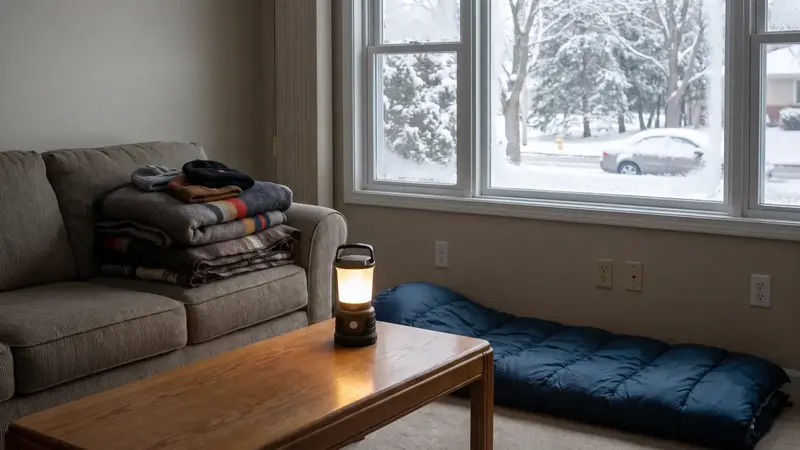 How to stay warm without power in winter, safelyStay warm in a winter power outage safely: keep heat in, dress in layers, never heat with an oven or grill, kn…
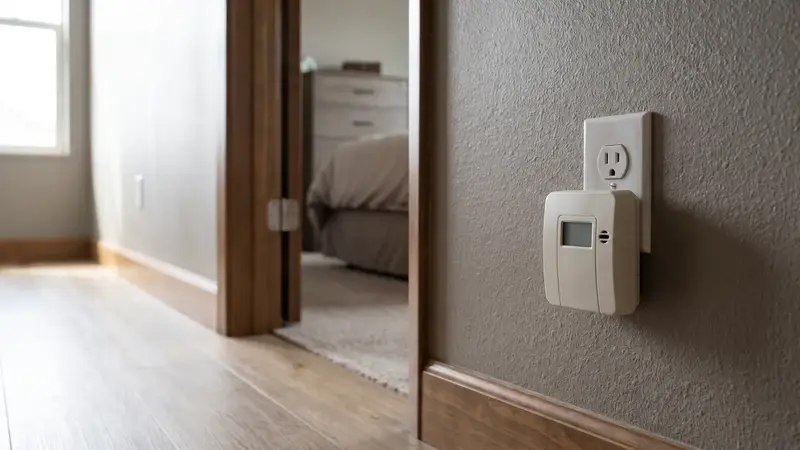 Carbon monoxide poisoning: symptoms, sources, alarms and what to doWhat CO poisoning feels like, who is most at risk, common sources in winter and outages, where to put CO alarm…
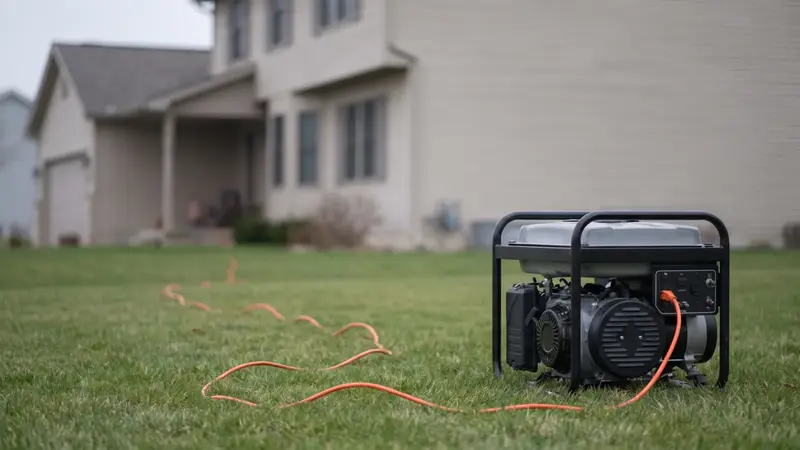 Portable generator safety: where to run it, carbon monoxide and cordsHow to use a portable generator safely in an outage: 20 feet from windows, never in a garage, CO alarms, outdo…
 Home fire escape plan: how to make one, practice it and get out safelyHow to make a home fire escape plan: two ways out of every room, an outside meeting place, escape ladders, dri…