Best home battery backup for power outages (2026)
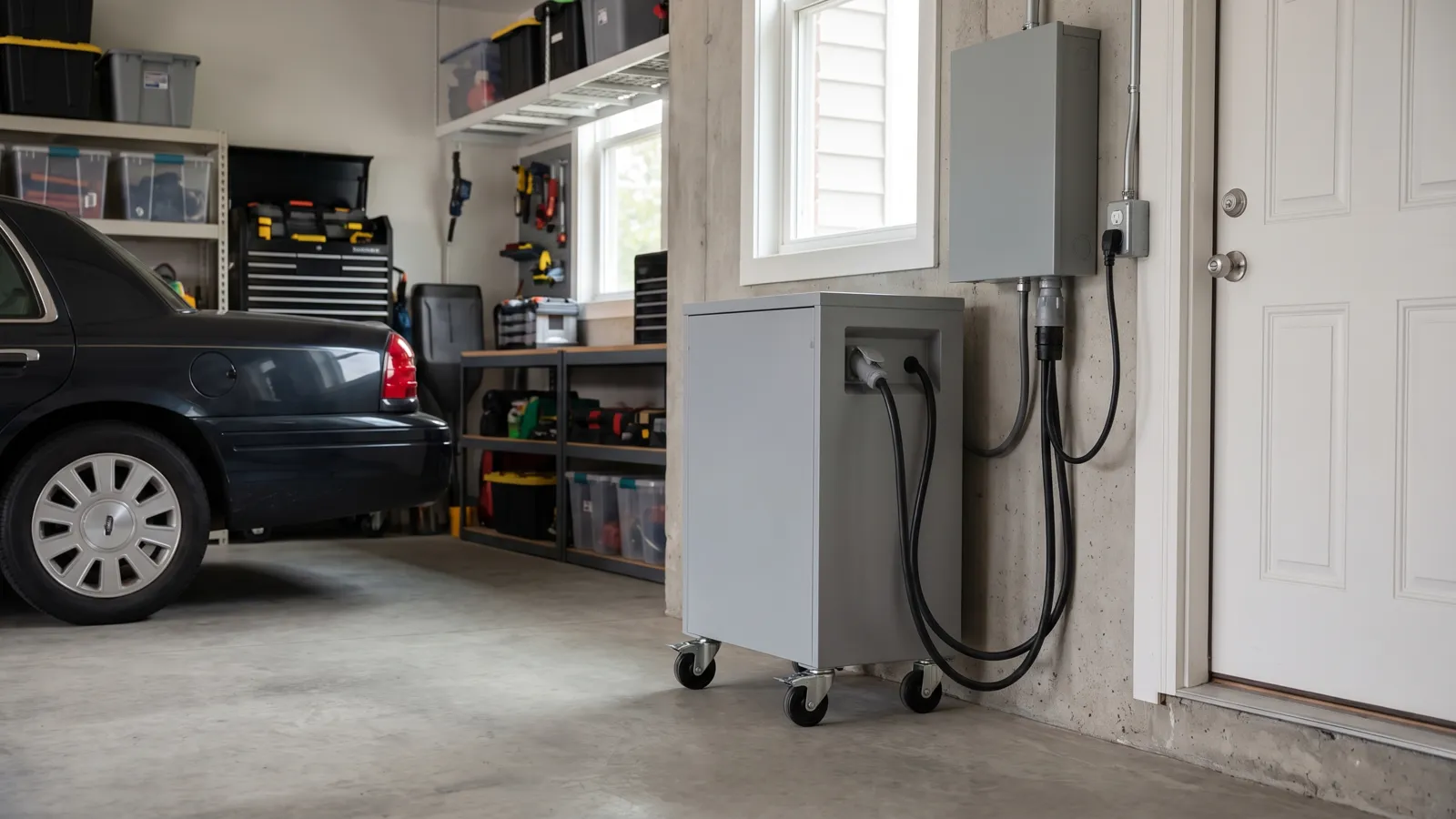
A home backup battery is a big power station, 2.7 to 6 kWh here, that can run a fridge, lights, a furnace fan and other essentials through an outage, silently and with no exhaust. All five list 120V and 240V output and can add batteries, and most of these makers sell a transfer switch or home panel so a battery can power chosen household circuits. Here's how they compare.
By PreparedStates editors · Updated October 22, 2026 · 5 products, prices indicative
Our picks
EcoFlow DELTA Pro 3
4 kWh and 240V in one wheeled unit
EcoFlow DELTA Pro Ultra
The biggest system here: 6 kWh and 7,200 W
Anker SOLIX F3800 Plus
Big output with solar and generator inputs for a long outage
All 5 compared
| Battery | Capacity | AC output | Weight | Battery | Price |
|---|---|---|---|---|---|
4,096 Wh · 4,000 W · 115 lb · LFP 4 kWh and 240V in one wheeled unit | 4,096 Wh | 4,000 W | 115 lb | LFP | |
Our verdictOur verdictResearched 4,096 Wh and 4,000 W in a single wheeled unit, with 120V and 240V output and room to grow to 48 kWh with extra batteries (maker). At 115 lb it rolls rather than carries. Best for 4 kWh and 240V in one wheeled unit Good
Worth knowing
Who shouldn't buy it: Don't buy it if you only need a fridge and lights: a 1 to 2 kWh station is far cheaper. | |||||
6,144 Wh · 7,200 W · 70.9 lb The biggest system here: 6 kWh and 7,200 W | 6,144 Wh | 7,200 W | 70.9 lb | — | |
Our verdictOur verdictResearched A modular inverter and 6,144 Wh battery with 7,200 W at 120V and 240V, and room to grow to 90 kWh (maker). Made to sit in a garage or utility room and power a home's circuits through EcoFlow's home panel. Best for The biggest system here: 6 kWh and 7,200 W Good
Worth knowing
Who shouldn't buy it: Don't buy it if you want something you can move around easily. | |||||
3,840 Wh · 6,000 W · 135.6 lb · LFP Big output with solar and generator inputs for a long outage | 3,840 Wh | 6,000 W | 135.6 lb | LFP | |
Our verdictOur verdictResearched 3,840 Wh and 6,000 W at 120V and 240V, with up to 3,200 W of solar input and a gas-generator input, so it can keep going through a long outage. At 135.6 lb it's the heaviest here. Best for Big output with solar and generator inputs for a long outage Good
Worth knowing
Who shouldn't buy it: Don't buy it if you'll need to move it often. | |||||
5,040 Wh · 7,200 W · 134.5 lb The most capacity in a single unit | 5,040 Wh | 7,200 W | 134.5 lb | — | |
Our verdictOur verdictResearched 5,040 Wh and 7,200 W at 120V and 240V in one unit, expandable to 60 kWh, and it works with Jackery's Smart Transfer Switch to power home circuits. 134.5 lb. Best for The most capacity in a single unit Good
Worth knowing
Who shouldn't buy it: Don't buy it if you need to carry it. | |||||
2,764.8 Wh · 3,840 W · 66.1 lb · LiFePO4 The lightest way into 240V home backup | 2,764.8 Wh | 3,840 W | 66.1 lb | LiFePO4 | |
Our verdictOur verdictResearched 2,765 Wh and 3,840 W at 120V and 240V in a 66 lb unit, with B300K or B500K batteries to add capacity later. Best for The lightest way into 240V home backup Good
Worth knowing
Who shouldn't buy it: Don't buy it if you want 4 kWh or more from day one. | |||||
ⓘ As an Amazon Associate, PreparedStates earns from qualifying purchases. We may earn a commission when you buy through our links. It never changes what we recommend. Amazon prices come from Amazon's own product data and can change at any time.
Before you buy
Size it to your essentials.
List what must run and for how many hours: a fridge, furnace fan, lights and router together need far less than whole-house use.
Check 240V if you need it.
A 240V well pump or some furnaces need it; all five here list 120V and 240V output.
Plan how it connects.
Plugging appliances in with cords works with any of these; powering home circuits needs the maker's transfer switch or home panel, fitted by an electrician.
Think about recharging.
Solar panels, and on some a gas-generator input, keep a battery going through a long outage.
They're heavy: 66 to 136 lb here, on wheels.
Choose where it will live before you buy.
We verify every product's specifications against at least two independent sources, re-check its US price and stock on a schedule where we can track it automatically, and cross-check safety-relevant claims against official guidance. Every review is labelled Researched or Used and reviewed by us: where we've bought a product, or been sent it free, and used it ourselves, its review says which; where we haven't, our verdict is a considered spec-and-evidence comparison, not a hands-on test — and commissions never change a ranking either way. Read our full methodology →
Head-to-head
Related kit comparisons
Guides that go with this
A calm power outage checklist from Ready.gov and CDC: what to prepare, how to protect food, medicines and medi…
How to use a portable generator safely in an outage: 20 feet from windows, never in a garage, CO alarms, outdo…
How to plan for a power outage if you use electric medical devices or refrigerated medicine: questions to ask,…
Common questions
Can a home battery run my whole house?
Not for long at normal use. These are best for essentials like the fridge, furnace fan, lights, internet and medical devices. Add batteries or solar for longer outages.
Is a battery safer than a generator indoors?
A battery burns no fuel, so it gives off no carbon monoxide. Ready.gov says generators must be used only outdoors, at least 20 feet from windows, doors and attached garages. Follow the maker's placement guidance for the battery.
Do I need an electrician?
Only to connect it to your home's circuits through the maker's transfer switch or home panel. Plugging appliances straight into the battery needs no installation.
Can I recharge it with solar?
Yes. All five take solar input; the Anker SOLIX F3800 Plus lists up to 3,200 W. See our solar panels and solar generators pages.