Non-perishable food list: what to stock for an emergency
A non-perishable food list from Ready.gov: canned meats, fruit and vegetables, bars, cereal, peanut butter, dried fruit and milk, and how to store it safely.
By Tom Calder · Updated October 24, 2026 · Sourced to Ready.gov
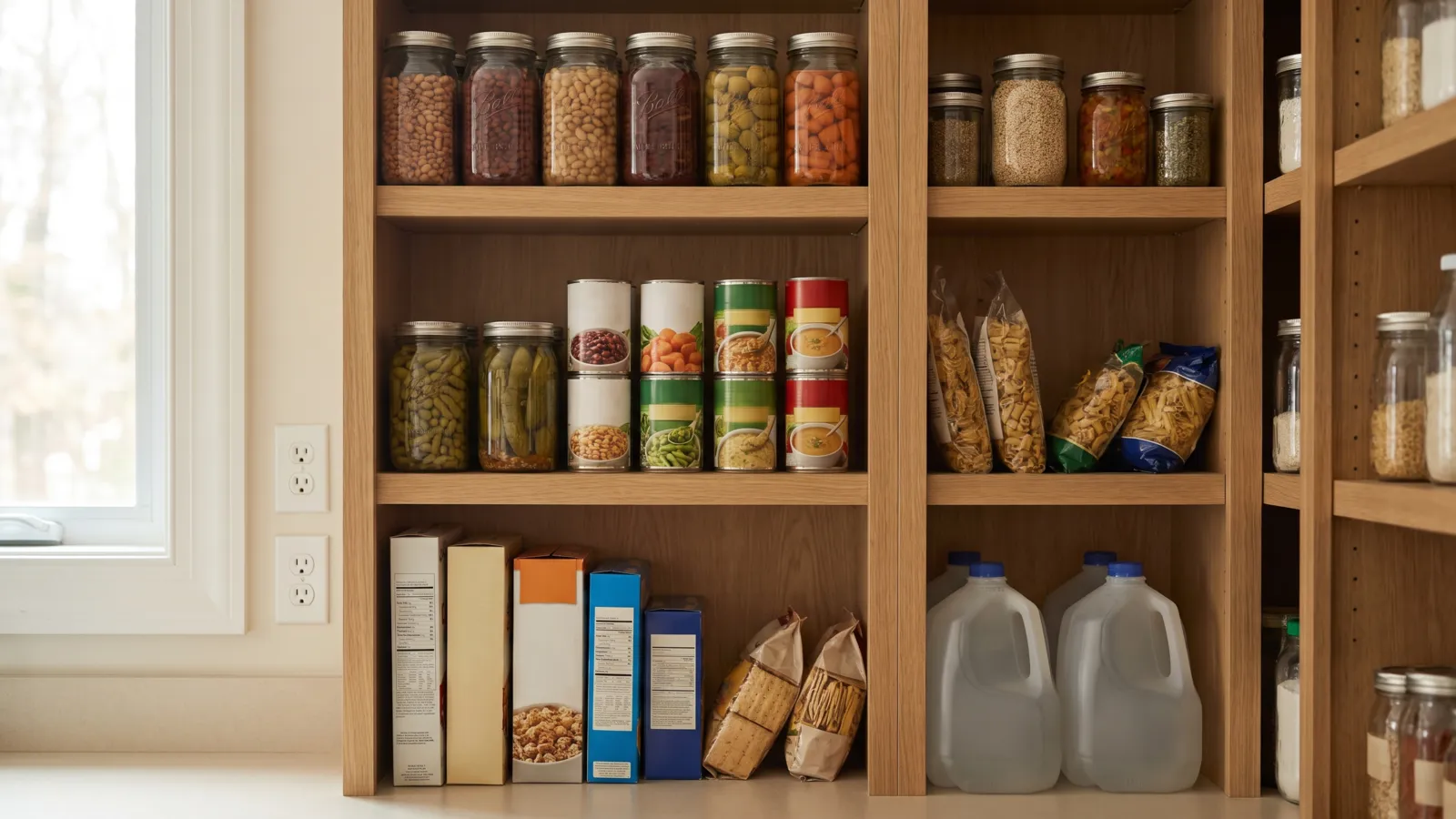
- Ready.gov says to store at least a several-day supply of non-perishable food: canned foods, dry mixes and other staples that need no refrigeration, cooking, water or special preparation.
- Its list: ready-to-eat canned meats, fruits and vegetables, protein or fruit bars, dry cereal or granola, peanut butter, dried fruit, canned juices, non-perishable pasteurized milk, high-energy foods, food for infants and comfort foods.
- Pack a manual can opener and eating utensils, and choose foods your family will eat, including any special diets.
- Keep canned food in a cool, dry place, store boxed food in tightly closed plastic or metal containers, and replace expired items.
- Never eat from cans that are swollen, dented or corroded, and throw out any food that looks or smells abnormal.
What counts as non-perishable food
Non-perishable food is food that keeps without a refrigerator. Ready.gov's advice starts from the reason you need it: following a disaster there may be power outages that could last for several days. So it says to stock canned foods, dry mixes and other staples that do not require refrigeration, cooking, water or special preparation, and to include a manual can opener and eating utensils.
The best emergency foods tick all of those boxes at once. A bag of dried beans you have to simmer for an hour, or rice that needs water you may be rationing, is less useful in an outage than food you can open and eat. That is why the list below leans on ready-to-eat items.
Food is one half of the basics. Ready.gov's basic disaster supplies kit puts water first, one gallon per person per day for several days, for drinking and sanitation, and then food: at least a several-day supply of non-perishable food. Our guide on how much water to store covers the water side.
The non-perishable food list
These are the items Ready.gov suggests when you put together emergency food supplies. It notes you may already have many of them on hand, so start with your pantry before you buy anything.
- Ready-to-eat canned meats, fruits and vegetables, and a can opener
- Protein or fruit bars
- Dry cereal or granola
- Peanut butter
- Dried fruit
- Canned juices
- Non-perishable pasteurized milk
- High-energy foods
- Food for infants
- Comfort or stress foods
How much to store
Ready.gov's minimum is at least a several-day supply of non-perishable food for everyone in your household. When you put it together, it says to choose foods your family will eat and to remember any special dietary needs, such as allergies, diabetes or a baby on formula.
For infants, Ready.gov says to use ready-to-feed formula, and if you must mix infant formula, to use bottled water or boiled water as a last resort. Pets need food too: its kit list adds pet food and extra water for your pet.
If you'd rather buy a ready-made supply, our emergency food kits comparison works out the cost per 2,000-calorie day for each kit, and our food bars and MREs page covers the grab-and-go options. Our guide to emergency food storage goes further on planning a longer supply.
How to store it
Ready.gov's advice for keeping a kit ready is short. Keep canned food in a cool, dry place. Store boxed food in tightly closed plastic or metal containers. Replace expired items as needed, and re-think your needs every year and update your kit as your family's needs change.
In practice that means a shelf away from the stove, the furnace and the sunniest wall, and a habit of eating the oldest cans first and buying replacements as you go. Writing the purchase month on each can or box makes the yearly check quick.
Eating it safely when the power is out
Commercially canned food may be eaten out of the can without warming, Ready.gov says. If you do want it hot, its method is to remove the label, thoroughly wash and disinfect the can with a diluted solution of one part bleach to 10 parts water, and open the can before heating.
For cooking without power, Ready.gov lists candle warmers, chafing dishes, fondue pots or a fireplace, and says charcoal grills and camp stoves are for outdoor use only. If you use a camp stove, keep it outside.
Food in the refrigerator is on a clock. Ready.gov says the refrigerator will keep food cold for about four hours if it is unopened, and to discard any perishable food such as meat, poultry, fish, eggs or leftovers that has been above 40 degrees Fahrenheit for two hours or more. Our food safety in a power outage guide has the full rules.
Ready.gov says not to eat foods from cans that are swollen, dented or corroded, even though the product may look safe to eat, and not to eat any food that looks or smells abnormal, even if the can looks normal. Throw away any food that has come into contact with contaminated flood water. When in doubt, throw it out.
Common questions
What is the best non-perishable food for emergencies?
Food your family will eat that needs no refrigeration, cooking, water or special preparation. Ready.gov's list is ready-to-eat canned meats, fruits and vegetables, protein or fruit bars, dry cereal or granola, peanut butter, dried fruit, canned juices, non-perishable pasteurized milk, high-energy foods, food for infants and comfort foods.
How much non-perishable food should I store?
Ready.gov says at least a several-day supply of non-perishable food for everyone in your household, alongside one gallon of water per person per day for several days, for drinking and sanitation.
Can you eat canned food without heating it?
Yes. Ready.gov says commercially canned food may be eaten out of the can without warming. To heat food in the can, remove the label, wash and disinfect the can, and open it before heating.
Do I need a manual can opener?
Yes. Ready.gov lists a manual can opener in its basic disaster supplies kit, and its food advice says to include one with your canned food, along with eating utensils.
Sources (2)
Get one calm email when it matters
Seasonal checklists and gear price drops. No spam, unsubscribe any time.
Keep reading
 Emergency food storage: how much to store, what to buy and how to keep it safeHow much emergency food to store, from a 3-day kit to two weeks at home: no-cook foods, calories, special diet…
 Food safety in a power outage: how long food lasts and what to throw outHow long food stays safe in the fridge and freezer without power, what to throw out, and when you can refreeze…
 How much water to store for an emergency: per person, per pet and for how longHow much water to store for an emergency: 1 gallon per person per day, pets, which containers to use, when to …
 Emergency kit checklist: what to include, how much to keep and where to store itA plain-English emergency kit checklist built on Ready.gov's basic kit and extra items, with how many days of …