Home canning for beginners: the USDA way to can safely
How to start home canning safely: which foods need a pressure canner and which a water bath, the jars and lids to use, tested recipes, altitude and storage, from CDC and USDA.
By Tom Calder · Updated October 24, 2026 · Sourced to CDC and the USDA Complete Guide to Home Canning
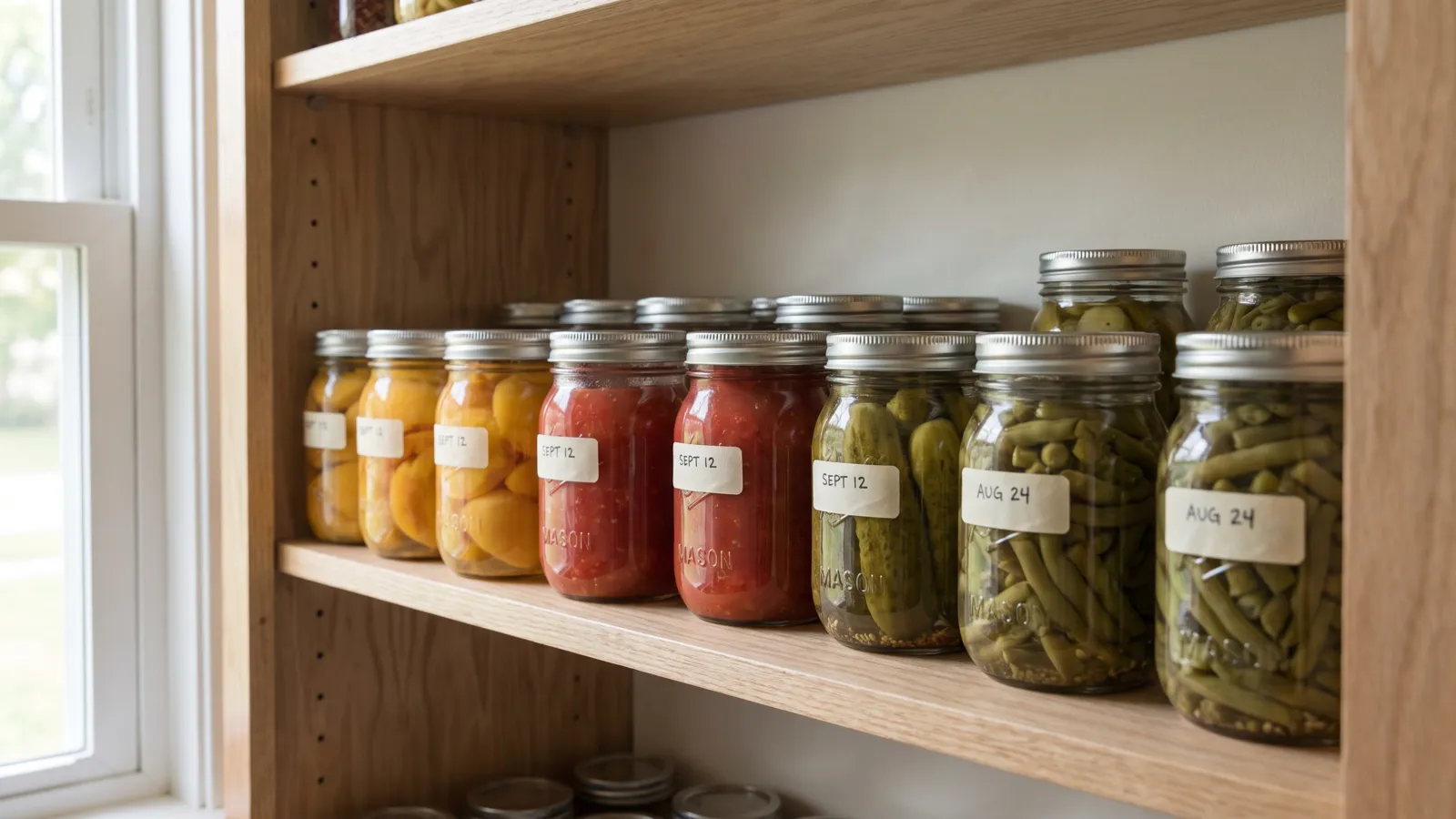
- Acid foods (pH 4.6 or lower), such as most fruit, jams, pickles and tomatoes with added acid, can go in a boiling-water canner.
- Low-acid foods, meaning vegetables, meat, poultry, seafood and milk, need a pressure canner. CDC says a boiling-water canner will not protect against botulism.
- Use Mason-type canning jars, new lids every time and a tested recipe with current times, adjusted for altitude from 1,000 feet up.
- Don't can in an electric multi-cooker, an oven, a microwave or a dishwasher, and don't use open-kettle canning.
- Can only what you'll use in a year, store jars between 50°F and 70°F, and when in doubt, throw it out.
Two methods: water bath or pressure canner
Everything in home canning comes back to acid. The USDA Complete Guide to Home Canning says acid foods have a pH of 4.6 or lower. Fruit, jams, jellies and pickles fall on that side, and so do tomatoes once you add lemon juice, citric acid or vinegar as a tested recipe directs. Acid foods can be processed in a boiling-water canner.
Low-acid foods are the rest: the USDA guide lists red meats, seafood, poultry, milk and all fresh vegetables except for most tomatoes. Those need far more heat. The USDA says all low-acid foods should be sterilized at 240° to 250°F, which only a pressure canner operated at 10 to 15 pounds of pressure can reach.
CDC puts it plainly: pressure canning is the only recommended method for canning low-acid foods, and you should not use a boiling-water canner for them, because it will not protect against botulism. If you want to can green beans, corn, soup or meat, you need a pressure canner, and a pressure canner can also do water-bath jobs.
What you need to start
The USDA guide says regular and wide-mouth Mason-type, threaded home-canning jars with self-sealing lids are the best choice. With careful use the jars can be reused many times, needing only new lids each time. The flat lid is the part you replace for every batch; the screw bands can be reused once they're washed and dried.
For low-acid foods, CDC says to use a recommended pressure canner that holds at least four 1-quart jars upright on the rack, and to make sure its gauge is accurate. Many county extension offices will check gauges for you.
The rest is small kit: a jar lifter for hot jars, a wide funnel, a tool to measure headspace and release air bubbles, and a clean towel to set hot jars on. Our canning supplies page lists a starter set.
- Mason-type canning jars (regular or wide mouth)
- New self-sealing lids, plus screw bands
- A boiling-water canner with a rack, a pressure canner, or both
- Jar lifter, funnel and headspace tool
- A tested recipe with current times
Follow a tested recipe, exactly
Canning is chemistry, so the recipe matters more than in ordinary cooking. The USDA guide says to use only tested recipes formulated to produce the proper acidity. That means a source such as the USDA guide itself or the National Center for Home Food Preservation, not an old family card or a recipe you've changed. CDC adds that if your recipe is old, you should use current processing times and pressures.
Altitude changes the times. The USDA guide warns that using sea-level process times may cause spoilage if you live at 1,000 feet or more, so follow the altitude adjustments in the recipe. Water boils at a lower temperature as you go up.
Once the jars come out, let them cool. The USDA guide says to test the seals after cooling jars for 12 to 24 hours, then remove the screw bands, which aren't needed on stored jars.
Methods not to use
Some popular shortcuts don't kill everything they need to. The USDA guide says open-kettle canning and processing filled jars in conventional ovens, microwave ovens or dishwashers are not recommended, because they don't prevent all risks of spoilage.
CDC also says not to use an electric multi-cooker appliance for canning, even one with a canning or steam canning button on the front, and not to use a boiling-water canner for low-acid foods.
- Open-kettle canning (hot food in jars, no processing)
- Oven, microwave or dishwasher canning
- Electric multi-cookers, even with a canning button
- A boiling-water canner for vegetables, meat, poultry or seafood
Storing and eating home-canned food
CDC says to can only the amount of food you will use in a year, unless directions for a specific food say otherwise, and to label and date your jars. Store them in a clean, cool, dark place: between 50°F and 70°F for best quality, and for safety never above 95°F, near hot pipes, a range or a furnace, in an uninsulated attic or in direct sunlight.
Before eating, CDC says to boil home-canned tomatoes, foods containing them and all low-acid home-canned foods in a saucepan. Below 1,000 feet, boil for 10 minutes, and add 1 minute for each additional 1,000 feet. Refrigerate any canned or pickled food after you open it.
Throw out any jar that is leaking, bulging or swollen, looks damaged or cracked, spurts liquid or foam when opened, or holds food that is discolored, moldy or smells bad. CDC's rule: do not eat food if you don't know whether safe canning guidelines were followed.
Why the rules are strict: botulism
The reason for all of this is a toxin. CDC says home-canned vegetables, which are low-acid foods, are the most common cause of botulism outbreaks in the United States. Botulism spores grow and make toxin in low-oxygen, low-acid conditions, which is exactly what the inside of a sealed jar of underprocessed vegetables provides.
CDC says you cannot see, smell or taste the toxin that causes botulism, and that even a small taste of food containing it can be deadly. That's why the safeguards are in the method rather than in a check at the end: the right canner for the food, a tested recipe, the right time and pressure, and boiling low-acid foods before you eat them.
CDC's advice for any home-canned jar you're unsure about is simple: throw it out, and never taste food to see if it's safe. A leaking, bulging or swollen lid, liquid that spurts when you open it, or food that looks or smells wrong are all reasons to discard it.
Common questions
Can I can vegetables in a water bath?
No. Vegetables are low-acid foods. CDC says pressure canning is the only recommended method for low-acid foods and not to use a boiling-water canner for them, because it will not protect against botulism.
Can I use an Instant Pot to can?
No. CDC says not to use an electric multi-cooker appliance for canning, even if it has a canning or steam canning button on the front panel.
How long does home-canned food last?
CDC says to can only the amount of food you will use in a year, unless the directions for a specific food say otherwise, and to store jars between 50°F and 70°F for best quality.
Can I reuse canning lids?
No. The USDA guide says Mason jars may be reused many times, requiring only new lids each time. Screw bands can be reused.
Do I need to adjust canning times for altitude?
Yes, from 1,000 feet up. The USDA guide says sea-level process times may cause spoilage at altitudes of 1,000 feet or more, so follow the recipe's altitude adjustments.
Get one calm email when it matters
Seasonal checklists and gear price drops. No spam, unsubscribe any time.
Keep reading
 Emergency food storage: how much to store, what to buy and how to keep it safeHow much emergency food to store, from a 3-day kit to two weeks at home: no-cook foods, calories, special diet…
 Non-perishable food list: what to stock for an emergencyA non-perishable food list from Ready.gov: canned meats, fruit and vegetables, bars, cereal, peanut butter, dr…
 Food safety in a power outage: how long food lasts and what to throw outHow long food stays safe in the fridge and freezer without power, what to throw out, and when you can refreeze…
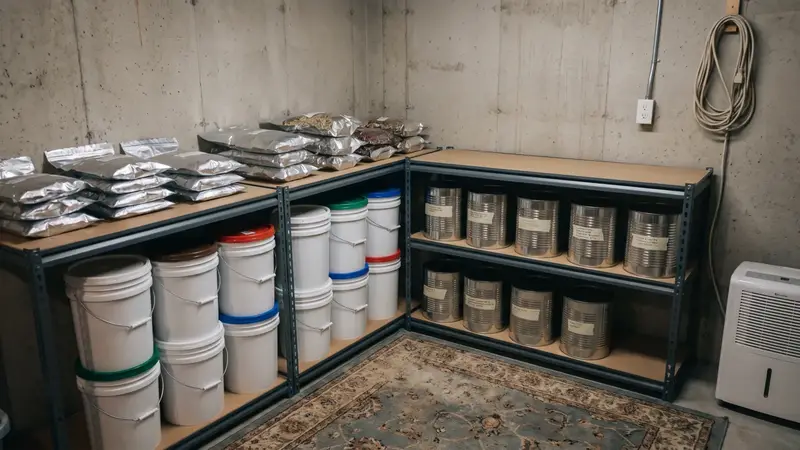 Long-term food storage: how to build a 3-month or 1-year supplyHow to store food for months or a year: which staples last decades, how to pack them with Mylar and oxygen abs…