Backyard chickens for eggs: how to keep them and stay healthy
Keeping backyard chickens for eggs: CDC rules for avoiding Salmonella, kids under 5, bird flu, collecting and storing eggs, coops and local rules to check first.
By Tom Calder · Updated October 24, 2026 · Sourced to CDC
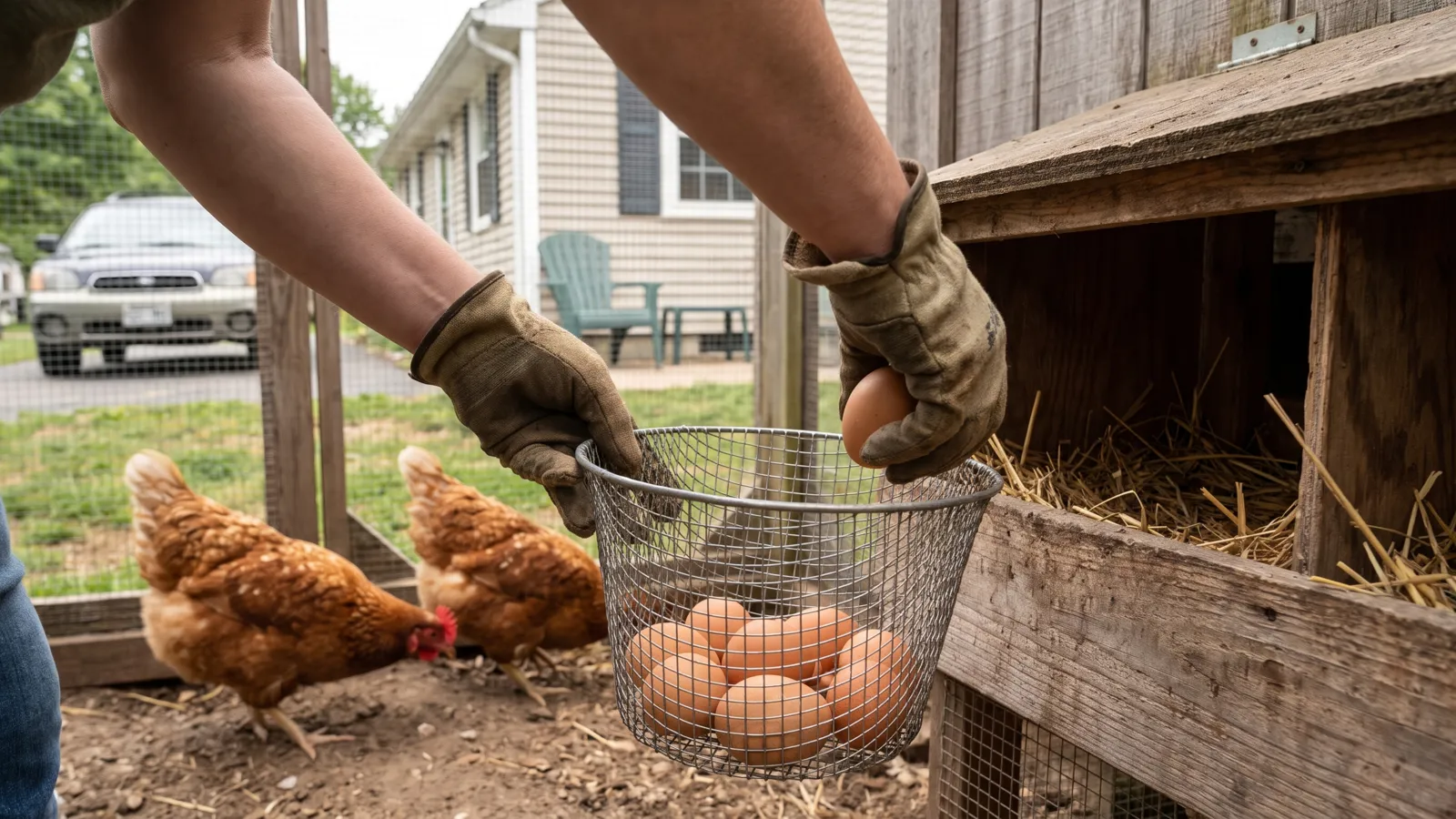
- CDC says many people keep chickens for fresh eggs, and that outbreaks of Salmonella linked to backyard poultry are common.
- Wash your hands with soap and running water after touching birds, eggs or anything in their area.
- Keep poultry out of the house, use a pair of shoes just for the coop, and don't kiss or snuggle the birds.
- Don't let children under 5 handle chicks or other poultry.
- Collect eggs often, throw away cracked ones, don't wash warm fresh eggs, and refrigerate them.
Why keep chickens
A small flock turns kitchen scraps and feed into eggs, and for many households it's the first step toward producing some of their own food. CDC notes that many people keep chickens to have fresh eggs. A few hens in a secure coop is the usual start.
Before you buy birds, check your city or county rules and any homeowners' association covenants, which often limit how many hens you can keep and ban roosters. Plan for daily care, feed, water that won't freeze in winter, and someone to look after them when you're away.
Salmonella: the risk CDC wants you to know
Healthy-looking birds can carry germs. CDC says outbreaks of Salmonella linked to backyard poultry are common, and that young children, older adults and people with weakened immune systems are more likely to get sick from these germs. CDC also recommends routine veterinary care for poultry to keep them healthy and prevent the spread of disease.
The good news is that the precautions are simple and mostly about where your hands, shoes and birds go.
Bird flu: sick or dead birds
Avian influenza is the other illness flock owners hear about. CDC says people should avoid direct contact or close exposure to sick or dead poultry, wild birds and other animals that could be infected, and that if you must have close contact with sick or dead birds, you should wear recommended personal protective equipment.
If birds in your flock fall sick or die suddenly, keep your distance, keep children and pets away, and call your veterinarian or your state's animal health office for advice on what to do next. Keeping wild birds away from your flock's feed and water helps too.
CDC's everyday rules
Wash your hands with soap and running water after touching backyard poultry or anything in the area where they live and roam, including after collecting eggs and handling their food or water containers. Adults should supervise handwashing for young children.
Don't kiss backyard poultry, or snuggle them and then touch your face or mouth. Don't let poultry inside the house, especially where food or drinks are prepared, served or stored. Set aside a pair of shoes for caring for poultry and keep those shoes outside the house.
- Wash hands after touching birds, eggs or equipment
- No kissing or snuggling birds
- Keep poultry and their equipment outside
- Dedicated coop shoes, kept outdoors
- Children under 5 don't handle poultry
Kids and chickens
CDC says not to let children younger than 5 years old handle or touch chicks, ducklings or other poultry, because young children are more likely to get sick from germs like Salmonella. Always supervise children around poultry and while they wash their hands afterward. Older children can help with feeding and egg collection, with handwashing every time.
Collecting and storing eggs
CDC says to collect eggs often, because eggs that sit in the nest can become dirty or break, and to throw away cracked eggs, since bacteria on the shell can more easily get inside through a crack. Clean dirt and debris carefully with fine sandpaper, a brush or a cloth, and don't wash warm, fresh eggs, because colder water can pull bacteria into the egg.
Then clean and refrigerate eggs after collection. For the pantry side of a food supply, our long-term food storage guide covers staples that keep for years.
Many cities and homeowners' associations limit backyard chickens: how many hens, whether roosters are allowed, and how far the coop must be from property lines. Check before you buy a coop or birds.
Common questions
Can backyard chickens make you sick?
Yes. CDC says outbreaks of Salmonella linked to backyard poultry are common. Wash your hands after touching birds, eggs or anything in their area, and keep poultry out of the house.
Should kids handle backyard chickens?
Not children under 5. CDC says young children are more likely to get sick from germs like Salmonella and shouldn't handle or touch chicks, ducklings or other poultry. Supervise older children and their handwashing.
Should I wash eggs from my chickens?
Not warm, fresh eggs. CDC says colder water can pull bacteria into the egg. Clean dirt off carefully with fine sandpaper, a brush or a cloth, throw away cracked eggs and refrigerate them.
Can chickens live in the house?
CDC says not to let backyard poultry inside the house, especially where food or drinks are prepared, served or stored.
Get one calm email when it matters
Seasonal checklists and gear price drops. No spam, unsubscribe any time.
Keep reading
 Long-term food storage: how to build a 3-month or 1-year supplyHow to store food for months or a year: which staples last decades, how to pack them with Mylar and oxygen abs…
 Root cellar: how to store vegetables for months without a fridgeHow a root cellar keeps potatoes, carrots, beets and cabbage for months: storage temperatures and humidity, cu…
 Emergency food storage: how much to store, what to buy and how to keep it safeHow much emergency food to store, from a 3-day kit to two weeks at home: no-cook foods, calories, special diet…
 Home canning for beginners: the USDA way to can safelyHow to start home canning safely: which foods need a pressure canner and which a water bath, the jars and lids…