Fallout shelter: where to shelter after a nuclear explosion
Where to shelter after a nuclear explosion in an ordinary home or building: Ready.gov's get inside, stay inside, stay tuned, the safest spots, 24 hours and decontamination.
By Tom Calder · Updated October 24, 2026 · Sourced to Ready.gov
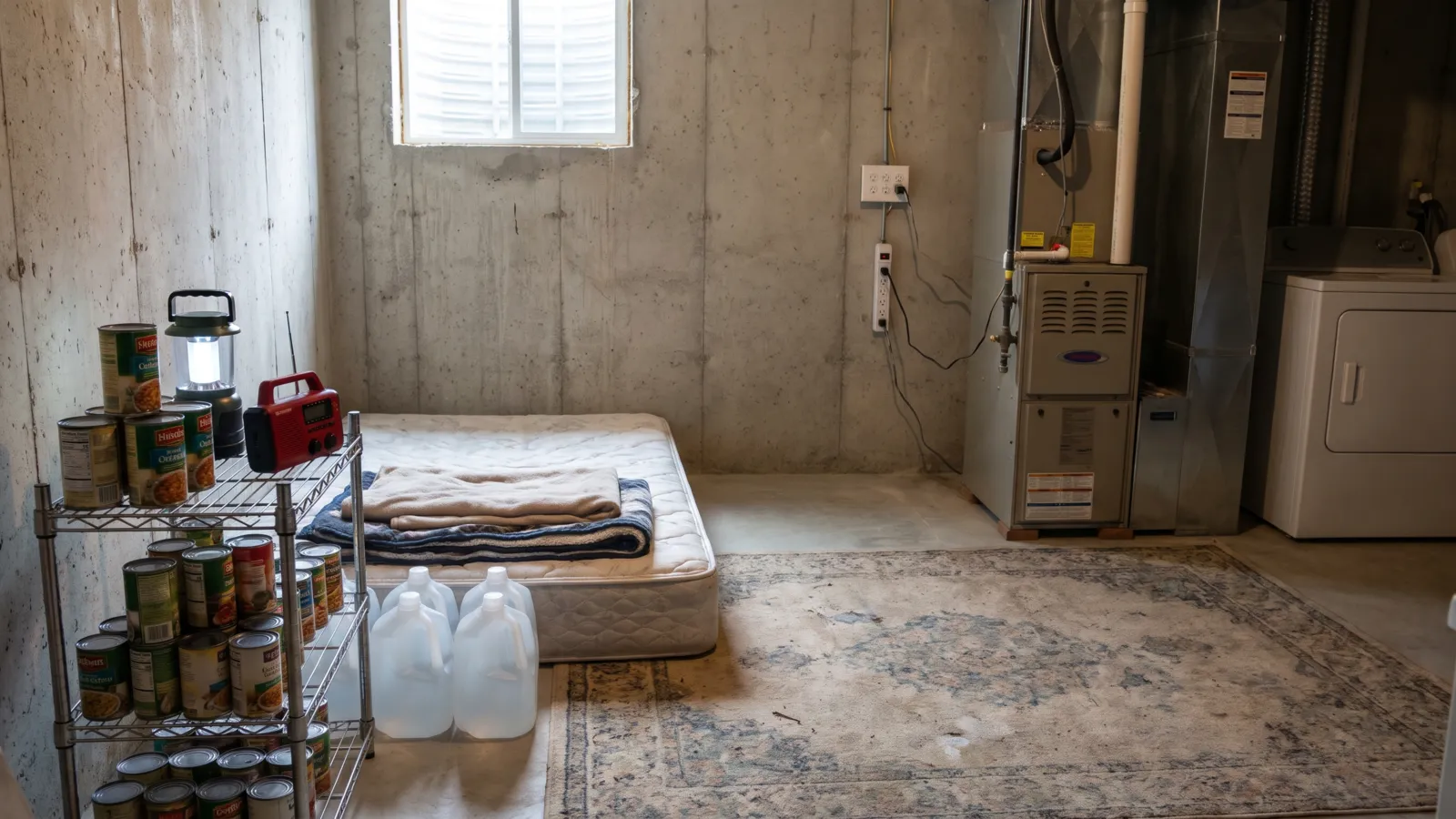
- Ready.gov's rule for any radiation emergency: get inside, stay inside and stay tuned.
- After a detonation you will have 10 minutes or more to find shelter before fallout arrives.
- The best shelter is a basement or the center of a large building; brick or concrete walls are safest.
- Stay in the most protective spot for the first 24 hours unless there's an immediate danger such as fire.
- If you were outside, remove your outer layer of clothing, which removes up to 90% of radioactive material, and wash.
What fallout is, and why shelter works
Ready.gov explains that a nuclear device detonated on the ground can suck material up into the air and create dangerous, sand-like radioactive particles called fallout. Those particles drift downwind and settle. A fallout shelter is simply a place with enough mass between you and the outside, walls, earth and floors, to block most of that radiation while it decays.
Time is on your side. Ready.gov says radiation levels decrease rapidly, becoming significantly less dangerous, during the first 24 hours. That's why the guidance is to get into the best shelter you can reach quickly and stay there, rather than to travel through the fallout.
Get inside: where to shelter
Ready.gov says that after a detonation you will have 10 minutes or more to find an adequate shelter before fallout arrives. If a multi-story building or a basement can be safely reached within a few minutes, go there immediately. The safest buildings have brick or concrete walls.
Inside, put as much building between you and the outside as you can: Ready.gov names a basement or the center of a large building as the most protective locations. If you're warned that a radiation hazard is possible, it says to get inside the nearest building immediately and move away from windows.
- A basement
- The center of a large building
- A building with brick or concrete walls
- Away from windows
Stay inside: the first 24 hours
Ready.gov says to remain in the most protective location, the basement or center of a large building, for the first 24 hours unless you're threatened by an immediate hazard, such as fire. If possible, turn off fans, air conditioners and forced-air heating that bring in outside air, close windows and doors, and close fireplace dampers. Pets and service animals should come inside too.
That's why the supplies matter. Ready.gov's list for radiation emergencies includes a spare change of clothes for each family member, a trash bag for contaminated clothing, and sealed food, water and medicine. Our emergency kit builder and water storage pages cover the basics.
If you were outside: decontaminate
If you were outside during the release, Ready.gov says to remove your outer layer of contaminated clothing, which can remove up to 90% of radioactive material, carefully so radioactive dust doesn't shake loose, and to avoid touching your eyes, nose and mouth. Then shower or wash with soap and water to remove particles from skin or hair that wasn't covered.
If you can't wash, wipe uncovered skin and hair with a wipe or a clean wet cloth. Ready.gov says not to use household cleaning wipes on your skin, and that hand sanitizer does not protect against radioactive material.
Stay tuned, and plan now
Ready.gov's third step is to follow instructions from emergency response officials. If you're told to evacuate, listen for routes, shelters and procedures, and if you've left, don't return until local authorities say it's safe. A battery or crank weather radio keeps you informed if the power and cell networks are down.
Planning ahead is mostly ordinary preparedness: know the best shelter spots at home, at work and at school, identify an out-of-state contact, and keep a kit with water, food and medicine. Ready.gov also suggests learning the shelter and evacuation plans of the schools, workplaces and care facilities your family uses.
Potassium iodide (KI) protects only the thyroid, and only from radioactive iodine. It doesn't replace getting inside. CDC says not to take it unless public health or emergency officials, or a healthcare provider, tell you to. See our potassium iodide guide.
Common questions
How long should I stay in a fallout shelter?
Ready.gov says to stay in the most protective location for the first 24 hours unless you're threatened by an immediate hazard such as fire, and then to follow officials' instructions. Radiation levels drop rapidly during the first 24 hours.
Is a basement a good fallout shelter?
Yes. Ready.gov names a basement or the center of a large building as the most protective locations, and says the safest buildings have brick or concrete walls.
How much time do I have to find shelter?
Ready.gov says you will have 10 minutes or more after a detonation to find adequate shelter before fallout arrives. If a basement or multi-story building is a few minutes away, go there immediately.
Should I take potassium iodide?
Only if officials or a healthcare provider tell you to. CDC says KI protects only the thyroid and doesn't protect against other radioactive materials. Getting inside is the main protection.
Get one calm email when it matters
Seasonal checklists and gear price drops. No spam, unsubscribe any time.
Keep reading
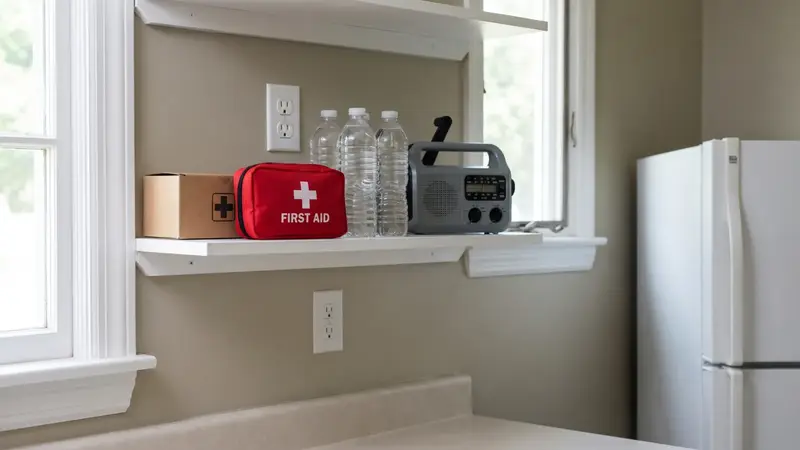 Potassium iodide (KI): what it does, who should take it and whenWhat potassium iodide does in a nuclear emergency, why to take it only when officials say so, who it's for, an…
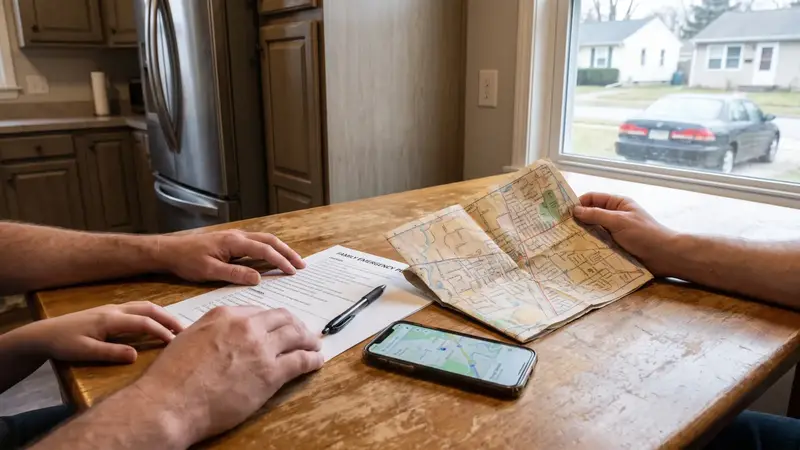 How to make a family emergency plan: steps, questions and a communication planHow to make a family emergency plan: Ready.gov's four steps, the questions to ask, a communication plan, meeti…
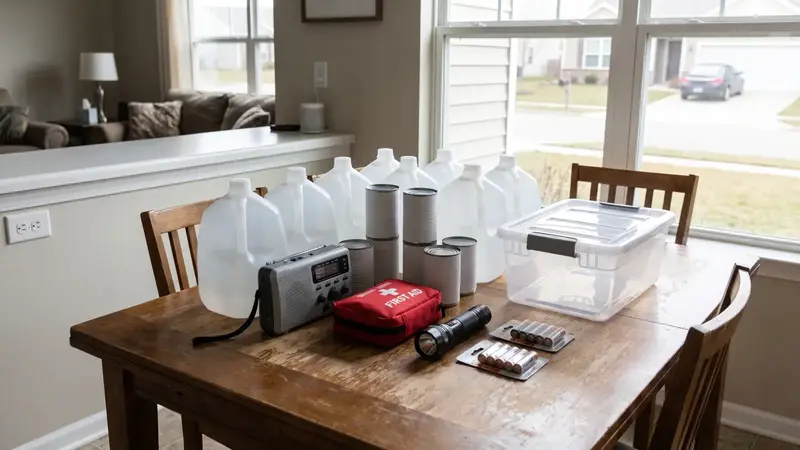 Emergency kit checklist: what to include, how much to keep and where to store itA plain-English emergency kit checklist built on Ready.gov's basic kit and extra items, with how many days of …
 Hurricane preparedness checklist: what to do before, during and after a stormHurricane season dates, watch vs warning, how to find your evacuation zone, storm surge, supplies, and what to…