Root cellar: how to store vegetables for months without a fridge
How a root cellar keeps potatoes, carrots, beets and cabbage for months: storage temperatures and humidity, curing, and what to keep apart, from Minnesota Extension.
By Tom Calder · Updated October 24, 2026 · Sourced to University of Minnesota Extension
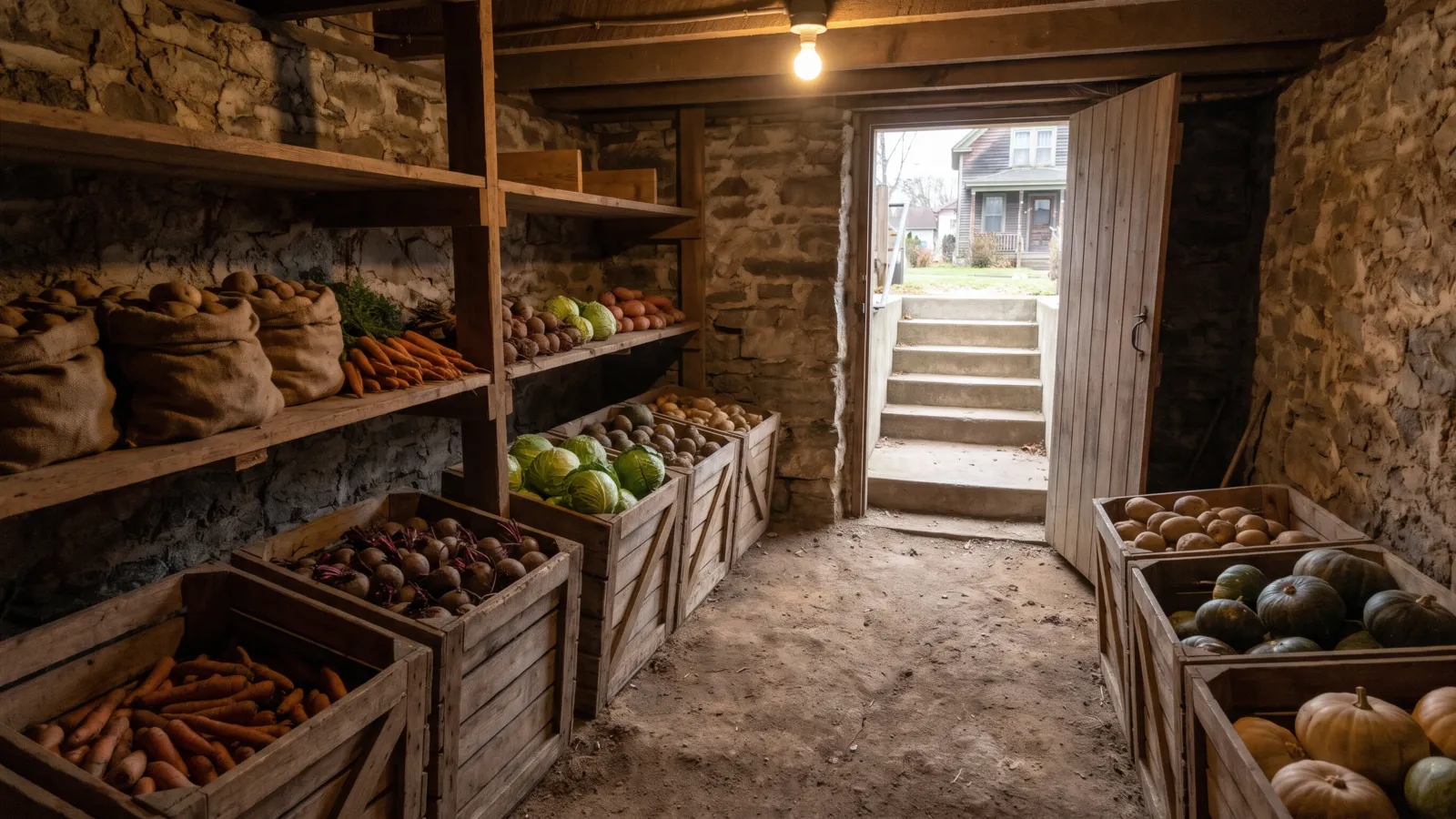
- A root cellar gives cold, moist storage: 32 to 40°F at about 95% relative humidity.
- Root crops such as carrots, beets, potatoes and cabbage keep for months there; onions want cold and dry, squash and pumpkins cool and dry.
- Every 10°F above the ideal can cut storage life by up to 25%, so the coldest spot that doesn't freeze is best.
- Give vegetables ventilation and protect them from rodents.
- Cure potatoes, onions and some others before storing, and keep the crops that need different conditions apart.
What a root cellar does
University of Minnesota Extension says temperature and humidity are the main factors in storing vegetables, and it describes three combinations for long-term storage: cool and dry (50 to 60°F and 60% relative humidity), cold and dry (32 to 40°F and 65%), and cold and moist (32 to 40°F and 95%). Root cellars provide the cold, moist conditions that root crops need.
That matters because a home refrigerator is the wrong kind of cold for most of them. Minnesota Extension says home refrigerators are generally cold and dry, about 40°F and 50 to 60% humidity, which is fine for long-term storage of garlic and onions but not much else.
Temperature: colder is better, down to freezing
For cold storage, Minnesota Extension says 32°F is the ideal temperature, and admits it isn't easy to reach in most homes. Expect shorter shelf lives the further you are from it: the shortening can be up to 25% for every 10 degrees Fahrenheit increase in temperature.
That's why traditional root cellars are dug into the ground or built in the coldest corner of a basement, where the earth holds the temperature steady. Basements in general, the same guide notes, are cool and dry, which suits squash and pumpkins better than root crops. Utah State University Extension gives the same broad advice for dry food storage: keep it cool, with low humidity.
Humidity and air: moist, but not wet
Root crops dry out and shrivel in dry air, which is why a cellar's high humidity helps. But Minnesota Extension warns that unperforated plastic bags often create too much humidity, which leads to condensation and the growth of mold or bacteria, so use perforated bags or open bins.
Vegetables are still alive after harvest. Minnesota Extension says they still breathe and need oxygen to keep their quality, so give them some ventilation, and protect them from rodents. Clean straw, hay or wood shavings make good insulation, as long as they aren't contaminated with pesticides.
What to store, and how long it keeps
Minnesota Extension's storage guide gives cold, moist conditions and these expected shelf lives for common root-cellar crops: carrots without their tops about eight months, beets without their tops five months, and cabbage five months. Potatoes are best stored dark, cold and moist (32 to 40°F, 95% humidity), but potatoes meant for frying keep better at 40 to 50°F, which avoids the cold-induced sweetening that discolors fries.
Some crops want different conditions and shouldn't share the cellar: onions keep about four months cold and dry, winter squash two to six months cool and dry, and pumpkins about two months cool and dry, since they're very sensitive to temperatures below 45°F.
- Carrots (tops off): cold and moist, about 8 months
- Beets (tops off): cold and moist, about 5 months
- Cabbage: cold and moist, about 5 months
- Potatoes: dark, cold and moist; 40 to 50°F for frying potatoes
- Onions: cold and dry, about 4 months
- Winter squash: cool and dry, 2 to 6 months
- Pumpkins: cool and dry, about 2 months
Curing before storage
Some crops need curing first, a few days or weeks in warmer conditions that toughen skins and heal small wounds. Minnesota Extension says to cure potatoes at 50 to 60°F for 14 days before storage, and onions at room temperature for two to four weeks. Winter squash needs no curing, and it says not to cure the Table Queen variety.
Store only sound vegetables: anything bruised, cut or diseased spoils first and can spread rot. Check your stores regularly and use or remove anything going soft.
A root cellar keeps fresh vegetables for months, but not for years. For longer storage, can, dry or freeze-dry the surplus: see our home canning guide and our dehydrator and freeze dryer comparisons.
Common questions
What temperature should a root cellar be?
About 32 to 40°F with about 95% relative humidity for root crops, by University of Minnesota Extension's figures. 32°F is ideal but hard to reach in most homes.
How long do potatoes last in a root cellar?
Months, once cured. Minnesota Extension says to cure potatoes at 50 to 60°F for 14 days and then store them dark, cold and moist, or at 40 to 50°F if they're for frying.
Can I use my basement as a root cellar?
For some crops. Minnesota Extension says basements are generally cool and dry, which suits squash and pumpkins; root crops need a colder, more humid spot, and every 10°F warmer can cut storage life by up to 25%.
Should I store vegetables in plastic bags?
Only perforated ones. Minnesota Extension says unperforated plastic bags often create too much humidity, leading to condensation, mold and bacteria.
Get one calm email when it matters
Seasonal checklists and gear price drops. No spam, unsubscribe any time.
Keep reading
 Home canning for beginners: the USDA way to can safelyHow to start home canning safely: which foods need a pressure canner and which a water bath, the jars and lids…
 Long-term food storage: how to build a 3-month or 1-year supplyHow to store food for months or a year: which staples last decades, how to pack them with Mylar and oxygen abs…
 Emergency food storage: how much to store, what to buy and how to keep it safeHow much emergency food to store, from a 3-day kit to two weeks at home: no-cook foods, calories, special diet…
 Backyard chickens for eggs: how to keep them and stay healthyKeeping backyard chickens for eggs: CDC rules for avoiding Salmonella, kids under 5, bird flu, collecting and …