How to prepare for a 90-day power outage: a staged plan for your home
How to prepare for a 90-day power outage, in stages: water, food, heat, fuel and medicines for 2, 4 or 6 people, and why official advice stops at about 2 weeks.
By Tom Calder · Updated October 30, 2026 · Sourced to Ready.gov, CDC, the American Red Cross, FEMA, EIA, EPA, USDA, FDA and CPSC
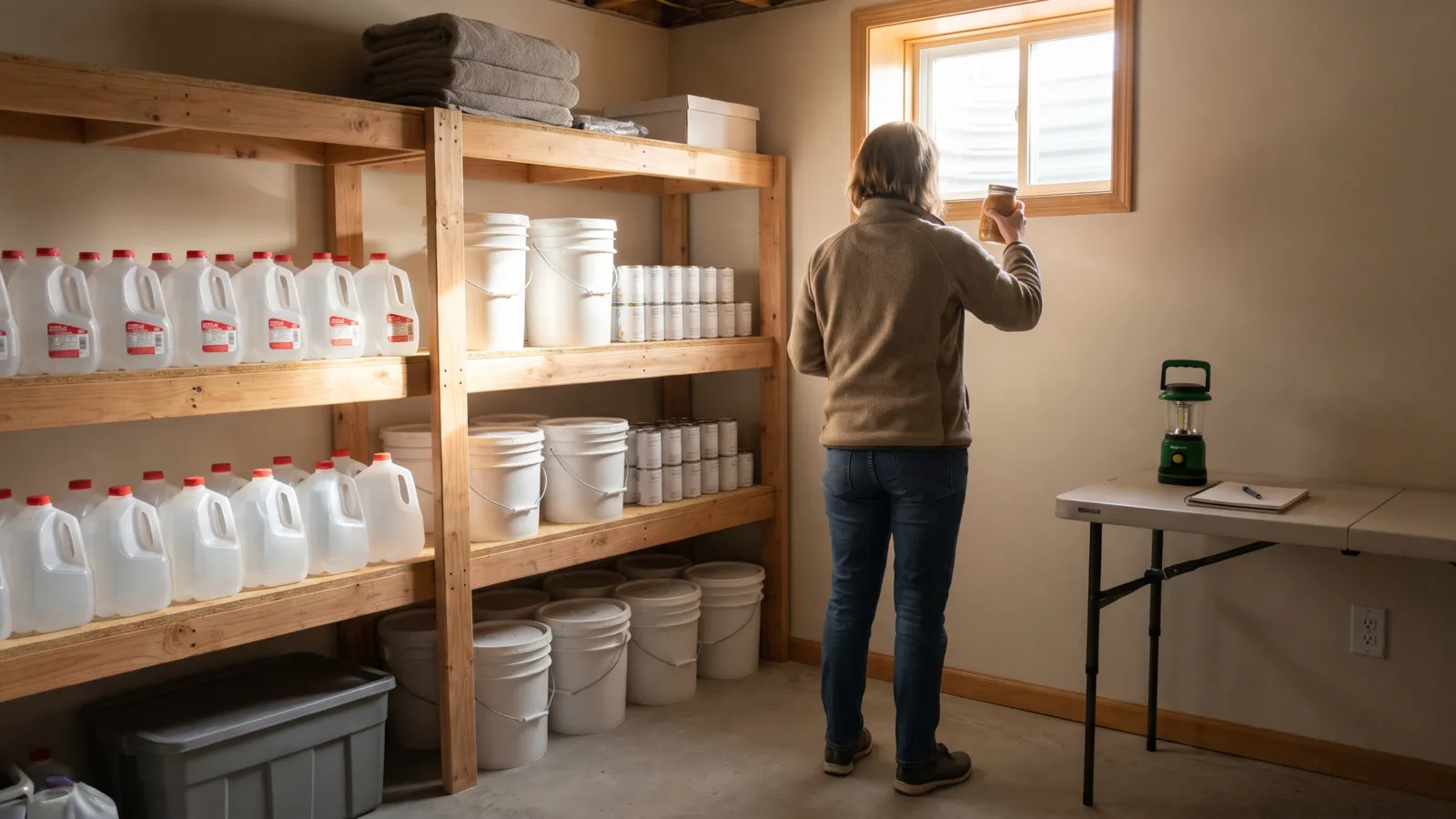
- No agency has warned of a 90-day blackout. Official advice for households runs from several days (Ready.gov) to about 2 weeks (CDC and the Red Cross).
- Treat 90 days as an outer edge, not a target. Plan in stages: 72 hours, 2 weeks, 30 days, 90 days, and stop where it suits your home.
- Water is the hard part: 1 gallon per person per day is 360 gallons for a family of 4 over 90 days. Store 2 weeks and plan to treat the rest.
- Carbon monoxide is one of the most serious risks in a long outage. Never use a gas stove or oven for heat, and run generators outdoors, at least 20 feet from the house.
- A long plan also needs medicines, sanitation, cash, and a decision about when you would leave home for a shelter or family.
 Want it as a plan?The 90-Day Home Plan: water, food, power and heat, stage by stage64 pages to print and tick off. Stop at whichever stage suits your home: most only need the first two.See the plan, $14.99 →
Is a 90-day blackout coming?
No federal agency has told households to prepare for a 90-day outage. The 90-day figure in the news comes from a Pentagon plan for military bases, which we checked in our fact-check. It is a planning target for bases, not a forecast.
Most outages are far shorter. EIA says US electricity customers averaged 11 hours of interruptions in all of 2024, the most in 10 years, driven by hurricanes. Long outages are rare, but they do happen: after Hurricane Maria in 2017, FEMA reported that 21 percent of Puerto Rico's customers had power back after 30 days, 49 percent after 60 days and 65 percent after 90 days.
What official advice actually says
Ready.gov says that after an emergency "you may need to survive on your own for several days," with "food, water and other supplies to last for several days." Its kit, water and food pages all say several days. None of them says two weeks.
The CDC goes further for water: store at least 1 gallon per person, per day for 3 days, and "try to store a 2-week supply if possible." The American Red Cross suggests a 2-week supply of water and food for home. So the official range is several days to about 2 weeks. Anything past that, including 90 days, is your own planning choice.
Plan in four stages, and stop where it suits you
A staged plan lets you build in steps and stop when you have enough. Most households only need the first two stages, which match the official advice. Start with our power outage checklist for Stage 1.
- Stage 1, 72 hours: water, no-cook food, a flashlight for each person, a radio, medicines, CO alarms with battery backup
- Stage 2, 2 weeks: the CDC's and Red Cross's level for home; outdoor cooking, sanitation supplies, two weeks of medicines planned
- Stage 3, 30 days: our own frame; keep the 2-week water store, add a way to treat more, rotate a deeper pantry
- Stage 4, 90 days: our own frame; rotation, water treatment, sanitation, medicines, and a plan for when to leave
Water for 2, 4 and 6 people
At the CDC's rate of 1 gallon per person per day, here is what each stage needs. This is our arithmetic on the CDC figure. Add more for hot weather, pets, pregnancy and illness: Ready.gov says that in very hot temperatures, water needs can double.
A gallon weighs about 8.3 pounds, so 90 days for a family of 4 is about 3,000 pounds of water. Few homes can store that safely. The sensible approach is to store 2 weeks, as in how much water to store, and keep the means to make more water safe: boiling, or unscented household bleach less than a year old. Ready.gov says never to ration drinking water unless authorities tell you to.
- 2 people: 6 gallons for 72 hours, 28 for 2 weeks, 60 for 30 days, 180 for 90 days
- 4 people: 12 gallons for 72 hours, 56 for 2 weeks, 120 for 30 days, 360 for 90 days
- 6 people: 18 gallons for 72 hours, 84 for 2 weeks, 180 for 30 days, 540 for 90 days
Food: a pantry you rotate, not a bunker
There is no official calorie figure for emergency food. FDA uses 2,000 calories a day as a general guide, so 90 days for a family of 4 is about 720,000 calories, or 1,080 meals. Children usually need less and teenagers and active adults more.
Ready.gov's advice is to choose foods your family will eat. A long pantry works only if you eat from it and replace what you use. USDA says high-acid canned foods such as tomatoes and fruit keep their best quality for 12 to 18 months, and low-acid canned foods such as meats and vegetables for 2 to 5 years. Store food below 85°F. Our food storage calculator sizes a pantry for your household, and the long-term food storage guide explains rotation.
Heat, cold and carbon monoxide
Carbon monoxide is one of the most serious risks in a long outage. Ready.gov: "Never use a gas stovetop or oven to heat your home." CDC: "Never use a generator inside your home or garage, even if doors and windows are open." CDC also says never burn charcoal or use a portable gas camp stove indoors.
Ready.gov says to install carbon monoxide detectors with battery backup in central locations on every level of your home. CDC adds: put battery-operated or battery back-up CO detectors near every sleeping area. If the house gets too cold or too hot, Ready.gov's advice is to check with local officials about heating and cooling locations open near you. More in staying warm without power and carbon monoxide poisoning.
Generators and fuel
A generator helps in a short outage, but fuel is the limit on a long one. Ready.gov: generators and fuel should always be used outdoors and at least 20 feet away from windows, doors and attached garages. CDC says more than 20 feet from windows, doors and vents. Let the generator cool before refueling. Our generator safety guide has the full rules.
CPSC says never store fuel for your generator in the home: keep gasoline, propane and kerosene outside living areas in properly labeled, non-glass safety containers, away from fuel-burning appliances. How much you may store is set by your local fire code, so ask your fire department. For the later stages, plan for things that need no stored fuel: battery and solar charging, food that needs no cooking, and warming and cooling centers.
Medicines, sanitation and cash
Ready.gov notes that about half of all Americans take a prescription medicine every day, and an emergency can make refills hard. Talk to your doctor or pharmacist about building a small emergency supply. If the power is out for more than a day, Ready.gov says to discard medicine that should be refrigerated unless the label says otherwise, and to consult your doctor or pharmacist for a new supply. If a life depends on the medicine, CDC says to use it only until a new supply is available. FDA says insulin vials or cartridges may be kept unrefrigerated between 59°F and 86°F for up to 28 days. See medical devices in a power outage.
For hygiene, CDC says if soap and water are not available, use hand sanitizer with at least 60% alcohol. Keep garbage in rodent-proof containers with tight lids. Ready.gov's kit lists garbage bags, plastic ties and moist towelettes for personal sanitation. Ready.gov also says to keep a small amount of cash at home in small bills, because ATMs and credit cards may not work during a disaster.
Know when you would leave
A long-outage plan should include the point where staying home stops making sense: the house cannot be kept at a safe temperature, a medical device or medicine cannot be kept going, water cannot be made safe, or officials tell you to leave. Agree on it as a household, and write down where you would go: a shelter, a warming or cooling center, or family elsewhere. Leaving is part of the plan, not a failure of it.
You do not need 90 days of supplies to be well prepared. A household that finishes Stage 1 and works toward 2 weeks has done what the CDC and the Red Cross ask. The later stages are for homes with a reason to go further, such as a well pump, a rural line or a medical need, and they are a choice, not a test.
Common questions
How do I prepare for a 90-day power outage?
Plan in stages: 72 hours, 2 weeks, 30 days, then 90 days. Store 2 weeks of water at 1 gallon per person per day and keep a way to treat more. Keep a rotating pantry, plan medicines with your prescriber, have CO alarms with battery backup, and decide when you would leave home.
Is the government telling people to prepare for a 90-day blackout?
No. Ready.gov says to be ready to manage on your own for several days. CDC says to try to store a 2-week supply of water if possible, and the Red Cross suggests 2 weeks of water and food for home. The 90-day figure in the news is a Pentagon target for military bases.
How much water do I need for 90 days?
At the CDC's 1 gallon per person per day: 180 gallons for 2 people, 360 for 4 and 540 for 6, before extra for heat, pets or illness. That is about 3,000 pounds for a family of 4, so most homes store 2 weeks and plan to treat the rest by boiling or with unscented bleach.
How much food do I need for 90 days?
Using FDA's general guide of 2,000 calories a day, 90 days is about 360,000 calories for 2 people, 720,000 for 4 and 1,080,000 for 6. Store foods your family already eats and rotate them. USDA says low-acid canned foods keep their best quality for 2 to 5 years.
Can I run a generator for 90 days?
Rarely. Fuel is the limit: local fire codes cap how much you can store at home, and CPSC says never store generator fuel in the home. Run any generator outdoors, at least 20 feet from windows, doors and vents, and plan the later stages around things that need no stored fuel.
Has the US ever had a 90-day outage?
Parts of it have. After Hurricane Maria in 2017, FEMA reported that Puerto Rico's whole grid failed, and that 65 percent of customers had power back after 90 days. Most US outages are far shorter: EIA says customers averaged 11 hours without power in all of 2024.
Sources (19)
- Ready.gov: Build a Kit
- Ready.gov: Water
- Ready.gov: Food
- Ready.gov: Power Outages
- Ready.gov: Financial Preparedness
- CDC: Creating and storing an emergency water supply
- CDC: Carbon monoxide poisoning basics
- CDC: About handwashing
- CDC: Preparedness and safety messaging for hurricanes, flooding and similar disasters (PDF)
- American Red Cross: Survival kit supplies
- EIA: Hurricanes in 2024 led to the most hours without power in 10 years
- FEMA: One year later (Hurricane Maria, Sept 6, 2018)
- USGS: Facts about water
- EPA: Emergency disinfection of drinking water
- FDA: Calories on the Nutrition Facts label
- USDA FSIS: Food product dating
- USDA FSIS: Shelf-stable food safety
- FDA: Insulin storage in an emergency
- CPSC: Portable generator hazards (PDF)
Get one calm email when it matters
Seasonal checklists and gear price drops. No spam, unsubscribe any time.
Keep reading
 Power outage checklist: what to do before, during and afterA calm power outage checklist from Ready.gov and CDC: what to prepare, how to protect food, medicines and medi…
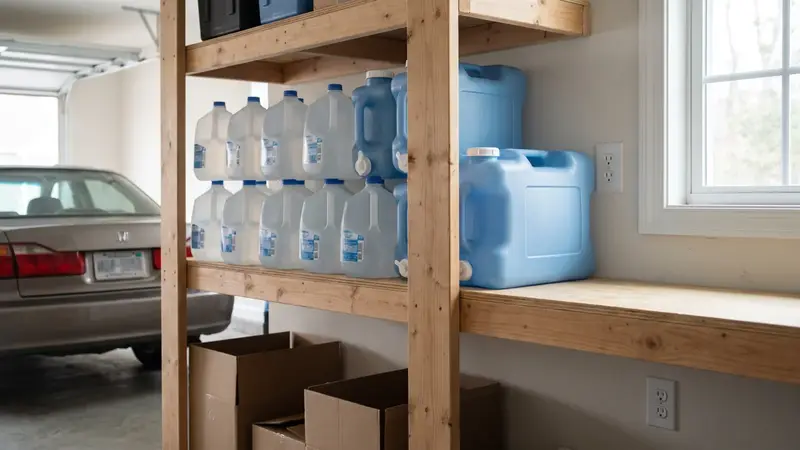 How much water to store for an emergency: per person, per pet and for how longHow much water to store for an emergency: 1 gallon per person per day, pets, which containers to use, when to …
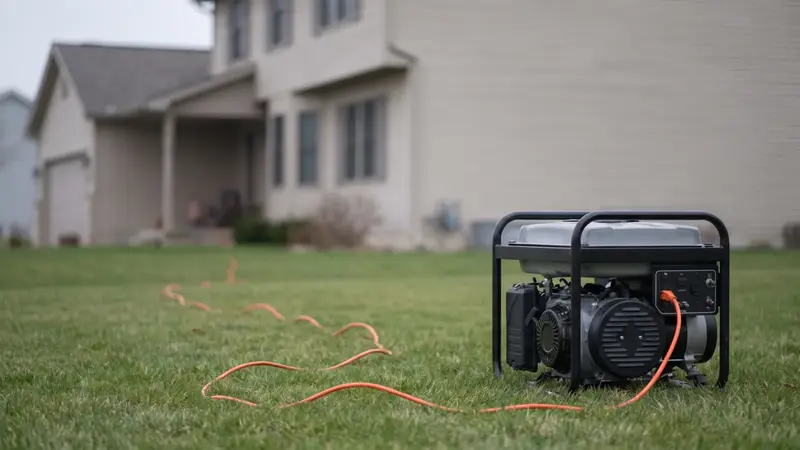 Portable generator safety: where to run it, carbon monoxide and cordsHow to use a portable generator safely in an outage: 20 feet from windows, never in a garage, CO alarms, outdo…
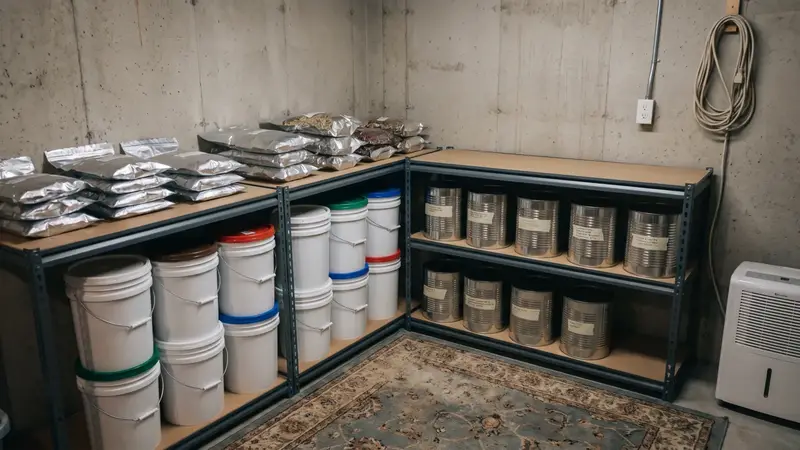 Long-term food storage: how to build a 3-month or 1-year supplyHow to store food for months or a year: which staples last decades, how to pack them with Mylar and oxygen abs…