Tornado, hurricane or earthquake kit: what goes in every kit and what changes by disaster
One basic emergency kit covers most disasters. See what Ready.gov puts in every kit, and what changes for a tornado, hurricane or earthquake.
By Tom Calder · Updated October 30, 2026 · Sourced to Ready.gov and FEMA
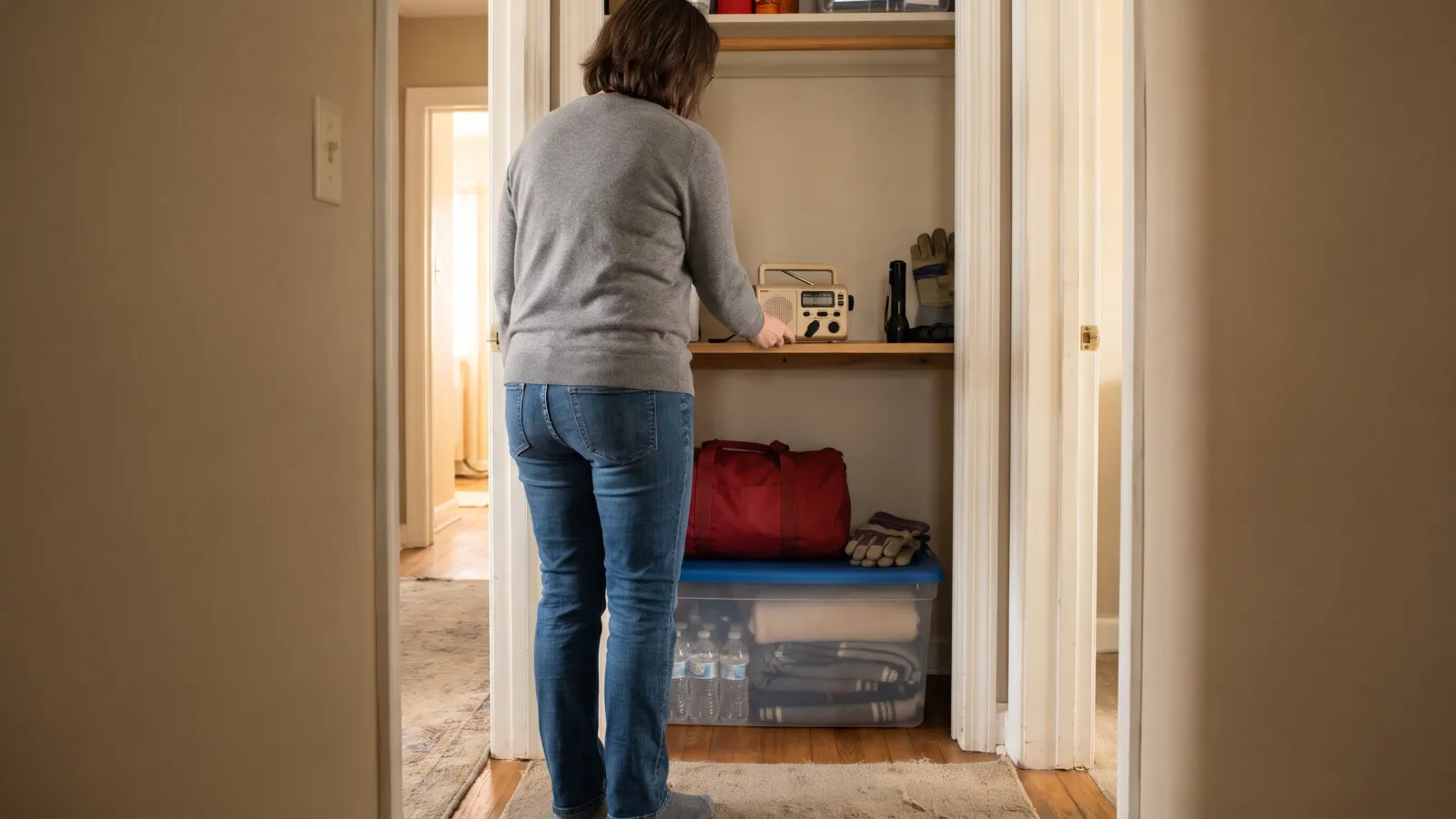
- One basic kit is the starting point for all three. Ready.gov publishes one basic disaster supplies kit checklist: water, food, a radio, a flashlight, a first aid kit and more.
- What changes is mostly the plan. Tornado: where you shelter. Hurricane: whether you leave. Earthquake: what is secured and what is on low shelves.
- Ready.gov says a hurricane may leave you without supplies "for days or even weeks," so keep medicines and pet supplies in a go bag or car trunk.
- You do not have to buy everything at once. Ready.gov says those who can afford it should make essential purchases and slowly build up supplies.
- A standard homeowner's insurance policy does not cover earthquake damage, says Ready.gov.
What goes in every kit
Ready.gov says that after an emergency you may need to survive on your own for several days, and that being prepared means having your own food, water and other supplies to last for several days. Its basic disaster supplies kit is one checklist, not one per hazard. Our emergency kit checklist and go bag checklist go into the detail; this is the short version from Ready.gov.
Ready.gov suggests storing items in airtight plastic bags and putting the whole kit in one or two easy-to-carry containers such as plastic bins or a duffel bag. For water, see how much water to store.
- Water: one gallon per person per day for several days, for drinking and sanitation
- Food: at least a several-day supply of non-perishable food, and a manual can opener
- Battery-powered or hand crank radio and a NOAA Weather Radio with tone alert
- Flashlight and extra batteries
- First aid kit
- Whistle, to signal for help
- Dust mask, to help filter contaminated air
- Plastic sheeting, scissors and duct tape, to shelter in place
- Moist towelettes, garbage bags and plastic ties, for personal sanitation
- Wrench or pliers, to turn off utilities
- Local maps
- Cell phone with chargers and a backup battery
Add what your household needs, from what you already own
Ready.gov's list of extras includes prescription and non-prescription medications, eyeglasses and contact lens solution, infant formula and diapers, pet food and extra water for your pet, cash, copies of important documents, a sleeping bag or warm blanket for each person, a change of clothing and sturdy shoes, a fire extinguisher, matches in a waterproof container, and games or books for children.
Much of that is already in your home. Ready.gov also says not everyone can afford to stock up on necessities, and that those who can should make essential purchases and slowly build up supplies. Start with water and any medicines, then add a radio and light. If you want to compare gear, see our weather radios, flashlights and lanterns, first aid kits and power banks, which rank by independent ratings, not by price.
Ready.gov says to maintain the kit: keep canned food in a cool, dry place, store boxed food in tightly closed plastic or metal containers, replace expired items as needed, and re-think your needs every year. It also says to prepare supplies for home, work and your car, since you do not know where you will be.
Tornado: the kit is the same, the shelter is the plan
Ready.gov says a tornado can happen anytime and anywhere and can bring winds over 200 miles per hour, with a greater risk in the Midwest and the Southeast. Ready.gov says to go immediately to a safe location that you have identified, so the choice that matters is where you go. Ready.gov says to identify and practice going to a safe shelter, such as a safe room built using FEMA criteria or a storm shelter built to ICC 500 standards. It says the next best protection is a small, interior, windowless room or a basement on the lowest level of a sturdy building.
Keep your radio and shoes where you shelter. Ready.gov says to pay attention to the Emergency Alert System, NOAA Weather Radio or local alerting systems, and to use your arms to protect your head and neck. After a tornado it says to stay clear of fallen power lines or broken utility lines, and to wear thick-soled shoes, long pants and work gloves for clean-up. See tornado preparedness for watch versus warning and sheltering in other buildings, and emergency alerts on your phone.
Hurricane: the kit has to be able to leave
Ready.gov says storm surge has historically been the leading cause of hurricane-related deaths in the United States, and that hurricanes can bring wind damage, rip currents and flooding to any U.S. coast. The Atlantic hurricane season runs June 1 to November 30, and the Eastern Pacific season May 15 to November 30. Track current storms on our hurricane page.
What changes is that you may be told to go. Ready.gov says to know your evacuation zone, learn your evacuation routes, practice with your household and pets, and identify where you will stay, and that if you live in a mandatory evacuation zone and local officials tell you to evacuate, you should do so immediately. It says to include medication, disinfectant supplies and pet supplies in your go bag or car trunk, because you may not have access to them for days or even weeks. Keep your phone charged when a hurricane is in the forecast and have backup charging devices.
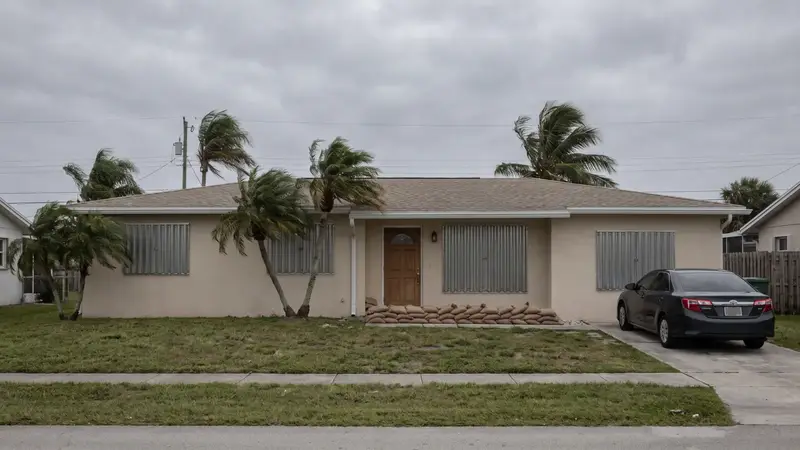
Ready.gov also says to keep insurance policies and personal documents up to date, make copies and keep them in a secure password-protected digital space; to de-clutter drains and gutters, bring in outside furniture and consider hurricane shutters; and, during a storm, to take refuge in a designated storm shelter or an interior room for high winds. See our hurricane preparedness guide and flood preparedness.
Earthquake: secure the house before it shakes
Ready.gov says the best time to prepare for any disaster is before it happens, so most of the work is done in advance. Ready.gov says to secure heavy items like bookcases, refrigerators, water heaters, televisions and objects that hang on walls, and to store heavy and breakable objects on low shelves. Its kit advice for earthquakes names enough food and water for several days, a flashlight, a fire extinguisher and a whistle. Ready.gov says the whistle matters if you are trapped: instead of shouting, use a whistle.
When the shaking starts, Ready.gov says to Drop (or Lock), Cover and Hold On, to stay inside if you are inside and avoid doorways, and to expect aftershocks. Afterward it says there can be serious hazards, such as damage to the building, leaking gas and water lines or downed power lines, and not to enter damaged buildings. Our earthquake preparedness guide covers the steps, and recent earthquakes are on our earthquakes page.
Ready.gov says a standard homeowner's insurance policy does not cover earthquake damage, and suggests considering an earthquake insurance policy. That is a money decision to take to your insurer, not something to buy from a guide.
Electrical and flood-water safety, and shutting off utilities
Ready.gov's hurricane page says: "Do not touch electrical equipment if it is wet or if you are standing in water. If it is safe to do so, turn off electricity at the main breaker or fuse box to prevent electric shock." It adds: "Do not wade in flood water, which can contain dangerous pathogens that cause illnesses. This water also can contain debris, chemicals, waste and wildlife. Underground or downed power lines can electrically charge the water."
Ready.gov's basic kit includes a wrench or pliers to turn off utilities. Our guide to shutting off utilities explains when and how, including why only a qualified professional can turn gas back on. After a disaster, Ready.gov says to save phone calls for emergencies, because phone systems are often down or busy, and to use text messages or social media to reach family and friends.
A quick comparison
The same kit, three different priorities. This table is our summary of the Ready.gov points above, not an agency's wording.
- Tornado: same kit; the plan is a safe room or storm shelter, or else a small, interior, windowless room or basement on the lowest level of a sturdy building, and a way to get alerts
- Hurricane: same kit packed to leave; know your evacuation zone; medicines and pet supplies in the go bag; copies of documents in a secure digital space; keep phones charged
- Earthquake: same kit with food and water for several days, a flashlight, a fire extinguisher and a whistle; secure heavy furniture and appliances, and keep heavy items low
Ready.gov says not everyone can afford to stock up on necessities, and that those who can afford it should make essential purchases and slowly build up supplies. Start with water, medicines and a flashlight, and add the rest over time.
Common questions
Do I need a different emergency kit for each disaster?
No. Ready.gov publishes one basic disaster supplies kit checklist. What changes by hazard is your plan, such as where to shelter, whether to evacuate, and how to secure your home.
How much water should be in the kit?
Ready.gov says one gallon per person per day for several days, for drinking and sanitation.
Where should I shelter in a tornado?
Ready.gov says a safe room built using FEMA criteria or a storm shelter built to ICC 500 standards is best. The next best protection is a small, interior, windowless room or a basement on the lowest level of a sturdy building.
Does homeowner's insurance cover earthquakes?
Ready.gov says a standard homeowner's insurance policy does not cover earthquake damage.
When is hurricane season?
Ready.gov gives June 1 to November 30 for the Atlantic and Central Pacific, and May 15 to November 30 for the Eastern Pacific.
Where should I keep the kit?
Ready.gov says to prepare supplies for home, work and your car, keep the home kit in a designated place and make sure all family members know where it is.
Get one calm email when it matters
Seasonal checklists and gear price drops. No spam, unsubscribe any time.
Keep reading
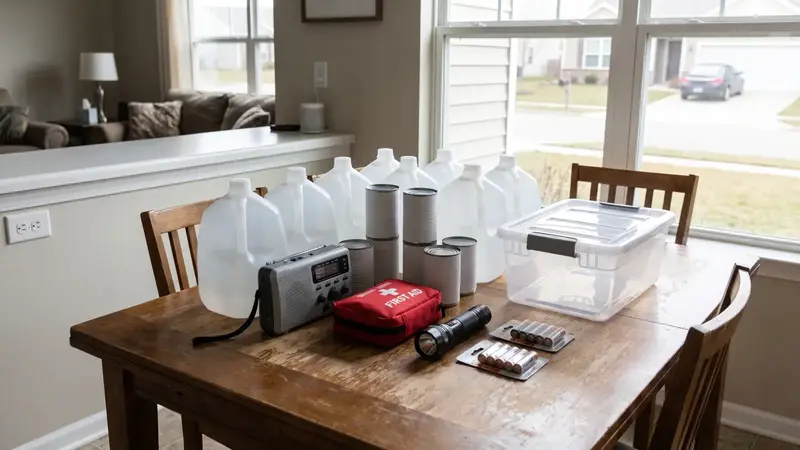 Emergency kit checklist: what to include, how much to keep and where to store itA plain-English emergency kit checklist built on Ready.gov's basic kit and extra items, with how many days of …
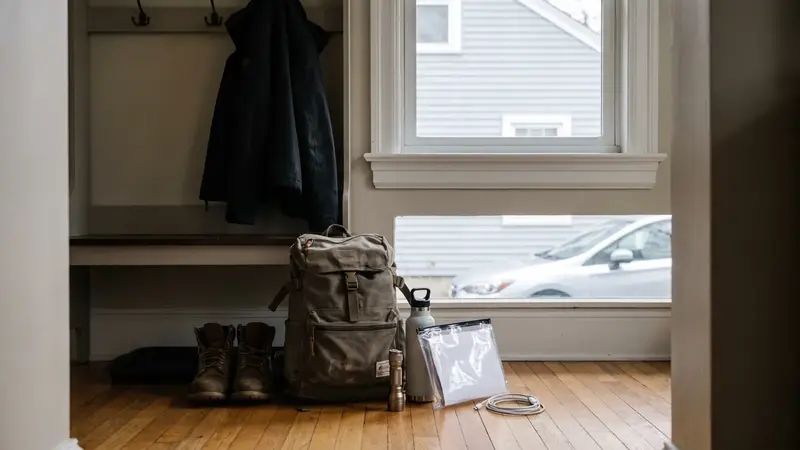 Go-bag checklist: what to pack in case you have to evacuateWhat to pack in a go-bag: documents, medications, cash, chargers, per-person items, kids and pets, and how it …
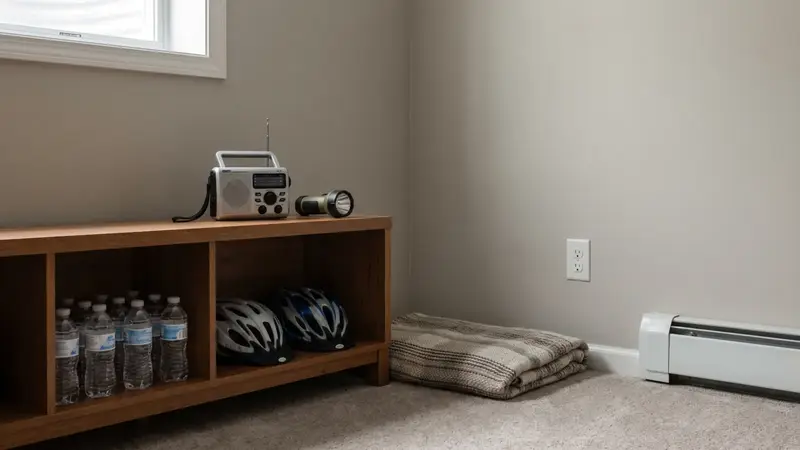 Tornado preparedness: watch vs warning, where to shelter and what to do afterTornado watch vs warning, where to shelter in a house, apartment, mobile home or car, how to get NOAA Weather …
 Hurricane preparedness checklist: what to do before, during and after a stormHurricane season dates, watch vs warning, how to find your evacuation zone, storm surge, supplies, and what to…