How to prepare for food shortages: what USDA, FEMA and Ready.gov say
How to prepare for food shortages at home: what USDA and Ready.gov say, how much to keep, how long canned food lasts, and why a steady pantry beats stockpiling.
By Tom Calder · Updated October 30, 2026 · Sourced to USDA (ERS, FSIS, FNS), Ready.gov, the American Red Cross and the FDA
- We found no current USDA or FDA warning of a US food shortage. USDA's Economic Research Service forecasts food prices, not shortages: all food up 2.8 percent in 2026 and 1.7 percent in 2027.
- Official preparedness advice is modest: Ready.gov says to store at least a several-day supply of non-perishable food, and the Red Cross suggests 2 weeks at home.
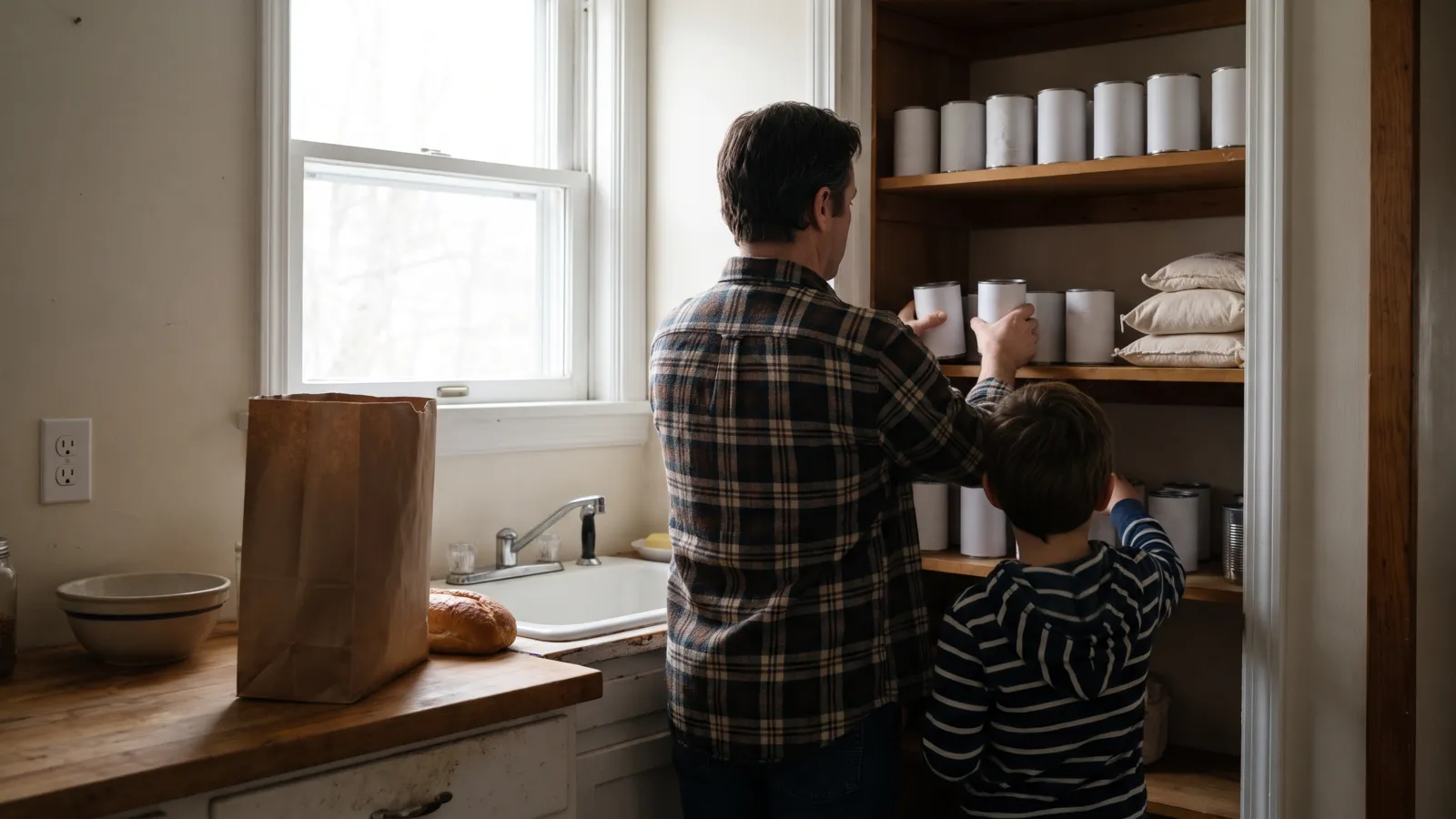
- The useful kind of preparing is a pantry of foods your family already eats, replaced as you use it. You do not need to buy a large amount at once.
- The Red Cross suggests 2 weeks of food at home. Ready.gov asks for at least a several-day supply.
- If money is tight, USDA's SNAP program and local food banks are the official routes to help.
Is the US facing a food shortage?
We checked USDA's current pages and found no warning of a national food shortage, and no statement from USDA or the FDA telling households to stock up. We also found no USDA statement telling people not to, so we say nothing on that either way.
What USDA does publish is price data. Its Food Price Outlook, updated October 23, 2026, says "in 2026, prices for all food are forecast to increase 2.8 percent" and "in 2027, prices for all food are forecast to increase 1.7 percent, with a forecast interval of -2.5 to 6.2 percent." It adds that "food prices in September 2026 were 2.5 percent higher than in September 2025," and that over the previous 20 years prices rose 3.0 percent per year on average. That is about what food costs, not whether it is on the shelf.
There is history on how past scares played out. In April 2020, the FDA said of empty shelves during COVID that "these shortages are temporary because of unprecedented consumer demand, not a lack of the food system's ability to produce, process and deliver food." In October 2024, responding to labor disputes at East Coast and Gulf Coast ports, USDA said it did not "expect shortages anytime in the near future for most items." Both statements are old and about those events, so we give them only as examples of how official analysis has looked.
What official advice asks of a household
Ready.gov says: "Store at least a several-day supply of non-perishable food." It adds "choose foods your family will eat" and "remember any special dietary needs." Its example list includes ready-to-eat canned meats, fruits and vegetables, protein or fruit bars, dry cereal or granola, peanut butter, dried fruit, canned juices, and non-perishable pasteurized milk, plus a manual can opener.
The American Red Cross goes further for home: "non-perishable, easy-to-prepare items (3-day supply for evacuation, 2-week supply for home)." So the official range is several days to 2 weeks. A longer pantry is your own choice, and our emergency food storage and long-term food storage guides cover how to do it.
A calm way to build a pantry
Ready.gov's low and no cost page suggests building a kit "over time": "When you go to the grocery store, you can pick up an extra item each time that you use regularly, especially if it's on sale!" That is the whole method. Spreading it over normal shopping trips also avoids one big spend (our view).
Use our non-perishable food list to pick items, and our food storage calculator to see what a 2-week supply looks like for your household. Buy what you will eat before it expires, and eat the oldest first.
How long stored food lasts
USDA's Food Safety and Inspection Service says: "High-acid canned foods (e.g., tomatoes and fruits) will keep their best quality for 12 to 18 months. Whereas low-acid canned foods (e.g., meats and vegetables) will keep for two to five years." It says to discard cans that are dented, leaking, bulging or rusted. Ready.gov says to "keep canned food in a cool, dry place" and "store boxed food in tightly closed plastic or metal containers." It also says to replace expired items as needed.
Rotating is simple: put new cans behind old ones, and write the month you bought them on the lid.
If the power goes out, the fridge is the weak point
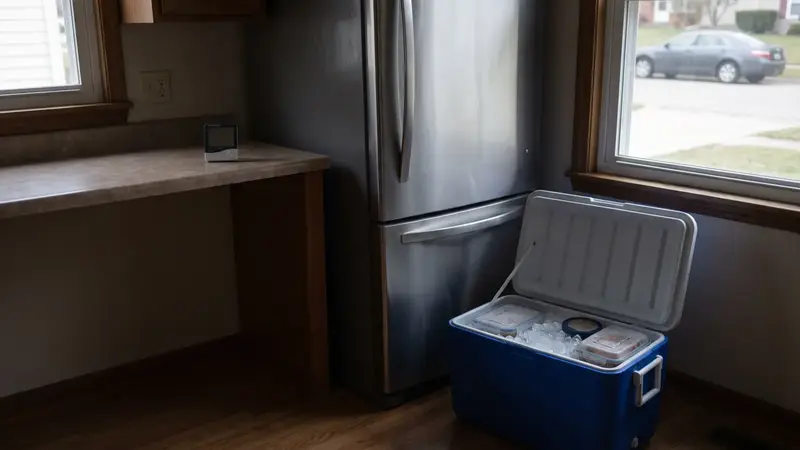
Ready.gov notes that a power outage can "cause food spoilage and water contamination." USDA says "the refrigerator will keep food safely cold for about 4 hours if it is unopened. A full freezer will hold the temperature for approximately 48 hours (24 hours if it is half full) if the door remains closed." It says to keep meat, poultry, fish and eggs at or below 40°F, and "never taste food to determine its safety." Ready.gov says to throw out perishable food that has been above 40°F for two hours or more. See food safety in a power outage.
If you cook on a camp stove or grill during an outage, Ready.gov says: "Generators, camp stoves or charcoal grills should always be used outdoors and at least 20 feet away from windows." It also says: "Never use a gas stovetop or oven to heat your home."
When money is the shortage
If the problem is money rather than empty shelves, there is official help. USDA's Food and Nutrition Service says SNAP "provides food benefits to low-income families to supplement their grocery budget so they can afford the nutritious food essential to health and well-being," and its SNAP page lists a Disaster SNAP program (D-SNAP). Ready.gov notes that "community food banks are a potential resource for food-insecure families to stock their emergency supply kits." Applying for benefits is also on Ready.gov's financial preparedness list.
You do not need to stock up because of a food-shortage headline. If you have a week of food your family likes, and a fridge you keep closed in an outage, you are at the level Ready.gov asks for. Add a little each shop if you want a 2-week cushion. Buying a lot in one go is a bigger spend at once, and the food may go past its best before you eat it.
Common questions
Is there a food shortage in the US?
We found no current USDA or FDA warning of one. USDA's October 23, 2026 outlook forecasts food prices up 2.8 percent in 2026 and 1.7 percent in 2027, and it is a price forecast, not a shortage warning.
How much food should I store?
Ready.gov says at least a several-day supply of non-perishable food. The Red Cross suggests 3 days for evacuation and 2 weeks for home. Choose foods your family will eat.
How long do canned goods last?
USDA's FSIS says high-acid canned foods such as tomatoes and fruit keep their best quality for 12 to 18 months, and low-acid canned foods such as meats and vegetables for two to five years. Discard cans that are dented, leaking, bulging or rusted.
Should I buy extra groceries now?
Official advice does not ask for it. Ready.gov suggests picking up an extra item each time you shop, on sale if possible, and building a kit over time.
Where can I get help buying food?
USDA's SNAP program provides food benefits to low-income families, and Ready.gov says community food banks are a resource for stocking emergency kits. Check your state's SNAP office for how to apply.
Sources (13)
- USDA ERS: Food Price Outlook, summary findings
- Ready.gov: Food
- Ready.gov: Build a Kit
- Ready.gov: Low and No Cost Preparedness
- Ready.gov: Financial Preparedness
- Ready.gov: Power Outages
- American Red Cross: Survival kit supplies
- USDA FSIS: Food product dating
- USDA FSIS: Keeping food safe during an emergency
- USDA FNS: Supplemental Nutrition Assistance Program
- FDA: Food safety and availability during and beyond COVID-19 (April 16, 2020)
- USDA: Statement on East Coast and Gulf Coast ports (Oct. 1, 2024)
- USDA FSIS: Steps to keep food safe
Get one calm email when it matters
Seasonal checklists and gear price drops. No spam, unsubscribe any time.
Keep reading
 Emergency food storage: how much to store, what to buy and how to keep it safeHow much emergency food to store, from a 3-day kit to two weeks at home: no-cook foods, calories, special diet…
 Non-perishable food list: what to stock for an emergencyA non-perishable food list from Ready.gov: canned meats, fruit and vegetables, bars, cereal, peanut butter, dr…
 Long-term food storage: how to build a 3-month or 1-year supplyHow to store food for months or a year: which staples last decades, how to pack them with Mylar and oxygen abs…
 Food safety in a power outage: how long food lasts and what to throw outHow long food stays safe in the fridge and freezer without power, what to throw out, and when you can refreeze…