A cheap 72-hour emergency kit from Walmart or Target: what to buy on a budget
How to build a 72-hour emergency kit cheaply from Walmart or Target: the Ready.gov list, what to buy first, what to skip, and what you probably already own.
By Tom Calder · Updated October 30, 2026 · Sourced to Ready.gov, CDC and the American Red Cross. We quote no store prices
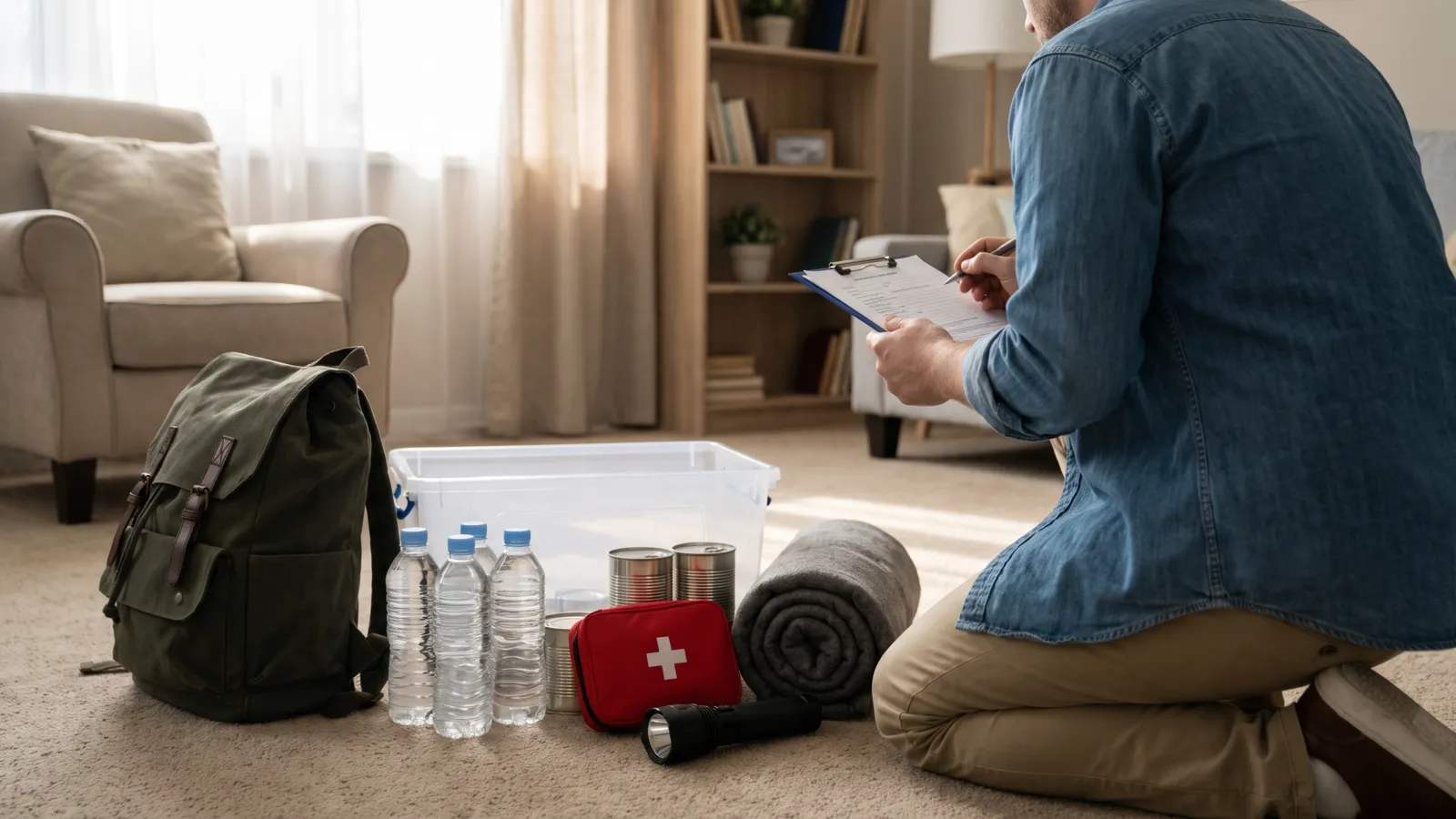
- Start with what you already own. Ready.gov says to build a kit over time and to begin with items such as a flashlight, extra batteries, copies of important documents, water and non-perishable food.
- The core list is short: water, food, a light, a radio, a first aid kit, batteries, medicines and a few basics.
- Water is the biggest item. The CDC says to store at least 1 gallon per person per day for 3 days. That is 3 gallons for one person, or 12 gallons for a family of 4 (our arithmetic).
- We do not quote prices because store prices change. Pick the plain, store-brand version of each item and check the shelf tag.
- Skip anything labeled a survival kit unless it contains items you need. You can build the same thing from the Ready.gov list and choose items that suit your household.
What a 72-hour kit needs
Ready.gov says that "after an emergency, you may need to survive on your own for several days." Its basic kit list is: water (one gallon per person per day for several days, for drinking and sanitation), at least a several-day supply of non-perishable food, a battery-powered or hand crank radio and a NOAA Weather Radio with tone alert, a flashlight, a first aid kit, extra batteries, a whistle, a dust mask, plastic sheeting, scissors and duct tape, moist towelettes, garbage bags and plastic ties, a wrench or pliers to turn off utilities, a manual can opener, local maps, and a cell phone with chargers and a backup battery.
The Red Cross list is similar and adds a 7-day supply of medications, a multi-purpose tool, copies of personal documents, family and emergency contact information, extra cash and an emergency blanket. The Red Cross suggests a 3-day supply for evacuation and a 2-week supply for home, and the CDC's water figure is also 3 days.
Start with what you already have
Ready.gov's low and no cost page says: "Build your emergency supply kit over time. Start with items you may already have in your home, like a flashlight, extra batteries, copies of important documents, water and non-perishable food." Before you shop, check for a flashlight, a phone charger and power bank, a can opener, pantry food, a first aid kit, blankets, and your medicines. You may find you already have several of these.
The same page says: "Look for deals at garage sales and thrift stores. You may find useful items like camping gear, tools, cookware and backpacks or luggage at a fraction of the retail price." It also suggests you "contact your local fire department. They may have programs that provide fire or carbon monoxide detectors."
Buy in this order
You do not have to buy everything in one trip. Ready.gov suggests picking up an extra item each time you shop. A sensible order, ours rather than an agency's, is to cover the items that matter most first:
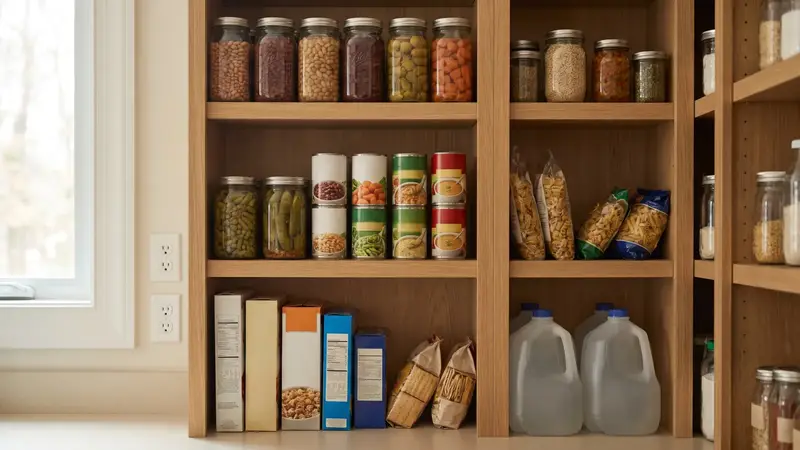
- Week 1, water and food: 1 gallon per person per day for 3 days, and 3 days of ready-to-eat food you like (canned meats, fruits and vegetables, peanut butter, cereal, protein bars), plus a manual can opener
- Week 2, light and information: a flashlight for each person, extra batteries, and a battery or hand crank radio, ideally a NOAA Weather Radio
- Week 3, health: a first aid kit, your prescription and non-prescription medicines, glasses or contact lens solution, and hygiene items
- Week 4, the rest: a whistle, dust masks, duct tape, garbage bags, a blanket for each person, a copy of key documents, and some cash in small bills
Water: the one item not to skimp on
The CDC says: "Store at least 1 gallon of water per person, per day for 3 days. You can use this water during an emergency for drinking, cooking, brushing teeth, and other uses. Try to store a 2-week supply if possible." It also says "unopened, commercially bottled water is the safest and most reliable source of water in an emergency." It suggests more water for pregnant women, people who are sick, pets, and hot climates.
Bottled water or gallon jugs from a big-box store meet that. Ready.gov says water that has not been commercially bottled should be replaced every six months. If you fill your own containers, see how to make water safe and how much water to store.
What to skip
Pre-packed survival kits can be handy but are not required. Check what is inside against the lists above, and remember you will still need water and food you like. You also do not need gear for scenarios far from your own: a household in a tornado area and one in a flood area need different extras, and our state pages show FEMA's risk ratings for yours.
Everything that needs batteries needs spare batteries, so buy the size your flashlight and radio use. For safety, Ready.gov says: "Never use a gas stovetop or oven to heat your home." and "Generators and fuel should always be used outdoors and at least 20 feet away from windows, doors and attached garages."
Keep it up to date
Ready.gov says to keep canned food in a cool, dry place, to store boxed food in tightly closed plastic or metal containers, to replace expired items as needed, and to "re-think your needs every year and update your kit as your family's needs change." Put the kit where you can reach it, and tell everyone in the home where it is. Our emergency kit checklist covers the basics, and the kit builder sizes a kit for your household.
You may already have part of a 72-hour kit at home, and Ready.gov says to start there. You do not need a branded kit, and nothing on this page is a reason to spend more than you want to. A kit you build slowly and keep up to date beats a bought one you never open.
Common questions
What should be in a cheap 72-hour kit?
Ready.gov's basic list includes: water, several days of non-perishable food, a radio, a flashlight, a first aid kit, extra batteries, a whistle, a dust mask, sanitation items, a manual can opener, and a phone charger. Add medicines, documents and some cash.
How much water do I need for 72 hours?
The CDC says at least 1 gallon per person per day for 3 days. That is 3 gallons for one person and 12 gallons for a family of 4. Our arithmetic on the CDC's figure.
Is a pre-made emergency kit worth buying?
It can save time, but you can build the same from the Ready.gov list. If you buy one, compare what is in it with the lists, and add water, food and your medicines.
Can I build a kit gradually?
Yes. Ready.gov says to build your kit over time, to start with items you already have, and to pick up an extra item each time you shop.
How often should I check my kit?
Ready.gov says to re-think your needs every year and update your kit as your family's needs change, and to replace expired items as needed.
Get one calm email when it matters
Seasonal checklists and gear price drops. No spam, unsubscribe any time.
Keep reading
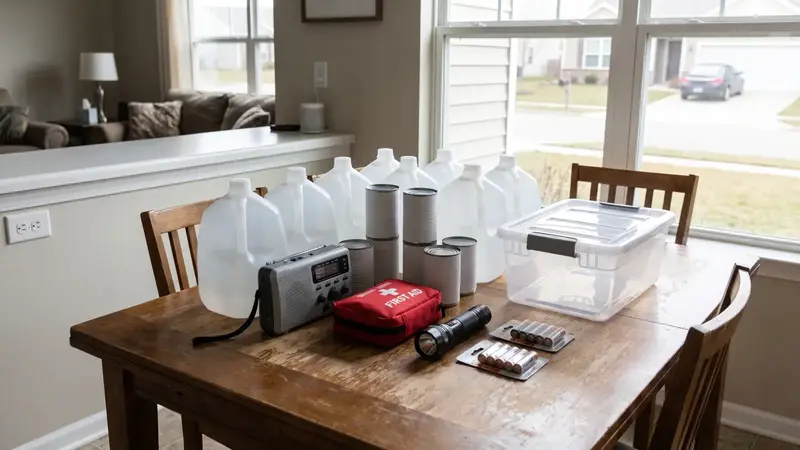 Emergency kit checklist: what to include, how much to keep and where to store itA plain-English emergency kit checklist built on Ready.gov's basic kit and extra items, with how many days of …
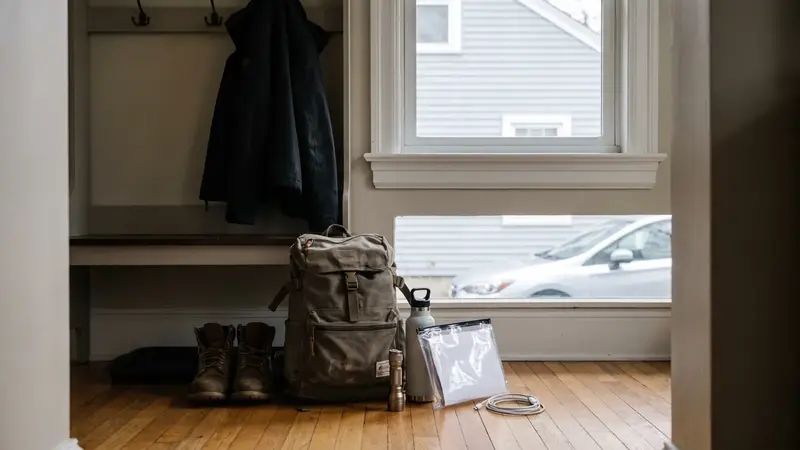 Go-bag checklist: what to pack in case you have to evacuateWhat to pack in a go-bag: documents, medications, cash, chargers, per-person items, kids and pets, and how it …
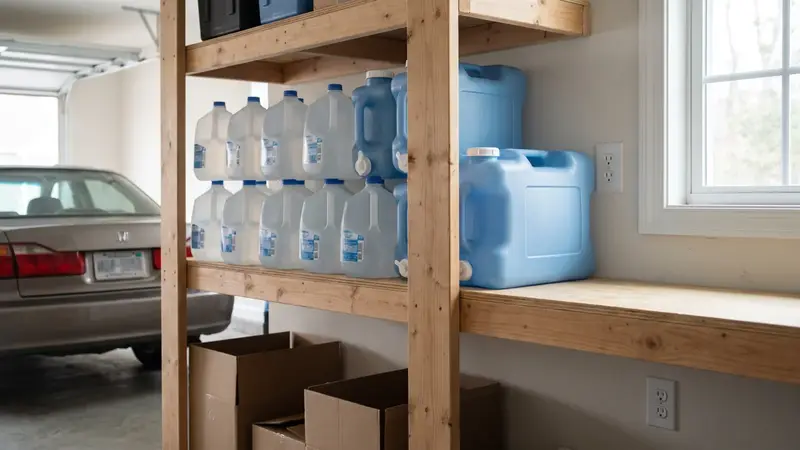 How much water to store for an emergency: per person, per pet and for how longHow much water to store for an emergency: 1 gallon per person per day, pets, which containers to use, when to …
 Non-perishable food list: what to stock for an emergencyA non-perishable food list from Ready.gov: canned meats, fruit and vegetables, bars, cereal, peanut butter, dr…