Prepping for beginners: how to start, step by step
A calm beginner's guide to prepping from Ready.gov, CDC and the Red Cross: know your risks, make a plan, build 3 days of supplies, then two weeks, then more.
By Tom Calder · Updated October 26, 2026 · Sourced to Ready.gov, CDC, the Red Cross and ACS Stop the Bleed
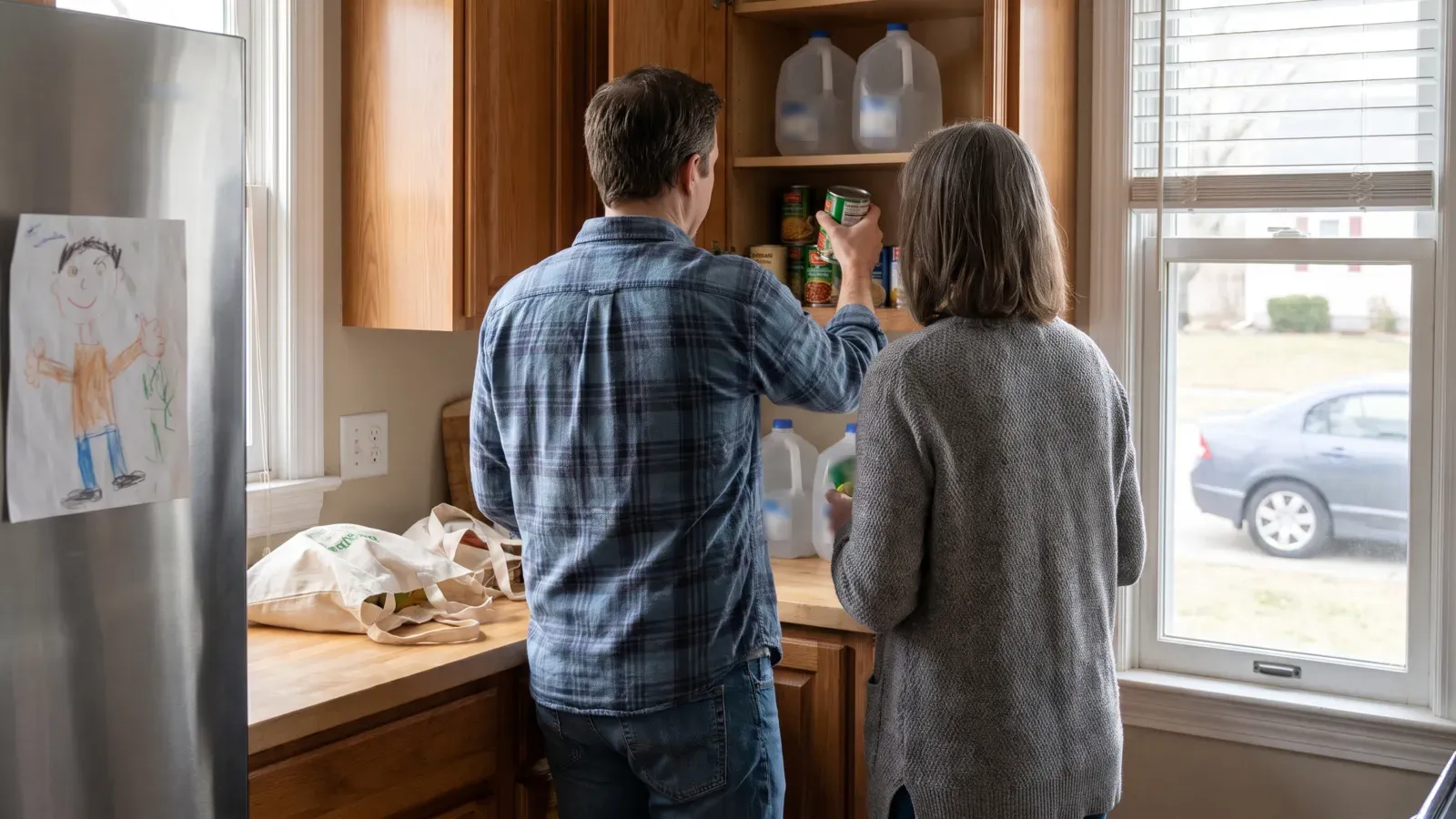
- Prepping just means being able to look after your household for a while when normal life is disrupted: a storm, a long outage, a boil-water notice.
- Start with your local risks and a household plan. Both are free.
- Then build a kit for 3 days: water, food, a radio, a flashlight, a first aid kit and your medicines.
- At home, stretch it to 2 weeks. CDC suggests a 2-week water supply if you can.
- Going further, with months of food, backup power and first aid skills, is a choice, not a requirement. Buy what you'll use and rotate it.
What prepping actually means
Ready.gov puts it simply: after an emergency, you may need to survive on your own for several days, with your own food, water and other supplies. That is what prepping is. It isn't about bunkers or doomsday. It's about getting through the disruptions that happen every year in the US, like winter storms, hurricanes, wildfires and long power outages, without a crisis at home.
You don't need to do it all at once, and you don't need to spend much to begin. The steps below go from free to more involved. Most households get most of the benefit from the first four.
Step 1: know your risks
Ready.gov's first piece of advice is to know what disasters and hazards could affect your area, and how to get emergency alerts. A household in Florida plans for hurricanes; one in Minnesota plans for blizzards and extreme cold. Our state pages list the top hazards for each state, with live National Weather Service alerts.
Ready.gov also suggests the FEMA App, for preparedness tips, real-time weather and emergency alerts. If you lose power often, bookmark your utility's outage map: our power outage lookup by ZIP code finds it.
Step 2: make a plan
Ready.gov says to make a plan today, because your family may not be together when a disaster strikes. Its plan starts with five questions: how you'll receive emergency alerts and warnings, what your shelter plan is, what your evacuation route is, what your family or household communication plan is, and whether you need to update your emergency kit.
Ready.gov also says to customize your plans and supplies to your household's daily living needs and responsibilities. Think about medicines, medical devices, babies, older relatives and pets. Our family emergency plan guide walks through it.
Step 3: build a kit for 3 days
Ready.gov's basic kit starts with water, one gallon per person per day for several days, and at least a several-day supply of non-perishable food. Add a battery-powered or hand-crank radio, a flashlight, a first aid kit and extra batteries, plus your prescription medicines. The full list is in our emergency kit checklist.
Keep it together in one or two easy-to-carry containers, and make sure everyone knows where it is. Our kit builder sizes the list to your household.
Step 4: stretch it to two weeks at home
Three days is the floor. CDC says to store at least 1 gallon of water per person, per day for 3 days, and to try to store a 2-week supply if possible. The Red Cross suggests a 3-day supply for evacuation and a 2-week supply for home, for both water and food.
Two weeks covers almost every outage and storm a household will face. Most of it is simply a fuller pantry and some stored water. Our guides to how much water to store and non-perishable food show what that looks like.
Step 5: go further, if you want to
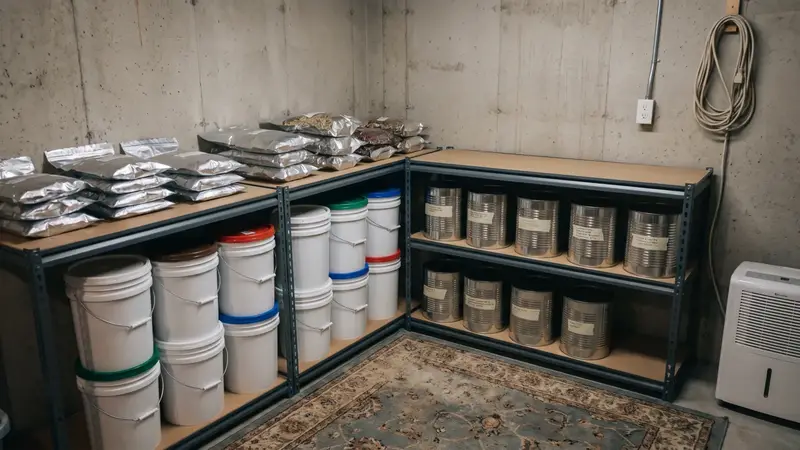
Some households keep months of food. If that appeals, our food storage calculator sizes a supply by household and months, and the long-term food storage guide explains how to store and rotate it.
Backup power is the other big step: a portable power station runs a fridge, lights and phones indoors, and a generator runs more but must stay outdoors (see generator safety). Skills matter too. The American College of Surgeons' Stop the Bleed course teaches you to apply direct pressure to a wound, pack a wound and apply a tourniquet, and it is open to anyone.
What not to do
Don't buy everything at once, and don't buy food you won't eat. Ready.gov's advice is to choose foods your family will eat, keep canned food in a cool, dry place, replace expired items as needed and rethink your needs every year.
Be wary of anything sold with fear. A kit that promises a year of survival for one price doesn't replace a fuller pantry, stored water and a plan. Start with steps 1 to 4. They cost little, and they're what official guidance asks for.
You don't need a bunker, a bug-out vehicle or a year of freeze-dried food to be prepared. Ready.gov's own starting point is several days of supplies, and two weeks at home covers almost everything a household faces. Get those right first. Everything after that is optional.
Common questions
What should a beginner prepper buy first?
Water and food for 3 days, then a radio, a flashlight, a first aid kit and spare batteries, plus your medicines. That is Ready.gov's basic kit. Much of it you may already have at home.
How do I start prepping on a budget?
Start with the free steps: learn your local risks and make a household plan. Then add a few extra cans and a gallon of water to each grocery trip until you have 3 days' worth, then 2 weeks. Buy food your family already eats, so nothing goes to waste.
How much water should I store?
CDC says at least 1 gallon per person, per day for 3 days, and a 2-week supply if possible. For a family of four, that's 12 gallons for 3 days, or 56 gallons for 2 weeks.
How long should I prepare for?
Ready.gov's basic advice is several days. CDC and the Red Cross suggest 2 weeks of water, and the Red Cross 2 weeks of food, at home. Longer is a personal choice.
Is prepping the same as doomsday prepping?
No. Most prepping is ordinary household readiness for storms, outages and other disruptions, and it is what Ready.gov and the Red Cross recommend. You can stop at two weeks and be well prepared.
Get one calm email when it matters
Seasonal checklists and gear price drops. No spam, unsubscribe any time.
Keep reading
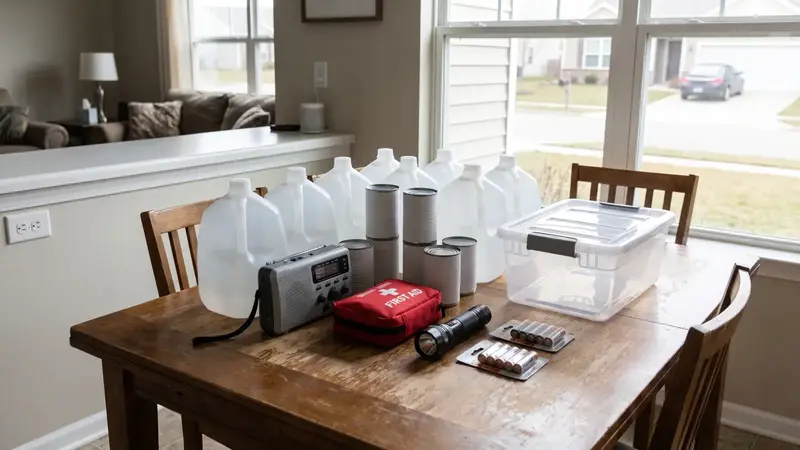 Emergency kit checklist: what to include, how much to keep and where to store itA plain-English emergency kit checklist built on Ready.gov's basic kit and extra items, with how many days of …
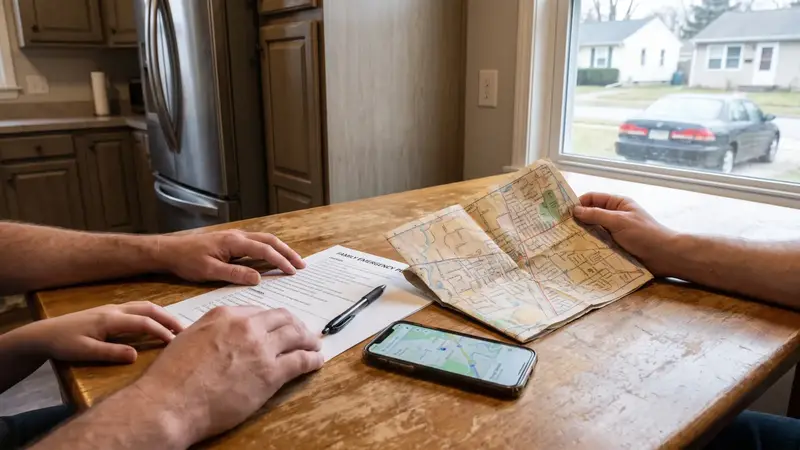 How to make a family emergency plan: steps, questions and a communication planHow to make a family emergency plan: Ready.gov's four steps, the questions to ask, a communication plan, meeti…
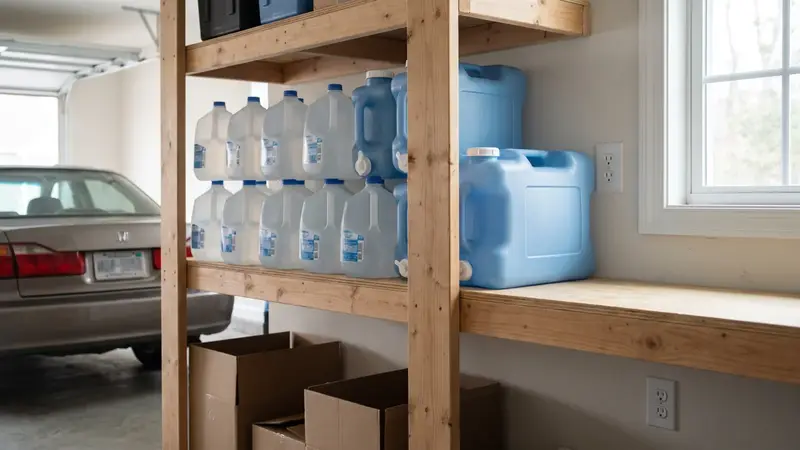 How much water to store for an emergency: per person, per pet and for how longHow much water to store for an emergency: 1 gallon per person per day, pets, which containers to use, when to …
 Long-term food storage: how to build a 3-month or 1-year supplyHow to store food for months or a year: which staples last decades, how to pack them with Mylar and oxygen abs…