Is the US government telling Americans to stockpile? What the UK, Japan and the US actually say
The UK and Japan are asking households to keep a few days of supplies, framed around storms, cyber attacks and earthquakes. The US has issued no new call to stockpile.
By Tom Calder · Updated October 30, 2026 · Sourced to the UK Cabinet Office, IBTimes UK, the Tokyo Metropolitan Government, Ready.gov, CDC and the Red Cross
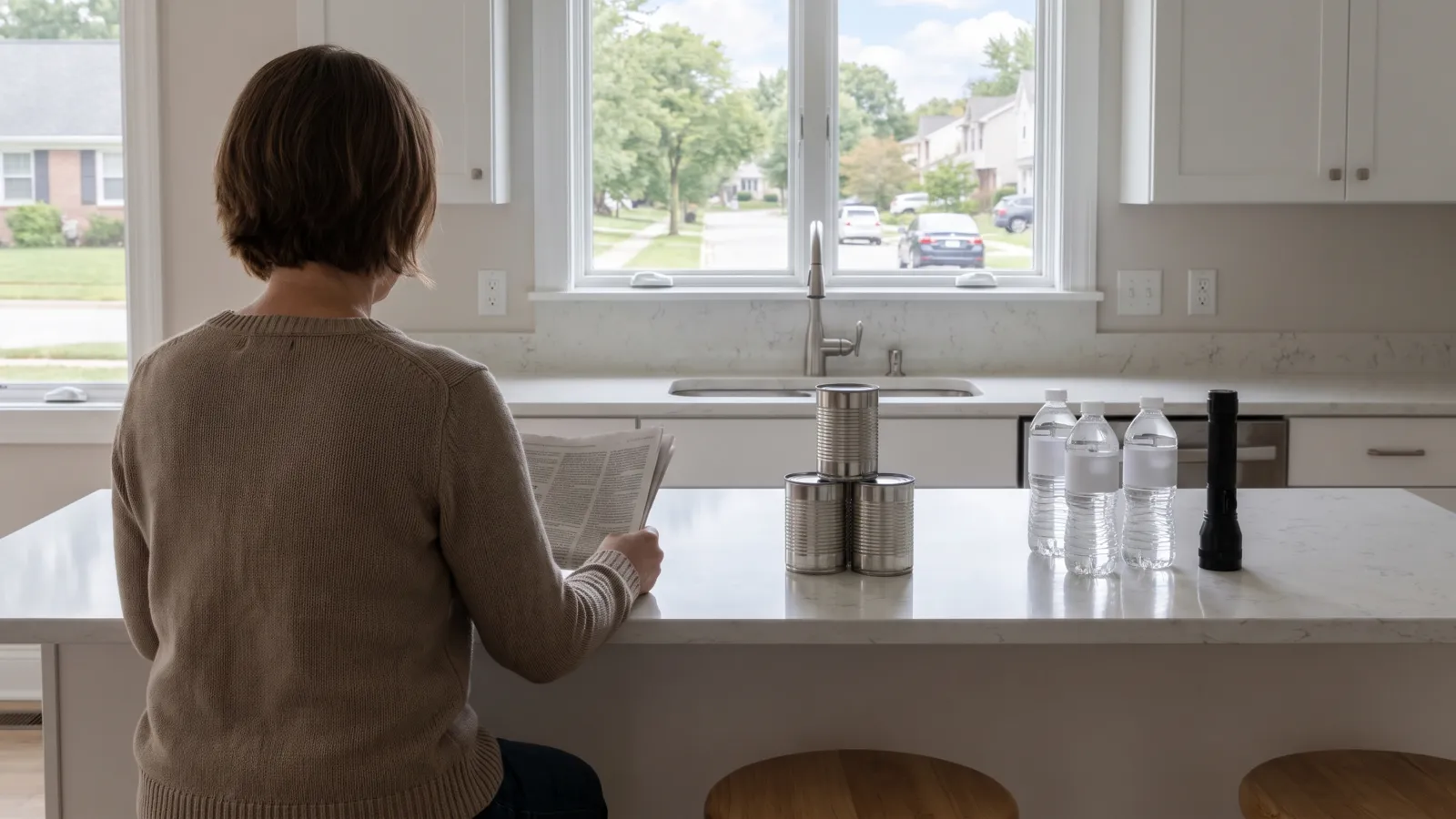
“governments all over the world suddenly telling their citizens to stockpile food and water”
UK: 3 days. Japan: 3 days to a week. US: no new advice.
- Posts say governments around the world are suddenly telling people to stockpile food and water, and ask what they expect to happen.
- Two announcements prompted most of these posts. The UK launched a campaign on October 22 asking households to be ready for 3 days of disruption, from severe weather to cyber attacks. Japan's disaster management minister plans to ask households for at least 3 days of supplies, ideally a week, with earthquakes in mind, IBTimes UK reports.
- Neither campaign says war is coming. Both are about getting through a few days while help reaches the people who need it most.
- The US has issued no new call to stockpile that we could find. Ready.gov's advice is unchanged: food and water for several days. CDC suggests a 2-week water supply if you can.
- That is about what the UK and Japan ask. You don't need to buy anything new because of these headlines.
Water, food and a way to cook it
Our top pick from each comparisonIf you already have these, you're most of the way there. As an Amazon Associate, PreparedStates earns from qualifying purchases. We may earn a commission when you buy through our links. It never changes what we recommend. Amazon prices come from Amazon's own product data and can change at any time.
 Want it as a plan?The 90-Day Home Plan: water, food, power and heat, stage by stage64 pages to print and tick off. Stop at whichever stage suits your home: most only need the first two.See the plan, $14.99 →
What the UK and Japan actually said
The UK Cabinet Office launched its campaign on October 22. Its press release says it is meant to help households feel better prepared "for events such as severe weather, which can occasionally affect services including power, water, phones and the internet." The campaign site says: "From severe weather to cyber attacks, emergencies can disrupt the services you rely on. Being ready for 3 days helps you manage while support reaches those in need." Its checklist includes bottled water and non-perishable food for 3 days.
In Japan, disaster management minister Goshi Hosono said on October 26 that he plans to ask households to keep at least 3 days of food, water and emergency toilet supplies, ideally a week, IBTimes UK reported. It says the appeal is planned for November 2, when a new disaster agency launches. The scenarios he named were earthquakes, including a Nankai Trough quake and one beneath Tokyo, and a Mount Fuji eruption. Japan's existing guidance already said at least three days, preferably a week. Tokyo's stockpiling site, written with a major Tokyo earthquake in mind, says to aim for at least three days first, then plan for a week and beyond.
What is confirmed, and what is not
Confirmed: the UK campaign is real. Its press release says the UK has published household advice since May 2024, much of which has not changed, and that its 3-day advice is also used by France, Ireland and the Netherlands. Reported: Japan's minister plans a similar appeal, according to IBTimes UK. Both ask for days of supplies, not months.
Not supported: that these campaigns are about a war. The UK's campaign pages and press release that we read don't mention war; they name severe weather and cyber attacks among other disruptions. IBTimes UK reports Japan's stated focus is natural disasters and calls online war claims "speculation, not evidence of the government's reasons for the appeal."
Separately, UK Defence Secretary Wes Streeting wrote in the Telegraph that adversaries could be able to attack by 2030, leaving Britain and its NATO allies "a little over 1,000 days" to prepare, Fortune reported. That is about military readiness, not the household campaign. Fortune also wrote that neither the US nor the UK government "has said a new war is imminent."
Not true for the US: we found no new advice from FEMA, Ready.gov or any federal agency telling households to stockpile. Japan's own appeal had not been issued when we published; we'll check it once it is.
Why it looks like a pattern
The UK campaign and Japan's plan landed a few days apart, the same week Fox News reported the Pentagon's plan for bases. Read together, they look like one warning. They aren't connected: the UK campaign is aimed at storms and outages, Japan's at earthquakes, and the Pentagon's at running bases without the civilian grid.
What they share is an old idea: in a big emergency, help takes time to arrive, so homes that can cope for a few days free up help for people who can't. The UK says that if households who can take these steps do, emergency services "will be able to prioritise those most in-need." Ready.gov's version for the US is simpler: after an emergency, "you may need to survive on your own for several days."
What it means for your home
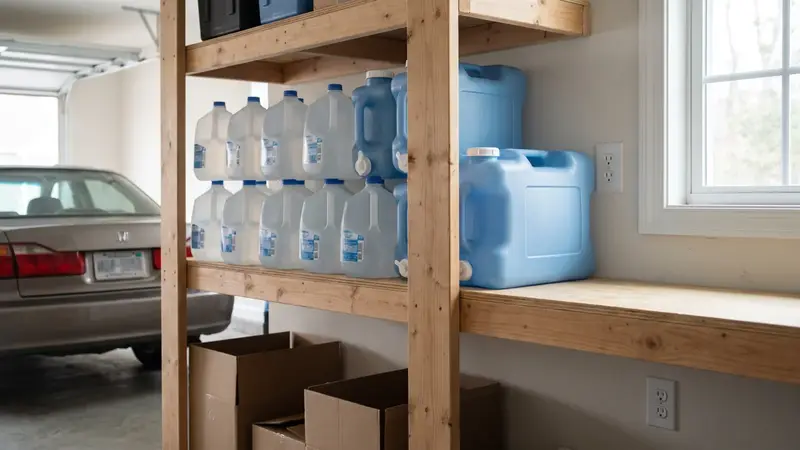
US advice hasn't changed, and it is close to what the UK and Japan ask. Ready.gov says that after an emergency "you may need to survive on your own for several days," with your own food, water and other supplies. Its basic kit lists water, one gallon per person per day for several days, and at least a several-day supply of non-perishable food. CDC says to store at least 1 gallon of water per person, per day for 3 days, and to try to store a 2-week supply if possible. The Red Cross suggests a 2-week supply of water and food at home.
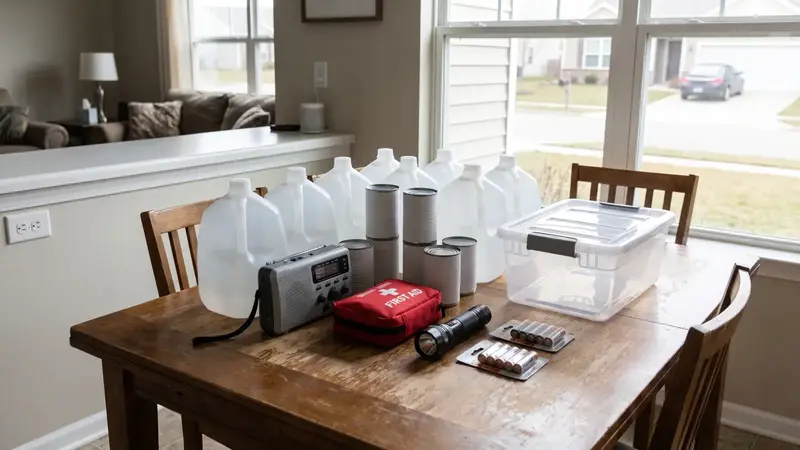
If you already have that, you don't need to do anything because of these headlines. If not, build it slowly from food you already eat. Our emergency kit checklist and how much water to store cover the basics, and the kit builder sizes Ready.gov's list to your household.
- Water: 1 gallon per person, per day, for at least 3 days; 2 weeks if you can
- Food you already eat, for several days, that needs no fridge
- A flashlight and spare batteries
- A battery-powered or hand-crank radio
- Medicines and anything a family member relies on every day
What not to do
Don't panic-buy. Panic buying empties shelves for everyone, and the UK's own advice is to build up gradually, picking up an extra item or two when you can. Ready.gov says to choose foods your family will eat, so stock you never use is money wasted.
Don't take advice from a post that says the US government has told you to stockpile. Check Ready.gov or your state or local emergency management office, which is where any real change would appear.
We will update this check when Japan issues its appeal, if FEMA or Ready.gov changes its advice for households, or if any government links its stockpile advice to a specific threat.
Common questions
Is the US government telling Americans to stockpile?
No new advice that we could find. FEMA's Ready.gov still says to be ready to manage on your own for several days with your own food, water and supplies. CDC suggests a 2-week water supply if possible. That is standing advice, not a new warning.
Why are the UK and Japan telling people to stock up?
Both want homes to cope for a few days while help goes to people who need it most. The UK names severe weather and cyber attacks among the disruptions it means. Japan's minister pointed to earthquakes and a Mount Fuji eruption, IBTimes UK reports. Neither campaign says war is coming.
How many days of supplies do they recommend?
The UK says 3 days. Japan's minister said at least 3 days, ideally a week. Ready.gov says several days, and CDC says at least 3 days of water, and 2 weeks if possible.
Is this because a war is coming?
Neither the UK campaign nor Japan's minister has said so. The UK campaign names severe weather, cyber attacks and outages, and IBTimes UK reports Japan's stated focus is natural disasters. The UK's Defence Secretary has separately warned about military readiness by 2030, but that is not the household campaign.
Should I buy more food and water now?
Only if you don't already have a few days' worth. Build it gradually from food your family eats, and store water first. There's no need to buy months of supplies because of these headlines.
Sources (12)
- UK Cabinet Office: Households encouraged to take small, simple steps to stay prepared in an emergency (Oct 22, 2026)
- UK government: Be ready for emergencies
- UK government: Be ready for emergencies checklist
- IBTimes UK: Japan joins UK in urging households to prepare week-long emergency supplies (Oct 27, 2026)
- IBTimes UK: Japan plans 'emergency request' for three-day food and water stockpiles (Oct 28, 2026)
- Tokyo Metropolitan Government: Why stockpiling matters
- Fortune: Pentagon FORTRESS bases and the UK's Be Ready campaign (Oct 26, 2026)
- Ready.gov: Build a Kit
- Ready.gov: Food
- Ready.gov: Water
- CDC: Creating and storing an emergency water supply
- American Red Cross: Survival kit supplies
Get one calm email when it matters
Seasonal checklists and gear price drops. No spam, unsubscribe any time.
Keep reading
 Did Dan Bongino tell Americans to stockpile? What he said, and what FEMA advisesDan Bongino urged Americans to stock up, citing warnings about 30 days of preparedness. The UK's advice is 3 d…
 Is a 90-day blackout coming? What the Pentagon's plan for bases means for your homeIs a 90-day blackout coming? No agency has warned of one. The 90 days is a Pentagon target for bases to run wi…
 Emergency kit checklist: what to include, how much to keep and where to store itA plain-English emergency kit checklist built on Ready.gov's basic kit and extra items, with how many days of …
 How much water to store for an emergency: per person, per pet and for how longHow much water to store for an emergency: 1 gallon per person per day, pets, which containers to use, when to …