Lithium battery fire safety at home: charging, storage and what to do
How to charge and store lithium-ion batteries at home, using the wording of CPSC, NFPA and Ready.gov: chargers, e-bikes, damaged batteries and disposal.
By Tom Calder · Updated October 30, 2026 · Sourced to CPSC, NFPA and Ready.gov
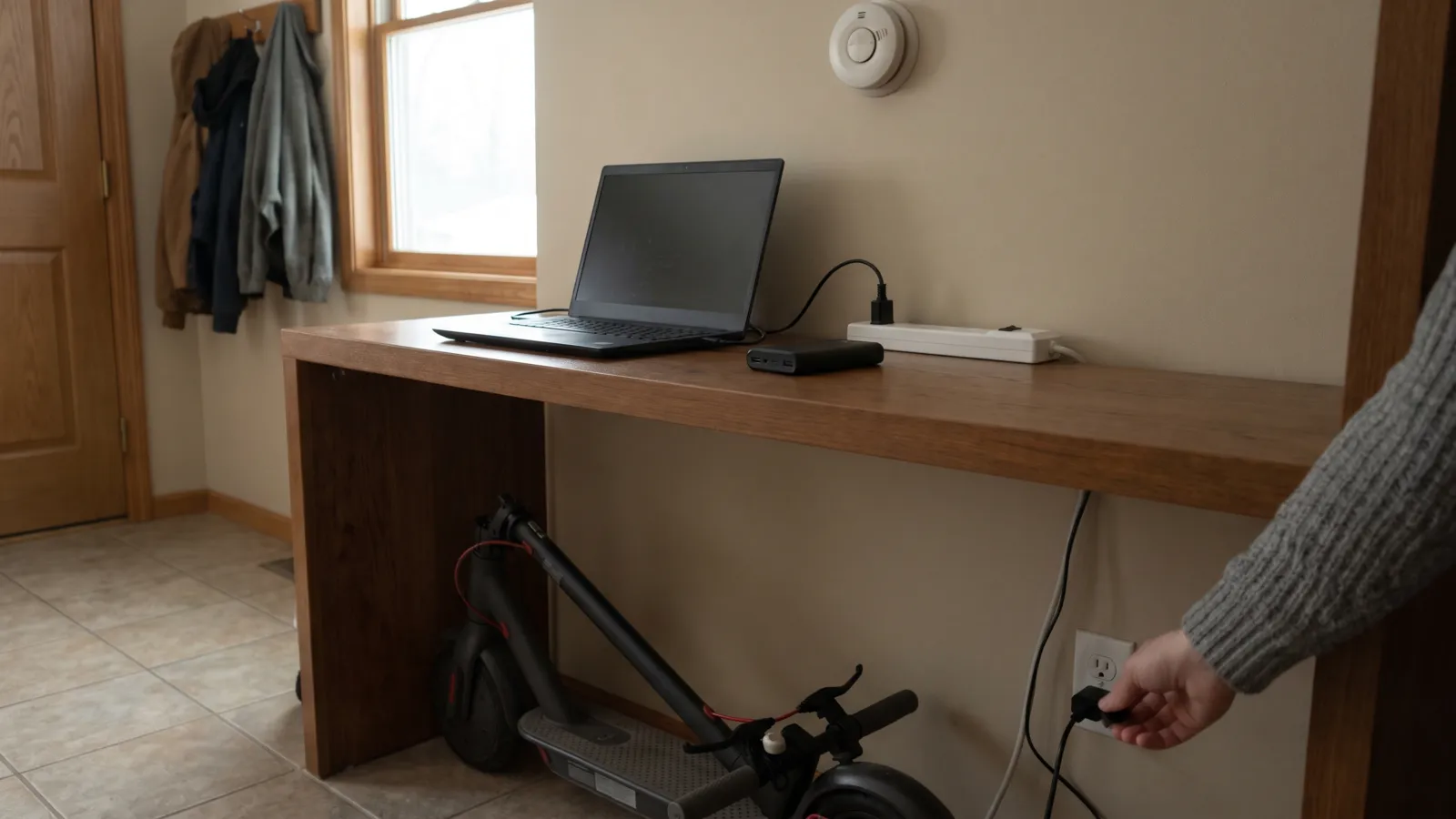
- You do not need to buy anything for this. The biggest steps are free: use the charger that came with the device (NFPA), stay with e-bikes and scooters while they charge (CPSC), and stop charging when the battery is full (NFPA).
- CPSC says never to charge micromobility products (e-bikes, e-scooters, hoverboards) while sleeping or when you are not at home.
- NFPA says to stop using a device if its battery shows signs of damage, such as an unusual odor, excessive heat, popping sounds, swelling, or change in color.
- CPSC says never to throw lithium batteries into the trash or general recycling: take them to a battery recycler or hazardous waste collection center.
- Ready.gov says a working smoke alarm significantly increases your chances of surviving a deadly home fire.
What the agencies say about these batteries
Lithium-ion batteries are in phones, laptops, power tools, e-bikes, power banks, portable power stations and electric cars. NFPA (the National Fire Protection Association, a nonprofit) says these batteries store a lot of energy in a small amount of space, and that when the energy is released in an uncontrolled manner it generates heat. Its page says the likelihood of overheating, catching on fire and even leading to explosions increases when the batteries are damaged or improperly used, charged or stored.
NFPA lists several ways these fires start: physical damage (for example, the battery is penetrated, crushed or exposed to water), electrical damage (for example, overcharging or using charging equipment not designed for the battery), exposure to extreme temperatures, and product defects.
This guide repeats what CPSC (the U.S. Consumer Product Safety Commission), NFPA and Ready.gov publish. It is not a substitute for your device's manual, and where we say what an agency says, the wording is theirs; where we add our own note, we say so.
Charging: the habits that matter most
CPSC's guidance for e-bikes, e-scooters and hoverboards is the clearest on charging. It says to follow the manufacturer's instructions for proper charging and unplug the device when done, and to always be present when charging micromobility products. It says never to charge them while sleeping or when you are not at home, and that CPSC has seen many lithium-ion battery home fires and deaths happen at night while batteries were charging and families were asleep.
Both agencies say to use the right charger. CPSC says to only use the charger provided with or recommended by the manufacturer of your micromobility device. NFPA's tips for devices like laptops, phones and tools say to use charging equipment that is only compatible with your device, and that to be safe you should use only the charging equipment supplied with your device. NFPA also says to stop charging a battery once it is full.
On replacement batteries, CPSC says to only use a replacement or secondary battery pack that has been tested and approved to work safely with your device and confirmed suitable by the device manufacturer. It also says never to use a micromobility device with a battery pack that has been modified or reworked by unqualified personnel, or with repurposed or used cells. NFPA's list adds to buy batteries that are only listed by a nationally recognized testing laboratory and labeled accordingly, and to have all repairs performed by a qualified professional.
In September 2024 CPSC urged consumers not to buy or use "universal" chargers with micromobility products because of a fire hazard. If you need a new charger, CPSC says to only use one provided with or recommended by the manufacturer of your micromobility device.
Where to charge and store batteries
For e-bikes, e-scooters and electric vehicles, NFPA says the safest place to charge is outdoors, away from any structure or enclosure and not in direct sunlight. It also says not to charge a battery when either the charger or the battery is damaged, not to store batteries in extremely hot or cold locations or in an area that blocks the only exit out of a room, and not to attempt to modify the battery or charger.
Our note: if you cannot charge outdoors, follow the charging rules above and, per CPSC, be present while it charges. The agencies we read do not publish a single required storage room or temperature number for household batteries, so follow your device manual for the temperatures it allows.
If flooding is possible where you live, NFPA says to disconnect all lithium-ion battery-powered devices and, if possible, move them to an area that is not likely to flood. It says not to store batteries near evacuation pathways, windows, doors or sleeping areas. Our flood preparedness guide covers the rest of the household.
If a battery looks damaged or gets wet
NFPA says to stop using your device if the battery shows signs of damage, such as an unusual odor, excessive heat, popping sounds, swelling, or change in color.
For batteries exposed to floodwater or water in the home, NFPA says to disconnect the devices from their charging stations, place them in a non-combustible container, and store them outside of the building. It says to contact the local fire department and the device manufacturer for recommendations on safe handling and disposal, and not to attempt to charge a lithium-ion battery that has been submerged in water or shows signs of damage, or to try to open or repair a submerged or damaged battery.
CPSC says that if your lithium battery or device is subject to a recall or product safety warning, you should follow the disposal instructions in the CPSC press release. You can report a problem with an e-bike or other micromobility battery on SaferProducts.gov.
Disposal
CPSC says: never throw lithium batteries into the trash or general recycling. Instead, take them to your local battery recycler or hazardous waste collection center.
NFPA gives the reason: they can cause fires during transport or at landfills and recyclers. It says many stores that sell large quantities of lithium-ion batteries have a recycling program where you can return them. For a water-damaged device, NFPA says to contact your local fire department, local waste department or product manufacturer for guidance on the correct way to dispose of the device and batteries.
Fire basics: alarms and getting out
A battery fire is still a home fire, so the home fire basics apply. Ready.gov says a working smoke alarm significantly increases your chances of surviving a deadly home fire, and to install smoke alarms on every level of your home, including the basement. See our smoke alarm placement guide and home fire escape plan.
Ready.gov says that every second counts in the event of a fire, and that escape plans help you get out of your home quickly. During a fire it says to drop to the floor and crawl low under any smoke to your exit, and that if you cannot get out, close the door and cover vents and cracks around doors with cloth or tape to keep smoke out, then call 9-1-1 or your fire department and say where you are.
The pages we read do not give home instructions for putting out a lithium battery fire yourself, so we do not either. Leaving and calling 9-1-1 is the guidance Ready.gov gives for a home fire.
Do you need to buy anything?
No. Everything above is a habit, not a purchase. If you want a backup for your phone or router, our comparison pages show compared picks: power banks and portable power stations. Whatever you choose, NFPA's advice to buy batteries that are listed by a nationally recognized testing laboratory and labeled accordingly applies, as does the manufacturer's own charging guidance.
Where to take worn-out batteries is the one thing worth looking up before you need it.
CPSC says to never charge micromobility products while sleeping or when you are not at home, because it has seen many lithium-ion battery home fires and deaths happen at night while batteries were charging and families were asleep. It says to always be present when charging and to unplug the device when done.
Common questions
Is it safe to charge my phone overnight?
The pages we read give a firm overnight rule only for micromobility products: CPSC says never to charge them while sleeping. For phones and laptops, NFPA says to stop charging a battery once it is full and to use only the charging equipment supplied with your device. Check your device manual for its own guidance.
Can I use a cheaper charger from another brand?
CPSC says to only use the charger provided with or recommended by the manufacturer of your micromobility device, and in September 2024 it urged consumers not to buy or use "universal" chargers with micromobility products because of a fire hazard. NFPA says to use only the charging equipment supplied with your device.
Where should I charge an e-bike?
NFPA says the safest place to charge e-bikes, e-scooters and electric vehicles is outdoors, away from any structure or enclosure and not in direct sunlight. It says not to store batteries in an area that blocks the only exit out of a room.
How do I get rid of an old lithium battery?
CPSC says never to throw lithium batteries into the trash or general recycling, and to take them to your local battery recycler or hazardous waste collection center. NFPA says many stores that sell large quantities of lithium-ion batteries have a recycling program.
What are the signs of a failing battery?
NFPA lists an unusual odor, excessive heat, popping sounds, swelling, or change in color, and says to stop using the device if the battery shows any of them.
Get one calm email when it matters
Seasonal checklists and gear price drops. No spam, unsubscribe any time.
Keep reading
 Smoke alarm placement: where to put them, how to test them and when to replace themWhere to put smoke alarms: every level, inside each bedroom and outside sleeping areas, plus testing, batterie…
 Home fire escape plan: how to make one, practice it and get out safelyHow to make a home fire escape plan: two ways out of every room, an outside meeting place, escape ladders, dri…
 Flood preparedness: flood watch vs warning, what to do and how flood insurance worksFlood watch vs warning, how little moving water can sweep a car away, the 30-day flood insurance wait, and wha…
 Power station vs generator: which one suits your home in an outage?A portable power station is a battery; a generator burns fuel. What that means for carbon monoxide, fuel stora…