Power outages and older parents: devices, heat and cold, checking in and who to call
How to help an older parent through a power outage: medical devices, medicines, heat and cold, who checks in, what 211 does and where bill help comes from.
By Tom Calder · Updated October 30, 2026 · Sourced to Ready.gov, CDC, NIH's National Institute on Aging, HHS emPOWER and the FCC
- The most useful step costs nothing: sit down with your parent and their doctor and ask what happens to each device and medicine when the power goes out.
- Ready.gov says to take an inventory of the items you need that rely on electricity, and to have alternate plans for refrigerating medicines or using power-dependent medical devices.
- Older adults are more prone to heat problems and can lose body heat quickly. NIA says to set the thermostat to at least 68 to 70°F, and the CDC says a fan alone is not enough in real heat.
- Agree who will check in, and how often, before an outage. The CDC suggests visiting those in your care at least twice a day in hot weather.
- Dial 211 for community help finding food, shelter and other services. We found no national sign-up list for utility medical needs, so ask your parent's electric company directly.
Start with a conversation, not a shopping list
Ready.gov's older-adult page says: "As an older adult, you may have specific needs after a disaster." It asks older adults to "take simple, low-cost steps that help you get better prepared." Most of those steps are about people and plans, not products.
Ready.gov also says to create a support network of family, friends and others, to make a plan and practice it with them, and to make sure at least one person in the network has an extra key, knows where the emergency supplies are and knows how to use lifesaving equipment or give medicine. If you live far away, that person may be a neighbor, so ask your parent who they would call. Our guide to older adults and emergency preparedness covers the wider plan.
Medical devices and medicines
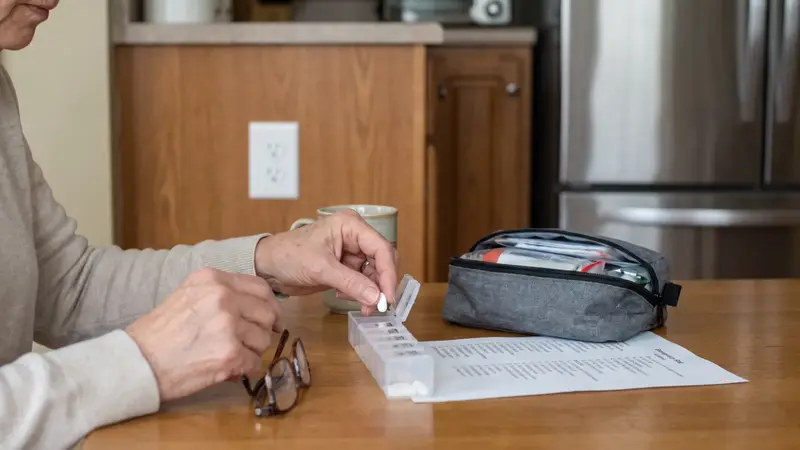
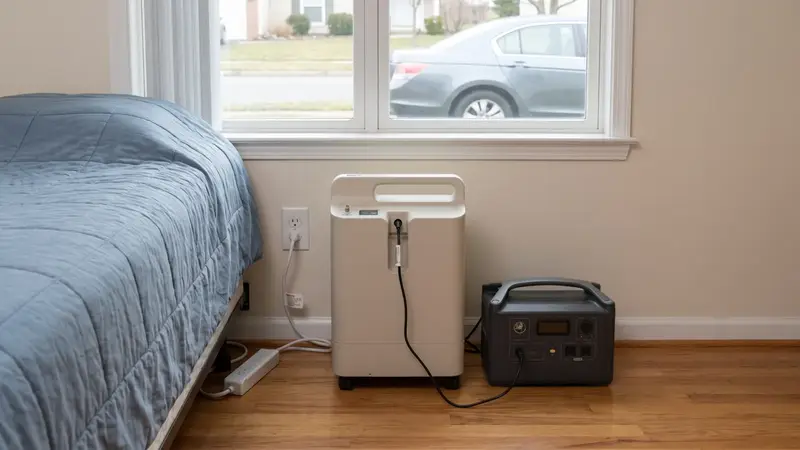
Ready.gov says a power outage may "prevent use of medical devices," and among its steps are: talk to the medical provider about a plan for electric devices and refrigerated medicines; take an inventory of items that rely on electricity and plan for batteries or a power bank; and find out whether the home phone works in an outage and how long its battery backup lasts.
On medicines, Ready.gov says: "If the power is out for more than a day, discard any medication that should be refrigerated, unless the drug's label says otherwise. Consult your doctor or pharmacist immediately for a new supply." The CDC adds that if a life depends on a refrigerated drug that has been at room temperature, use it only until a new supply is available. That is a decision to make with a pharmacist or doctor in advance, not in the dark. Our guide to medical devices in a power outage has the questions to ask.
The HHS emPOWER Map shows how many Medicare beneficiaries in each state, county and ZIP Code rely on electricity-dependent equipment. It is built for community planning, with de-identified totals. It is not a sign-up list. Separately, HHS keeps a restricted dataset that only public health authorities can request for emergency outreach; you cannot join or check it yourself.
Cold: keeping the house warm enough
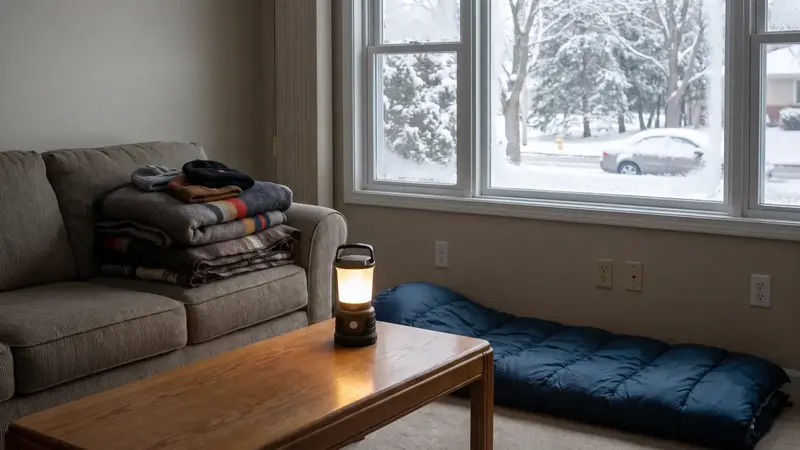
NIA says older adults can lose body heat quickly, and changes in the body with age can make it harder to notice a drop in body temperature. It says to set the thermostat to at least 68 to 70°F, and that even mildly cool homes at 60 to 65°F can lead to hypothermia in older adults. In an outage the thermostat will not help, so the plan is layers: NIA suggests long underwear, socks and slippers, a blanket over the legs and shoulders, and a hat indoors.
The CDC says hypothermia is a dangerous condition and that if you notice signs, take the person's temperature, and if it is below 95°F, get medical attention immediately. NIA lists warning signs that include slowed or slurred speech, sleepiness or confusion, and shivering or stiffness, and says to call 9-1-1 right away. If the house is too cold, the CDC says to seek shelter with friends or at a community shelter, and Ready.gov says to check with local officials about warming locations. See staying warm without power.
Heat: when the air conditioner stops
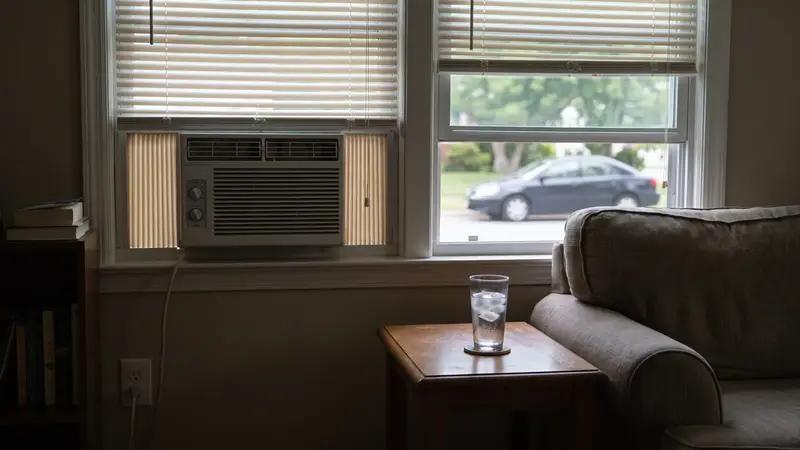
The CDC says people aged 65 or older are more prone to heat-related health problems. They do not adjust as well as younger people to sudden changes in temperature, and they are more likely to take medicines that affect the body's ability to control temperature or sweat. The CDC's advice: stay in air-conditioned buildings as much as possible, and if the home has none, contact the local health department or find an air-conditioned shelter. A shopping mall or public library works too: the CDC says even a few hours in air conditioning can help.
The CDC also says: "Do not rely on a fan as your main cooling source when it's really hot outside," and to drink more water than usual and not wait until thirsty. If a doctor limits fluids or prescribes water pills, ask how much to drink in hot weather. See extreme heat safety.
Checking in
Ready.gov's planning page for neighborhoods and apartments says to "decide who will check on elderly or disabled neighbors." The CDC says to check on a friend or neighbor and have someone else do the same for you, and, for people in your care, to visit at least twice a day in hot weather.
Our suggestion, if you cannot visit: a phone call at agreed times, a neighbor with a key, and a backup if the phone network is down. Ready.gov says an outage may disrupt communications, and it also asks whether the home phone works without power. Write the agreed times on the fridge. If you believe it is an emergency, call 911.
211 and help with bills
The FCC describes 211 this way: "Call 211 to access community services and resources to help you find essentials, such as food, shelter, clothing, education, transportation, and physical and mental health care services." Our suggestion: put the number in your parent's phone, and try it during a long outage when you need help finding a warming or cooling location.
For energy bills, NIA says that states, territories, tribes and tribal organizations may be able to help eligible households pay for home heating and cooling costs, and to contact the local or state social services agency to apply. We could not verify a federal list of utility medical-needs programs, and Ready.gov mentions none. So the practical step is a phone call: ask your parent's electric company whether it keeps a list for customers who rely on medical equipment, and what that list does and does not promise. Our state pages link to each state's emergency management office, and our power outage by ZIP code page shows what is out now.
Carbon monoxide and safe light
These lines are official wording. CDC: "Never use a generator, pressure washer, or any gasoline-powered engine inside your home, basement, or garage or less than 20 feet from any window, door, or vent." CDC: "When using a generator, use a battery-powered or battery backup CO detector in your home." Ready.gov: "Do not use a gas stove or oven to heat your home."
The CDC also says to use battery-powered flashlights and lanterns rather than candles to minimize the risk of fire. Check that your parent's CO alarm has battery backup and works; see carbon monoxide poisoning.
Most of this guide costs nothing: a talk with a doctor and pharmacist, a list of phone numbers, a neighbor with a key and a check-in schedule. If your parent uses an electric medical device, a backup power plan is worth paying for, but the device maker and doctor should tell you what size and type, not a shopping page. For everyone else, a charged power bank and a battery flashlight are enough to start.
Common questions
What should my elderly parent do in a power outage?
Use the plan you made in advance: check which devices and medicines are affected, keep a flashlight and phone charger handy, stay warm with layers or move to a cooler or warmer place as needed, and call the check-in person. Never use a generator, charcoal grill or camp stove indoors, and do not heat the home with a gas oven.
How warm should an older person keep the house?
NIA says to set the thermostat to at least 68 to 70°F, because even mildly cool homes at 60 to 65°F can lead to hypothermia in older adults. During an outage, use layers and blankets, or go to a warmer place.
What does 211 do?
The FCC says that calling 211 connects you to community services and resources, such as food, shelter, clothing, transportation and health care services. What is available depends on where you live.
Is there a national list for people who depend on electric medical equipment?
We did not find one. HHS's emPOWER Map shows de-identified area totals for planners and is not a sign-up; a separate restricted dataset can be requested only by public health authorities. Ask your parent's electric utility and local emergency management office what they offer, and talk to the doctor about a backup plan.
Sources (9)
- Ready.gov: Older adults
- Ready.gov: Power outages
- Ready.gov: Plan for locations
- CDC: What to do during a power outage
- CDC: Heat and older adults aged 65 and over
- NIH National Institute on Aging: Hypothermia, a cold weather hazard
- HHS emPOWER Program: about the emPOWER Map
- HHS emPOWER Program: FAQs
- FCC: Nationally assigned 3-digit numbers (N11)
Get one calm email when it matters
Seasonal checklists and gear price drops. No spam, unsubscribe any time.
Keep reading
 Emergency preparedness for older adults: how to make a plan and a kitHow older adults can prepare for emergencies: assess needs, build a support network, plan for medicines and de…
 Power outage plan for electric medical devices and refrigerated medicinesHow to plan for a power outage if you use electric medical devices or refrigerated medicine: questions to ask,…
 How to stay warm without power in winter, safelyStay warm in a winter power outage safely: keep heat in, dress in layers, never heat with an oven or grill, kn…
 Extreme heat safety: heat exhaustion vs heat stroke and how to stay cool in a power outageHeat exhaustion vs heat stroke signs and what to do, why a fan is not enough when it is very hot, heat alert t…