How to stockpile food and water for your household: what the official lists say
How to stockpile food and water for your household: Ready.gov says several days, the Red Cross says 2 weeks. What that means for 1, 2, 4 or 6 people.
By Tom Calder · Updated October 30, 2026 · Sourced to Ready.gov, the CDC and the American Red Cross
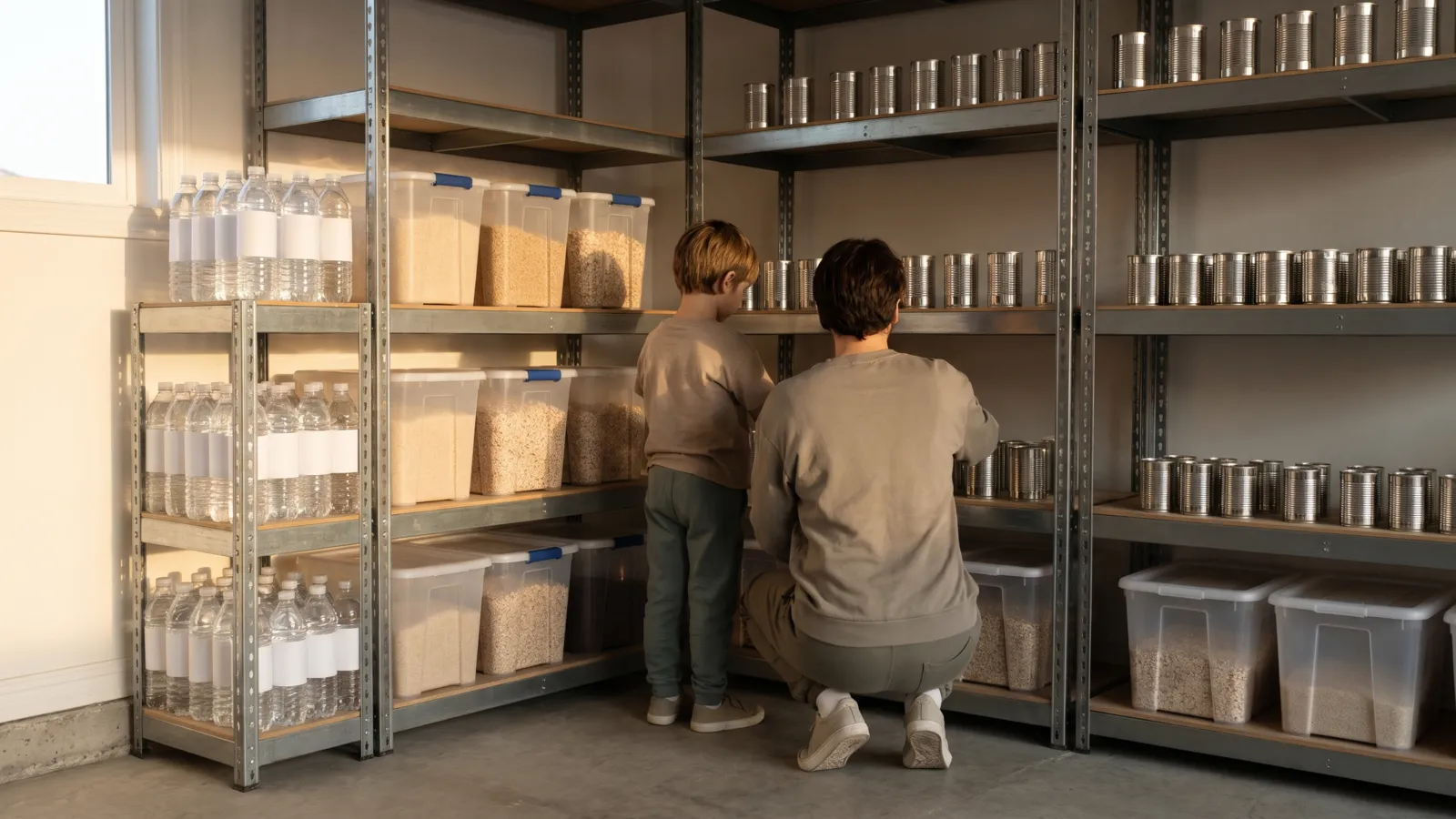
- Ready.gov asks households to keep food and water for several days. The Red Cross says a 2-week supply of water and food for home, and the CDC says to try to store 2 weeks of water if possible. None of them sets a figure in months.
- The water rule is 1 gallon per person per day. For 2 weeks that is 14 gallons a person, or 56 gallons for a family of 4 (our arithmetic on the CDC and Red Cross figures).
- Food should be non-perishable, ready to eat if possible, and things your family already likes. You can build it from the pantry you have, a few cans at a time.
- You may not need to buy anything new. Start by counting the food and water you already have.
- Rotate what you store: water you bottle yourself should be replaced every 6 months, and Ready.gov says to replace expired items as needed.
How much do official sources ask you to store?
Ready.gov's kit page says: "After an emergency, you may need to survive on your own for several days." Its basic kit lists "one gallon per person per day for several days" of water and "at least a several-day supply" of non-perishable food.
The CDC asks for at least 1 gallon of water per person per day for 3 days and adds: "Try to store a 2-week supply if possible." The American Red Cross sets out two tiers: a 3-day supply of water and food to take with you if you evacuate, and a 2-week supply for home.
So the range in official advice runs from several days to 2 weeks; the Red Cross's power outage page says to store food and water "for at least two weeks." None of the sources here sets a figure in months. Going further is your own choice, for reasons such as a rural home, a well pump or a medical need. Our 90-day blackout plan explains how to build further in stages if you want to.
Water: 1 gallon per person per day
Ready.gov says a normally active person needs about three quarters of a gallon of fluid a day, and that needs vary with age, health, activity, diet and climate. It also says: "In very hot temperatures, water needs can double." Children, nursing mothers and sick people may need more. The 1 gallon figure covers drinking and sanitation.
Here is what that comes to at 1 gallon per person per day. This is our arithmetic on the CDC and Red Cross figures, not a number any agency publishes. Add more for hot weather, pets and illness.
- 1 person: 3 gallons for 3 days, 14 gallons for 2 weeks
- 2 people: 6 gallons for 3 days, 28 gallons for 2 weeks
- 4 people: 12 gallons for 3 days, 56 gallons for 2 weeks
- 6 people: 18 gallons for 3 days, 84 gallons for 2 weeks
How to store water safely
Ready.gov advises buying commercially bottled water and keeping it in the sealed original container in a cool, dark place. If you fill your own containers, use food-grade water storage containers. The CDC says: "If you are filling containers with water to store, replace the water every 6 months." Ready.gov likewise says water that has not been commercially bottled should be replaced every six months.
Ready.gov says never to ration drinking water unless authorities tell you to. If your stored water runs out, the CDC says boiling is the best way to kill germs in water (it does not make water with fuel or toxic chemicals safe): bring clear water to a rolling boil for 1 minute (3 minutes above 6,500 feet), then let it cool. Our make water safe and how much water to store guides go through the steps, and if you do want containers, see our water storage comparison.
Food: a few days to 2 weeks, from foods you eat
Ready.gov's food page says: "Store at least a several-day supply of non-perishable food," and "Choose foods your family will eat." It suggests canned meats, fruits and vegetables, and says to include a manual can opener and eating utensils. It also says to remember any special dietary needs.
None of the official sources here sets a calorie target for emergency food. A practical way to start is to count meals: 3 meals a day for each person, for the number of days you want, then look at what your cupboards already cover. Our food storage calculator does the counting for your household and the non-perishable food list gives ideas that need no cooking.
Stock what keeps without a fridge, and plan for power cuts: Ready.gov says the foods should not require "refrigeration, cooking, water or special preparation." Ready.gov also notes that commercially canned food may be eaten out of the can without warming.
Keep the stockpile in date
Ready.gov says to maintain a kit after you assemble it: replace expired items as needed, and re-think your needs every year as your family changes. The easiest habit is to buy what you already eat, put the newest at the back and use the oldest first. That way nothing is wasted and the shelf stays current.
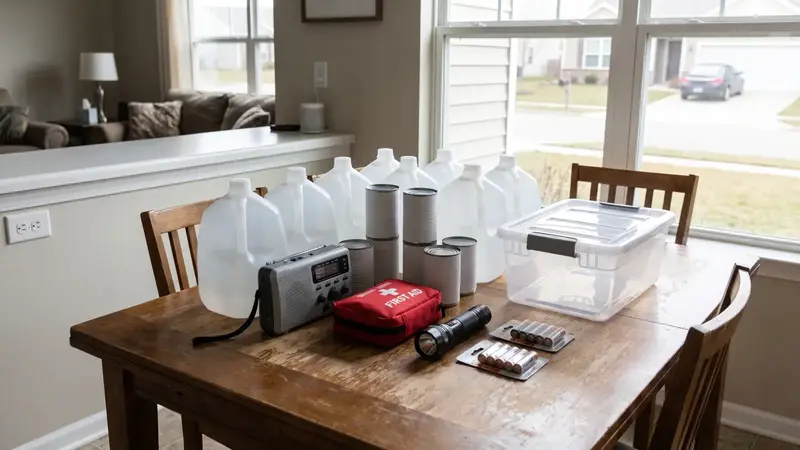
Store everything in one or two places you can find in the dark, along with a flashlight and a battery-powered radio. Our emergency food storage and emergency kit checklist guides cover the rest.
Medicines and the other basics
Food and water are only part of a kit. The Red Cross list also asks for a 7-day supply of medications and medical items, sanitation and personal hygiene items, copies of personal documents, and emergency contact information. Ready.gov adds a manual can opener, a whistle, and a battery-powered or hand crank radio.
If a family member relies on a medicine or a medical device, ask your prescriber and your pharmacy about extra supply, and our medical devices in a power outage guide covers backup power.
You do not need a bunker of supplies, and you do not need to spend a lot. Official advice is several days to about 2 weeks. Start with water in clean containers, canned and dry food you already eat, a manual can opener, and a way to keep track of dates. Buy something only if there is a gap on your list.
Common questions
How much food and water should I stockpile?
Ready.gov asks for several days of each. The Red Cross says a 2-week supply of water and food for home, and the CDC says to try to store 2 weeks of water if possible, at 1 gallon per person per day. For 4 people, 2 weeks of water is 56 gallons (our arithmetic).
How long can I store water?
The CDC says to replace water you fill into containers yourself every 6 months. Ready.gov says to keep commercially bottled water in its sealed original container in a cool, dark place, and the CDC says to observe the expiration date for store-bought water. Replace any water that has not been commercially bottled every six months.
What if I run out of stored water?
Ready.gov says never to ration drinking water unless authorities tell you to. If your tap water is unsafe, the CDC says boiling is the best way to kill germs in water: a rolling boil for 1 minute, or 3 minutes above 6,500 feet. Let it cool before you drink it.
Do I need freeze-dried or special emergency food?
No. Ready.gov says to choose foods your family will eat, such as canned meats, fruits and vegetables. Regular canned and dry food from the grocery store meets that advice. Special products are a choice, not a requirement.
Get one calm email when it matters
Seasonal checklists and gear price drops. No spam, unsubscribe any time.
Keep reading
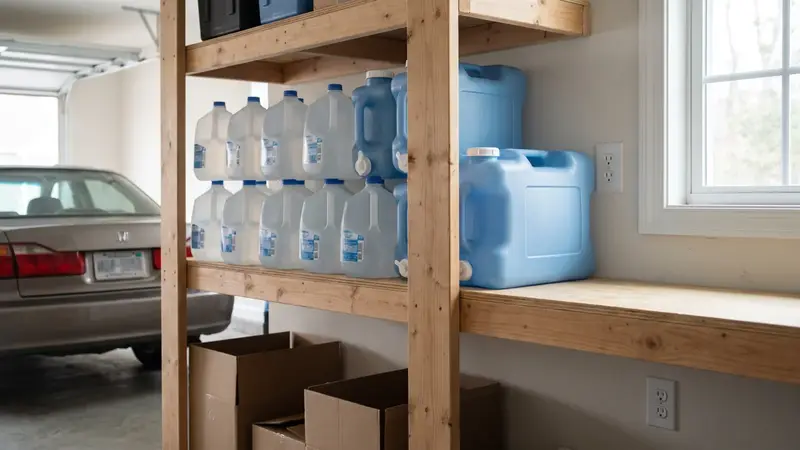 How much water to store for an emergency: per person, per pet and for how longHow much water to store for an emergency: 1 gallon per person per day, pets, which containers to use, when to …
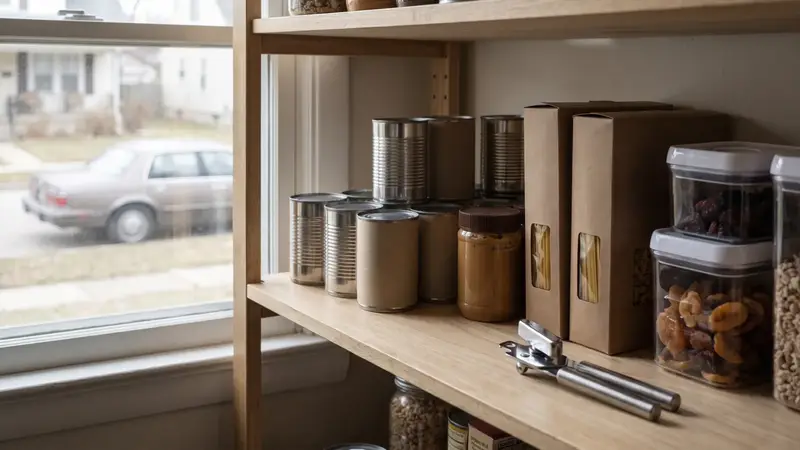 Emergency food storage: how much to store, what to buy and how to keep it safeHow much emergency food to store, from a 3-day kit to two weeks at home: no-cook foods, calories, special diet…
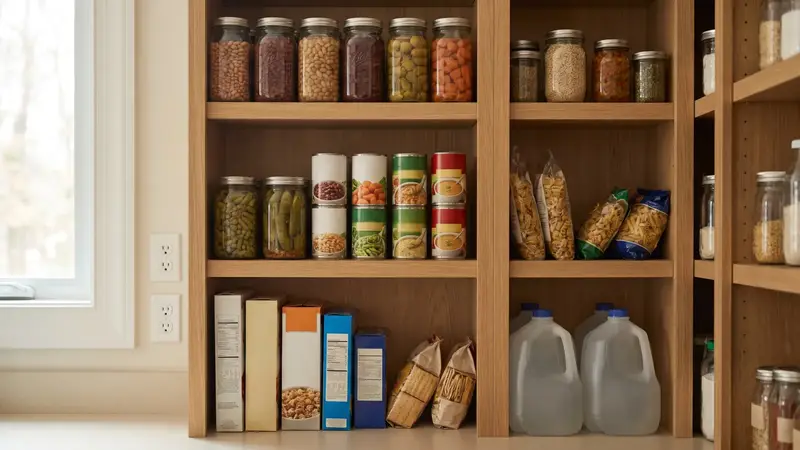 Non-perishable food list: what to stock for an emergencyA non-perishable food list from Ready.gov: canned meats, fruit and vegetables, bars, cereal, peanut butter, dr…
 Emergency kit checklist: what to include, how much to keep and where to store itA plain-English emergency kit checklist built on Ready.gov's basic kit and extra items, with how many days of …