Is a 90-day blackout coming? What the Pentagon's plan for bases means for your home
Is a 90-day blackout coming? No agency has warned of one. The 90 days is a Pentagon target for bases to run without the grid. What is confirmed, and what it means for you.
By Tom Calder · Updated October 30, 2026 · Sourced to Fox News, Breaking Defense, the Department of War, the US Army, EIA, Ready.gov and CDC
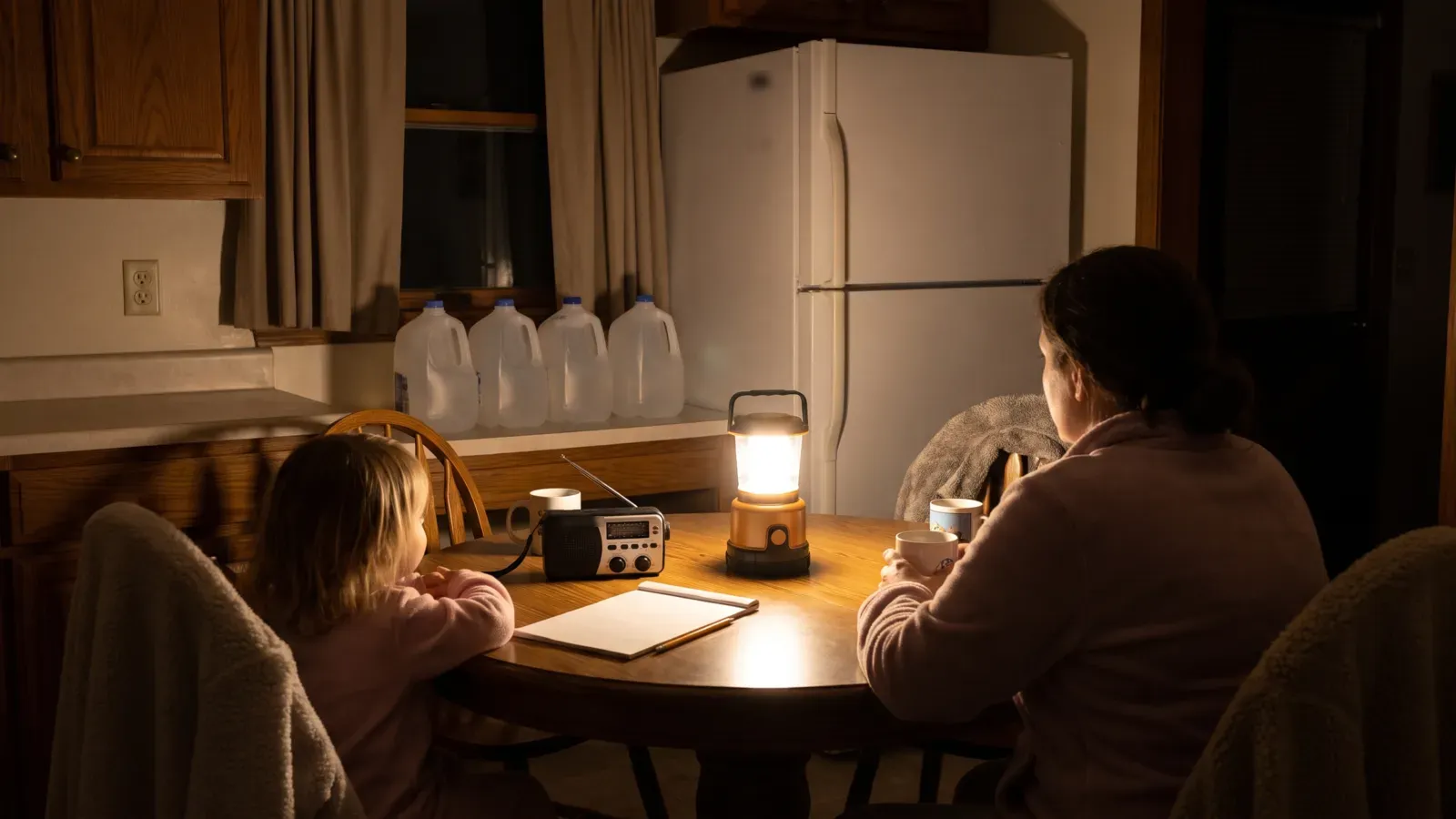
“Pentagon prepares every major US military base to operate for at least 90 days without outside electricity, fuel, water or supplies”
Real plan, for bases. No new advice for homes.
- Update, October 30: the Pentagon's installations chief says partnerships with companies will help pay for FORTRESS, and he spoke on the record of powering bases for "30, 60, or even 90 days" and of a 90-day stockpile on bases. Nothing he or the Pentagon said covers power or supplies for homes. No cost or timeline has been released.
- A widely shared post says the Pentagon is preparing every major US military base to run for at least 90 days without outside electricity, fuel, water or supplies, citing Fox News.
- The Pentagon announced the wider plan on September 30, and its chief spokesperson explained the thinking on the record. The 90-day figure comes from the documents Fox reviewed, which have not been made public.
- Nothing in the report asks households to do anything. Official advice is unchanged: supplies for several days, and a 2-week water supply if you can.
- Don't buy 90 days of supplies because of this story. Plan for the outages that actually happen.
The three things most homes are missing
Our top pick from each comparisonIf you already have these, you're most of the way there. As an Amazon Associate, PreparedStates earns from qualifying purchases. We may earn a commission when you buy through our links. It never changes what we recommend. Amazon prices come from Amazon's own product data and can change at any time.
 Want it as a plan?The 90-Day Home Plan: water, food, power and heat, stage by stage64 pages to print and tick off. Stop at whichever stage suits your home: most only need the first two.See the plan, $14.99 →
Update, October 30, afternoon: who pays, and what it says about your power
The Pentagon plans to use "public-private partnerships" to help pay for FORTRESS, Dale Marks, the assistant secretary for energy, installations and environment, told Breaking Defense at a conference in Tampa this week. "The model that we're trying to drive on is not me having to go back up on Capitol Hill with my hand out," he said. He didn't say which projects could be paid for that way. Breaking Defense also reports that he is not focused on a completion date for every existing base, but on priorities and ways to bring costs down.
On stage, Marks described the energy goal as powering bases for "30, 60, or even 90 days without a single watt of outside power." He also said: "We're mandating a 90-day sovereign stockpile of critical parts, fuels, propellants, ammunitions on site." That is the first time we have found a Pentagon official using a 90-day figure on the record. He used it for a stockpile on bases; for power, he gave a range. Microreactors won't go on every base, he said: other sources could include natural gas and geothermal.
The Pentagon's own news story on his Tampa speech, published October 29, says: "While Fortress America installations will use a public-private economic model, they will be designed to rely on their own infrastructure for 30 days, completely detached from external utilities in case the surrounding civilian grid collapses." That is a worst case the bases are planning for, the way a hospital plans for losing power. It is not a forecast, and the story gives no warning or advice for the public.
What none of it says: neither Marks nor the Pentagon's story mentions power, fuel or supplies for homes, utility bills, or what FORTRESS will cost. The September 30 memo that created the program doesn't mention partnerships or outside funding either. For households, nothing changes: keep supplies for several days, and a 2-week water supply if you can, as set out below.
Update, October 30: what has changed
The program is moving. Hegseth's September 30 memo creating FORTRESS America told the Pentagon's acquisition chief to stand up a FORTRESS America Program Office within 30 days. Under Secretary Michael Duffey issued a directive, dated Tuesday, October 6, that starts setting it up and names an interim director. DefenseScoop reported it on October 7. Neither the September 30 memo nor the parts of the October 6 directive DefenseScoop quoted mention 90 days.
At an October 20 roundtable, a senior defense official told reporters that details are still being worked out as officials consider the needs of around 500 bases in the continental US. "The assessment timeline that we're in right now is trying to determine what is this going to cost," the official said. Air & Space Forces Magazine, which reported the roundtable, wrote that it could take decades to fully achieve the goal. We found no cost or timeline from the Pentagon.
Did the Pentagon confirm the 90 days? Reports disagree. The Epoch Times says Parnell "confirmed" Fox's report on October 25. The confirmation it describes is an X post sharing the Fox article, which it quotes as: "FORTRESS is strategic deterrence in action, ensuring our defenses are hardened, proactive, and ready." Snopes looked at the same post and said it "does not explicitly confirm the 90-day operating requirement." Both are describing one post, and the words quoted from it don't mention 90 days.
Our reading: the Pentagon's spokesman endorsed the Fox story, and he is quoted in it at length, but we found no on-record statement from him or the Pentagon that confirms the 90-day figure itself. Snopes said on October 26 that it had asked the Pentagon and was awaiting a reply. None of this changes anything for households.
What Fox News actually reported
Fox News Digital published the story on October 25, based on documents it says it reviewed. They describe a Pentagon initiative called FORTRESS. Under a new requirement, every major military installation in the continental United States would be expected to sustain essential operations independently for at least 90 days. The 90 days includes electricity, water, fuel and communications.
To get there, the documents envision portable nuclear reactors, large-scale battery storage and microgrids that can disconnect a base from the civilian grid. They also call for strategic reserves, including fuel, munitions, spare parts and medical supplies.
Pentagon chief spokesperson Sean Parnell told Fox News Digital: "We don't want to rely on standard civilian municipal infrastructure to run our national defense." He also said, "Power is combat now. Without electricity, you lose communications, water, logistics, assembly lines and just basic military command structures."
What is confirmed, and what is not
Confirmed: FORTRESS itself is public. Defense Secretary Pete Hegseth announced it in his September 30 "State of the Force" address, and the Army's write-up says the program "calls for every American military installation to eventually run under its own power." Pentagon chief spokesperson Sean Parnell also explained the thinking to Fox on the record.
Parts of the plan are already underway. On August 26, the Army announced awards of up to a combined $2.2 billion for companies to own, build and operate nuclear microreactors at five bases: Fort Bragg, Fort Campbell, Fort Hood, Fort Benning and Fort Drum. The Army is aiming for its first reactor to operate on a base by September 2028, and expects more than 20 in total.
The idea is not new either. In 2017 the Army said its installations should be able to provide necessary energy and water for a minimum of 14 days, a figure it chose after studying past outages and water shortages. Ninety days would be a much longer target.
Not confirmed: the documents Fox reviewed have not been made public, and the 90-day figure is not in the public announcements. Fox's report does not say who signed the documents, when, or by what date bases must comply. Hegseth did not say how long the goal would take, and Air & Space Forces Magazine reported that it could take decades to fully achieve. The post's wording, that the Pentagon is "anticipating a major war," is also stronger than Fox's own, which says the Pentagon is preparing "for the possibility of a major war."
Why bases, and why now
Fox's report says a central concern is the military's reliance on civilian power grids, the reliance Parnell described. The Army said in August that it wants energy resilience "without relying on potentially vulnerable external grids." That is planning for a base's mission in a worst case, the way a hospital keeps backup generators. It is not a forecast that the grid will go down, and no agency has told households to prepare for one.
For most households, outages are far shorter. EIA says US electricity customers averaged 11 hours of interruptions in all of 2024, a high year driven by hurricanes. Interruptions from major events averaged nearly nine hours that year, and outages not caused by major events routinely average about two hours a year. The worst-hit state, South Carolina, averaged nearly 53 hours.
What it means for your home
Nothing in this report changes official advice for households. Ready.gov says that after an emergency you may need to survive on your own for several days, with your own food, water and other supplies. CDC says to store at least 1 gallon of water per person, per day for 3 days, and to try to store a 2-week supply if possible. The Red Cross suggests a 2-week supply of water and food at home.
That is a sensible target, and it covers the outages people actually face. Start with our power outage checklist and how much water to store. If you want to keep a deeper pantry anyway, our food storage calculator sizes one by household and months, and the long-term food storage guide explains how to rotate it.
- Water: 1 gallon per person, per day, for at least 3 days; 2 weeks if you can
- Food you already eat, for several days, that needs no fridge
- A flashlight for every person, plus spare batteries
- A battery-powered or hand-crank radio
- A plan for anyone who relies on powered medical devices or cold medicines
What not to do
Don't panic-buy months of supplies because of a headline about military bases. Food you never eat goes to waste, and Ready.gov's advice is to choose foods your family will eat.
If you do buy a generator, use it safely. CDC says never to use a generator, pressure washer or any gasoline-powered engine inside your home, basement or garage, or less than 20 feet from any window, door or vent. Ready.gov adds: never use a gas stovetop or oven to heat your home, and install carbon monoxide detectors with battery backup on every level.
We will update this check if the Pentagon publishes the FORTRESS documents or confirms the 90-day requirement, if FEMA or Ready.gov changes its advice for households, or if any federal agency warns the public about a long grid outage.
Common questions
Is there a 90-day blackout coming in 2026?
No agency has warned of one. The 90 days comes from a Pentagon plan, reported by Fox News on October 25, for major military bases to keep running for at least 90 days without outside electricity, fuel or water. It is a planning target for bases, not a forecast or a scheduled outage.
When is the 90-day blackout supposed to happen?
There is no date, because no blackout is scheduled. Posts calling it a "90-day blackout" come from the Pentagon's FORTRESS plan for bases. Fox's report doesn't say when bases must meet the target, and Air & Space Forces Magazine reported that it could take decades to fully achieve.
Should we prepare for a 90-day blackout?
Official advice hasn't changed: Ready.gov says to be ready to manage on your own for several days, and CDC says to store a 2-week water supply if you can. That covers the outages people actually face. EIA says US customers averaged 11 hours without power in all of 2024.
Is the Pentagon really preparing bases to run 90 days without power?
Fox News Digital reported it on October 25, from documents it says it reviewed. They describe the Pentagon's FORTRESS plan, under which every major base in the continental US would be expected to sustain essential operations independently for at least 90 days. Defense Secretary Hegseth announced FORTRESS publicly on September 30, but the documents Fox reviewed, and the 90-day figure, have not been made public.
Did the Pentagon confirm the 90-day requirement?
Not as one fixed rule for power. Spokesperson Sean Parnell shared Fox's report on X on October 25; Snopes said that does not explicitly confirm the 90-day requirement. On October 30, Breaking Defense reported the Pentagon's installations chief, Dale Marks, describing the power goal as "30, 60, or even 90 days" and saying the Pentagon is "mandating a 90-day sovereign stockpile" of parts, fuel and ammunition on site. The Pentagon's own October 29 story says 30 days.
Who will pay for FORTRESS America?
The Pentagon hasn't given a cost. Dale Marks, the assistant secretary for energy, installations and environment, told Breaking Defense on October 30 that the Pentagon plans to use public-private partnerships to help pay for it, rather than going back to Congress with his "hand out." He didn't say which projects. Nothing reported says households or utility customers would pay.
Does it apply to every military base?
Fox's report says every major military installation in the continental United States. It does not mention smaller sites or bases overseas.
Is the government warning that the power grid will fail?
No. No federal agency has told households to prepare for a long grid outage. The Pentagon's comments are about not relying on civilian utilities to run national defense. The Army says it wants bases to be resilient without relying on potentially vulnerable external grids.
Should I store 90 days of food and water?
Official advice has not changed. Ready.gov says to be ready to manage on your own for several days. CDC says to store at least 1 gallon of water per person per day for 3 days, and a 2-week supply if possible. A deeper pantry is a personal choice, but store foods your family will eat.
What are the nuclear reactors for military bases?
On August 26 the Army announced awards of up to $2.2 billion for companies to own, build and operate microreactors at Fort Bragg, Fort Campbell, Fort Hood, Fort Benning and Fort Drum. It is aiming for its first reactor to operate on a base by September 2028.
Sources (19)
- Fox News: Inside the Pentagon's doomsday plan to keep America fighting if global war erupts (Oct 25, 2026)
- Breaking Defense: Pentagon eyes 'public-private partnerships' to help fund FORTRESS America homeland base plan (Oct 30, 2026)
- Department of War: Assistant Secretary says new infrastructure initiatives are a 'national calling' (Oct 29, 2026)
- US Army: Hegseth delivers 'State of the Force' address, outlines series of new initiatives (Oct 2, 2026)
- Air & Space Forces Magazine: Pentagon's FORTRESS energy push (Oct 20, 2026)
- US Army: Army reaches agreement with private industry for nuclear micro-reactors (Aug 26, 2026)
- US Army: Army pursuing 14-day energy, water independence for installations (Mar 28, 2017)
- EIA: Hurricanes in 2024 led to the most hours without power in 10 years
- Ready.gov: Build a Kit
- Ready.gov: Food
- CDC: Creating and storing an emergency water supply
- American Red Cross: Survival kit supplies
- CDC: Protect yourself during a power outage
- Ready.gov: Power Outages
- Department of War: Establishment of FORTRESS America as a Department of War program (memo, Sep 30, 2026)
- DefenseScoop: Pentagon memo to operationalize FORTRESS America Program Office (Oct 7, 2026)
- Snopes: Pentagon FORTRESS initiative, 90 days (Oct 26, 2026)
- The Epoch Times: Pentagon preparing US military bases to operate off-grid for 90 days, spokesman says (Oct 26, 2026)
- Fortune: Pentagon FORTRESS bases 90 days off grid (Oct 26, 2026)
Get one calm email when it matters
Seasonal checklists and gear price drops. No spam, unsubscribe any time.
Keep reading
 Power outage checklist: what to do before, during and afterA calm power outage checklist from Ready.gov and CDC: what to prepare, how to protect food, medicines and medi…
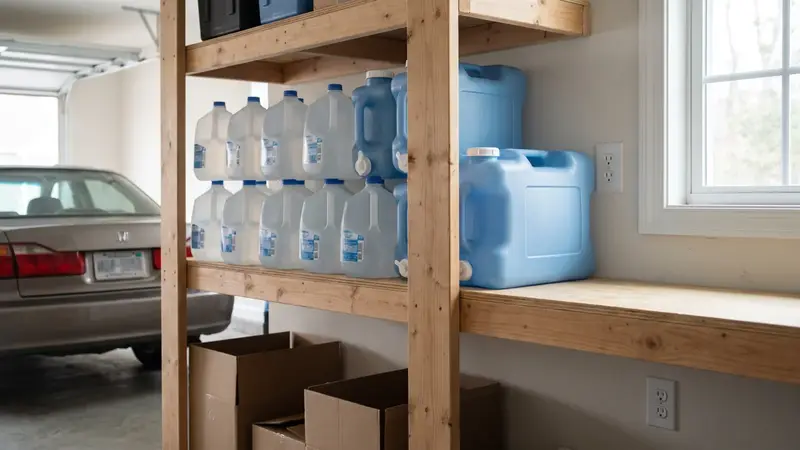 How much water to store for an emergency: per person, per pet and for how longHow much water to store for an emergency: 1 gallon per person per day, pets, which containers to use, when to …
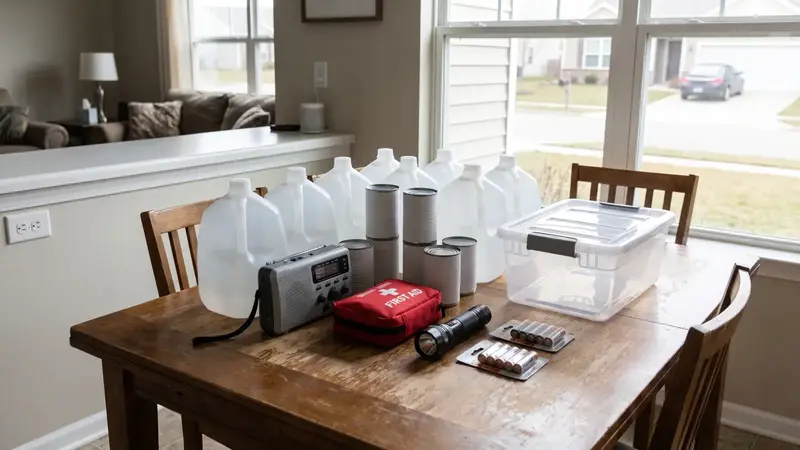 Emergency kit checklist: what to include, how much to keep and where to store itA plain-English emergency kit checklist built on Ready.gov's basic kit and extra items, with how many days of …
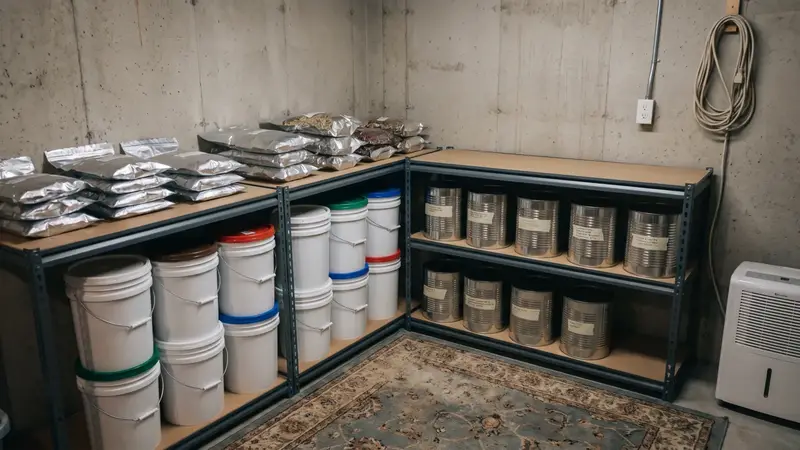 Long-term food storage: how to build a 3-month or 1-year supplyHow to store food for months or a year: which staples last decades, how to pack them with Mylar and oxygen abs…