Can a power outage damage appliances? What official sources say about surges
The risk Ready.gov describes is a surge when power returns, not the outage itself. What to unplug, what a surge protector is for, and what to skip.
By Tom Calder · Updated October 30, 2026 · Sourced to Ready.gov, the American Red Cross, CDC and CPSC
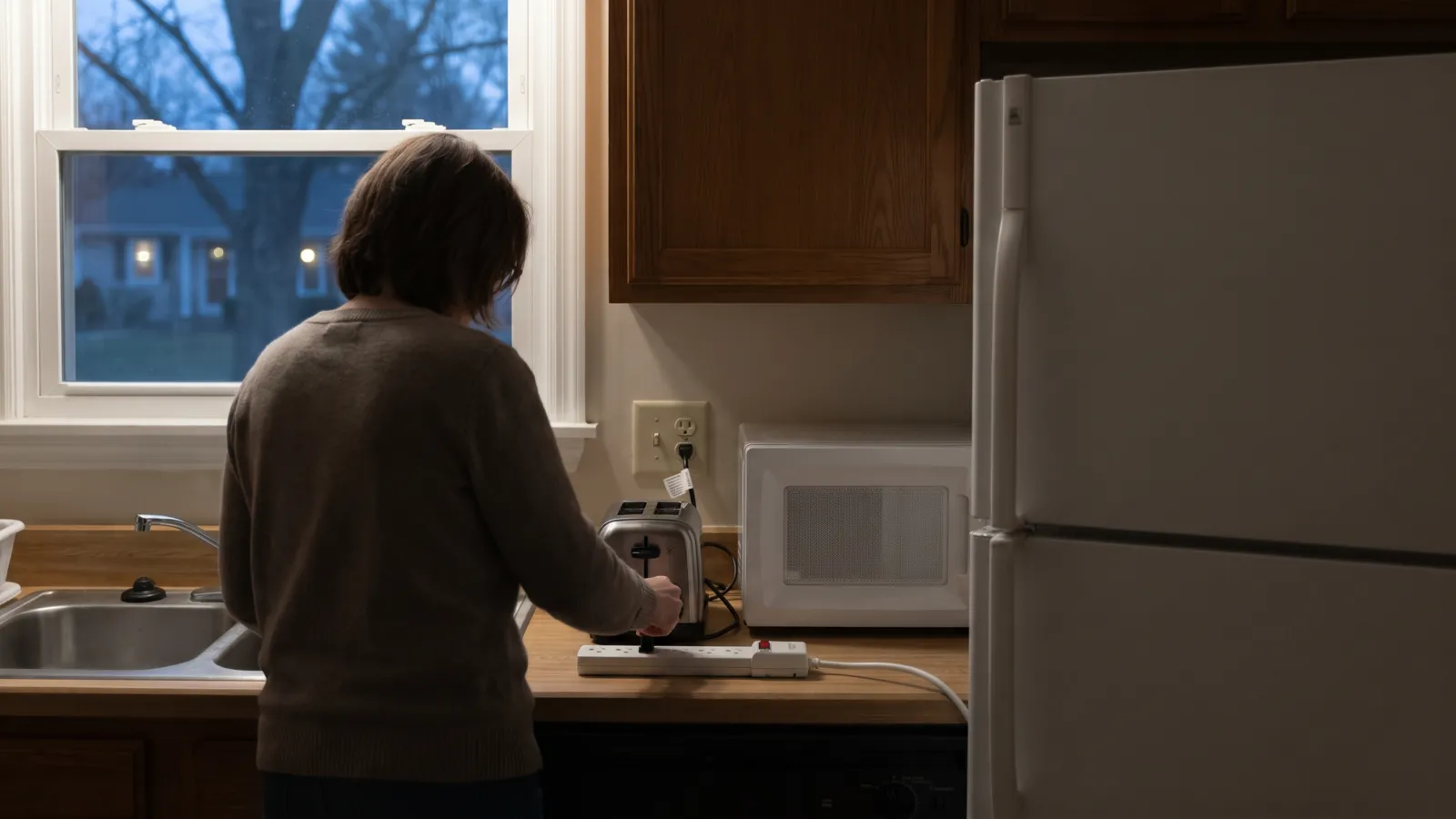
- Ready.gov says power may return with momentary surges or spikes that can cause damage, so turn off or disconnect appliances, equipment, or electronics.
- Ready.gov ties the risk to the moment power comes back. Neither Ready.gov nor the Red Cross says the outage itself damages appliances, and neither gives figures for how often damage happens.
- Unplugging costs nothing. The Red Cross also advises having current surge protectors for household electronics.
- Keep the fridge and freezer doors shut, and have an electrician look at any tripped breakers before you reset them.
What the sources actually say
Ready.gov's power outage page says: "Turn off or disconnect appliances, equipment, or electronics. Power may return with momentary surges or spikes that can cause damage." Its tip list says the same in short form: "Disconnect appliances and electronics to avoid damage from electrical surges."
The American Red Cross gives matching advice: "Unplug appliances and electronics to avoid power overloads or damage from power surges." The Red Cross also lists, under preparing, "Plan for surge protection. Make sure that you have current surge protectors for household electronics."
Note what these pages leave out. Ready.gov names surges and spikes when power returns as the concern; the Red Cross names power overloads and power surges. Neither page says that losing power by itself harms ordinary appliances, and neither gives a damage rate, a protector rating or a product to buy. We have not found a federal page that does, so we do not offer numbers.
What to unplug, and when
The simplest plan is the one both Ready.gov and the Red Cross give: disconnect before the power comes back. Start with items that are expensive or hard to replace, such as computers, televisions, game consoles and the router, and anything with a motor or compressor that you do not need during the outage.
Our suggestion, not an agency rule: leave one lamp switched on so you know when power has returned, wait a few minutes, then plug things back in a little at a time.
Refrigerators and freezers are a special case. CDC says your refrigerator will keep food safe for up to 4 hours without power if you don't open the door, and a full freezer for 48 hours (24 hours if half full). Keep doors shut while the power is out. If the outage runs long, our food safety in a power outage guide covers what to keep.
What a surge protector is for
A surge protector is a plug-in device that sits between the wall and your electronics. The Red Cross lists having current ones as part of preparing for an outage. Ready.gov's and the Red Cross's pages do not explain how protectors work, so we will not describe their ratings here.
Two plain points from CPSC are worth keeping in mind. CPSC says to always plug electric space heaters directly into a wall outlet and never into an extension cord or power strip, to prevent overloading and causing a fire. And CPSC advises that you check for recalled products at www.cpsc.gov/recalls before using household products.
You do not need to buy anything to follow the main advice. Unplugging is free. If you already own surge protectors, use them for computers and entertainment gear; if one is old, the Red Cross says "current" protectors, which we read as meaning a good reason to replace an old one (our reading).
When you use a generator or battery backup
If you run a generator, the same handful of rules protect your equipment and your family. CPSC says to connect appliances using heavy-duty extension cords designed for outdoor use, with a wattage rating for each cord that exceeds the total wattage of all appliances connected to it. Never plug a generator into a wall outlet: CPSC calls this backfeeding, and it is extremely dangerous.
Ready.gov also warns that using a gas oven or stovetop for heat "could damage the appliance," on top of the carbon monoxide risk. Never use a gas stove or oven to heat your home. For fuel-burning generators, read our generator safety guide; for battery backup, see home backup batteries and power stations.
After the lights come back
The Red Cross says that if any circuit breakers have been tripped, contact an electrician to inspect them before turning them on. It also says turn off the utilities only if you suspect damage or if local officials instruct you to do so, and your gas line can only be turned on by a qualified professional.
CDC advises throwing out all perishable foods in your refrigerator when the power has been off for 4 hours or more, and the Red Cross adds a thermometer to check food temperatures. If an appliance does not work after a surge, check your warranty or homeowners or renters policy: that is general advice, not from the federal pages above.
Ready.gov says to turn off or disconnect appliances, equipment, or electronics because power may return with momentary surges or spikes that can cause damage. Both Ready.gov and the Red Cross advise unplugging or disconnecting appliances and electronics.
Common questions
Can a power outage itself damage my appliances?
Ready.gov says power may return with momentary surges or spikes that can cause damage; the Red Cross says to unplug to avoid power overloads or damage from power surges. Neither says the outage itself causes damage or how often damage happens.
Should I unplug everything during an outage?
Both Ready.gov and the Red Cross advise disconnecting appliances and electronics. Our suggestion: start with costly electronics, and leave one light on so you know when power returns.
Do I need a surge protector?
The Red Cross says to plan for surge protection and to have current surge protectors for household electronics. The federal pages we read do not name a rating or product.
Is it safe to reset a tripped breaker?
The Red Cross says if any circuit breakers have been tripped, contact an electrician to inspect them before turning them on.
Will a generator damage my electronics?
The sources we read do not say so. CPSC's rules are about safety: outdoor-rated heavy-duty cords, cords rated above the total wattage, and never backfeeding through a wall outlet.
Get one calm email when it matters
Seasonal checklists and gear price drops. No spam, unsubscribe any time.
Keep reading
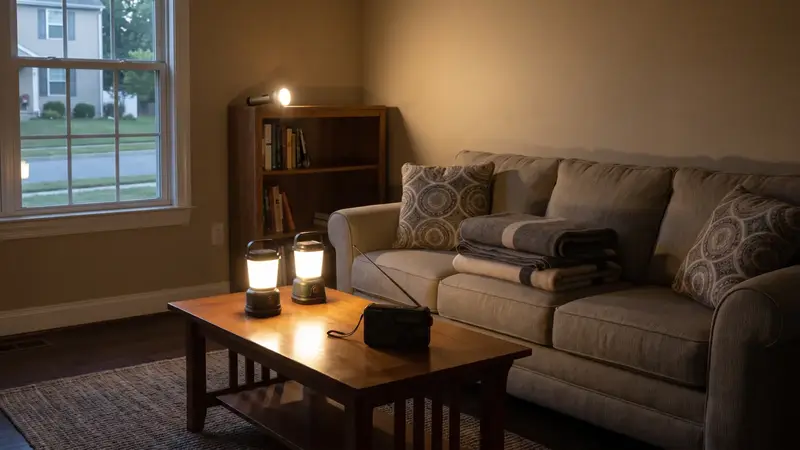 Power outage checklist: what to do before, during and afterA calm power outage checklist from Ready.gov and CDC: what to prepare, how to protect food, medicines and medi…
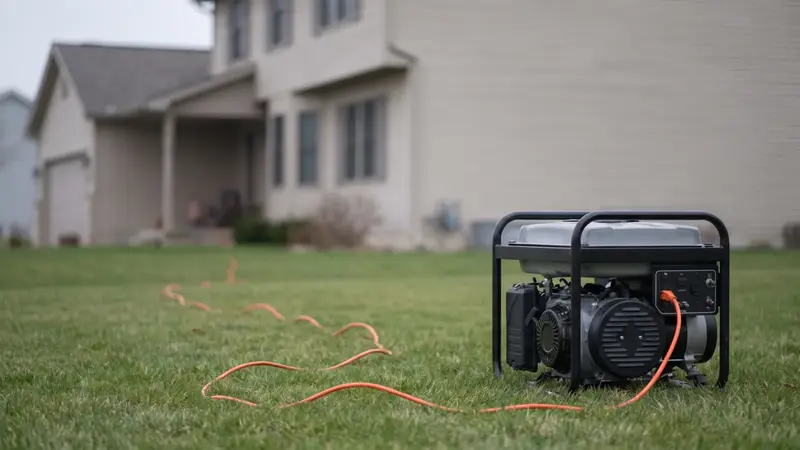 Portable generator safety: where to run it, carbon monoxide and cordsHow to use a portable generator safely in an outage: 20 feet from windows, never in a garage, CO alarms, outdo…
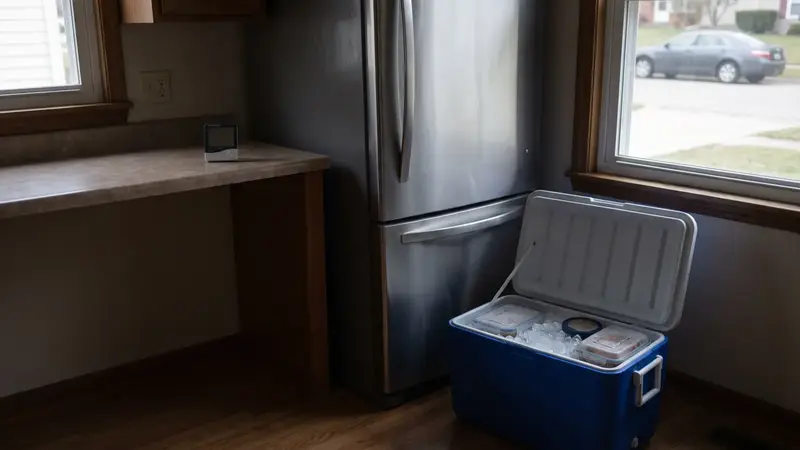 Food safety in a power outage: how long food lasts and what to throw outHow long food stays safe in the fridge and freezer without power, what to throw out, and when you can refreeze…
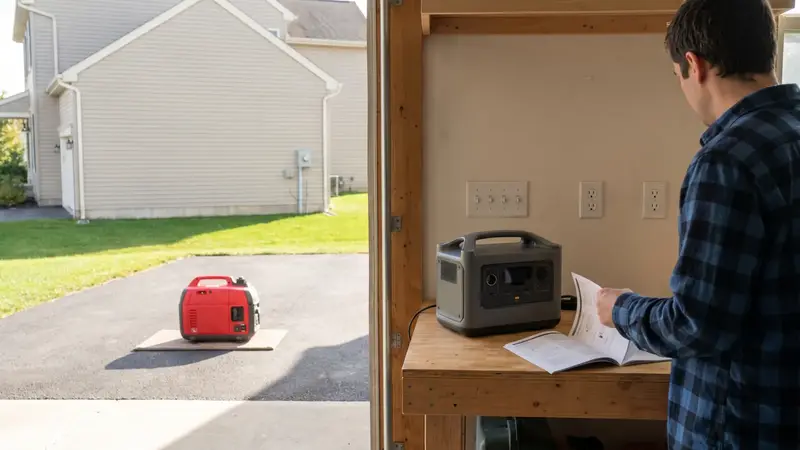 Power station vs generator: which one suits your home in an outage?A portable power station is a battery; a generator burns fuel. What that means for carbon monoxide, fuel stora…