Could a national blackout happen in the US? How the three grids work
Could the whole US lose power at once? The country runs on three mostly separate grids, with NERC setting standards and FERC approving them. What that means for you.
By Tom Calder · Updated October 30, 2026 · Sourced to EIA, NERC, FERC, the US-Canada outage task force, Ready.gov and the American Red Cross
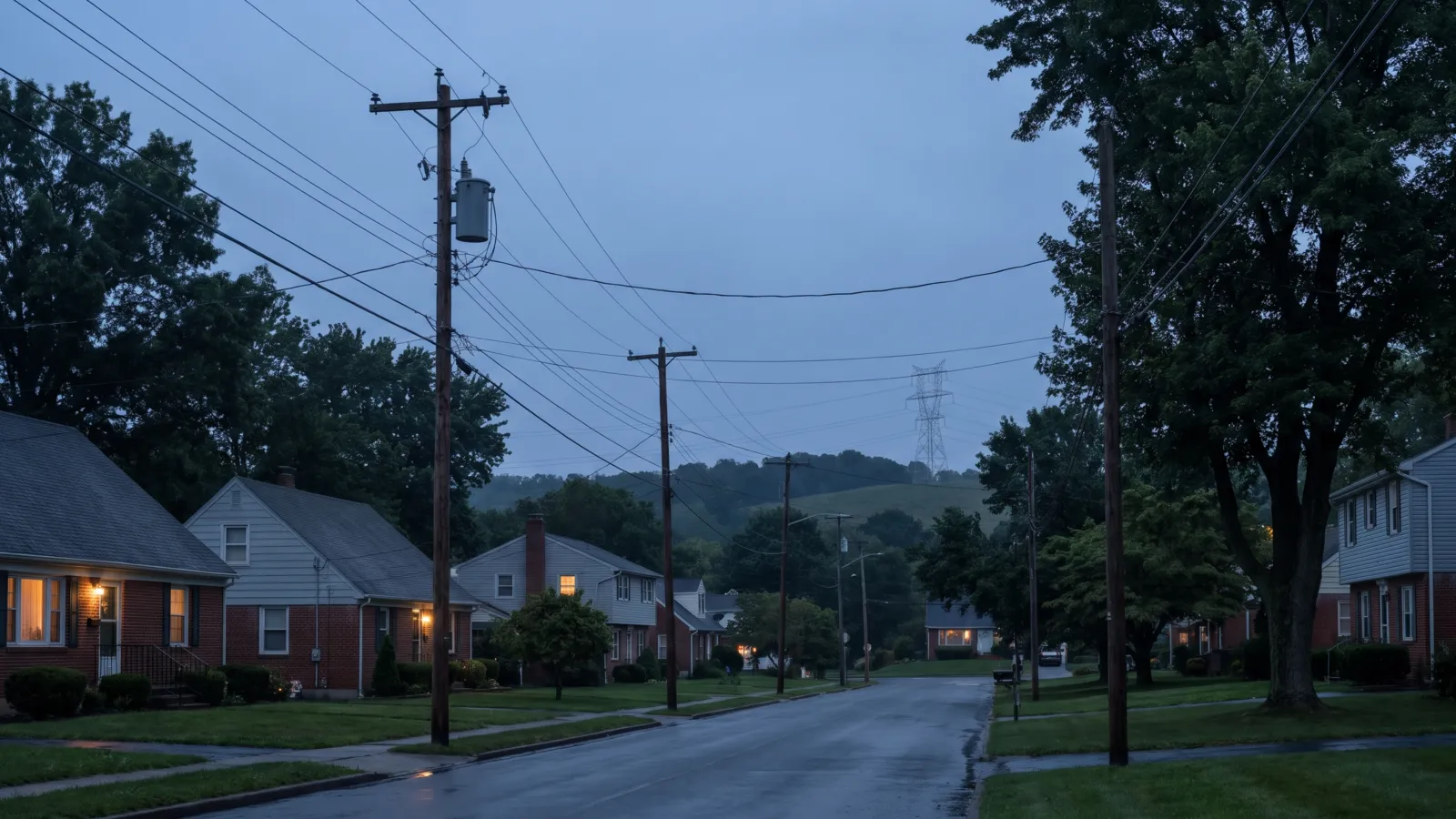
- The lower 48 states run on three main grids, called interconnections: Eastern, Western and Texas (ERCOT). EIA says they mostly operate independently and rarely transfer electricity among them.
- The biggest past blackouts were regional. The 2003 blackout reached about 50 million people in the Northeast, Midwest and Ontario. The February 2021 Texas freeze left more than 4.5 million people in Texas without power.
- We found no federal agency forecasting a national blackout. NERC's 2026 summer assessment says all areas have adequate resources for normal peak demand, and names a few areas at elevated risk in extreme conditions.
- Our planning case is a regional outage of several days. Ready.gov's Build a Kit page says to have food, water and other supplies "to last for several days." You do not need to buy anything special for this.
The short answer
A blackout across the whole country at once is not something any federal agency we checked has forecast, and the way the grid is built makes it hard to do. Regional blackouts do happen, and a few have lasted days. That is the case worth planning for, and the plan is the same short list in Ready.gov's power outage advice: food, water, light, medicines, and a way to stay safe and warm or cool.
Three grids, not one
EIA, the federal statistics agency for energy, explains that "the U.S. electric grid in the Lower 48 states has three main interconnections. These interconnections mostly operate independently from each other and rarely transfer electricity among them." They are the Eastern Interconnection, which covers the area east of the Rocky Mountains and a part of the Texas panhandle, the Western Interconnection, which covers the Rocky Mountains and west, and ERCOT, which covers most of Texas.
Inside each grid there are many connected power lines and plants. EIA says this "redundancy helps prevent widespread blackouts if a transmission line or power plant fails." The two big grids are also linked to Canada's. Between grids, the links are limited. FERC and NERC staff wrote in their 2021 report that the most power that can be imported into ERCOT at once, on all its ties (including two to Mexico), is 1,220 megawatts, with up to 820 megawatts of that over the ties to the Eastern grid.
A 2017 Department of Energy assessment, which counted four interconnections, put the design this way: it "prevents power loss on one grid from affecting the other three, as the interconnections are electrically independent from each other, except for a few direct current (DC) links." That report is from 2017, so treat it as background on how the system is built, not as today's status.
Who keeps the grid reliable: NERC, FERC and FEMA
EIA says the North American Electric Reliability Corporation, or NERC, "develops and enforces mandatory grid reliability standards, which are approved by the Federal Energy Regulatory Commission (FERC)." NERC also publishes seasonal reliability assessments each summer and winter. Its 2026 summer assessment describes the work as supporting "the needs of nearly 400 million people" across North America.
FEMA and Ready.gov sit on the other side: they do not run the grid, they help households and communities get ready for outages. Ready.gov says "extended power outages may impact the whole community and the economy."
What NERC's latest assessments say
NERC's 2026 Summer Reliability Assessment, published in May 2026, says "all areas are assessed as having adequate anticipated resources for normal summer peak load conditions." It then names areas that "face elevated risks of electricity supply shortfalls during periods of more extreme summer conditions." It describes the risk picture as "marked by rising demand, significant generation growth in many areas, the prospect of challenging hydrological conditions, and the unpredictability of large loads."
The 2025-2026 Winter Reliability Assessment says the same about normal winter peaks, then adds that "more extreme winter conditions extending over a wide area could result in electricity supply shortfalls." For Texas it says "strong load growth from new data centers and other large industrial end users is driving higher winter electricity demand forecasts and contributing to continued risk of supply shortfalls." If you want to see the risk areas for your region, read the maps in the assessments themselves, linked below. NERC's 2026 State of Reliability overview says the bulk power system "continues to deliver reliable electric service under increasingly challenging conditions."
What big blackouts have looked like
On August 14, 2003, a blackout hit "an area with an estimated 50 million people and 61,800 megawatts (MW) of electric load in the states of Ohio, Michigan, Pennsylvania, New York, Vermont, Massachusetts, Connecticut, New Jersey and the Canadian province of Ontario," according to the US-Canada task force final report. Power "was not restored for 4 days in some parts of the United States," and the report puts US costs between $4 billion and $10 billion.
In February 2021, the FERC, NERC and regional staff report says "more than 4.5 million people in Texas lost power during the Event, and some went without power for as long as four days, while exposed to below-freezing temperatures for over six days." It records 23,418 megawatts of manual load shed, "the largest controlled firm load shed event in U.S. history," and at least 210 deaths, with most connected to the outages. The report ranks the Texas event third in megawatts of load lost, after the 2003 blackout and a 1996 Western blackout.
How often does your power go out?
EIA's Electric Power Annual, updated October 21, 2026, gives the average US customer 262.6 minutes of interruptions in 2025 (about 4.4 hours, our arithmetic), counting major events, and 120.8 minutes without them. For 2024 the same table shows 611.3 minutes with major events and 126 without. A year with big storms looks very different from a quiet year, which is why planning is for storms, not for the average.
What to do: a short plan, not a shopping trip
Ready.gov says to "have enough nonperishable food and water," to keep freezers and refrigerators closed, and to plan batteries or a power bank for what you rely on. The Red Cross suggests storing "non-perishable food and water supplies for at least two weeks." Start with our power outage checklist, size your water with how much water to store, and see our 90-day plan only if you want to go much further. Our live power outage map shows outages reported by utilities right now.
Two safety lines from Ready.gov apply to every outage. "Generators and fuel should always be used outdoors and at least 20 feet away from windows, doors and attached garages." And: "Never use a gas stovetop or oven to heat your home." If you use a generator, read generator safety first.
You do not need to buy anything because of a national blackout headline. If you already have a few days of water and food you eat anyway, a flashlight for every household member, a battery radio and your medicines in order, you have the core of what Ready.gov's power outage and kit pages list. Gear such as battery stations only helps if you have a specific need, like a medical device.
Common questions
Could the entire US lose power at once?
We found no federal agency forecasting it. EIA says the lower 48 run on three main grids that mostly operate independently and rarely transfer electricity among them. Even the largest past blackouts stayed regional.
What are the three US grids?
The Eastern Interconnection (east of the Rocky Mountains, plus a part of the Texas panhandle), the Western Interconnection (the Rocky Mountains and west) and ERCOT (most of Texas), according to EIA.
What does NERC do?
EIA says NERC develops and enforces mandatory grid reliability standards, which FERC approves. NERC also publishes summer and winter reliability assessments for North America.
Is the grid getting less reliable?
NERC says the bulk power system continues to deliver reliable service under increasingly challenging conditions, and that demand is rising. Its assessments name regional areas at elevated risk in extreme weather. They do not describe a national risk.
How long should I plan to be without power?
Ready.gov asks for supplies to last for several days, and the Red Cross suggests food and water for at least two weeks. Longer plans are your own choice. Check any outage in your area on our power outage map.
Sources (11)
- EIA: Delivery to consumers (Energy Explained)
- EIA: Electric Power Annual, Table 11.3 reliability metrics
- NERC: 2026 Summer Reliability Assessment (PDF)
- NERC: 2025-2026 Winter Reliability Assessment (PDF)
- NERC: 2026 State of Reliability overview (PDF)
- US-Canada Power System Outage Task Force: August 2003 blackout final report (PDF, hosted by NERC)
- FERC and NERC: February 2021 cold weather event report (PDF)
- Department of Energy: Assessment of electricity disruption incident response capabilities (2017)
- Ready.gov: Power Outages
- American Red Cross: Power outage
- Ready.gov: Build a Kit
Get one calm email when it matters
Seasonal checklists and gear price drops. No spam, unsubscribe any time.
Keep reading
 Power outage checklist: what to do before, during and afterA calm power outage checklist from Ready.gov and CDC: what to prepare, how to protect food, medicines and medi…
 How to prepare for a 90-day power outage: a staged plan for your homeHow to prepare for a 90-day power outage, in stages: water, food, heat, fuel and medicines for 2, 4 or 6 peopl…
 Portable generator safety: where to run it, carbon monoxide and cordsHow to use a portable generator safely in an outage: 20 feet from windows, never in a garage, CO alarms, outdo…
 Is a 90-day blackout coming? What the Pentagon's plan for bases means for your homeIs a 90-day blackout coming? No agency has warned of one. The 90 days is a Pentagon target for bases to run wi…