Emergency alerts on your phone: WEA, IPAWS and NOAA Weather Radio, and how to check they are on
How Wireless Emergency Alerts, IPAWS, the Emergency Alert System and NOAA Weather Radio work, why you may not get an alert, and how to check your phone is set up.
By Tom Calder · Updated October 30, 2026 · Sourced to FEMA, the FCC, the National Weather Service and Ready.gov
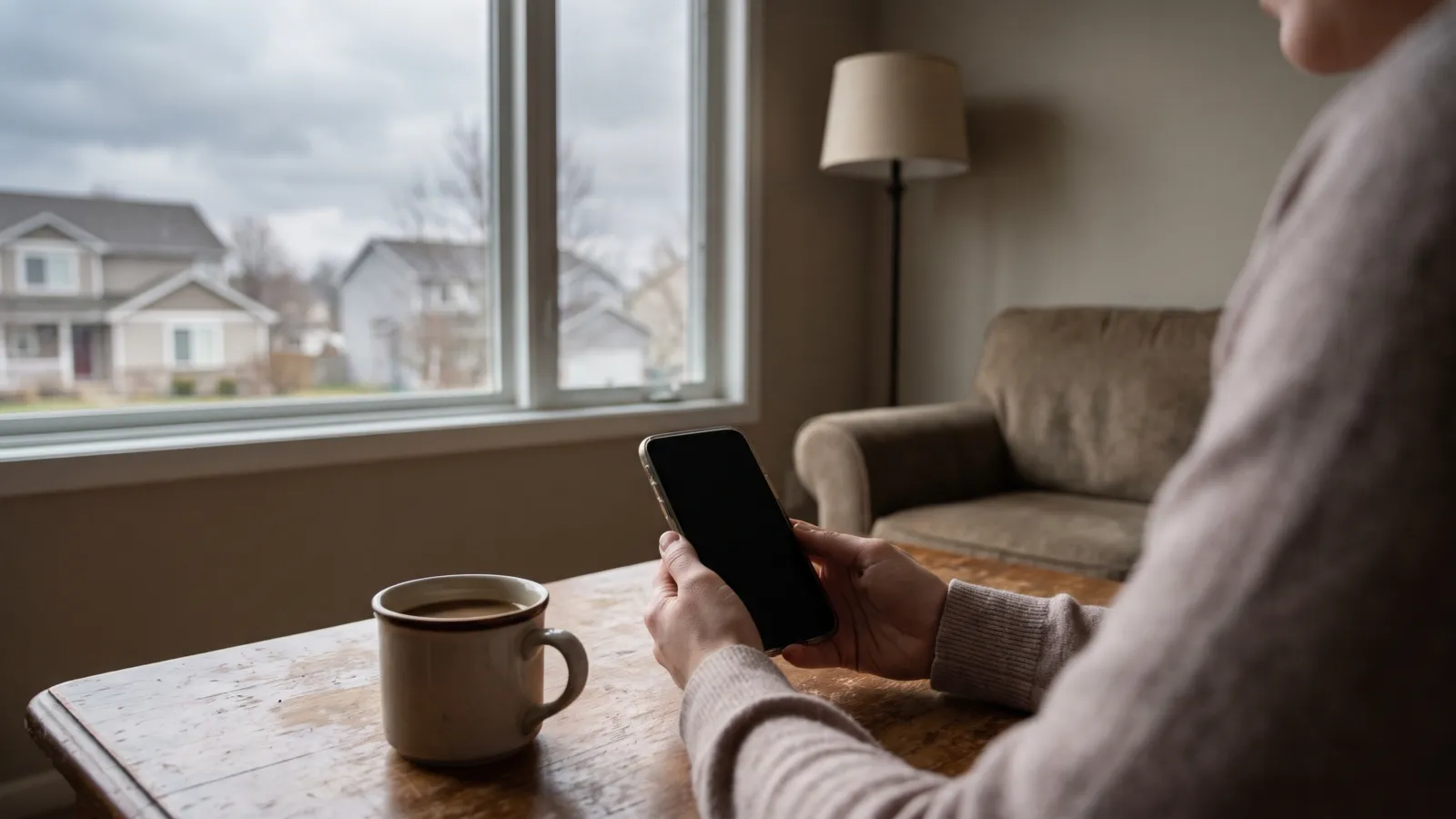
- You do not need to sign up, download an app or pay for Wireless Emergency Alerts (WEA). The FCC says alerts are free and need no sign-up, as long as your carrier takes part and your phone can receive them.
- Check your phone's notification settings. Ready.gov says older phones may not be WEA capable and some models require you to enable WEAs. Some carriers call them "Government Alerts" or "Emergency Alert Messages."
- WEA is one of several channels. FEMA's IPAWS sends alerts to phones, to radio and TV through the Emergency Alert System, and to NOAA Weather Radio.
- A phone alert can be missed (airplane mode, no signal, a VPN), so Ready.gov says to have several ways to receive alerts.
- FEMA and the FCC will test the Emergency Alert System on radio and TV on Tuesday, November 17, 2026, at about 2:20 p.m. Eastern Time, in English and Spanish. If conditions require it, the FCC says the test moves to December 3. FEMA says no action is required.
The four ways official alerts reach you
Ready.gov describes these channels. Wireless Emergency Alerts (WEA) are short messages that authorities can send to any WEA-enabled mobile device in a locally targeted area. The Emergency Alert System (EAS) reaches you through broadcast TV and radio, satellite audio, satellite TV and cable. NOAA Weather Radio All Hazards (NWR) is a nationwide network of radio stations that broadcast weather information from the nearest National Weather Service office. The Integrated Public Alert and Warning System (IPAWS) is FEMA's national system for local alerting. Ready.gov says it lets public safety agencies send WEAs, EAS alerts and messages through NOAA weather radios at the same time.
FEMA describes IPAWS as the system that gives authenticated alerts to the public through mobile phones using WEA, to radio and television through EAS, and on NOAA Weather Radio. Ready.gov says IPAWS lets local alerting authorities send their own emergency alerts, and that FEMA does not review, edit or approve them. FEMA says more than 2,000 federal, state, local, tribal and territorial alerting authorities use it.
You may also see local systems such as sirens and digital road signs, which FEMA says may also receive alerts from IPAWS. And you can add your own sign-ups: Ready.gov says to sign up for community alerts in your area, and to be aware that EAS and WEA require no sign-up.
Wireless Emergency Alerts: what they are and what they cost
FEMA says WEAs are short emergency messages from authorized federal, state, local, tribal and territorial public alerting authorities that can be broadcast from cell towers to any WEA-enabled mobile device in a locally targeted area. The FCC says authorized officials send them through IPAWS to participating wireless carriers, which push them to compatible phones in the affected area.
They are free. The FCC says customers do not pay to receive WEA and do not need to sign up, and that prepaid phones can receive them if the provider takes part and the phone is WEA enabled. FEMA says WEA messages do not count towards texting limits. The FCC says WEA does not track your location, and FEMA says every WEA-capable phone within range of the cell tower receives the message.
A WEA looks like a text message but is not one. Ready.gov says WEAs are designed to get your attention with a unique sound and vibration repeated twice, and that they are not affected by network congestion and do not disrupt texts, calls or data sessions. FEMA says the message shows the type and time of the alert, any action you should take, and the agency that issued it, in no more than 360 characters. FEMA's advice is to follow the action the alert advises and get details from local authorities, local news or trusted social media sources.
Which alerts the weather service sends to phones
The FCC lists four kinds of WEA: National Alerts from the President or the FEMA Administrator, Imminent Threat alerts, AMBER Alerts about missing children, and Public Safety Messages. FEMA also lists opt-in test messages, which state that they are a test.
The National Weather Service says it sends WEA messages for these warnings only: Tsunami, Tornado, Severe Thunderstorm (only when the damage threat is destructive), Flash Flood (only when the damage threat is considerable or catastrophic), Hurricane, Typhoon, Storm Surge, Extreme Wind, Dust Storm and Snow Squall. Heat, winter weather and watches are not on that list, so a quiet phone does not mean no weather alert is in effect. Our alerts page shows the live National Weather Service alerts for the whole country.
How to check your phone will get them
The steps differ by phone make and model. Ready.gov says to check the settings on your mobile device and review your user manual, that older phones may not be WEA capable, and that some cell phone models require you to enable WEAs. FEMA says the alerts opt-in or opt-out menu is typically in the notification settings menu.
Your carrier has to take part too. The FCC says participation is widespread but voluntary, and that you should check with your wireless carrier to find out whether your phone is WEA capable. Ready.gov says all major phone providers and some smaller ones take part and links to the FCC's registry of WEA providers.
You can switch off some alerts. The FCC says participating carriers may let you block Imminent Threat alerts and AMBER Alerts, but you cannot block National Alerts. If you turn the others off, you will not get tornado or flash flood warnings of that kind on your phone.
- Open your phone's notification settings and look for emergency or government alerts. Make sure the alert types you want are on.
- If you cannot find the setting, check your user manual or ask your carrier whether your phone and plan support WEA.
- Keep the phone out of airplane mode and charged when severe weather is forecast.
- Do not rely on a phone alone: add a weather radio or a local sign-up, as in the sections below.
Why you might not get an alert
FEMA says that if someone near you received a WEA and you did not, it may be inadequate cell reception, or because some phones will not show an alert while you are on a call. FEMA also says the alert may not arrive if your phone is set to off or airplane mode, is not connected to a cell site that is broadcasting the alert, is connected to a virtual private network (VPN), or is opted out of receiving alerts. FEMA says that if you are on a call, the message is delayed until you finish.
The reverse can happen too. The National Weather Service says WEA messages are broadcast from cell towers in, and sometimes around, the warning area, so a phone that cannot target precisely may get an alert for a warning that does not cover your exact spot. FEMA says its December 2019 enhancements aim to reach 100 percent of the targeted area with no more than 1/10 of a mile (528 feet) overshoot, and that the nationwide availability of enhanced features on customer phones takes more time.
If your phone keeps repeating the same alert, FEMA says it is most likely a device issue and that powering the phone off and on may help.
NOAA Weather Radio: the backup that is not your phone
The National Weather Service says NOAA Weather Radio broadcasts official warnings, watches, forecasts and other hazard information 24 hours a day, 7 days a week, from more than 1000 transmitters covering all 50 states, adjacent coastal waters, Puerto Rico, the U.S. Virgin Islands and the U.S. Pacific Territories. It also carries non-weather emergencies such as AMBER alerts through the Emergency Alert System.
It needs a special radio receiver or scanner. The broadcasts are on seven VHF frequencies (MHz): 162.400, 162.425, 162.450, 162.475, 162.500, 162.525 and 162.550. Ready.gov's basic kit list includes a "NOAA Weather Radio with tone alert" alongside a battery-powered or hand crank radio. Our weather radio comparison and hand-crank radio comparison cover the choices.
To check yours is working, find your county on the National Weather Service's NOAA Weather Radio station search and coverage maps and set the radio to the station listed. The same site has a page where you can view transmitters that are degraded or out of service. The National Weather Service's NOAA Weather Radio site also has pages on receivers and reception problems.
The Emergency Alert System and the November 17 test
Ready.gov says the Emergency Alert System is a national public warning system that allows the president to address the nation within 10 minutes during a national emergency, and that other authorized alerting authorities may use it for weather information, imminent threats, AMBER alerts and local incident information targeted to specific areas.
FEMA says that, in coordination with the FCC, it will conduct a nationwide test of EAS at approximately 2:20 p.m. Eastern Time on Tuesday, November 17, 2026. Radio and television broadcasters will interrupt normal programming. The test message will state, "This is a nationwide test of the Emergency Alert System, issued by the Federal Emergency Management Agency. This is only a test. No action is required by the public." FEMA says the test will last approximately one minute. FEMA's page describes a test of EAS on radio and TV; it does not say phones will get a message, so do not treat a quiet phone that day as a fault.
Update, October 30: the FCC's notice to broadcasters adds two details. If conditions on November 17 require the test to be rescheduled, it will be conducted on December 3, 2026. And the test will go out in English and Spanish. The FCC's version of the message also says it covers the United States "from 2:20 to 2:50 hours ET." If you notice a problem with the test where you live, the FCC invites members of the public to report it to its Public Safety Support Center.
The FEMA App and local sign-ups
Ready.gov says the FEMA App lets you receive real-time weather and emergency alerts from the National Weather Service for up to five locations nationwide, and find a nearby shelter if you need to evacuate. That is useful if relatives live elsewhere or you travel.
The National Weather Service says local sign-up systems and WEA are complementary: local agencies may ask you to register for calls, texts or emails that often include specific details about a critical event, while WEAs are very short messages designed to get your attention. Search your county or city website for its emergency notification sign-up.
Do you need to buy anything?
No, not for WEA. It is free and built into compatible phones, and the only step is checking your settings. Ready.gov's basic kit list includes a NOAA Weather Radio with tone alert, and Ready.gov says to have several ways to receive alerts. If you do buy, our comparison pages rank radios by independent ratings, not by price or commission.
Ready.gov says to have several ways to receive alerts. Check your phone's notification settings today, then add one more channel: a NOAA Weather Radio, the FEMA App, or your county's own sign-up.
Common questions
Do I have to sign up for Wireless Emergency Alerts?
No. The FCC says consumers do not need to sign up, and alerts are free. Your phone must be WEA capable and your carrier must take part.
Why did my friend get an alert and I did not?
The FCC says your phone must be WEA capable, switched on, not in airplane mode, and receiving service from a participating carrier's tower. FEMA also lists a VPN, a call in progress and poor reception as reasons.
Can I turn off WEA?
Partly. The FCC says participating carriers may let you block Imminent Threat alerts and AMBER Alerts, but you cannot block National Alerts.
Does WEA track my location?
No. The FCC says WEA is not designed to, and does not, track the location of anyone receiving an alert. FEMA says alerts are broadcast from area cell towers to phones in the defined area.
Will I get alerts if I am traveling?
Yes, if your phone is WEA capable and your carrier takes part. The FCC says a visitor in the alert zone can receive the alert.
Is the November 17, 2026 test going to ring my phone?
FEMA describes it as a nationwide test of the Emergency Alert System on radio and television, at about 2:20 p.m. Eastern Time. The message says no action is required by the public. If conditions that day require it, the FCC says the test will be held on December 3, 2026 instead.
Sources (10)
- Ready.gov: Emergency Alerts
- FEMA: Wireless Emergency Alerts
- Ready.gov: Hurricanes
- FEMA: Integrated Public Alert & Warning System
- FEMA: 2026 Nationwide Emergency Alert System Test
- FCC: Wireless Emergency Alerts (WEA)
- National Weather Service: Wireless Emergency Alerts
- National Weather Service: NOAA Weather Radio
- Ready.gov: Build a Kit
- FCC: Public Notice DA 26-989, Nationwide EAS Test on November 17, 2026 (Sept 16, 2026)
Get one calm email when it matters
Seasonal checklists and gear price drops. No spam, unsubscribe any time.
Keep reading
 Tornado preparedness: watch vs warning, where to shelter and what to do afterTornado watch vs warning, where to shelter in a house, apartment, mobile home or car, how to get NOAA Weather …
 Hurricane preparedness checklist: what to do before, during and after a stormHurricane season dates, watch vs warning, how to find your evacuation zone, storm surge, supplies, and what to…
 Power outage checklist: what to do before, during and afterA calm power outage checklist from Ready.gov and CDC: what to prepare, how to protect food, medicines and medi…
 How to make a family emergency plan: steps, questions and a communication planHow to make a family emergency plan: Ready.gov's four steps, the questions to ask, a communication plan, meeti…