Did a cyberattack break freezers at US military bases? What is confirmed, and your freezer
Investigators suspect hacking behind August freezer failures at base commissaries. Nothing is confirmed; no report mentions home freezers. How long food keeps in an outage.
By Tom Calder · Updated October 30, 2026 · Sourced to Nextgov, Stars and Stripes, Military Times, The Next Web, USDA's Food Safety and Inspection Service and Ready.gov
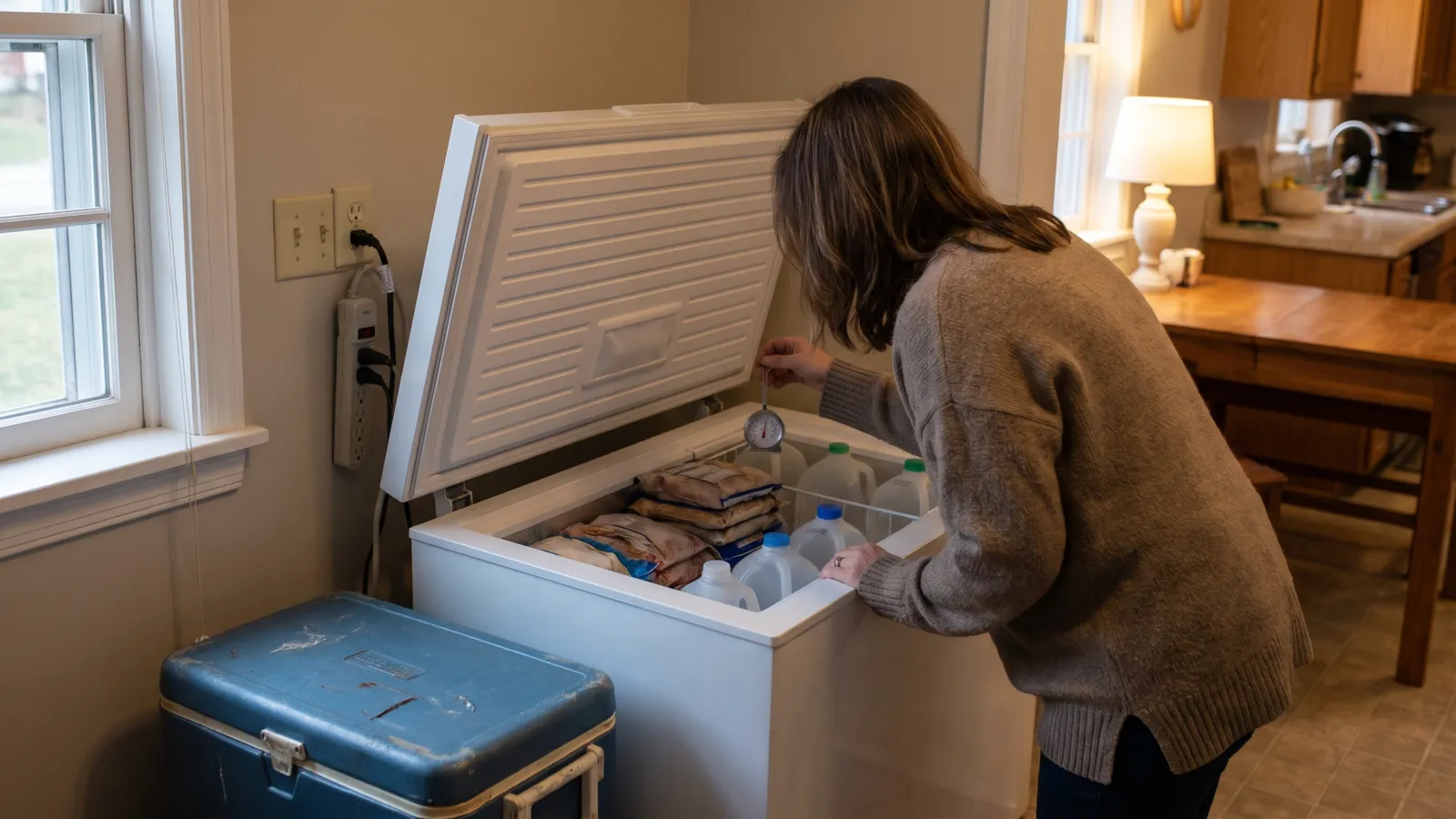
“Pentagon suspects cyberattack behind freezer malfunctions at US military bases”
Suspected, not confirmed. Reported only at base stores.
- On October 29, Reuters reported that investigators are treating freezer failures at stores on US military bases in late August as a suspected cyberattack. The Next Web, citing the report, says four officials told Reuters; none is named.
- The failures hit commissaries, the on-base grocery stores. Some freezers went into defrost mode and food spoiled. Military criminal investigators confirmed in September that they had opened investigations.
- No one has publicly confirmed a hack, named a culprit or said what caused the failures. Every system named in the reports is commercial store refrigeration. None of the reports we read mention home fridges or freezers.
- What it is useful for at home: USDA says a full freezer holds its temperature for about 48 hours (24 if half full) and a closed fridge keeps food safe for up to 4 hours without power.
The three things most homes are missing
Our top pick from each comparisonIf you already have these, you're most of the way there. As an Amazon Associate, PreparedStates earns from qualifying purchases. We may earn a commission when you buy through our links. It never changes what we recommend. Amazon prices come from Amazon's own product data and can change at any time.
What the reports actually say
Reuters reported on Thursday, October 29, that investigators were treating the incidents as a possible hack. We could not open Reuters itself, so we rely on outlets that cite it. The Next Web writes that four officials told Reuters investigators are treating the US incidents as a suspected cyberattack. Nextgov, citing one US official who spoke on condition of anonymity, says the outages affected some six commissaries.
At Fort Huachuca in Arizona, officials reported that a freezer had entered defrost mode and heated its contents, leaving food spoiled, Nextgov reports. Cyber Command and Defense Department law enforcement units are looking into it, and French authorities are working with them. The Pentagon's statement to Reuters, as quoted by The Next Web, said its team was working in close coordination with interagency and law enforcement partners.
What is confirmed, and what is not
Confirmed: freezer and refrigerator problems at several commissaries in late August, with spoiled food. Stars and Stripes listed six affected stores, based on announcements by each installation: Fort Irwin, Calif.; F.E. Warren Air Force Base, Wyo.; Fort Huachuca, Ariz.; Naval Station Newport, R.I.; Columbus Air Force Base, Miss.; and Travis Air Force Base, Calif. The stores stayed open to sell dry goods.
Also confirmed: the Army Criminal Investigation Division's Cyber Field Office and the Air Force Office of Special Investigations told Stars and Stripes they have active investigations. None said what kind. In August, the Defense Department acknowledged only a possible refrigeration disruption at some commissaries.
Not confirmed: that a hack caused it. Nextgov says it is unclear who might be responsible or whether investigators have conclusively determined what caused the failures. Fox 9 notes it has not been officially established. In August, a defense official told Military Times it would be inappropriate to speculate as to the cause.
Why investigators are looking at hacking
Nextgov notes that the investigation draws attention to the computers that control everyday equipment used to store and handle food. It reports that earlier in October, hackers overrode temperature controls on commercial refrigeration equipment at more than 350 French establishments, forcing supermarkets to discard spoiled food.
The Next Web says Reuters could not establish whether the commissaries used the same maker's equipment, though records for one shop, at Naval Air Facility El Centro in California, list a Danfoss control system. In August, a security firm reported flaws in refrigeration controls made by Danfoss and Copeland. That is a possible lead, not a finding. Investigators have not said whether systems beyond the affected stores were touched.
What it means for your home
Nothing in the reports asks households to do anything, and we found no agency warning about home appliances. The useful part is the reminder that a power outage is the everyday reason a home freezer warms up. USDA's Food Safety and Inspection Service says a full freezer will hold the temperature for approximately 48 hours, or 24 hours if it is half full. The refrigerator will keep food safe for up to 4 hours.
USDA says to keep an appliance thermometer in both the fridge and freezer, with the fridge at 40°F or below and the freezer at 0°F or below. A thermometer is how you know, after the fact, what is safe. Our full guide is food safety in a power outage.
- Keep the fridge and freezer doors closed (USDA)
- If the power will be out longer than 4 hours, move fridge food to a cooler with ice or frozen gel packs, enough to keep it at 40°F or below (USDA). Perishables left in a fridge without power for more than 4 hours should be thrown out
- For a long outage, get dry ice or block ice: USDA says fifty pounds of dry ice should hold an 18-cubic-foot freezer for 2 days. Never touch dry ice with bare hands or put it directly on food
- Keep the freezer full: fill gaps with frozen jugs of water, bags of ice or gel packs (USDA)
- Frozen food that has thawed but still has ice crystals, or stayed at 40°F or below, may be safely refrozen; quality may suffer (USDA)
What to throw out afterwards
Ready.gov says to throw away any food that has been exposed to temperatures of 40 degrees or higher for two hours or more, or that has an unusual odor, color or texture. USDA says to discard raw, cooked or leftover meat, poultry, fish and eggs if your fridge has been without power for more than 4 hours.
Ready.gov adds that if the power is out for more than a day, discard any medication that should be refrigerated, unless the label says otherwise, and consult your doctor or pharmacist for a new supply. For the rest of an outage plan, see the power outage checklist.
What not to do
Do not taste food to decide if it is safe: USDA says never taste food to determine its safety. When in doubt, throw it out. Do not unplug or replace a working home freezer because of this story; nothing in it involves home appliances. And you do not need to buy anything new. An appliance thermometer and a cooler you already own cover most of it. If you have neither, a cooler is the one item that earns its place.
We will update this check if the Pentagon or a military investigator confirms or rules out a cyberattack, names who was responsible, or says how many stores were affected, or if any federal agency warns the public about home refrigerators or freezers.
Common questions
Was there a cyberattack on freezers at US military bases?
It is suspected, not confirmed. Officials told Reuters investigators are treating August freezer failures at base commissaries as a suspected cyberattack, according to outlets citing the report. No one has publicly confirmed a hack or named who was responsible.
Which bases were affected?
Stars and Stripes listed six commissaries, based on each installation's announcements: Fort Irwin, F.E. Warren Air Force Base, Fort Huachuca, Naval Station Newport, Columbus Air Force Base and Travis Air Force Base. Unverified sources cited by Stars and Stripes suggested up to a dozen stores.
Could hackers turn off my home freezer?
Nothing in the reports we read involves home appliances. The systems named are commercial store refrigeration controls, and we found no agency warning about home fridges or freezers. A power outage is the everyday reason a home freezer warms up.
How long does food last in a freezer without power?
USDA says a full freezer will hold the temperature for approximately 48 hours, or 24 hours if it is half full, as long as the door stays closed. Food that still has ice crystals, or stayed at 40°F or below, may be safely refrozen.
How long is fridge food safe in an outage?
USDA says the refrigerator will keep food safe for up to 4 hours if the door stays closed. If the outage will last longer, move perishables to a cooler with enough ice to stay at 40°F or below. Perishables such as meat, poultry, fish, eggs and leftovers left in a fridge without power for more than 4 hours should be thrown out.
Sources (7)
- Nextgov/FCW: Pentagon investigates suspected cyberattack behind military freezer failures (Oct 2026)
- The Next Web: Pentagon military base freezer failures, suspected cyberattack (Oct 29, 2026)
- Stars and Stripes: Army CID investigates commissary refrigerator outages (Sep 1, 2026)
- Military Times: DOD confirms refrigeration disruption at military commissaries (Aug 28, 2026)
- Fox 9: Pentagon treating military base freezer malfunctions as suspected cyberattack (Oct 29, 2026)
- USDA Food Safety and Inspection Service: Keep your food safe during emergencies
- Ready.gov: Power Outages
Get one calm email when it matters
Seasonal checklists and gear price drops. No spam, unsubscribe any time.
Keep reading
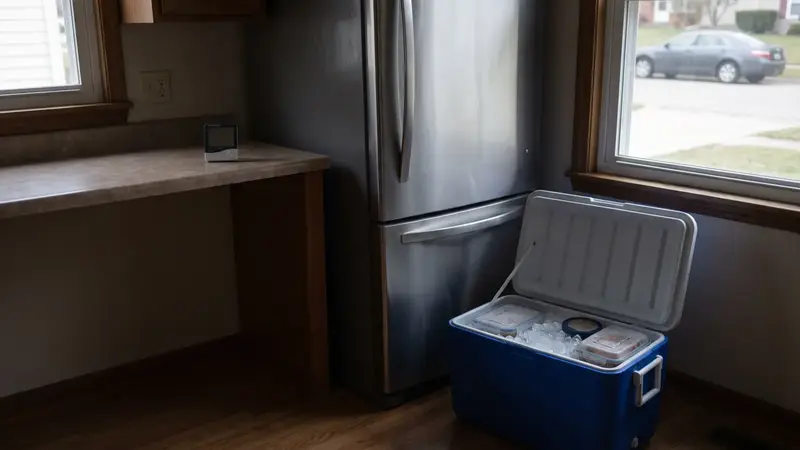 Food safety in a power outage: how long food lasts and what to throw outHow long food stays safe in the fridge and freezer without power, what to throw out, and when you can refreeze…
 Power outage checklist: what to do before, during and afterA calm power outage checklist from Ready.gov and CDC: what to prepare, how to protect food, medicines and medi…
 How long does a power outage usually last? EIA figures and what to plan forWhat federal data says about how long outages last in the US, how it varies by state, and what to do in the fi…
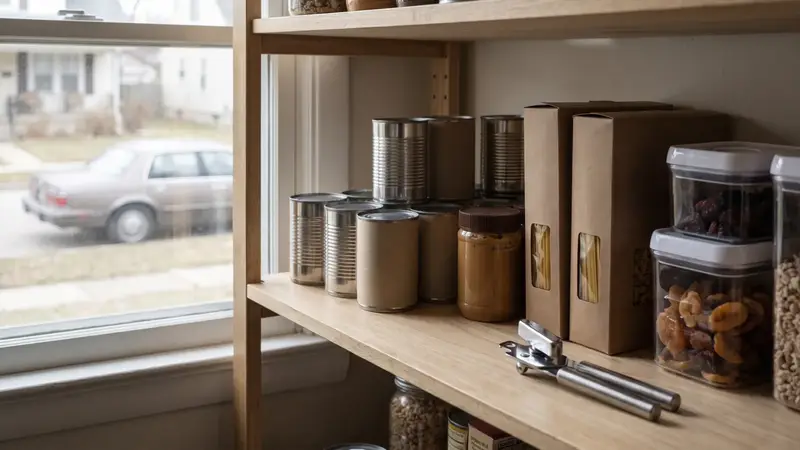 Emergency food storage: how much to store, what to buy and how to keep it safeHow much emergency food to store, from a 3-day kit to two weeks at home: no-cook foods, calories, special diet…