Power station vs generator: which one suits your home in an outage?
A portable power station is a battery; a generator burns fuel. What that means for carbon monoxide, fuel storage, wiring rules and who each one really suits.
By Tom Calder · Updated October 30, 2026 · Safety lines from CDC, CPSC, OSHA and Ready.gov; the comparison itself is our own reasoning
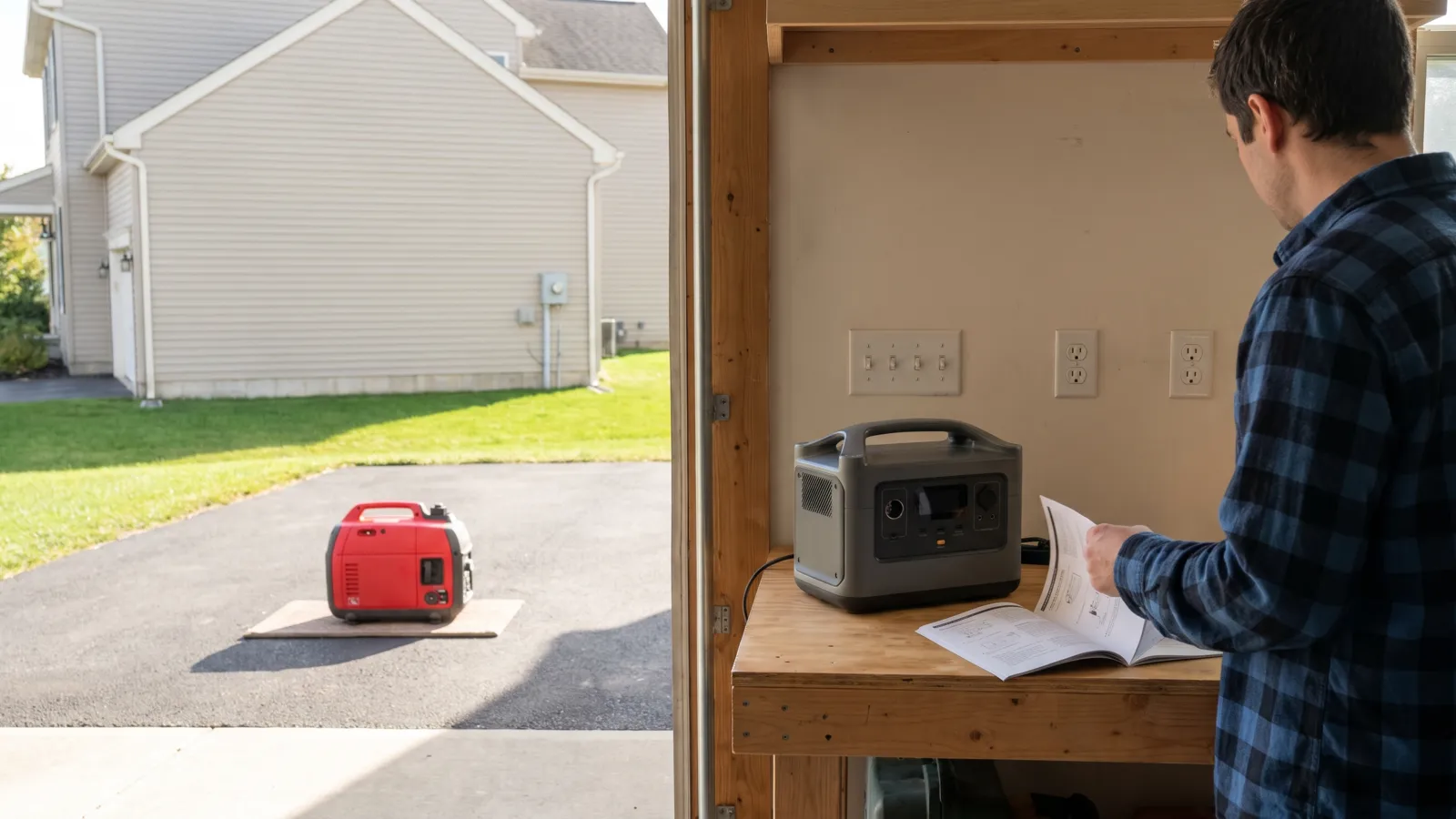
- A portable power station is a battery with outlets. A portable generator is an engine that burns fuel. The official generator rules (CDC, CPSC, Ready.gov) are written for the engine.
- CDC: only use generators outside, more than 20 feet away from any windows, doors, and vents. Never use one inside your home or garage, even if doors and windows are open.
- Short outages and a few small loads (phones, router, lights, medical devices): a power station may be all you need. Long outages and big loads: usually a generator or a home standby system.
- You do not need either to be prepared. Flashlights, a cooler and a full phone battery cover many outages.
Start with what you need to run, and for how long
Both machines do the same job: they turn stored energy into household outlet power. The difference is where the energy comes from. A power station stores it in a battery you charged earlier, from a wall outlet, a car or solar panels. A generator makes it as it goes, by burning gasoline, propane or another fuel.
Before you compare anything, list what you would actually plug in and how long the power might be out. Ready.gov suggests you take an inventory of the items you need that rely on electricity. Our generator sizing tool turns that list into watts.
Many outages are short. CDC says your refrigerator will keep food safe for up to 4 hours without power if you don't open the door, and a full freezer for 48 hours (24 hours if half-full). If your outages usually last a few hours, closed doors, a cooler and a charged power bank may already be enough.
What a power station suits
A power station stores a fixed amount of energy and, when it is empty, it is empty until you recharge it. That makes it a good fit for small, important loads: phones, a router, lights, a CPAP, a laptop. If someone in your home relies on a powered medical device, talk to your medical provider about a plan; Ready.gov advises exactly that. See our medical devices in a power outage guide.
The agency generator rules below are about engines that burn fuel and make exhaust. None of the official pages we read covers battery power stations, so we do not attribute any battery-specific rule to an agency. Follow the manufacturer's instructions for placement and charging. Compare models on our power stations page.
What a generator adds, and the strict conditions
A fuel-burning generator can keep going as long as you have fuel, so it suits long outages and heavier loads. It comes with hazards that a battery does not share. CPSC names the primary hazards as carbon monoxide (CO) poisoning from the toxic engine exhaust, electric shock or electrocution, and fire and burns. CPSC also says most generator incidents reported to it involve CO poisoning from generators used indoors or in partially enclosed spaces.
CDC's wording for placement is: "Only use generators outside, more than 20 feet away from any windows, doors, and vents." and "Never use a generator inside your home or garage, even if doors and windows are open." Ready.gov says generators and fuel should always be used outdoors and at least 20 feet away from windows, doors and attached garages.
If you cannot put a generator outdoors, far from openings, do not run it. See our generator safety guide for the full list, and compare models on our generators page.
Carbon monoxide: the rule that decides it
CDC says carbon monoxide is an odorless, colorless gas that kills without warning, and that people who are sleeping, drunk, or under the influence of other substances can die from CO poisoning before they have symptoms. Its power outage page says: "When using a generator, use a battery-powered or battery backup CO detector in your home." CPSC adds that CO alarms should be placed on every level of the home and outside sleeping areas, and should be battery operated or have battery backup.
The most common symptoms CDC lists are headache, dizziness, weakness, nausea, vomiting, chest pain, and confusion. CDC says if someone shows signs of CO poisoning, call 911 or your local Poison Control Center at 1-800-222-1222. Whichever machine you pick, a battery-backed alarm is the cheap part of the plan: see carbon monoxide alarms.
Fuel, wiring and codes
CPSC says never to store fuel for your generator in the home. Gasoline, propane, kerosene and other flammable liquids should be stored outside of living areas in properly labeled, non-glass safety containers, and not near a fuel-burning appliance such as a natural gas water heater in a garage. Before refueling, turn the generator off and let it cool down, because gasoline spilled on hot engine parts could ignite. A power station has no fuel to store.
Powering house wiring is where rules matter. CPSC says never to try to power the house wiring by plugging the generator into a wall outlet, a practice known as backfeeding, because it presents an electrocution risk to utility workers and neighbors served by the same utility transformer. OSHA says never to attach a generator directly to a building's electrical system unless a qualified electrician has properly installed it with a transfer switch. That is a job for an electrician (our advice); local permit rules vary, so ask your electrician or local building department. See transfer switches.
Which one suits whom
Our reading, not an agency's: a power station suits renters, apartment dwellers and anyone whose needs are small and short, because there is no exhaust, no fuel and nothing to place 20 feet from a window. A portable generator suits a house with outdoor space, a real need to run bigger loads for days, and a household willing to follow the outdoor-only rules every time. Whole-house standby systems are a separate, professionally installed category; see whole-house generators.
If you are unsure, buy neither yet. Write down your loads, check the sizing tool, and choose on that. Plenty of households are well served by a cooler, flashlights, a power bank and a plan to go to a community location with power if heat or cold is extreme, which Ready.gov also suggests.
CPSC says never to use a generator inside homes, garages, crawlspaces, sheds, or similar areas, even when using fans or opening doors and windows for ventilation. If you have nowhere safe outdoors for an engine, a battery power station or no machine at all is the safer plan.
Common questions
Is a power station safer than a generator?
The carbon monoxide and fuel rules that CDC, CPSC and Ready.gov give are for engines that burn fuel. A battery power station makes no engine exhaust, but none of those agency pages covers power stations, so follow the maker's instructions.
How far from the house should a generator be?
CDC says only use generators outside, more than 20 feet away from any windows, doors, and vents. Ready.gov says at least 20 feet from windows, doors and attached garages.
Can a generator run my whole house?
OSHA says never to connect a generator to a building's wiring unless a qualified electrician has installed it with a transfer switch. Whether a generator can carry the whole house depends on its size and your loads (see our sizing tool). Plugging a generator into a wall outlet is called backfeeding, and CPSC calls it extremely dangerous.
Where do I store generator fuel?
CPSC says never in the home: outside living areas, in properly labeled, non-glass safety containers, away from fuel-burning appliances.
Do I need a CO alarm if I use a power station?
CDC says to install battery-operated or battery back-up CO detectors near every sleeping area in your home, and to use one when running a generator.
Get one calm email when it matters
Seasonal checklists and gear price drops. No spam, unsubscribe any time.
Keep reading
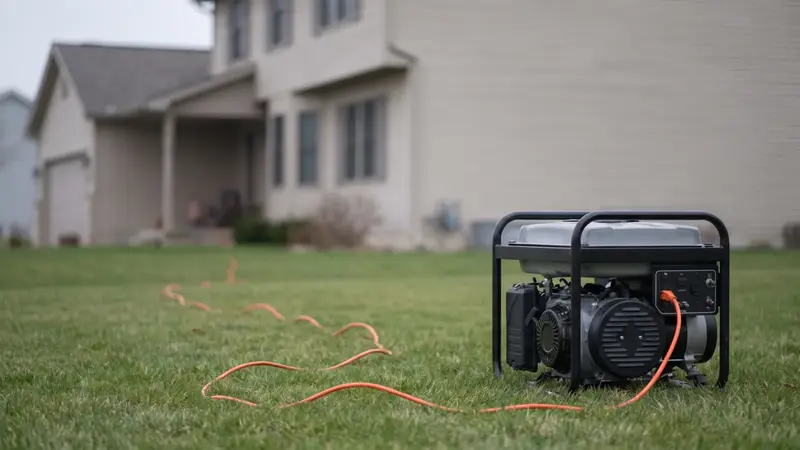 Portable generator safety: where to run it, carbon monoxide and cordsHow to use a portable generator safely in an outage: 20 feet from windows, never in a garage, CO alarms, outdo…
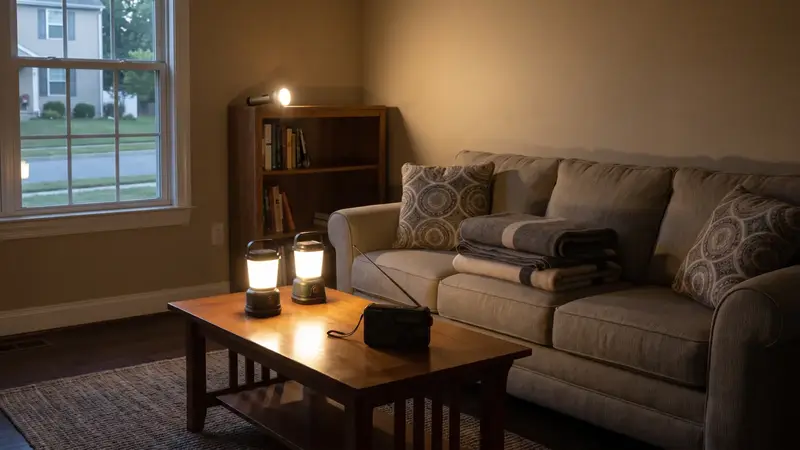 Power outage checklist: what to do before, during and afterA calm power outage checklist from Ready.gov and CDC: what to prepare, how to protect food, medicines and medi…
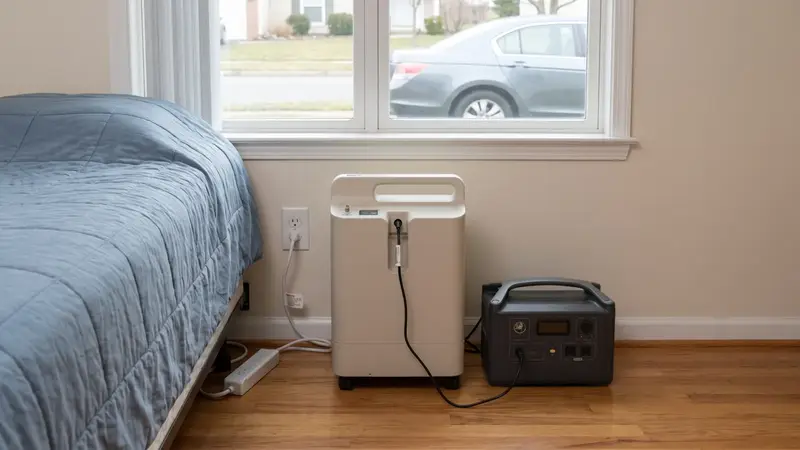 Power outage plan for electric medical devices and refrigerated medicinesHow to plan for a power outage if you use electric medical devices or refrigerated medicine: questions to ask,…
 Carbon monoxide poisoning: symptoms, sources, alarms and what to doWhat CO poisoning feels like, who is most at risk, common sources in winter and outages, where to put CO alarm…