Will the US power grid fail this winter? What NERC's winter assessment says, by region
Will the US power grid fail this winter? What NERC's latest winter assessment says for ERCOT, PJM, California and the West, what is not yet published, and how to prepare.
By Tom Calder · Updated October 30, 2026 · Sourced to NERC's 2025-2026 Winter Reliability Assessment and Ready.gov
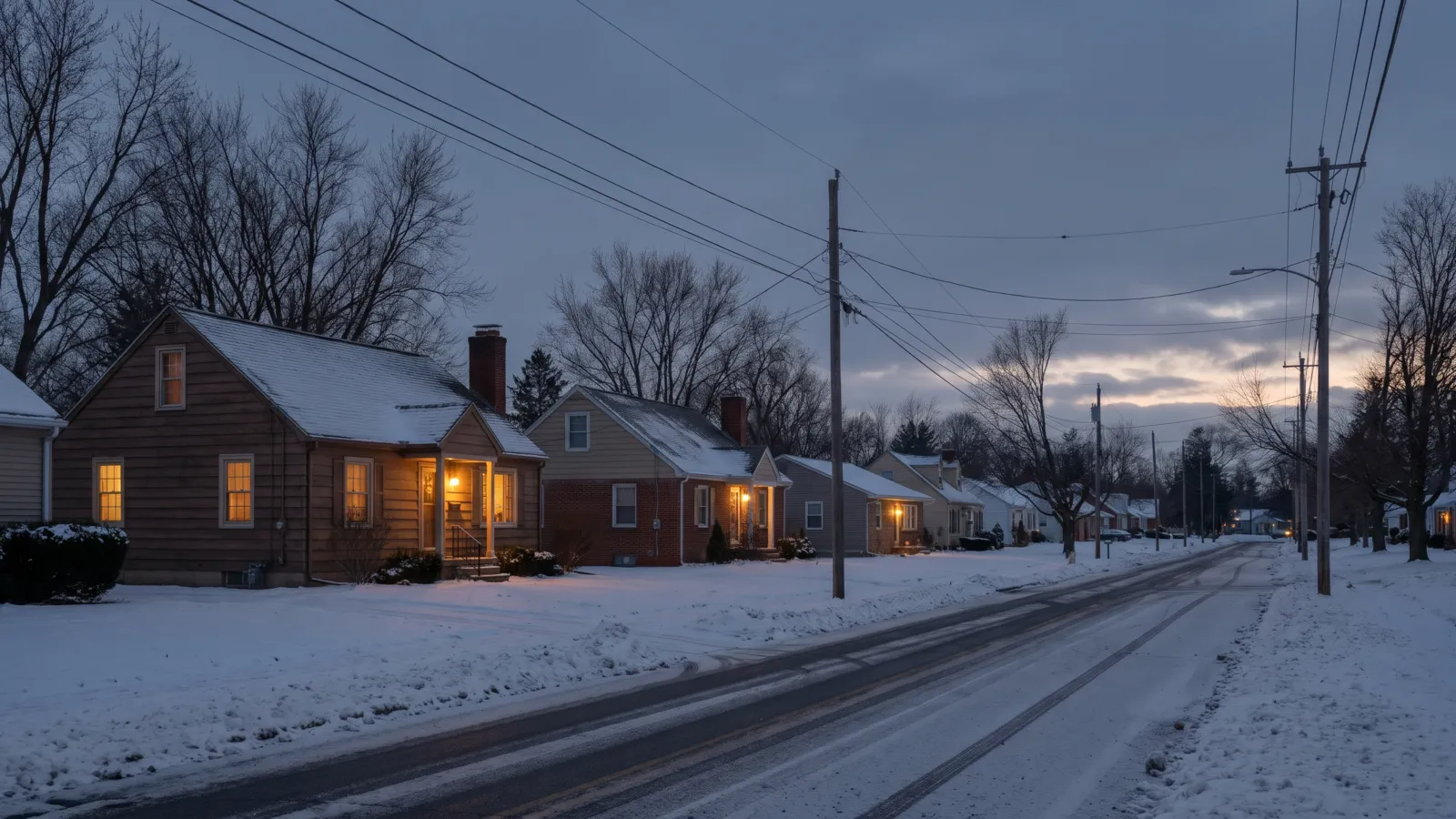
- NERC, the North American Electric Reliability Corporation, assessed every US area as having adequate resources for normal winter peak demand in its latest winter report. Its warning is about prolonged, wide-area cold snaps.
- That report is last winter's (November 2025). As of Oct 30, 2026 we could not find NERC's 2026-2027 edition, so the figures below are from the 2025-2026 report and should be read as the most recent we could find, not a forecast for this winter.
- By region: NERC said ERCOT in Texas expects continued reserve shortage risk in extreme conditions, PJM expects little capacity adequacy risk, California reported no expected unserved energy, and parts of the interior West could need outside help.
- A grid report cannot say whether your street will lose power. The steps that help are the same either way: a few days of water and food, a flashlight and radio, and carbon monoxide safety.
What NERC is and what it publishes
NERC is the body that assesses the reliability of the North American bulk power system. NERC publishes a Winter Reliability Assessment covering December through February. The edition we could read is the 2025-2026 report, dated November 2025.
As of Oct 30, 2026 we could not find the 2026-2027 edition. When it appears it will replace the figures here, so check NERC's assessments page before relying on any number in this guide. Nothing below is a forecast for this winter, and none of it is our own assessment.
The headline finding: fine for a normal winter, tight in an extreme one
NERC's first key finding was that "All areas are assessed as having adequate resources for normal winter peak-load conditions." It then adds that "more extreme winter conditions extending over a wide area could result in electricity supply shortfalls," and that prolonged, wide-area cold snaps can drive sharp increases in demand and threaten generation and natural gas fuel supply.
NERC also reported that aggregate peak demand across its assessment areas had risen 20 GW (2.5%) since the previous winter, with nearly all assessment areas reporting demand growth. NERC names data centers as a driver in several areas, including ERCOT. It notes four severe arctic storms since 2021. In September 2025 the Federal Energy Regulatory Commission approved a cold weather reliability standard for generators, EOP-012-3, effective Oct 1, 2025.
Texas (ERCOT)
NERC describes ERCOT as located entirely in Texas and operating as a single balancing authority. NERC said Texas RE-ERCOT was "expected to continue facing reserve shortage risks during the peak load hour" and high net-load hours in extreme cold, and that elevated forced outages of thermal plants and reduced output from intermittent resources in such conditions add to the risk.
For a normal peak, though, NERC reported ERCOT expecting sufficient operating reserves, with an anticipated reserve margin of 36%. ERCOT's own probabilistic assessment, as reported by NERC, put the chance of having to declare an energy emergency alert on the January peak day at 2%, and the chance of controlled load shed at 1.8%. ERCOT's own website may have newer figures; we have not reviewed them.
The mid-Atlantic and Midwest (PJM)
PJM coordinates power across all or parts of 13 states and the District of Columbia, from Illinois and Ohio to New Jersey and Virginia. NERC reported that PJM expected "little capacity adequacy risk during Winter 2025-2026" and about 35% installed reserves, above PJM's 17.7% target.
NERC also noted that the winter before, PJM hit a new all-time winter peak and still kept sufficient reserves throughout. It said reserves were lower than the year before because of load increases and retirements of generation without like-for-like replacement.
California and the West
NERC's WECC-California area includes the California ISO. For winter 2025-2026 its probabilistic assessment reported "no EUE or LOLH," meaning no expected unserved energy or loss-of-load hours. California is mainly a summer-peaking area.
Further inland, NERC said the interior West areas, WECC-Basin (Utah, southern Idaho and part of western Wyoming) and WECC-NW, have enough capacity for expected peaks but are likely to need external assistance in extreme winter weather, and that outside help may not be available in region-wide extreme conditions. For WECC-Basin, NERC's key findings say that under an extreme combination of generator derates and outages the region could be short 1.6 GW before imports.
What this means for your home
A report on the whole bulk power system does not tell you whether your street will lose power. Ready.gov asks every household to be ready to manage on its own for several days, so check our power outage checklist and the how to stockpile food and water guide. Our power outage tracker and state pages show live conditions.
NERC recommends that state and provincial regulators help amplify public appeals for electricity and natural gas conservation in extreme cold, so it is worth cutting back if your utility asks. Keep your phone charged, a battery-powered radio and flashlights on hand, and see our NOAA Weather Radio guide for how to get alerts when the internet is down.
Carbon monoxide and heating in a winter outage
Ready.gov says: "Install carbon monoxide detectors with battery backup in central locations on every level of your home." It also says: "Generators, camp stoves or charcoal grills should always be used outdoors and at least 20 feet away from windows." And: "Never use a gas stovetop or oven to heat your home."
Our stay warm without power and generator safety guides go through heat and generators in detail.
You do not need to buy anything because of a grid report. NERC's own message is that normal winters are covered and extreme, wide-area cold is the risk. In our view, the best protection is the same several-day preparation Ready.gov already asks for. If you have not got it yet, start with water, food, a radio and working carbon monoxide alarms.
Common questions
Will the US power grid fail this winter?
NERC's latest published winter assessment (for 2025-2026, dated November 2025) found adequate resources for normal peak demand in every area, with risk in extreme, prolonged, wide-area cold. We could not find the 2026-2027 edition as of Oct 30, 2026. A grid report cannot say whether your own street will lose power.
What does NERC say about Texas (ERCOT)?
NERC said Texas RE-ERCOT continues to face reserve shortage risk in extreme cold. It also reported ERCOT expected sufficient operating reserves for a normal peak, with a 2% chance of an energy emergency alert on the January peak day and a 1.8% chance of controlled load shed. ERCOT's own website may have newer figures; we have not reviewed them.
Where can I find the new winter assessment?
NERC publishes its Winter Reliability Assessment on its website under assessments. The 2025-2026 edition was dated November 2025. When a 2026-2027 edition is out, it supersedes the figures in this guide.
What should I do if my utility asks me to cut back use?
NERC recommends that state regulators help amplify public appeals for electricity and natural gas conservation in extreme cold, so it is worth cutting back when asked. Charge phones and power banks, and keep a flashlight, a battery-powered radio and several days of water and food on hand, as Ready.gov advises.
Get one calm email when it matters
Seasonal checklists and gear price drops. No spam, unsubscribe any time.
Keep reading
 Power outage checklist: what to do before, during and afterA calm power outage checklist from Ready.gov and CDC: what to prepare, how to protect food, medicines and medi…
 How to stay warm without power in winter, safelyStay warm in a winter power outage safely: keep heat in, dress in layers, never heat with an oven or grill, kn…
 Portable generator safety: where to run it, carbon monoxide and cordsHow to use a portable generator safely in an outage: 20 feet from windows, never in a garage, CO alarms, outdo…
 How to prepare for a 90-day power outage: a staged plan for your homeHow to prepare for a 90-day power outage, in stages: water, food, heat, fuel and medicines for 2, 4 or 6 peopl…