AM radio in every car: where the bill stands, and what carries alerts in an outage
The House passed the AM Radio for Every Vehicle Act on Sept 15 and the Senate version has 60 cosponsors. What the bill does, and what carries alerts in an outage.
By Tom Calder · Updated October 30, 2026 · Sourced to Congress.gov, the Congressional Research Service, FEMA, Ready.gov and the National Weather Service
- A column published on Townhall on October 29 says the House passed the AM Radio for Every Vehicle Act on September 15 and that the Senate version has more than 60 cosponsors and is out of committee. The bill's record confirms the House vote and the committee step, and lists exactly 60 Senate cosponsors, not more.
- The Senate has not passed it. In the latest data we could read (September 8 and 24), both versions sit on the Senate calendar awaiting floor time. It is not law, and nothing about the cars you can buy today has changed.
- FEMA's alert system reaches people by radio, TV, phones and NOAA Weather Radio. FEMA's National Public Warning System stations have back-up power generators, and most of the stations FEMA lists are AM.
- For your home, the answer is a battery-powered or hand-crank radio that tunes AM and FM, plus a NOAA Weather Radio with a tone alert.
What prompted this
On October 29, Townhall ran a column by Nic Anderson titled "When the Grid Goes Dark, AM Radio Is America's Last Line of Defense." It argues that the Senate should pass the AM Radio for Every Vehicle Act. It is an opinion piece, so we treat it only as the reason to check the record. Among its claims: the House passed the bill on September 15, and the Senate version has more than 60 cosponsors, has cleared committee and still waits for floor time.
Those are checkable facts about a bill, so we checked them against Congress.gov's own bill-status data. We did not test the column's arguments.
Where the bill actually stands
The House version is H.R. 979. The House passed it, as amended, on September 15 by voice vote under suspension of the rules, so there is no recorded tally to show its margin. It reached the Senate the next day and was placed on the Senate Legislative Calendar, Calendar No. 622. It had 317 cosponsors.
The Senate version is S. 315. The Senate Commerce Committee ordered it reported on February 5, 2025, and reported it on April 3, 2025. It then went on the Senate calendar (Calendar No. 39). Congress.gov lists 60 cosponsors, so "more than 60" is slightly high. The record shows exactly 60.
So the column's three claims hold, with that one rounding. Neither bill has passed the Senate, and the president has not signed anything. The data we could read was last updated on September 8 for S. 315 and on September 24 for H.R. 979. We could not open Congress.gov's own pages, so we cannot say whether anything has happened since.
What the bill would do
Congress.gov's summary of the bill as introduced says it requires the Department of Transportation to issue a rule making AM radio capability standard in all new passenger vehicles, sold or shipped in the US after the rule takes effect. Until the rule takes effect, a manufacturer that leaves AM out has to label it clearly and may not charge a separate fee for AM access.
The summary adds that the Government Accountability Office must study how emergency alerts reach the public, including a look at AM radio next to other IPAWS technologies. The House bill's summary says the rule must expire 10 years after enactment.
Nothing here affects a car you already own. Several manufacturers have left AM out of electric vehicles since 2014, citing interference, according to the Congressional Research Service. That is the dispute behind the bill.
What carries an emergency alert when the power is out
FEMA runs the Integrated Public Alert and Warning System, IPAWS, which sends alerts through Wireless Emergency Alerts on phones, the Emergency Alert System on radio and TV, and NOAA Weather Radio. FEMA says the Emergency Alert System delivers alerts via AM, FM and satellite radio, as well as broadcast, cable and satellite TV. Cell phones get Wireless Emergency Alerts even if cellular networks are overloaded and can no longer support calls, texts and emails.
FEMA's National Public Warning System, also called Primary Entry Point (PEP) stations, is the part aimed at national alerts. These are radio stations that work with FEMA to provide alerts before, during and after disasters, and they are the primary source of initial broadcast for a national alert. FEMA says they are equipped with back-up communications equipment and power generators designed to let them keep broadcasting during and after an event, and that they can directly reach more than 90% of the US population.
How much of that is AM
In FEMA's published list of these stations, most are AM. By our count, 61 of the 73 stations listed are AM and 12 are FM. The count is ours, not FEMA's.
The Congressional Research Service describes the role plainly: AM stations are initial points of contact for presidential and nonpresidential alerts in the broadcast system, and also "one of several" pathways for nonpresidential alerts, alongside satellite and cellular. Broadcasters and seven former FEMA administrators say that losing AM in cars could impede drivers' ability to get alerts. That is their position, and the CRS reports it as theirs. It is also fair to note that FEMA says the Emergency Alert System also delivers alerts via FM and satellite radio, and no federal source we read says AM is the only way to receive one.
What to know about NOAA Weather Radio
NOAA Weather Radio, run by the National Weather Service, broadcasts official warnings, watches and forecasts 24 hours a day. The National Weather Service says it includes more than 1,000 transmitters covering all 50 states, adjacent coastal waters, Puerto Rico, the US Virgin Islands and the US Pacific territories, and that you need a special receiver or scanner to pick it up.
Its transmitters can go down too. The National Weather Service's status map lists a transmitter as out of service for problems such as a power outage or antenna damage. That is a reason to keep two ways to get information, not one.
What it means for your home
The bill does not change what you should have today. Ready.gov's basic kit includes a battery-powered or hand-crank radio. FEMA, as quoted by the Congressional Research Service, says that in many cases radio and TV stations continue to operate when other means of alerting the public are unavailable. A radio that tunes AM and FM can pick up the National Public Warning System stations FEMA lists, which are all AM or FM. Ready.gov's kit also lists a NOAA Weather Radio with tone alert.
Our comparison pages rank both: weather radios and hand-crank radios. Some models do both jobs. If you already own a battery radio with fresh batteries, you do not need another one. For the rest of the outage plan, start with the power outage checklist.
- A battery-powered or hand-crank radio that tunes AM and FM, with spare batteries
- A NOAA Weather Radio with tone alert, if you do not already have one
- Phone alerts switched on (Wireless Emergency Alerts), and a charged phone or battery bank
- Know the local AM and FM stations that carry your area's emergency information
What not to do
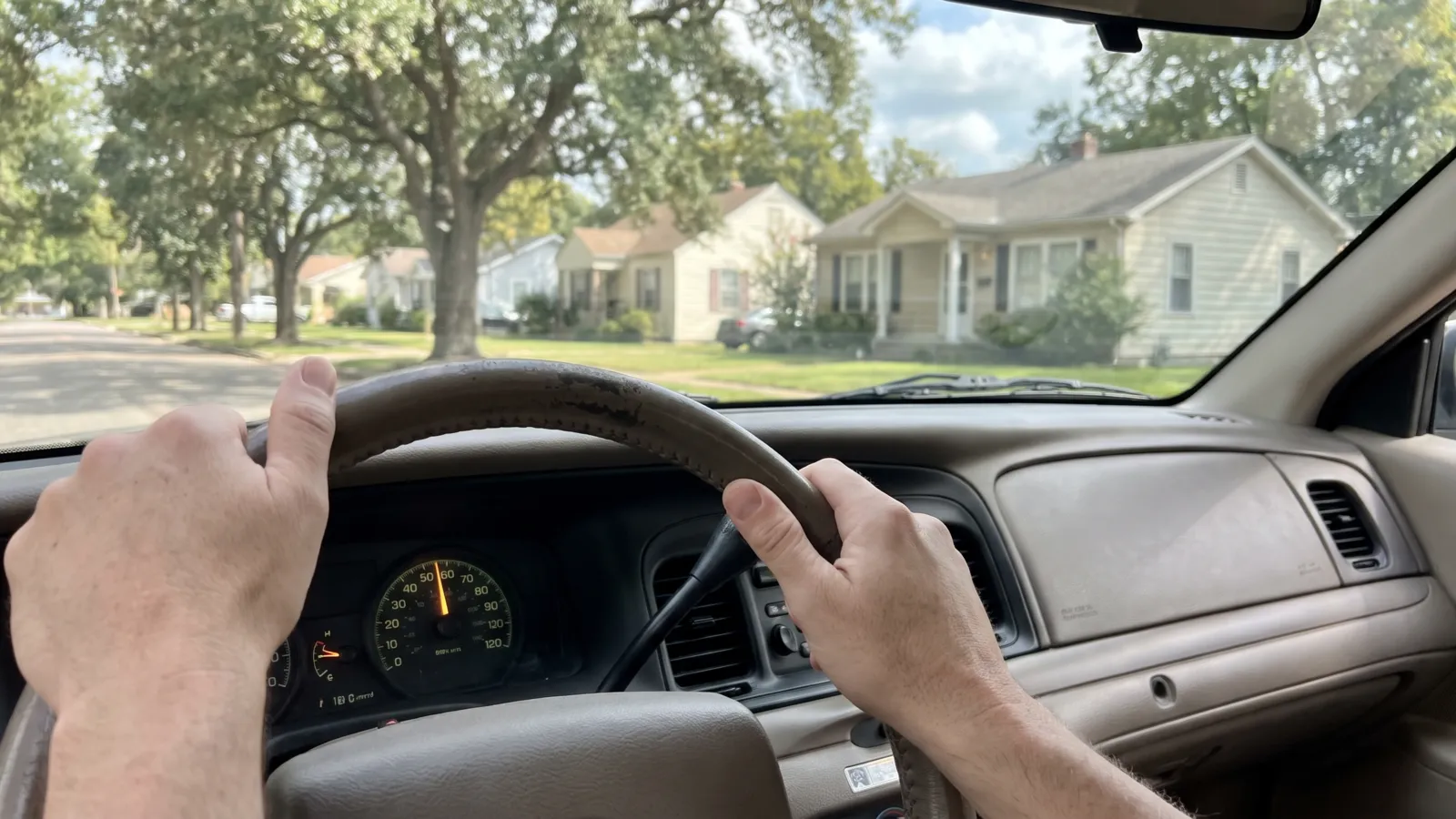
Do not buy or skip a car because of this bill. It is not law. Do not rely on the car radio alone, either: sitting in a running car in a closed garage is dangerous, and CDC says never to leave the motor running in a vehicle parked in an enclosed or partially enclosed space, such as a garage. And do not read the debate as proof that alerts would fail without AM in your car. Phones, FM, satellite radio, TV and weather radios carry them too.
We will update it if the Senate votes on S. 315 or H.R. 979, if the bill is signed into law, if DOT starts a rulemaking, or if FEMA changes its description of the Primary Entry Point stations. We could not open Congress.gov directly on October 30, so a floor action after September 24 would also change it.
Common questions
Did the House pass the AM Radio for Every Vehicle Act?
Yes. The House passed H.R. 979, as amended, on September 15, 2026 by voice vote under suspension of the rules. It was received in the Senate on September 16 and placed on the Senate calendar. A voice vote has no recorded tally.
Is the AM radio bill law yet?
No. It has passed the House, but the Senate has not voted on either version, and the president has not signed it. In the latest data we could read (September 8 for S. 315, September 24 for H.R. 979), both bills were on the Senate calendar. Nothing about new cars has changed yet.
How many Senate cosponsors does the bill have?
Congress.gov lists 60 cosponsors for S. 315, which was reported by the Senate Commerce Committee on April 3, 2025. The Townhall column says "more than 60"; the official record lists exactly 60.
What does the bill require?
The Department of Transportation would have to issue a rule making AM radio standard in new passenger vehicles. Before the rule takes effect, automakers that omit AM must label it and cannot charge extra for it. GAO would also study emergency alerting. The rule would expire 10 years after enactment.
Do Primary Entry Point stations work in a blackout?
FEMA says National Public Warning System stations have back-up communications equipment and power generators designed to let them keep broadcasting during and after an event. FEMA does not promise how long a station can run, and we did not find a figure on its pages.
Is AM radio the only way to get an emergency alert?
No. FEMA says its alert system delivers alerts through radio (AM, FM and satellite), TV, Wireless Emergency Alerts on phones, and NOAA Weather Radio. AM stations are an important part, and most Primary Entry Point stations are AM, but they are one pathway of several.
Do I need a weather radio if I have an AM/FM radio?
It is worth having both. They do different jobs. Ready.gov's basic kit lists both a battery-powered or hand-crank radio and a NOAA Weather Radio with tone alert. An AM/FM radio brings local news and emergency stations. Some models combine the two.
Sources (9)
- Congress.gov bill status data: H.R. 979, AM Radio for Every Vehicle Act of 2025 (via GovInfo, updated Sept 24, 2026)
- Congress.gov bill status data: S. 315, AM Radio for Every Vehicle Act of 2025 (via GovInfo, updated Sept 8, 2026)
- Congressional Research Service: AM Broadcast Radio in Motor Vehicles (R48315, Dec 19, 2024)
- FEMA: Broadcasters and wireless providers (National Public Warning System)
- FEMA: Integrated Public Alert and Warning System
- Ready.gov: Emergency alerts
- National Weather Service: NOAA Weather Radio
- CDC: Protect yourself during a power outage
- Ready.gov: Build a Kit
Get one calm email when it matters
Seasonal checklists and gear price drops. No spam, unsubscribe any time.
Keep reading
 Power outage checklist: what to do before, during and afterA calm power outage checklist from Ready.gov and CDC: what to prepare, how to protect food, medicines and medi…
 Emergency kit checklist: what to include, how much to keep and where to store itA plain-English emergency kit checklist built on Ready.gov's basic kit and extra items, with how many days of …
 Portable generator safety: where to run it, carbon monoxide and cordsHow to use a portable generator safely in an outage: 20 feet from windows, never in a garage, CO alarms, outdo…
 Ham radio for emergencies: how to get your licenseHow to get an FCC ham radio license for emergency communication: the no-code Technician exam, volunteer examin…