Gas averages over $4 a gallon: what it costs your household a month, and 3 ways to spend less
EIA's latest weekly average for regular gas is $4.27 a gallon, up $1.23 in a year. What that means for a monthly fuel budget, and three official ways to use less.
By Tom Calder · Updated October 30, 2026 · Sourced to the US Energy Information Administration, the Department of Energy's Alternative Fuels Data Center and Energy Saver tips, CPSC and the American Red Cross
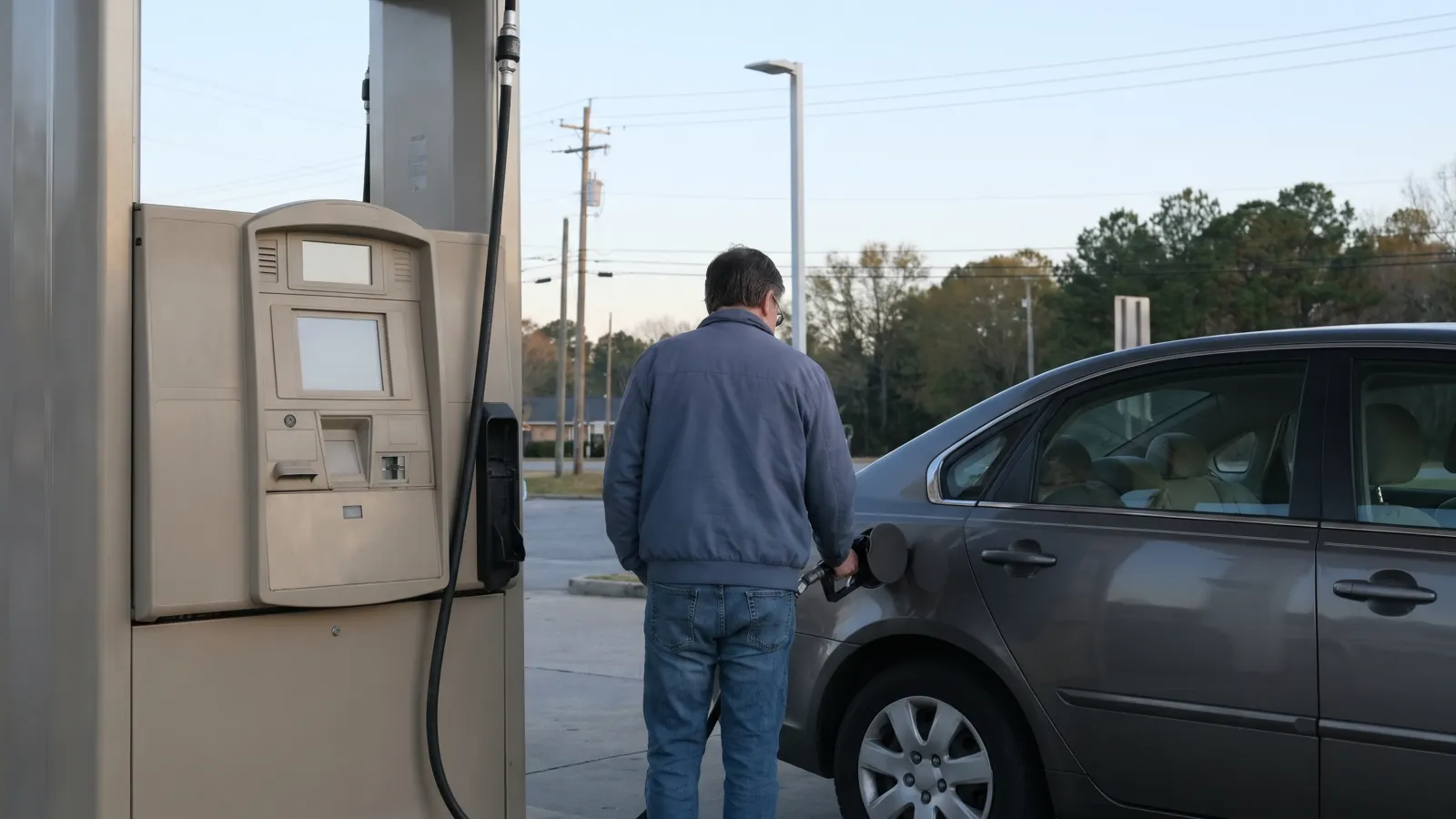
- Regular gasoline averaged $4.269 a gallon across the US in the week of October 26, according to the US Energy Information Administration (EIA). That is $1.234 more than a year earlier, and it has been above $4 every week since late July.
- Using federal averages for miles driven and fuel economy, an average car now costs about $153 a month in gas, up from about $109 a year ago. An average light truck or van costs about $218, up from about $155.
- The biggest saving is in how you drive. The Department of Energy says aggressive driving can cut gas mileage by 15% to 30% at highway speeds and 10% to 40% in stop-and-go traffic.
- Keep your tank at least half full, as the Red Cross advises, but don't stockpile gasoline at home. None of the savings here cost anything.
- EIA expects gasoline to average just under $3.60 a gallon next year.
What the latest figures show
EIA publishes the official weekly average for retail gasoline every Monday. In its October 27 release, regular gasoline averaged $4.269 a gallon nationally for the week of October 26, including all taxes. That is down a cent and a half from the week before, but up $1.234 from $3.035 a year earlier.
EIA's weekly series shows the national average first passed $4 in early April, dipped below it from late June to mid-July, and has stayed above $4 every week since July 20. Before this year, the last week above $4 was in August 2022. The 2026 high so far was $4.500, in the week of May 11.
Diesel is higher still: $6.352 a gallon on average, up $2.634 from a year ago. EIA's next weekly figures come out on November 3.
Where it costs most, and where prices are still rising
Prices vary a lot by region. On the West Coast regular averaged $5.417, and in California $5.888. The Gulf Coast was lowest at $3.702, with Texas at $3.632. The Lower Atlantic region averaged $3.832.
Most of the country saw small drops last week, but not the Midwest, where the average rose 12.4 cents to $4.269, the same as the national figure. Ohio rose 33.1 cents to $4.380, and Chicago 19.2 cents to $4.897. Colorado rose 18.4 cents to $4.458. Our Nebraska fuel check explains why Midwest supply has been tight this fall.
EIA publishes figures for nine states and ten cities. If yours isn't among them, your regional average is the closest official figure.
What $4 gas means for a monthly budget
The Department of Energy's Alternative Fuels Data Center, using Federal Highway Administration figures, puts the average car at 11,026 miles a year and 25.6 miles per gallon. A light truck or van averages 11,360 miles at 18.5 miles per gallon.
At the national average of $4.269, that works out to about $1,839 a year, or $153 a month, for an average car. At last year's $3.035, it was about $1,307 a year, or $109 a month. For a light truck or van, it is about $2,621 a year, or $218 a month, against about $1,864, or $155 a month, a year ago. A household with one of each is paying about $107 more a month than last fall.
Your own figure depends on how far you drive and what you drive. To work it out, divide the miles you drive in a month by your vehicle's miles per gallon, then multiply by the price at your usual station. Every 10 gallons now costs about $42.69, against $30.35 a year ago.
3 ways to cut your fuel bill
None of these needs anything new. The first is by far the biggest.
1. Drive more gently and a little slower. The Department of Energy says speeding, rapid acceleration and hard braking can lower fuel economy by 15% to 30% at highway speeds and 10% to 40% in stop-and-go traffic, and that gas mileage usually decreases rapidly above 50 mph. On dry highways, cruise control helps you keep a steady speed.
2. Combine trips and don't idle. Energy Saver advises combining errands into one trip: it cuts the distance you drive and more of it is done with a warm engine. Idling can use a quarter to a half gallon of fuel an hour, so turn the engine off when you're parked.
3. Check your tires and lighten the load. Properly inflated tires improve gas mileage by 0.6% on average and up to 3%; under-inflated tires lose 0.2% for every 1 psi drop in all four. Use the pressure on the sticker in the driver's door jamb or in your owner's manual, not the maximum on the tire. Take off an empty roof box: a large one can cut fuel economy by 6% to 25% on the highway.
Your fuel reserve: keep the tank half full
High prices tempt people to run the tank low and buy a few gallons at a time. For preparedness, the Red Cross advises the opposite: "Keep your car gas tank at least half full." A half tank lets you leave in an evacuation, reach a station that has fuel and power when one nearby doesn't, or get home if roads close.
That doesn't mean buying more fuel overall. Fill up when you reach half instead of near empty, and plan around it:
- Fill up at half a tank, not on the warning light
- When a storm is forecast, fill up a day or two ahead rather than joining the last-minute line
- Plan the week's errands as one loop
- Keep a winter car kit in the trunk, so a breakdown or a closed road isn't an emergency
- Check your tire pressure against the sticker in the driver's door jamb
What not to do
Don't stockpile gasoline in cans at home to beat prices. CPSC says never to store generator fuel in the home, and to keep gasoline outside living areas in properly labeled, non-glass safety containers. Our generator safety guide has the rest. And be wary of additives or gadgets that claim to raise your mileage by themselves: none of the tips above cost anything.
Don't top off every day or panic-buy when you hear of shortages. During this month's Nebraska outages, Tim Keigher, spokesman for the state's fuel retailers' association, told WOWT that the fuel system isn't built for everyone to fill up on the same day, and that panic buying only makes the problem worse.
Will prices come down?
EIA's October Short-Term Energy Outlook, released October 6, says gasoline averaged $4.35 a gallon in September, driven by higher crude oil prices and rising refining margins. It expects gasoline to average just under $3.60 a gallon next year. It also forecasts the Brent crude oil price falling from about $105 a barrel in the last quarter of 2026 to an average of $84 next year.
Crude oil is the largest part of what you pay at the pump, according to EIA. Taxes are a smaller part: 18.4 cents a gallon federal, plus state taxes and fees that averaged 33.55 cents a gallon in January, and sales and local taxes in some places. Forecasts change, and EIA's next outlook is due November 10.
We will update this story if EIA's weekly average falls back below $4 or rises by more than 25 cents, or if EIA's November 10 outlook changes its forecast for next year. EIA's weekly update at eia.gov/petroleum/gasdiesel is the official figure.
Common questions
What is the national average price of gas right now?
EIA's latest weekly average for regular gasoline is $4.269 a gallon, for the week of October 26, 2026, including taxes. That is $1.234 more than a year earlier. EIA updates the figure every Monday, with the next release on November 3.
How much does gas cost a month for an average driver?
Using federal averages of 11,026 miles a year at 25.6 mpg for a car, about $153 a month at $4.269 a gallon, up from about $109 a year ago. For a light truck or van at 11,360 miles and 18.5 mpg, about $218 a month, up from about $155.
What is the best way to save on gas?
Change how you drive. The Department of Energy says aggressive driving can lower gas mileage by 15% to 30% at highway speeds and 10% to 40% in stop-and-go traffic. Combining errands, not idling and keeping tires at the right pressure add smaller savings.
Should I keep my gas tank full when prices are high?
Keep it at least half full, as the Red Cross advises, so you can leave or get help if you need to. That doesn't cost more overall: you're filling up earlier, not buying more. Don't store extra gasoline at home to beat prices.
When will gas prices go down?
Nobody can say for sure. EIA's October outlook expects gasoline to average just under $3.60 a gallon next year, and it forecasts crude oil prices falling. Its next outlook is due November 10.
Sources (11)
- EIA: Gasoline and Diesel Fuel Update (Oct 27, 2026)
- EIA: US regular gasoline retail price, weekly history
- EIA: Short-Term Energy Outlook (Oct 6, 2026)
- EIA: Gasoline explained, factors affecting gasoline prices
- DOE Alternative Fuels Data Center: Average annual vehicle miles traveled by major vehicle category
- DOE Alternative Fuels Data Center: Average fuel economy by major vehicle category
- DOE Alternative Fuels Data Center: Driving behavior
- Energy.gov: Tips for your tank this summer driving season
- Energy Saver: Fuel economy tips consumer guide (PDF)
- American Red Cross: Power outage safety
- CPSC: Portable generator safety alert (PDF)
Get one calm email when it matters
Seasonal checklists and gear price drops. No spam, unsubscribe any time.
Keep reading
 Winter car emergency kit: what to keep in your car and what to do if you're strandedWhat to keep in your car for winter and what to do if you get stranded: stay with the car, clear the exhaust p…
 Is there a gas shortage in Nebraska? Why some Omaha pumps keep running drySome Omaha drivers keep finding empty pumps while others fill up fine. What's behind Nebraska's patchy gas out…
 Winter storm preparedness checklist: before, during and afterA plain-English winter storm checklist: watch vs warning, home prep, supplies, staying warm, shoveling and car…
 Portable generator safety: where to run it, carbon monoxide and cordsHow to use a portable generator safely in an outage: 20 feet from windows, never in a garage, CO alarms, outdo…