FEMA aid after Hurricane Isaias in Florida: who can apply, the steps and how to spot scams
FEMA aid for Hurricane Isaias covers households in 8 Florida Panhandle counties, Santa Rosa among them. The four ways to apply, what to have ready and how to spot scams.
By Tom Calder · Updated October 30, 2026 · Sourced to FEMA's OpenFEMA disaster declarations data, USA.gov and CISA
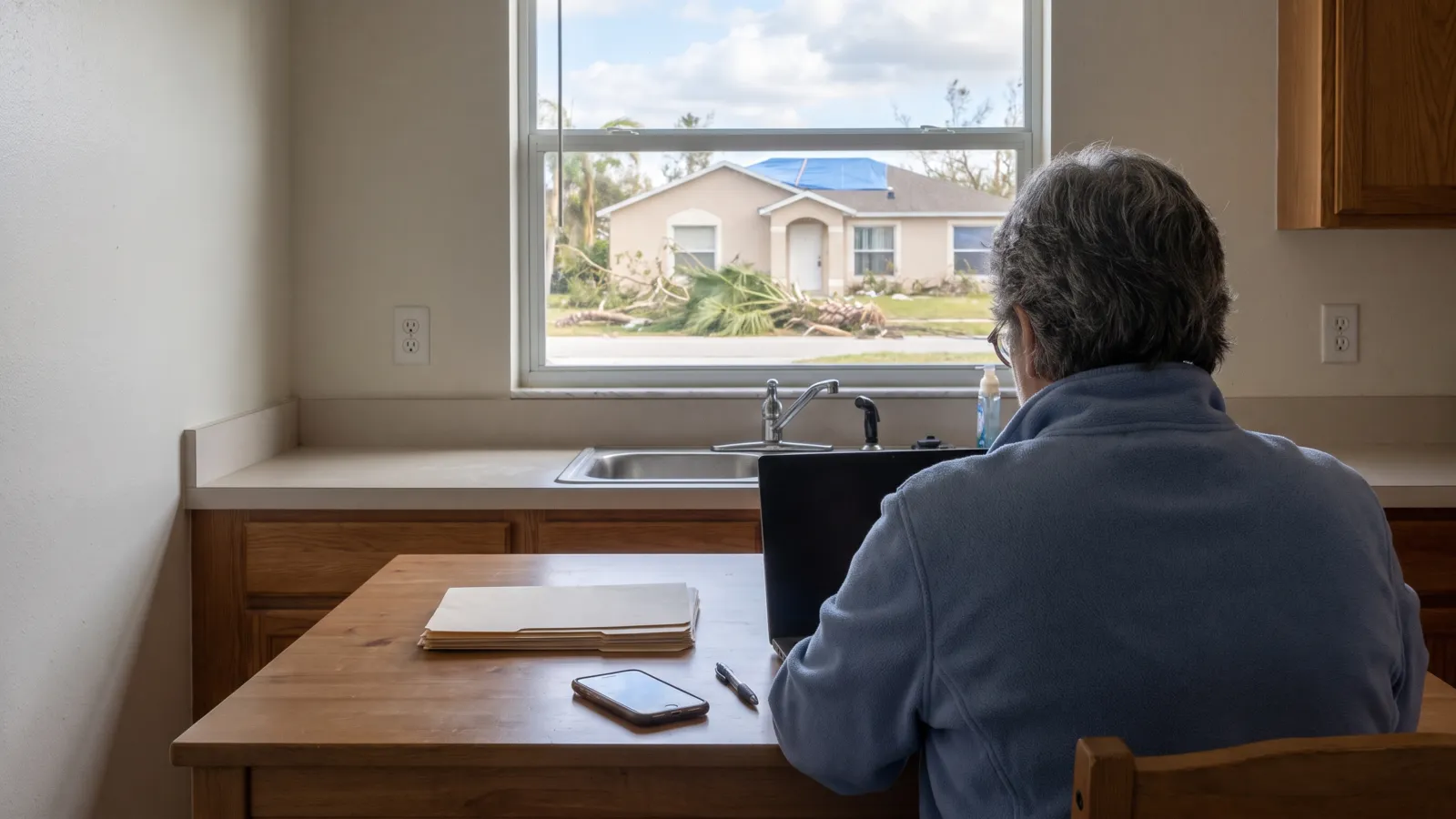
- FEMA's major disaster declaration for Hurricane Isaias in Florida, DR-4955-FL, was declared on October 27 for the storm of October 6 to 12.
- Households in eight counties can apply for help from FEMA's Individuals and Households Program: Bay, Escambia, Gulf, Holmes, Okaloosa, Santa Rosa, Walton and Washington. Seven more counties are covered for Public Assistance only.
- FEMA's data lists December 28, 2026 as the last day to apply.
- You can apply at DisasterAssistance.gov, in the FEMA app, by phone at 1-800-621-3362, or in person at a Disaster Recovery Center. Have your Social Security number, insurance details, a description of the damage, household income, contact details and bank details ready.
- Apply only through those four official routes. Treat any unexpected call, text or knock that asks for money, a gift card or your personal details as a likely scam.
What has been declared
Hurricane Isaias now has a federal major disaster declaration in Florida. FEMA's OpenFEMA data lists it as DR-4955-FL, declared on October 27, 2026, for an incident period of October 6 to October 12. Florida made its request on October 15.
Help for individual households comes through FEMA's Individuals and Households Program, which is declared county by county. USA.gov puts it simply: "You must live in a presidentially declared disaster area to receive financial assistance from FEMA." Which kind of help depends on your county, so check that first.
Which counties can apply
FEMA's data, last refreshed on October 30, shows the Individuals and Households Program declared for eight counties.
- Bay
- Escambia
- Gulf
- Holmes
- Okaloosa
- Santa Rosa
- Walton
- Washington
The other seven counties
Calhoun, Franklin, Gadsden, Jackson, Jefferson, Liberty and Wakulla counties are in the declaration for Public Assistance, but not for the Individuals and Households Program. That means households there can't apply to FEMA's Individuals and Households Program for now. All 15 counties, including the eight above, are covered for Public Assistance.
Declarations can be amended to add counties or programs. If you live in one of those seven counties, or you aren't sure your address counts, use the address lookup on USA.gov's disaster assistance page or call FEMA's helpline. USA.gov also notes that not everyone qualifies for every program in an area, and that FEMA has an anonymous tool to check what you may be eligible for.
How to apply: four ways
USA.gov lists four ways to apply for FEMA disaster assistance. Pick whichever is easiest for you. If your power or internet is still out, the phone line or a recovery center is often simplest.
1. Online at DisasterAssistance.gov.
2. In the free FEMA app, from your phone's app store.
3. By phone at 1-800-621-3362.
4. In person at a Disaster Recovery Center (DRC). USA.gov's page links to a tool to find the one nearest you.
FEMA's data gives December 28, 2026 as the last day to apply for this disaster.
What to have ready
According to USA.gov, to apply you will need:
- Your Social Security number
- Insurance information
- A description of the damage caused
- Your annual household income
- Contact information
- Bank account information for direct deposit
Before you start, and after you apply
Write the damage down room by room and take photos before you clean up or throw things away, so your description is clear and complete. Keep your insurance policy number and your insurer's name with you, along with a phone number where FEMA can reach you, even if you have moved out for now.
Give an email address and contact details when you apply. USA.gov says that is what lets you check your application's status later, in three ways: at DisasterAssistance.gov if you created an account, by calling 1-800-621-3362, or in person at a DRC.
Two more federal programs can help. USA.gov says people in a federally declared disaster area may be eligible for IRS tax relief, such as a filing extension, and that Disaster Legal Services gives free legal help to people with low incomes in a federally declared disaster area, including on insurance claims, lost documents, home repair contracts and landlord problems.
How to spot disaster-aid scams
After a hurricane, scammers follow the aid. USA.gov warns that imposters "may call, text, email, or knock at your door" pretending to be someone in authority, and may even fake caller ID so it looks like an official government number. What they want is for you to send money or a gift card or to share personal information.
Be wary of anyone who:
- Contacts you out of the blue offering to sign you up for FEMA aid, especially for a fee
- Asks for a payment, a gift card or a wire transfer to apply or to speed up your claim
- Wants your Social Security or bank account number before you have applied through an official route
- Pushes you to act right now, or says you'll lose your aid if you don't respond today
If something feels wrong
Stop and contact FEMA yourself, using only the four official routes above: DisasterAssistance.gov, the FEMA app, 1-800-621-3362 or a Disaster Recovery Center. Don't use a number or link from the message you were sent. USA.gov notes that, unless you contact them first, government agencies typically start with a letter, and that unexpected contact or demands any other way may be a scam. If someone says they're from FEMA, hang up and call 1-800-621-3362 yourself to check. USA.gov's list of ways to apply doesn't include paying anyone to apply for you.
CISA's advice on suspicious messages sums it up: "If a message looks suspicious, it's probably phishing." Report imposter scams to the Federal Trade Commission. USA.gov's where-to-report tool will point you to the right agency for other scams.
What not to do
Don't pay anyone to fill in your application or promise you a bigger payment. Don't give your Social Security or bank details to anyone who contacted you first, by phone, text, email, social media or at the door. And don't sign a repair contract in a hurry: Disaster Legal Services may be able to help with home repair contracts and contractors if you have a low income.
If your home came through the storm, this is a good time to check your own plan for next season. Our hurricane guide and family emergency plan cover what to do before the next storm, including keeping copies of key papers in your go-bag.
We will update this story if FEMA adds counties or programs to DR-4955-FL, changes the December 28 deadline, or if SBA disaster loans are announced for Hurricane Isaias. FEMA's page for this disaster is fema.gov/disaster/4955.
Common questions
Can Santa Rosa County residents apply for FEMA aid after Hurricane Isaias?
Yes. FEMA's data shows the Individuals and Households Program declared for Santa Rosa County under DR-4955-FL, along with Bay, Escambia, Gulf, Holmes, Okaloosa, Walton and Washington counties. Apply at DisasterAssistance.gov, in the FEMA app, at 1-800-621-3362 or at a Disaster Recovery Center.
What is the deadline to apply for FEMA aid for Hurricane Isaias?
FEMA's OpenFEMA data lists December 28, 2026 as the last day to apply for individual assistance under DR-4955-FL. Don't wait: register well before then.
What do I need to apply for FEMA assistance?
USA.gov lists your Social Security number, insurance information, a description of the damage, your annual household income, contact information, and bank account details for direct deposit. Photos and a room-by-room list of the damage will make the description easier.
My county isn't on the list. Can I still get FEMA help?
Not from the Individuals and Households Program for now. Calhoun, Franklin, Gadsden, Jackson, Jefferson, Liberty and Wakulla counties are covered for Public Assistance only. Declarations can be amended, so check your address with the lookup on USA.gov's disaster assistance page or call 1-800-621-3362.
How can I tell if a FEMA call or text is a scam?
Be wary if it came out of the blue and asks for money, a gift card or your personal details. USA.gov warns that imposters can fake caller ID to look official. Hang up and contact FEMA yourself through DisasterAssistance.gov, the FEMA app or 1-800-621-3362.
Get one calm email when it matters
Seasonal checklists and gear price drops. No spam, unsubscribe any time.
Keep reading
 Hurricane preparedness checklist: what to do before, during and after a stormHurricane season dates, watch vs warning, how to find your evacuation zone, storm surge, supplies, and what to…
 Flood preparedness: flood watch vs warning, what to do and how flood insurance worksFlood watch vs warning, how little moving water can sweep a car away, the 30-day flood insurance wait, and wha…
 How to make a family emergency plan: steps, questions and a communication planHow to make a family emergency plan: Ready.gov's four steps, the questions to ask, a communication plan, meeti…
 Go-bag checklist: what to pack in case you have to evacuateWhat to pack in a go-bag: documents, medications, cash, chargers, per-person items, kids and pets, and how it …