Best ice melt for driveways, steps and sidewalks (2026)
The Red Cross puts it simply: "Have a snow shovel and ice-melting products to keep your walkways safe." This page compares ice melts sold in the US by what they're made of, the lowest temperature each maker says it works at, and what each maker says about paws, plants and concrete. We haven't used them ourselves; every figure is the maker's or the listing's.
By Tom Calder · Updated November 1, 2026 · 6 products, prices indicative
Our picks
Qik Joe 10 lb
Very cold climates and quick results on ice
Green Gobbler Pet Safe
Households with dogs or cats that want a gentler melter for steps and paths
Road Runner 50 lb
A long driveway or several walks where you want one big bag
All 6 compared
| Ice melt | Type | Bag size | Works to (maker) | Pets and concrete (maker) | Price |
|---|---|---|---|---|---|
100% calcium chloride pellets · 10 lb bag · -25°F (maker) · Says not to harm concrete as directed; no pet claim Very cold climates and quick results on ice | 100% calcium chloride pellets | 10 lb bag | -25°F (maker) | Says not to harm concrete as directed; no pet claim | |
Our verdictOur verdictResearched Qik Joe is straight calcium chloride pellets, rated by the maker to -25 degrees F, which is colder than the blends and the pet-friendly pellets. It makes its own heat as it dissolves and the maker says it should not harm concrete when used as directed. It makes no pet-safety claim, so keep pets off it. Best for Very cold climates and quick results on ice Good
Worth knowing
Who shouldn't buy it: Don't buy it if a pet will walk where you spread it, or you want something for a big driveway on a budget. | |||||
Magnesium chloride pellets · 15 lb pail · -10°F (maker); listing title says -15°F · Maker: non-corrosive to concrete, asphalt, pavers Households with dogs or cats that want a gentler melter for steps and paths | Magnesium chloride pellets | 15 lb pail | -10°F (maker); listing title says -15°F | Maker: non-corrosive to concrete, asphalt, pavers | |
Our verdictOur verdictResearched Green Gobbler sells this as its pet-friendly pellet, built on magnesium chloride and aimed at paws and concrete. The maker's own safety sheet still warns of mild skin irritation and stomach upset if a pet swallows it, so it is gentler, not harmless. It stops short of the coldest weather: the maker quotes -10 degrees F. Best for Households with dogs or cats that want a gentler melter for steps and paths Good
Worth knowing
Who shouldn't buy it: Don't buy it if you routinely see temperatures well below zero and need the strongest melter. | |||||
Calcium and magnesium chloride plus salt blend · 50 lb bag · -15°F (maker) · No pet claim on this blend (maker) A long driveway or several walks where you want one big bag | Calcium and magnesium chloride plus salt blend | 50 lb bag | -15°F (maker) | No pet claim on this blend (maker) | |
Our verdictOur verdictResearched Road Runner mixes calcium chloride and magnesium chloride pellets with rock salt, and Scotwood rates it to -15 degrees F. A 50 lb bag covers a lot of ground for less than the all-calcium pellets. It contains salt, and Scotwood sells a separate Pet Friendly line, so this is not the one for paw-conscious homes. Best for A long driveway or several walks where you want one big bag Good
Worth knowing
Who shouldn't buy it: Don't buy it if you have pets that lick paws or want a salt-free product for new concrete. | |||||
Salt- and chloride-free melter · 8 lb jug · 10°F (maker) · Vet recommended, pet friendly (maker) Small steps and porches where pets walk every day | Salt- and chloride-free melter | 8 lb jug | 10°F (maker) | Vet recommended, pet friendly (maker) | |
Our verdictOur verdictResearched Morton describes Safe-T-Pet as a salt- and chloride-free melter that vets recommend and that is less irritating to paws than plain salt. It only works down to 10 degrees F by the maker's figure, and the 8 lb jug covers a small area, so it suits steps and a stoop more than a long driveway. Best for Small steps and porches where pets walk every day Good
Worth knowing
Who shouldn't buy it: Don't buy it if you need to clear a long driveway or expect temperatures below 10°F. | |||||
CMA-blended ice melter · 10 lb jug · -10°F (listing) · Listing: gentler on plants, concrete, metal Steps and walks near plants or older concrete in moderate cold | CMA-blended ice melter | 10 lb jug | -10°F (listing) | Listing: gentler on plants, concrete, metal | |
Our verdictOur verdictResearched A CMA-enhanced blend that Snow Joe says is gentler on vegetation, concrete and metal than plain salt, rated to -10 degrees F. The listing does not call it pet-safe, and Snow Joe's own safety sheets for related blends put CMA at under 5 percent, with the rest mostly chloride salts, so do not treat it as a pet product. Best for Steps and walks near plants or older concrete in moderate cold Good
Worth knowing
Who shouldn't buy it: Don't buy it if you want a salt-free, pet-labelled product. | |||||
Rock salt (sodium chloride) · 25 lb bag · 5°F (maker) · No pet or concrete claim Mild-winter climates where cheap rock salt is enough | Rock salt (sodium chloride) | 25 lb bag | 5°F (maker) | No pet or concrete claim | |
Our verdictOur verdictResearched Plain rock salt from Cargill's Diamond Crystal brand, which the maker says works down to about 5 degrees F. It is the simplest and usually cheapest choice, but it is harder on concrete, plants and paws than the chloride blends and pet lines. Fine for mild winters; poor in deep cold. Best for Mild-winter climates where cheap rock salt is enough Good
Worth knowing
Who shouldn't buy it: Don't buy it if you have pets, new concrete or lawn edges you want to protect, or you get below-zero cold. | |||||
ⓘ As an Amazon Associate, PreparedStates earns from qualifying purchases. We may earn a commission when you buy through our links. When two products are close, commission can decide which one we pick. A clearly better product always wins. Amazon prices come from Amazon's own product data and can change at any time.
Before you buy
Read the main ingredient, not the color of the bag.
Rock salt (sodium chloride) is the cheapest but slows down in hard cold; calcium chloride and magnesium chloride keep working at lower temperatures; salt-free products use other chemistry. Each maker's lowest working temperature is in the table.
Shovel first, then treat.
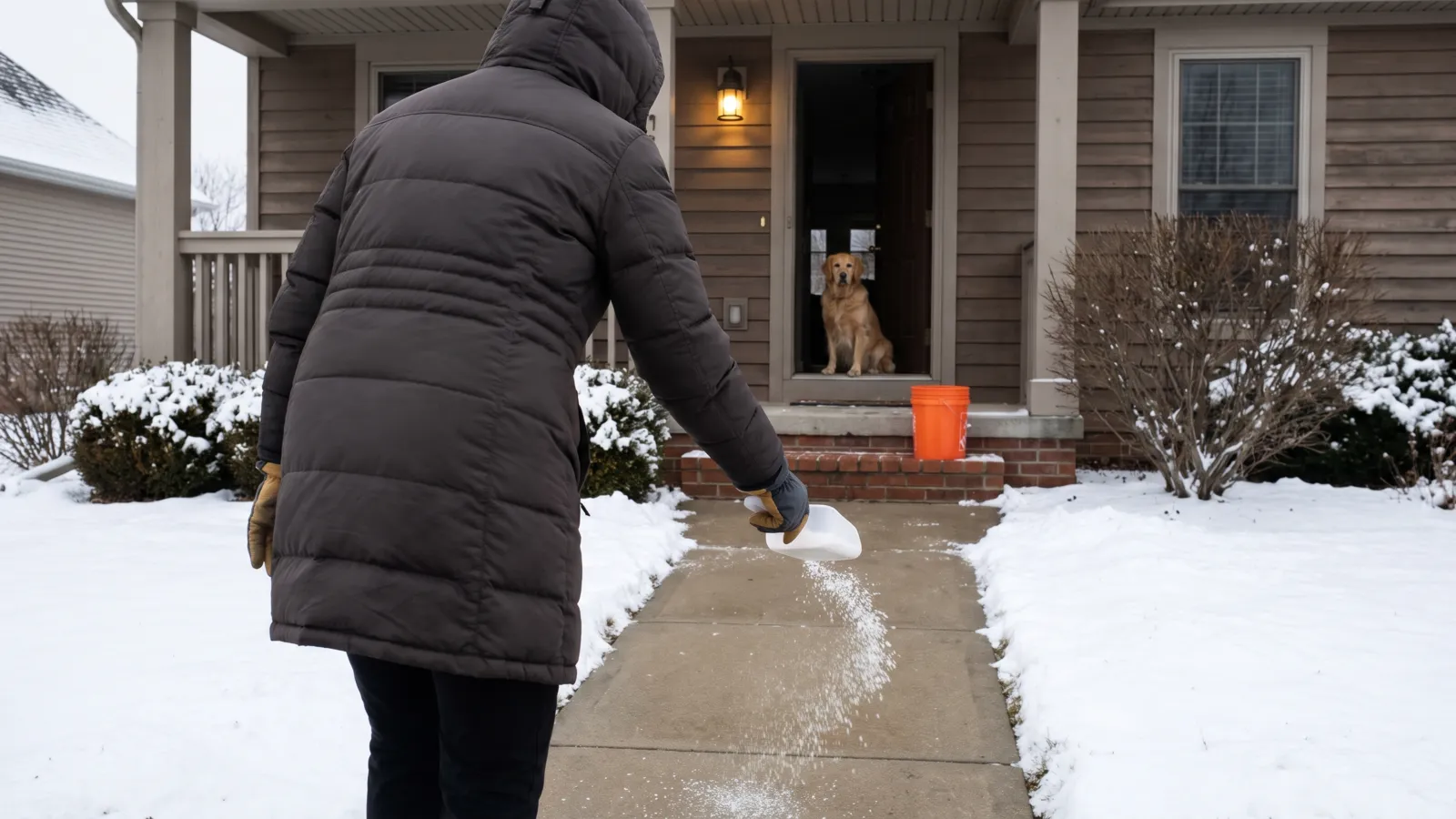
Ice melt is for the thin layer left after shoveling and to stop new ice bonding. Spread it thinly and evenly at the rate on the bag.
Pets and plants.
Some makers sell blends they describe as safer for paws and lawns. Those are the makers' claims, not a federal standard, so it still helps to wipe paws after walks and sweep pellets off the grass when the ice is gone.
Concrete.
Freezing and thawing is hard on any concrete, and makers warn about new concrete in particular. Check what the bag says before using any ice melt on concrete poured in the last year.
Store it dry.
Keep the bag closed and off a damp floor; most ice melts take on moisture and clump.
We verify every product's specifications against at least two independent sources, re-check its US price and stock on a schedule where we can track it automatically, and cross-check safety-relevant claims against official guidance. Every review is labeled Researched or Used and reviewed by us: where we've bought a product, or been sent it free, and used it ourselves, its review says which; where we haven't, our verdict is a considered spec-and-evidence comparison, not a hands-on test. When two products are close, commission can decide which one we pick. A clearly better product always wins. Read our full methodology →
Related gear comparisons
Guides that go with this
A plain-English winter storm checklist: watch vs warning, home prep, supplies, staying warm, shoveling and car…
How to winterize your home before cold weather: seal drafts, insulate, service the furnace and chimney, protec…
Common questions
What ice melt is safe for pets?
Several makers sell blends they describe as pet-friendly or safer for paws, and each one's own claim is in the table. There's no federal pet-safe standard for ice melt, so it still helps to wipe your pet's paws after walks and keep pets from eating it.
Does ice melt damage concrete?
It can add to freeze-thaw wear, and makers warn about concrete less than a year old. Follow the bag's spread rate, shovel the slush away once it melts, and check the bag before using it on new concrete.
Rock salt or calcium chloride?
Rock salt is cheapest and fine in milder cold. Calcium chloride keeps working at lower temperatures, according to the makers' ratings in the table. In very cold places, a calcium or magnesium blend is the usual pick.
How much ice melt do I need?
Follow the spread rate printed on the bag; it varies by product. Shovel first so you're only treating a thin layer, and keep a bag in before a storm, since stores can sell out.