Best heat tape and heat cables for water pipes (2026)
Pipes in crawl spaces, garages, unheated basements and against outside walls are the ones that freeze. The American Red Cross suggests insulating them and says to consider "installing UL-listed 'heat tape,' 'heat cable,' or similar materials on exposed water pipes." This page compares heat cables sold for water pipes in the US: the type, the lengths, which pipes each maker allows them on, and whether a thermostat turns them on in the cold. We haven't installed these ourselves; every figure is the maker's or the listing's.
By Tom Calder · Updated November 1, 2026 · 5 products, prices indicative
Our picks
Frost King HC9A 9 ft
One exposed pipe in a crawl space or against an outside wall
EasyHeat AHB 18 ft
A mid-length run of pipe under a house or in a garage
HEATIT 24 ft self-regulating
Longer or awkward pipe runs, and plastic pipe, where lower heat is safer
All 5 compared
| Heat cable | Type | Fits | Build | Power | Price |
|---|---|---|---|---|---|
Cable with built-in thermostat · Metal and Sch. 40 plastic pipe, not PVC (maker) · Built-in thermostat; 9 ft cable · 120V, 7 W/ft (maker) One exposed pipe in a crawl space or against an outside wall | Cable with built-in thermostat | Metal and Sch. 40 plastic pipe, not PVC (maker) | Built-in thermostat; 9 ft cable | 120V, 7 W/ft (maker) | |
Our verdictOur verdictResearched A plug-in 9-foot cable with a thermostat built into the plug end: Frost King says it switches on below 38 degrees F and off above 45. The maker's rules are strict: no overlapping, insulate over it, never use it inside walls, and not on PVC pipe or hoses. Best for One exposed pipe in a crawl space or against an outside wall Good
Worth knowing
Who shouldn't buy it: Don't buy it if your pipe is PVC, runs inside a wall, or is longer than the cable. | |||||
Cable with integral thermostat · Metal or plastic pipe, to -40°F (maker via Lowe's) · Integral thermostat; 18 ft cable · 120V, 7 W/ft, 126 W (listing) A mid-length run of pipe under a house or in a garage | Cable with integral thermostat | Metal or plastic pipe, to -40°F (maker via Lowe's) | Integral thermostat; 18 ft cable | 120V, 7 W/ft, 126 W (listing) | |
Our verdictOur verdictResearched EasyHeat's AHB cable plugs in, has a thermostat built into the cable, and the maker says it keeps water flowing in plastic or metal pipe to -40 degrees F. Its brochure wants a GFCI-protected outlet and a straight run with no spiral or overlap. Best for A mid-length run of pipe under a house or in a garage Good
Worth knowing
Who shouldn't buy it: Don't buy it if you cannot plug it into a GFCI-protected outlet or need to wrap the cable around fittings. | |||||
Self-regulating cable · Metal and plastic pipe (listing) · Built-in thermostat; 24 ft cable · 120V, 3 W/ft (listing) Longer or awkward pipe runs, and plastic pipe, where lower heat is safer | Self-regulating cable | Metal and plastic pipe (listing) | Built-in thermostat; 24 ft cable | 120V, 3 W/ft (listing) | |
Our verdictOur verdictResearched A 3 W/ft self-regulating cable with a thermostat. Self-regulating cables ease off where the pipe is already warm, which is why this type is the one usually offered for plastic pipe, and the listing says it suits both metal and plastic. At 3 watts a foot it puts out less heat than the 7 W/ft cables, and the listing gives no installation sheet in the part we read, so follow the pack's instructions. Best for Longer or awkward pipe runs, and plastic pipe, where lower heat is safer Good
Worth knowing
Who shouldn't buy it: Don't buy it if you want a maker's installation page to read before buying. | |||||
Cable with built-in thermostat · Metal and Sch. 40 plastic pipe, not PVC (maker) · Built-in thermostat; 12 ft cable · 120V, 7 W/ft (maker) A 10-12 foot run of exposed pipe under a house or in a garage | Cable with built-in thermostat | Metal and Sch. 40 plastic pipe, not PVC (maker) | Built-in thermostat; 12 ft cable | 120V, 7 W/ft (maker) | |
Our verdictOur verdictResearched The 12-foot size of Frost King's plug-in cable, with the thermostat Frost King says switches on below 38 degrees F and off above 45. Same strict maker rules as the other sizes: no overlapping, insulate over it, never use it inside walls, and not on PVC pipe or hoses. Best for A 10-12 foot run of exposed pipe under a house or in a garage Good
Worth knowing
Who shouldn't buy it: Don't buy it if your pipe is PVC, runs inside a wall, or is longer than 12 feet. | |||||
Cable with built-in thermostat · Metal and Sch. 40 plastic pipe, not PVC (maker) · Built-in thermostat; 3 ft cable · 120V, 7 W/ft (maker) A short stretch of pipe, such as a water-meter or hose-bib run | Cable with built-in thermostat | Metal and Sch. 40 plastic pipe, not PVC (maker) | Built-in thermostat; 3 ft cable | 120V, 7 W/ft (maker) | |
Our verdictOur verdictResearched A plug-in 3-foot cable with a thermostat built into the plug end: Frost King says it switches on below 38 degrees F and off above 45. The maker's rules are strict: no overlapping, insulate over it, never use it inside walls, and not on PVC pipe or hoses. At 3 feet it only suits a short section. Best for A short stretch of pipe, such as a water-meter or hose-bib run Good
Worth knowing
Who shouldn't buy it: Don't buy it if you need to protect more than about three feet of pipe. | |||||
ⓘ As an Amazon Associate, PreparedStates earns from qualifying purchases. We may earn a commission when you buy through our links. When two products are close, commission can decide which one we pick. A clearly better product always wins. Amazon prices come from Amazon's own product data and can change at any time.
Before you buy
Two kinds.
Self-regulating cable puts out more heat as the pipe gets colder and less as it warms; many can be cut to length. Constant-wattage cable puts out the same heat all the time and relies on a built-in thermostat to switch on in the cold; it comes in fixed lengths and usually must not overlap itself. Each product's type is in the table.
Match the pipe.
Check that the maker allows the cable on your pipe: Frost King's HC cables, for example, are for metal and Schedule 40 plastic supply pipe but not PVC. Measure the length of pipe, and for valves and fittings follow the maker's wrapping guide.
Look for a listing mark.
The Red Cross specifies UL-listed heat tape. The table notes what each maker says; check for the listing mark on the box.
Insulate over it.
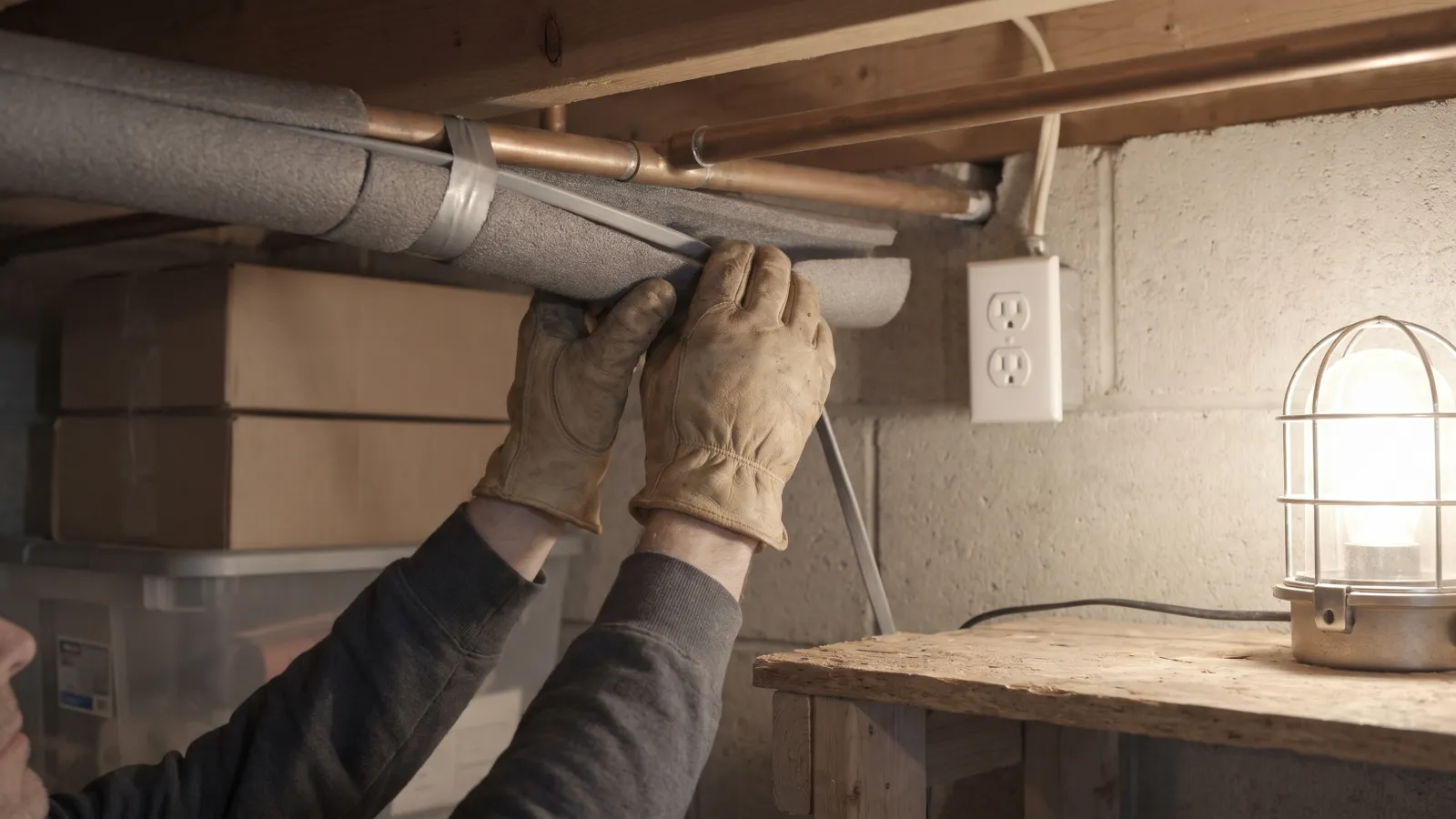
Makers want insulation over the cable, and some name the kind: Frost King specifies 1/2-inch fiberglass with a vapor seal. It keeps the heat on the pipe.
Plan the plug.
Check the outlet the maker specifies (EasyHeat, for one, says GFCI-protected) is within reach of the cable's power lead, and follow its instructions on extension cords.
We verify every product's specifications against at least two independent sources, re-check its US price and stock on a schedule where we can track it automatically, and cross-check safety-relevant claims against official guidance. Every review is labeled Researched or Used and reviewed by us: where we've bought a product, or been sent it free, and used it ourselves, its review says which; where we haven't, our verdict is a considered spec-and-evidence comparison, not a hands-on test. When two products are close, commission can decide which one we pick. A clearly better product always wins. Read our full methodology →
Related gear comparisons
Guides that go with this
How to keep pipes from freezing and what to do if they do: insulate, let faucets drip, thaw safely with a hair…
How to winterize your home before cold weather: seal drafts, insulate, service the furnace and chimney, protec…
Common questions
Is heat tape safe?
It's a common way to protect exposed pipes, and the Red Cross suggests UL-listed heat tape or heat cable. Most problems come from installation: overlapping a cable that mustn't overlap, using it on a pipe type the maker doesn't allow, or skipping the GFCI outlet. Follow the instructions in the box, and replace a cable that's old, cracked or damaged.
Can I use heat tape on PEX or PVC pipe?
Only if the maker says so. Some cables are made for metal and plastic pipe, others for metal only. The table shows what each maker allows.
Does heat tape use a lot of electricity?
It depends on the watts per foot, the length and how long it runs. A built-in thermostat switches it on only in the cold, and insulation over the cable helps. The wattage of each cable is in the table.
What else stops pipes freezing?
The Red Cross says: "When the weather is very cold outside, let the cold water drip from the faucet served by exposed pipes." Opening the cabinet doors under sinks lets warm air reach the pipes, and if you go away it says to leave the heat "set to a temperature no lower than 55° F."