Best heat-powered wood stove fans (2026)
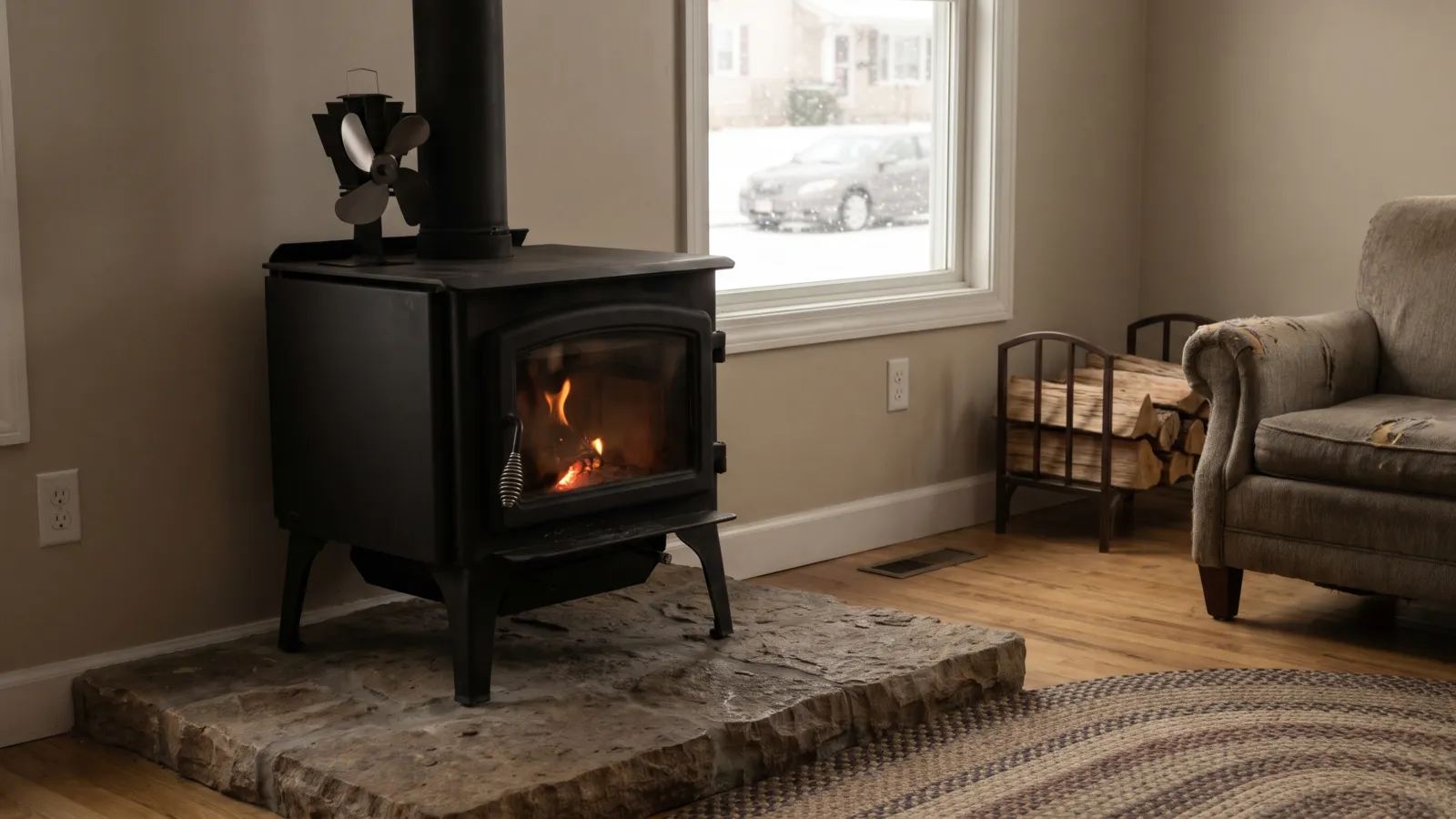
A heat-powered stove fan sits on top of a wood stove and turns the stove's own heat into a gentle breeze, pushing warm air into the room with no outlet or battery, which makes it useful in a power outage. This page compares stove fans sold in the US on the temperature each starts at, the most heat the maker says it can take, and blades. The stove itself comes first: CDC says that if you plan to use a fireplace or wood stove for emergency heating, "have your chimney or flue inspected each year." We haven't used these fans ourselves; every figure is the maker's or the listing's.
By Tom Calder · Updated November 1, 2026 · 6 products, prices indicative
Our picks
Ecofan UltrAir
A free-standing wood stove in a medium room, no outlet needed
Ecofan AirMax
A larger room or a bigger stove where you want more air moved
Ecofan Mini
A small stove or a small room
All 6 compared
| Stove fan | Type | Starts at (maker) | Max surface (maker) | Blades | Price |
|---|---|---|---|---|---|
2-blade heat-powered, 125 CFM · About 212°F (maker) · 650°F (maker) · 2, finger-safe (listing) A free-standing wood stove in a medium room, no outlet needed | 2-blade heat-powered, 125 CFM | About 212°F (maker) | 650°F (maker) | 2, finger-safe (listing) | |
Our verdictOur verdictResearched Caframo's mid-size fan generates its own power from stove heat and moves about 125 CFM, according to the maker. It works on a free-standing stove with a surface between 212 and 650°F. It is the best-documented fan here. The catch is that it needs a hot, flat stove top and does not suit a cool-running stove or most fireplaces. Best for A free-standing wood stove in a medium room, no outlet needed Good
Worth knowing
Who shouldn't buy it: Don't buy it if your stove top rarely gets above 200°F, or you want to run it on a fireplace insert. | |||||
2-blade heat-powered, 175 CFM · About 185°F (maker) · 650°F (maker) · 2, aluminum (listing) A larger room or a bigger stove where you want more air moved | 2-blade heat-powered, 175 CFM | About 185°F (maker) | 650°F (maker) | 2, aluminum (listing) | |
Our verdictOur verdictResearched The largest Ecofan moves about 175 CFM and starts spinning at a lower stove temperature (about 185°F) than the UltrAir. It suits a big room and a stove that does not run very hot. The catch is that taller bases warm more slowly, and Caframo's FAQ says it is not meant for fireplaces. Best for A larger room or a bigger stove where you want more air moved Good
Worth knowing
Who shouldn't buy it: Don't buy it if you have a small stove or a fireplace insert. | |||||
2-blade heat-powered, 85 CFM · About 230°F (maker manual) · 617°F (maker manual) · 2 (listing) A small stove or a small room | 2-blade heat-powered, 85 CFM | About 230°F (maker manual) | 617°F (maker manual) | 2 (listing) | |
Our verdictOur verdictResearched The smallest Ecofan: 85 CFM, two blades, and a model manual that sets 230 to 617°F as the working range. It fits small stoves where a bigger fan would crowd the top. The catch is that it moves less air, and the maker's own pages give different top temperatures, so follow the manual. Best for A small stove or a small room Good
Worth knowing
Who shouldn't buy it: Don't buy it if you have a large room or a stove with a big flat top. | |||||
4-blade heat-powered · About 122°F (listing) · Damage above 662°F (listing) · 4 (listing) A cheaper four-blade fan with its own thermometer | 4-blade heat-powered | About 122°F (listing) | Damage above 662°F (listing) | 4 (listing) | |
Our verdictOur verdictResearched A four-blade fan that Galafire says starts at about 122°F, with a magnetic thermometer so you can see the stove temperature. It costs less than the Caframo fans. The catch is that the seller itself says it does not run well if the stove top stays under about 212°F, and the specs come from the listing alone. Best for A cheaper four-blade fan with its own thermometer Good
Worth knowing
Who shouldn't buy it: Don't buy it if your stove stays cooler than about 200°F, or you want a maker page with full specs. | |||||
4-blade heat-powered · About 131°F (listing) · 660°F (listing) · 4, anodized aluminum (listing) A low-cost fan for a small free-standing wood stove | 4-blade heat-powered | About 131°F (listing) | 660°F (listing) | 4, anodized aluminum (listing) | |
Our verdictOur verdictResearched A four-blade, heat-powered fan from a brand that sells several versions, with listings that mention a start temperature near 131°F and an upper limit of 660°F. It is a budget way to move warm air. The catch is that the listings disagree on some figures and there is no maker page, so treat the numbers as approximate. Best for A low-cost fan for a small free-standing wood stove Good
Worth knowing
Who shouldn't buy it: Don't buy it if you want maker-published temperature limits. | |||||
5-blade heat-powered · About 176°F (listing) · Strip lifts at 482-572°F (listing) · 5, aluminum (listing) A low-cost fan for a small wood stove or pellet stove | 5-blade heat-powered | About 176°F (listing) | Strip lifts at 482-572°F (listing) | 5, aluminum (listing) | |
Our verdictOur verdictResearched A five-blade, heat-powered fan with aluminum blades and a safety strip that tilts it when the stove top gets very hot, according to the listing. It is cheap and needs no power. The catch is that the listing figures are not maker-verified and vary across Tomersun models. Best for A low-cost fan for a small wood stove or pellet stove Good
Worth knowing
Who shouldn't buy it: Don't buy it if you want maker-published temperature limits. | |||||
ⓘ As an Amazon Associate, PreparedStates earns from qualifying purchases. We may earn a commission when you buy through our links. When two products are close, commission can decide which one we pick. A clearly better product always wins. Amazon prices come from Amazon's own product data and can change at any time.
Before you buy
Start temperature.
The fan needs the stove surface to reach a certain heat before it turns; a lower starting temperature means it gets going sooner.
Maximum temperature.
Each maker gives a top surface temperature; above that, the motor can be damaged. A magnetic stove thermometer helps you keep an eye on it.
Blades and size.
More or larger blades move more air but need more heat. Check the fan's height fits under anything above the stove.
Where to put it.
Usually toward the back or side of the stove top, as the maker's instructions show. Caframo says not to put its fans in front of the chimney pipe, where they can overheat. It works only on a free-standing stove with a flat top, not an open fireplace.
Safety first.
The U.S. Fire Administration says to keep anything that can burn at least 3 feet from all heat sources including wood stoves.
We verify every product's specifications against at least two independent sources, re-check its US price and stock on a schedule where we can track it automatically, and cross-check safety-relevant claims against official guidance. Every review is labeled Researched or Used and reviewed by us: where we've bought a product, or been sent it free, and used it ourselves, its review says which; where we haven't, our verdict is a considered spec-and-evidence comparison, not a hands-on test. When two products are close, commission can decide which one we pick. A clearly better product always wins. Read our full methodology →
Related gear comparisons
Guides that go with this
What CO poisoning feels like, who is most at risk, common sources in winter and outages, where to put CO alarm…
How to winterize your home before cold weather: seal drafts, insulate, service the furnace and chimney, protec…
How to use a space heater safely: keep it 3 feet from anything that can burn, plug it into the wall, never run…
Common questions
Do wood stove fans really work?
They move the warm air off the top of the stove out into the room, so the room warms more evenly. They don't add heat. Makers' airflow figures are their own.
Where do you put a stove fan?
On a flat stove top, usually toward the back or one side, so it draws cooler air from behind and pushes warm air forward. Follow the maker's placement guide and keep it away from the flue if the maker says so.
Can a stove fan get too hot?
Yes. Each has a maximum surface temperature in the table. Above it, the motor or base can be damaged. A stove thermometer helps.
What safety steps does a wood stove need?
CDC says to have your chimney or flue inspected each year if you plan to use a fireplace or wood stove for emergency heating, and to install a smoke detector and a battery-operated carbon monoxide detector near the area to be heated. The U.S. Fire Administration says to keep anything that can burn at least 3 feet from wood stoves.