Black Friday 2026: the gear that keeps a home running this winter
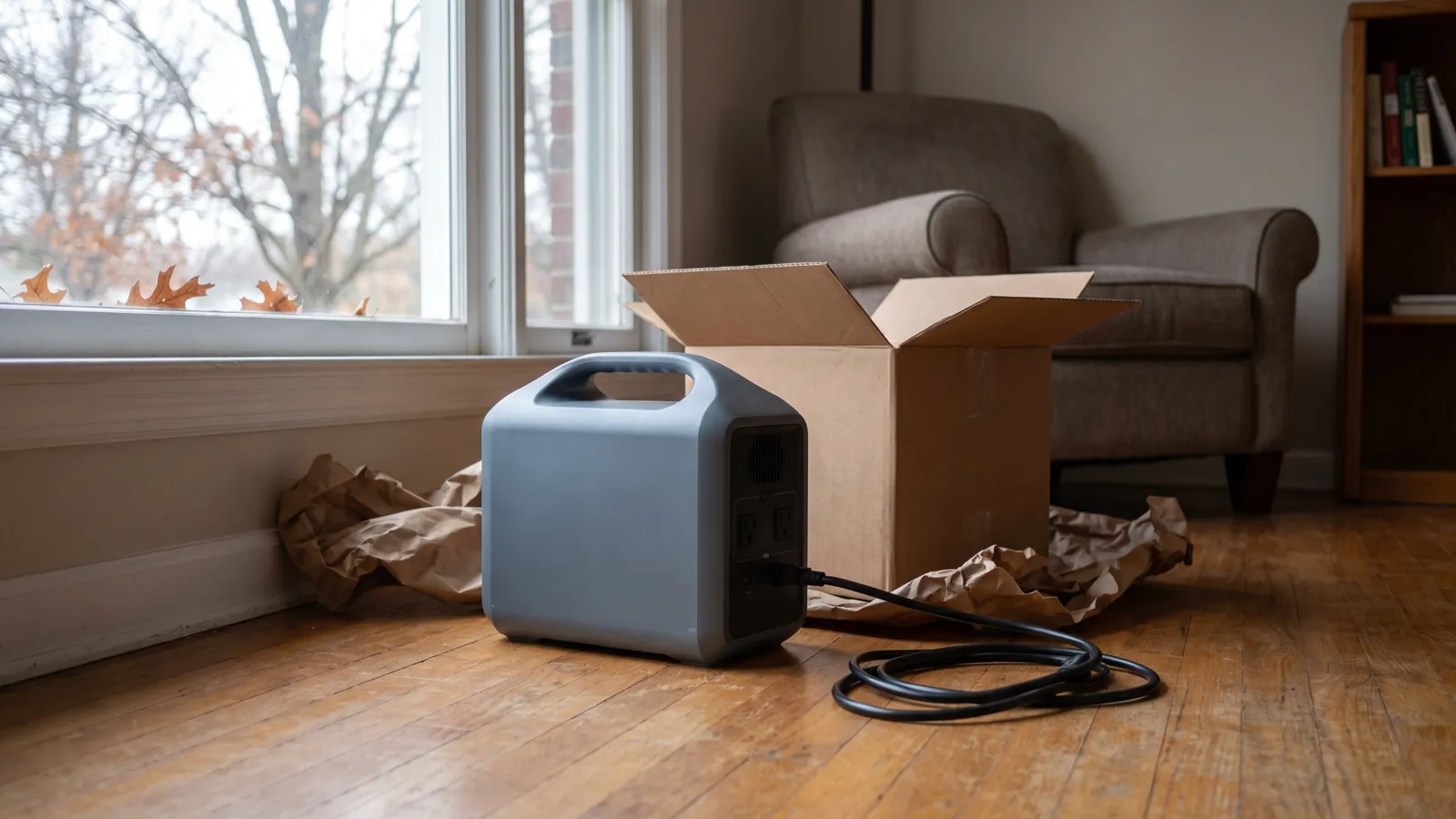
This page gathers the household gear most worth a look in the Black Friday sales, grouped by the job it does in a US winter: keeping the lights, fridge and phones going in a power outage, running a generator without the carbon monoxide risk, heating one room safely, hearing the warnings, and having food and water on hand. Every pick is a product we already compare, chosen on its specs and what it's for, not on today's price.
Prices appear only inside the product cards, with the store they come from. For power stations and generators, our deal check compares each brand store's current price with what that same store has charged on the days we've recorded, so you can see whether a sale price is genuinely lower. If you don't need something, the section on what you can skip is the most useful part of this page.
Every power station we compare, with the brand stores' own prices checked twice a day and a plain verdict on whether each is lower than we've recorded. Black Friday: November 27, 2026.
Open the deal check →Every generator we compare, by running watts, with the makers' own store prices checked twice a day and judged against what they've charged. Black Friday: November 27, 2026.
Open the deal check →- Black FridayFriday, November 27, 2026 · Many stores run offers over a longer stretch around it. We list a store's own sale dates on the deal pages only once that store publishes them.
- Cyber MondayMonday, November 30, 2026 · The Monday after Black Friday. As with Black Friday, each store announces its own start and end.
Power stations: quiet backup for the fridge, Wi-Fi and phones
A portable power station is a big rechargeable battery with regular household outlets. You charge it before a storm and it runs a refrigerator, a router, phone chargers and a lamp through an outage, indoors, with no fumes and no fuel to store. It's also a large purchase, so it's where it pays most to settle on the size first and then check whether a sale price is really lower than usual.
Decide the size before the sale, not during it. List what you'd run and for how long, check the station's continuous output covers the biggest item, and look at how long it takes to recharge. Our runtime calculator does the sum for a fridge, a CPAP or a furnace blower. Then open the deal check, which compares each brand store's price with its own record.
Generators, and the CO alarm that goes with one
A gas or dual-fuel generator runs more for longer than a battery can, which is why it suits longer outages and bigger loads such as a well pump or a furnace on a transfer switch. It also makes carbon monoxide, an odorless gas, so a generator only ever runs outdoors, well away from the house, and a CO alarm belongs on the same shopping list. If you have nowhere safe to run one, a power station is the better buy.
Size it before the sales start. Add up the running watts of what must run together and the starting watts of the biggest motor; our generator sizing calculator does the sum. Then compare like with like: dual fuel, electric start and a CO shutoff sensor all change the price, so check which version a sale is on.
- “Never use a generator inside your home or garage, even if doors and windows are open.” (CDC)
- “Only use generators outside, more than 20 feet away from any windows, doors, and vents.” (CDC)
- “Install battery-operated or battery back-up CO detectors near every sleeping area in your home.” (CDC)
- “Always connect the generator to appliances with heavy-duty extension cords.” (Ready.gov)
Heaters that are safe to use indoors
For one cold room, an electric space heater with an automatic shut-off is the simple, indoor-safe choice, as long as the power is on. A thermostat matters more than the headline wattage, because what changes your bill is how long the heater runs. An oil-filled radiator is slower to warm up but quiet and steady, which suits a bedroom.
Fuel-burning heaters are a different decision. If you're thinking of a propane or kerosene heater for outages, read our indoor propane and kerosene heater comparison and the CO guide first, and fit a CO alarm before you light one.
- “Use electric space heaters with automatic shut-off switches and non-glowing elements.” (CDC)
- “Keep portable heaters at least three feet away from drapes, furniture, bedding and other combustible materials to prevent fires.” (CPSC)
- “Always plug electric space heaters directly into a wall outlet and never into an extension cord or power strip. Never leave portable heaters turned on while sleeping.” (CPSC)
Weather radios: hearing the warning when the phone can't
Ready.gov's basic kit asks for two kinds of radio, and they do different jobs. A NOAA Weather Radio with a tone alert sits by the bed and wakes you when the National Weather Service warns your county. A hand-crank radio keeps you informed, and can top up a phone, when the power and cell service are both down.
Look for S.A.M.E. programming on an alert radio, so it sounds only for warnings that cover your county, and battery backup so it keeps listening in an outage. For a crank radio, more than one way to charge matters more than extra features.
- “Battery-powered or hand crank radio and a NOAA Weather Radio with tone alert.” (Ready.gov, basic disaster supplies kit)
Food and water: the basics, sized for your household
Food and water are the least exciting things here and the most important. CDC's figure is a gallon of water per person per day, and Ready.gov asks for at least a several-day supply of non-perishable food. Much of that can come from the groceries you already eat; a long-shelf-life kit is worth it if you'd rather store it and forget it.
Our food storage calculator and kit builder size both for your household, so you buy what fills the gap rather than the biggest bucket on sale.
- “Store at least 1 gallon of water per person, per day for 3 days. ... Try to store a 2-week supply if possible.” (CDC)
- “Food (at least a several-day supply of non-perishable food)” (Ready.gov, basic disaster supplies kit)
You probably don't need this
A sale price on something you won't use is the full price. Before you buy, check this list.
- A generator, if you have nowhere safe to run it. It has to sit outdoors, more than 20 feet from windows, doors and vents. In an apartment or a home with no yard, a power station does the job indoors.
- The biggest power station on sale. If your outages are usually a few hours, a station sized for the fridge, Wi-Fi and phones covers them. Size it with the runtime calculator and buy that, not the one with the biggest discount.
- A whole-house generator for rare, short outages. It's a major install. Check how often your area actually loses power on our outages by ZIP code page before you price one.
- A space heater to heat the whole house. It's for one room you're sitting in. If the furnace is struggling, that's a service call, not a sale item.
- A 25-year food bucket you'd never eat. Several days of food can come from your own pantry. Rotate what you already buy with the non-perishable food list.
- A second of something you already own. Check the closet first: the kit builder shows what Ready.gov's list asks for, so you can buy only what's missing.
- Anything bought because a countdown clock said so. If it wasn't on your list in October, a lower price in November hasn't made it useful.
How our deal check works, and why Amazon prices aren't judged
For power stations and generators we check each brand's own US store twice a day and keep a record of what it charges for each model. When a sale price appears, the deal pages call it a deal only when it's below every price we've recorded at that store in the last 60 days, or at least 10% under its usual price there, and only once we have at least 14 days on record. Otherwise they say plainly that it's about the usual price, or above it. We started recording US brand-store prices in October 2026, so this is the first Black Friday in our record.
Amazon prices are never judged. Amazon's rules for sites like ours don't allow us to record or analyze its prices, so a product we link to on Amazon gets a plain link to Amazon's own page, where its current price is shown. That's why the verdicts on the deal pages cover brand stores only.
How to tell a real deal from a headline
- Check the exact model number. Older versions, smaller sizes and bundles sell alongside the current model in sale week, often under near-identical names, and a review of one doesn't describe the other.
- Judge the store's own recent price, not the crossed-out one. The FTC's guides on deceptive pricing say a former-price comparison is legitimate when the former price was "the actual, bona fide price at which the article was offered to the public on a regular basis for a reasonably substantial period of time." Our deal check makes that comparison for brand stores.
- Check the shipping time before you order a gift. Under the FTC's mail, internet and telephone order rule, a seller needs a reasonable basis to ship within the time it states, or within 30 days if it states none, and must tell you if it can't.
- Pay by credit card for the big items. If something you paid for by credit card isn't delivered as agreed, that counts as a billing error under Regulation Z, and your written notice has to reach the card issuer no later than 60 days after it sent the first statement showing the charge.
- Read the return window and who pays return shipping. Store policies differ, and holiday purchases often have their own dates.
- Compare like with like. A power station bundled with a solar panel, or a generator with a wheel kit and cover, is priced differently from the unit alone.
Common questions
When is Black Friday 2026?
Friday, November 27, 2026, with Cyber Monday on Monday, November 30. Many stores run offers over a longer period around those days, and each store announces its own dates; we add a store's sale dates to the deal pages only once it publishes them.
How do I know if a Black Friday price is really lower?
Compare it with what the same store has charged recently, not with a crossed-out list price. For power stations and generators sold on the makers' own US stores, our deal check does this for you: it calls a price a deal only when it's below every price we've recorded there in the last 60 days, or at least 10% under the usual price, with at least 14 days on record.
Why is there no verdict on Amazon prices?
Amazon's rules for sites like ours don't allow us to record or analyze its prices. Products we link to on Amazon get a plain link to Amazon's own page, where the current price is shown.
Should I wait for Black Friday to buy a generator or power station?
Only if you don't need it before then. Gear bought now is ready for the first winter storm. Our own price record started in October 2026, so it can't tell you whether Black Friday is the cheapest time of year; it can tell you whether a sale price is lower than the store's recent prices.
Can I run a generator in the garage with the door open?
No. CDC says never to use a generator inside your home or garage, even if doors and windows are open, and to run it outside, more than 20 feet away from any windows, doors and vents. Fit battery-operated or battery back-up CO alarms near every sleeping area.
Is an electric space heater safe to leave on overnight?
CPSC says never to leave portable heaters turned on while sleeping, to plug them directly into a wall outlet rather than an extension cord or power strip, and to keep them at least three feet from drapes, furniture and bedding.
Holiday gift guides
Get one calm email when it matters
Seasonal checklists and gear price drops. No spam, unsubscribe any time.
Sources (23)
- CDC: Carbon monoxide poisoning basics
- Ready.gov: Power outages
- CDC: Stay safe during and after a winter storm
- CPSC: Keep warm and safe this winter (2026)
- CPSC: There's a chill in the air (2025)
- Ready.gov: Build a kit
- CDC: How to create and store an emergency water supply
- FTC Guides Against Deceptive Pricing, 16 CFR 233.1 (former price comparisons)
- FTC Mail, Internet, or Telephone Order Merchandise Rule, 16 CFR 435.2
- Regulation Z, 12 CFR 1026.13 (billing error resolution)
- Jackery: Explorer 1000 v2 specifications
- BLUETTI: Elite 100 V2 specifications
- EcoFlow: RIVER 2 Pro
- Honda: EU2200i owner's manual (PDF)
- Champion: 4500W electric start dual fuel inverter
- Kidde: 10-year battery CO alarm with digital display
- Dreo: oil-filled radiator heater
- Dr.Prepare: 1500W space heater (DCH07)
- Midland: WR400 weather alert radio
- Midland: WR120 weather alert radio
- Midland: ER310PRO crank radio
- ReadyWise: 72-hour emergency food kit
- WaterBrick: product specifications
PreparedStates is independent and not affiliated with the US government.