Candles in a power outage: why flashlights are safer, and the rules if you light one anyway
Are candles safe in a power outage? Ready.gov and the Red Cross say use flashlights instead. The U.S. Fire Administration's candle rules.
By Tom Calder · Updated November 2, 2026 · Sourced to Ready.gov, the American Red Cross and the U.S. Fire Administration
- The official advice is simple. The American Red Cross's power outage page says: "Use flashlights, not candles." Ready.gov says: "Have flashlights for every household member."
- A candle is an open flame in a dark house where people are moving around, sleeping and improvising. That is the whole problem, and it is why fire agencies would rather you did not light one.
- If you do use a candle, the U.S. Fire Administration's candle safety rules apply: keep it at least 12 inches from anything that can burn, never leave it unattended, and blow it out before you leave the room or go to sleep.
- Never use anything that burns fuel for light or heat indoors. Ready.gov says generators, camp stoves and charcoal grills "should always be used outdoors and at least 20 feet away from windows."
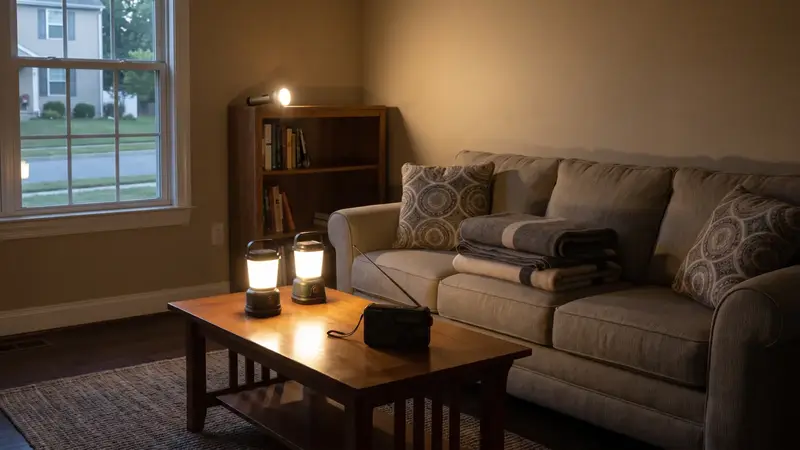
- What replaces candles costs very little: an LED flashlight for each person, a headlamp, a battery lantern, and a plug-in light that comes on by itself when the power fails.
What the official guidance says
The American Red Cross's power outage checklist puts it in four words: "Use flashlights, not candles." Ready.gov's power outage page says to "plan for batteries and other alternative power sources to meet your needs when the power goes out, such as a portable charger or power bank," and to "have flashlights for every household member."
Neither agency bans candles outright, but both answer the question the same way. The safe light in an outage is a battery light. A candle is the fallback for a household that has not planned, and the point of this guide is to make sure you are not that household.
Why a candle in an outage is riskier than a candle at dinner
A candle on the dining table on an ordinary evening sits in a lit room with people watching it. An outage candle is different. It is often the only light, so it gets carried from room to room, set down on whatever is handy, left burning in a hallway or bathroom, and sometimes still alight when people fall asleep. Children and pets move around in the dark. Blankets and coats come out if it is cold.
Each of those habits is one the U.S. Fire Administration's candle safety rules tell you to avoid. An outage stacks them up at the same time, in a house where the smoke alarms may be on battery backup and the fire department is busy with the same storm that took the power out.
If you light one anyway: the rules that matter
The U.S. Fire Administration's candle safety pictograph sets the basics. Keep a burning candle at least 12 inches away from anything that can burn. Use a sturdy holder that will not tip, on a stable surface. Never leave a burning candle unattended. Blow it out when you leave the room or go to bed.
Add the outage-specific habits: one candle in one room, not a trail through the house. Keep it out of reach of children and pets. Do not carry a lit candle up or down stairs. If you are using blankets, sleeping bags or extra layers to stay warm, keep the candle well away from them, and read our staying warm without power guide for the safe ways to hold heat.
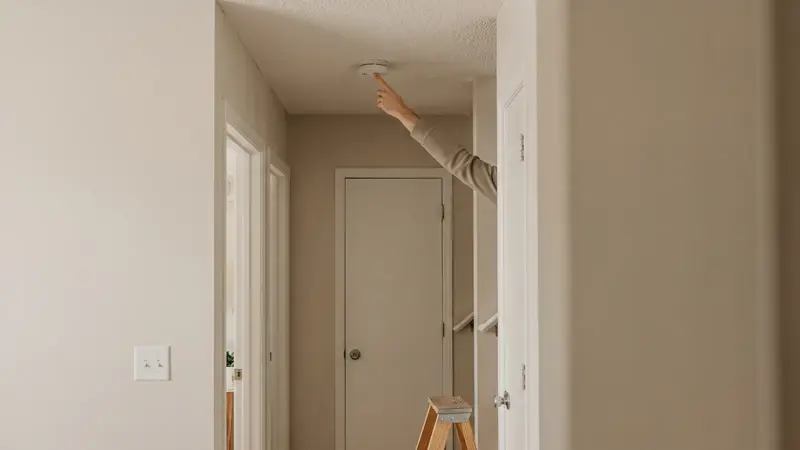
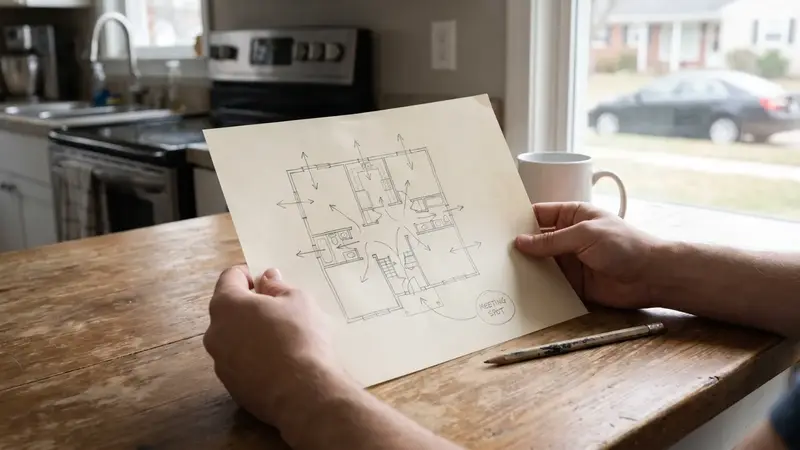
Check your smoke alarms. Our smoke alarm placement guide covers where they go and why battery backup matters in an outage, and the home fire escape plan guide covers what to do if the worst happens.
The one absolute never: fuel-burning anything indoors
A candle is a small open flame. A fuel-burning appliance is a carbon monoxide source, and that is a different category of danger. Ready.gov says: "Generators, camp stoves or charcoal grills should always be used outdoors and at least 20 feet away from windows. Never use a gas stovetop or oven to heat your home." The Red Cross says: "Never use a generator, outdoor stoves or heaters indoors."
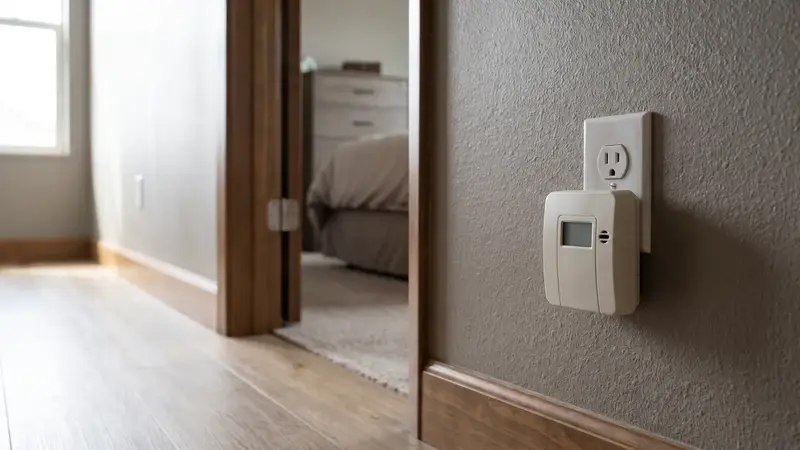
That rules out camping lanterns that burn propane or white gas, charcoal of any kind, and any heater not made for indoor use. Our carbon monoxide poisoning guide has the symptoms and the alarm rules, and the carbon monoxide alarm comparison lists battery-backup models.
Better light, for very little money
Flashlights for every person is Ready.gov's baseline, and the flashlight and lantern comparison covers the sensible end of the market. A headlamp leaves both hands free for cooking, checking the breaker panel or finding the dog. A battery LED lantern lights a whole room, which is the job most people reach for a candle to do.
The quiet winner is a power failure light: it sits in an outlet, charges itself, and comes on by itself the moment the power drops, so nobody is hunting for a flashlight in the dark. Put one in the hallway and one by the stairs. A set of rechargeable batteries, charged before storm season, keeps everything running.
Battery-operated flameless candles are fine if you like the look. They are not a safety tool, just a light, and a lantern does the same job more brightly. The power outage kit preset in our kit builder sizes the lighting to your household.
You do not need to buy candles, candle holders, candle lanterns or a stock of matches for outages. One LED flashlight per person and one plug-in power failure light is the whole purchase, and most of it costs less than a dinner out. If you already own candles, keep them for dinner parties and let the flashlights do the outage work.
Common questions
Are candles safe in a power outage?
The American Red Cross says to use flashlights, not candles, and Ready.gov says to have flashlights for every household member. A candle is an open flame in a dark house, so it is the fallback, not the plan.
What are the candle safety rules if I use one?
The U.S. Fire Administration's candle safety rules: keep the candle at least 12 inches from anything that can burn, use a sturdy holder, never leave it unattended, and blow it out before you leave the room or go to sleep.
Can I use a propane camping lantern indoors for light?
No. Anything that burns fuel is a carbon monoxide source. Ready.gov says generators, camp stoves and charcoal grills should always be used outdoors and at least 20 feet away from windows, and the Red Cross says never to use a generator, outdoor stoves or heaters indoors.
What is the best replacement for candles in an outage?
An LED flashlight for each person, a headlamp or battery lantern for the room you are using, and a plug-in power failure light that comes on by itself when the power fails.
Are flameless LED candles a good idea?
They are safe and give a soft light. A battery lantern is brighter and does the same job, so buy the LED candles for the look, not as a safety measure.
Get one calm email when it matters
Seasonal checklists and gear price drops. No spam, unsubscribe any time.
Keep reading
 Power outage checklist: what to do before, during and afterA calm power outage checklist from Ready.gov and CDC: what to prepare, how to protect food, medicines and medi…
 Smoke alarm placement: where to put them, how to test them and when to replace themWhere to put smoke alarms: every level, inside each bedroom and outside sleeping areas, plus testing, batterie…
 Home fire escape plan: how to make one, practice it and get out safelyHow to make a home fire escape plan: two ways out of every room, an outside meeting place, escape ladders, dri…
 Carbon monoxide poisoning: symptoms, sources, alarms and what to doWhat CO poisoning feels like, who is most at risk, common sources in winter and outages, where to put CO alarm…