How to treat a burn or scald: the first-aid steps that matter, and when to call 911
Burn first aid from MedlinePlus (National Library of Medicine): cool running water for 5 to 30 minutes, what never to put on a burn, how to cover it, and when to call 911.
By Tom Calder · Updated November 2, 2026 · Sourced to MedlinePlus (U.S. National Library of Medicine) and the American Red Cross
- For a minor burn with unbroken skin, MedlinePlus says: "Run cool water over the area of the burn or soak it in a cool water bath (not ice water). Keep the area under water for at least 5 to 30 minutes."
- Then "cover it with a dry, sterile bandage or clean dressing" and "protect the burn from pressure and friction." Ibuprofen or acetaminophen can help with pain. "Do not give aspirin to children under 19."
- What not to do: "Do not apply oil, butter, ice, medicines, cream, oil spray, or any household remedy to a severe burn." Do not break blisters, and do not remove clothing stuck to the skin.
- Call 911 if the burn is "about the size of your palm or larger," is full-thickness, was caused by chemicals or electricity, if the person breathed in smoke, if you are not sure how serious it is, or if there are signs of shock.
- Children under 5 and adults over 55 "have a higher chance of complications," and burns on the face, hands, feet and genitals "can be particularly serious." When in doubt, treat it as a major burn.
Minor burn: cool water is the treatment
MedlinePlus, the National Library of Medicine's consumer health service, gives the sequence for a minor burn where the skin is unbroken: "Run cool water over the area of the burn or soak it in a cool water bath (not ice water). Keep the area under water for at least 5 to 30 minutes. A clean, cold, wet towel will help reduce pain. Calm and reassure the person."
Cool, not cold, and not ice. The water does the real work, pulling heat out of the skin so the burn does not keep deepening. Take off rings, watches and tight clothing near the burn before it swells, unless they are stuck to the skin.
Then cover it and manage the pain
MedlinePlus continues: "After flushing or soaking the burn, cover it with a dry, sterile bandage or clean dressing. Protect the burn from pressure and friction. Over-the-counter ibuprofen or acetaminophen can help relieve pain and swelling. Do not give aspirin to children under 19."
Afterwards: "Once the skin has cooled, moisturizing lotion containing aloe and an antibiotic also can help. If the skin is broken, an ointment is preferred since it will prevent dressings from sticking to the burn. Minor burns will often heal without further treatment. Make sure the person is up to date on their tetanus immunization." If there is still pain after 48 hours, or any sign of infection such as pus, fever, increased pain, red streaks or swollen lymph nodes, MedlinePlus says to contact your provider.
What never to put on a burn
The folk remedies make burns worse. MedlinePlus's list: "Do not apply oil, butter, ice, medicines, cream, oil spray, or any household remedy to a severe burn. Do not breathe, blow, or cough on the burn. Do not disturb blistered or dead skin. Do not remove clothing that is stuck to the skin. Do not give the person anything by mouth if there is a severe burn. Do not place a severe burn in cold water. This can cause shock."
Two points trip people up. Ice is out, on any burn. And for a severe burn, the cold-water rule reverses: a large burn goes under a dry sterile cover, not into a bath, because cooling a large area can cause shock.
When it is a 911 call
MedlinePlus says: "Before giving first aid, it is important to determine what type of burn the person has. If you are not sure, treat it as a major burn. Serious burns need medical care right away. Call 911 or the local emergency number." Its 911 list: "The burn is very large, about the size of your palm or larger. The burn is severe (full-thickness). You aren't sure how serious it is. The burn is caused by chemicals or electricity. The person shows signs of shock. The person breathed in smoke. Physical abuse is the known or suspected cause of the burn."
Major burns are "third-degree burns," second-degree burns "more than 2 to 3 in" wide, and second-degree burns "on the hands, feet, face, groin, buttocks, or over a major joint." Watch for an airway burn: "burns on the head, face, neck, eyebrows, or nose hairs," burned lips, coughing, difficulty breathing or voice changes. And note: "Children under age 5 and adults over age 55 have a higher chance of complications and death from severe burns because their skin tends to be thinner."
If someone is on fire, or the burn is major
MedlinePlus: "If someone is on fire, tell the person to stop, drop, and roll." Then pour water on the person, call 911, make sure they are no longer touching anything burning, and "do not remove burned clothing that is stuck to the skin." Check breathing. "Cover the burned area with a dry sterile bandage (if available) or clean cloth. A sheet will do if the burned area is large. Do not apply any ointments. Avoid breaking burn blisters." Separate burned fingers and toes with dry non-stick dressings and raise the burned part above the heart.
For an electrical burn: "do not touch the victim directly. Use a non-metallic object to separate the person away from exposed wires before starting first aid." If there is no head, neck, back or leg injury, lay the person flat, raise the feet about 12 inches, cover them with a blanket and keep watching their breathing until help arrives.
What to keep within reach, and how to prevent the next one
The Red Cross's first-aid kit list for a family of four includes sterile gauze pads, roller bandages, adhesive cloth tape, nonlatex gloves and antibiotic ointment packets, all of which are what a burn needs. Our first aid kit comparison covers ready-made kits, and the home first aid kit checklist covers building your own. A fire extinguisher in the kitchen is the other purchase that earns its place.
Prevention, from MedlinePlus: install smoke alarms and check the batteries, turn pot handles toward the back of the stove, keep children from grabbing hot irons and oven doors, and "set the water heater temperature at 120°F (48.8°C) or less." That last one prevents most tap-water scalds in small children and older adults. Our smoke alarm placement and space heater safety guides cover the household side, and cooking without power covers the outage case, when burns from camp stoves and candles rise.
Burn gels, sprays and specialist dressings are heavily marketed, but the first-aid advice from the National Library of Medicine is cool running water for 5 to 30 minutes, then a dry sterile dressing. Your kitchen faucet does the important part. Put the money into an ordinary first-aid kit with plenty of sterile gauze, a kitchen fire extinguisher, and a water heater set to 120°F.
Common questions
How long should I run a burn under water?
MedlinePlus says to keep a minor burn under cool running water, or in a cool water bath, for at least 5 to 30 minutes. Not ice water.
Should I put ice, butter or toothpaste on a burn?
No. MedlinePlus says not to apply oil, butter, ice, medicines, cream, oil spray or any household remedy to a severe burn, and ice is a bad idea on any burn.
When does a burn need 911?
If it is about the size of your palm or larger, full-thickness, caused by chemicals or electricity, if the person breathed in smoke or shows signs of shock, or if you are not sure how serious it is.
Should I pop a burn blister?
No. MedlinePlus says to avoid breaking burn blisters and not to disturb blistered or dead skin.
What pain reliever can I give for a burn?
MedlinePlus says over-the-counter ibuprofen or acetaminophen can help, and not to give aspirin to children under 19.
How do I prevent scalds at home?
MedlinePlus says to set the water heater to 120°F or less, turn pot handles toward the back of the stove, keep hot items out of children's reach and install smoke alarms.
Get one calm email when it matters
Seasonal checklists and gear price drops. No spam, unsubscribe any time.
Keep reading
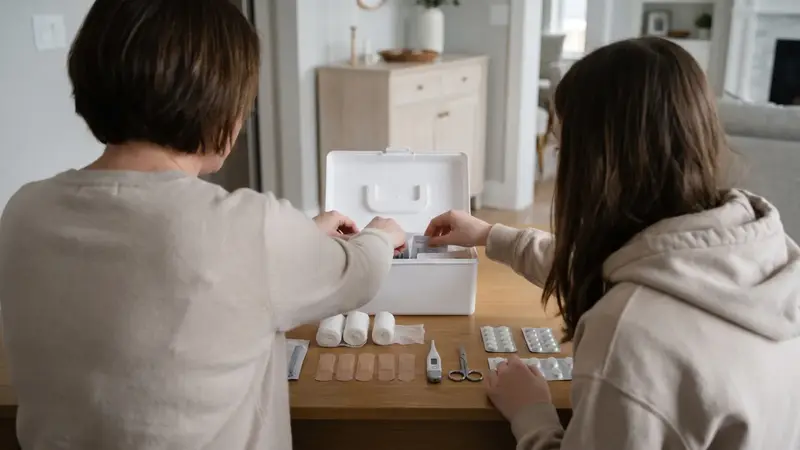 Home first aid kit checklist: the Red Cross list, and when to buy a ready-made kitThe American Red Cross list for a family of four, item by item, plus where to keep kits, when to check expirat…
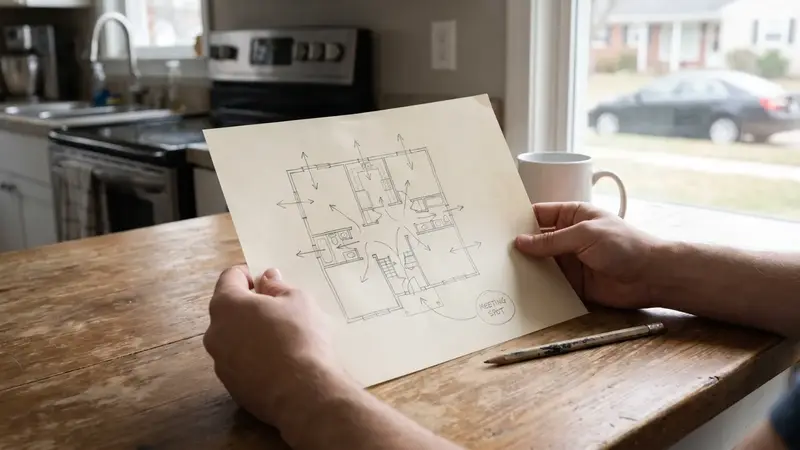 Home fire escape plan: how to make one, practice it and get out safelyHow to make a home fire escape plan: two ways out of every room, an outside meeting place, escape ladders, dri…
 Smoke alarm placement: where to put them, how to test them and when to replace themWhere to put smoke alarms: every level, inside each bedroom and outside sleeping areas, plus testing, batterie…
 Space heater safety: clearance, plugs and what to do in a winter power outageHow to use a space heater safely: keep it 3 feet from anything that can burn, plug it into the wall, never run…