Will my solar panels work in a power outage? Usually not, and here is what changes that
Most rooftop solar shuts down when the grid does. Why, what a battery or backup inverter changes, what it costs per California's utility regulator, and the cheaper options.
By Tom Calder · Updated November 2, 2026 · Sourced to the California Public Utilities Commission, the U.S. Department of Energy and Ready.gov
- The California Public Utilities Commission's outage FAQ says it plainly: "During a power shut-off, most solar systems will automatically power down." Most home systems "are designed to operate only while the grid is operating normally."
- "Some systems have the ability to 'island' during outage conditions and provide power to some or all of the appliances in your home." (CPUC) That needs either a battery or an inverter built for backup.
- "Many solar systems can be retrofitted to provide backup power either by replacing the inverter with a specifically designed model or by adding backup battery storage." The CPUC puts replacement inverters at "around $1,000 to $2,500" and whole battery systems at "$7,000 to over $20,000" installed.
- A backup-capable inverter without a battery only works while the sun is on the panels: "No power is available at night, for instance, and you might lose power when a cloud shades your solar panels." (CPUC)
- For most households the cheaper answer to a short outage is not a home battery at all: a portable power station for the essentials, or a generator used safely outdoors.
The short answer: a standard system shuts off
If your panels were installed with a standard grid-tied inverter and no battery, they will stop producing the moment the utility power drops, even in full sun. The California Public Utilities Commission (CPUC), which wrote a public FAQ for the state's wildfire power shutoffs, says: "During a power shut-off, most solar systems will automatically power down. However, while many solar systems are designed to operate only while the grid is operating normally, some systems have the ability to 'island' during outage conditions and provide power to some or all of the appliances in your home. Please check with your solar provider and/or your licensed contractor to determine the capabilities of your specific system."
The reason is safety and design. A grid-tied inverter synchronizes to the utility's voltage and frequency and pushes power out onto the lines. When the grid goes dark, the inverter shuts down so that it is not feeding electricity into lines that utility crews expect to be dead, and because without the grid there is nothing to synchronize to. That is why a house with a roof full of panels can be as dark as its neighbors in an outage.
What "islanding" means, and what it takes
An islanded system disconnects from the grid and runs the house, or part of it, as its own small island. The CPUC: "Many solar systems can be retrofitted to provide backup power either by replacing the inverter with a specifically designed model or by adding backup battery storage." The retrofit always includes a transfer switch or a backup panel so the house is physically separated from the grid while it runs on its own power.
The two routes have very different limits. A backup-capable inverter alone gives you daytime power only. The CPUC: "Some inverters are designed to provide limited backup power during grid outages, even if no battery is installed. ... First, they only provide power while your solar system is generating power. No power is available at night, for instance, and you might lose power when a cloud shades your solar panels." It usually comes from a single dedicated outlet, not the whole house. A battery removes those limits for as long as its charge lasts, and the panels recharge it by day: "If you have a solar plus battery storage system and the sun is shining, the amount of time you have backup power is extended."
What it costs
The CPUC's figures: "Replacement inverters typically cost around $1,000 to $2,500 depending on the size of your solar system," and for a battery, "with installation, you can probably expect to spend from $7,000 to over $20,000 for the whole battery system, depending on the size and type of batteries." "Most battery storage systems are capable of providing backup power," but ask the installer to confirm the backup function and the transfer switch are included, because some batteries are sold for shifting daytime solar to the evening, not for outages.
The Department of Energy's homeowner guide describes that daily use case: storage "allows you to save that energy and use it later in the day, like when you turn the heat on at night or run the dishwasher after dinner or even when the power goes out." The economics of a battery are mostly about your utility's rates and net metering, which the DOE says depend "on policies and practices in your state and electric utility." If the outage protection is the only reason you want it, read the next section first.
Cheaper ways to cover an outage
For an outage of a day or two, what most households need to keep running is a short list: the refrigerator, phones, a few lights, the internet router, and sometimes a medical device or a furnace blower. A portable power station covers that list for far less than a home battery, and a folding solar panel recharges it by day; the solar generator comparison lists bundles. Our generator sizing tool adds up the watts, and the will a power station run my refrigerator guide works the main example.
A gasoline, propane or dual-fuel generator is the other route, with one rule that is not negotiable. Ready.gov: "Generators, camp stoves or charcoal grills should always be used outdoors and at least 20 feet away from windows." Our generator safety guide and the power station vs generator comparison cover the choice. A transfer switch installed by an electrician is how either source feeds the house's own circuits safely.
If you are planning for frequent or long outages, or someone at home depends on powered medical equipment, a home backup battery tied to the solar is the quiet, automatic answer, and the one the CPUC's FAQ was written for. Ready.gov's advice applies either way: "Plan for batteries and other alternative power sources to meet your needs when the power goes out."
Questions to ask your installer
Whether you have panels already or are getting quotes, the CPUC's advice is to "check with your solar provider and/or your licensed contractor to determine the capabilities of your specific system." Ask: does this system provide any power when the grid is down? Is that daytime-only from one outlet, or whole-house with a battery? Which circuits are on the backup panel, and is the refrigerator and furnace among them? How many hours does the battery run those circuits at night, and will the panels recharge it in winter sun?
Ask too whether the utility's interconnection rules in your state have anything to say about backup operation, and get the transfer switch and backup panel on the quote in writing. Then test it: a backup system that has never been tried in a planned shutoff is a guess. Our power outage checklist covers the rest of the plan, and the 90-day blackout plan covers the long tail.
Panels alone do nothing for you in an outage, and a home battery is a large purchase whose economics depend on your utility's rates far more than on storms. If what you want is the refrigerator, the phones and a few lights for a day or two, a portable power station does that for a fraction of the cost and needs no installer. Buy the home battery if outages are frequent or long, if a medical device depends on it, or if your rates already make it pay. Otherwise, keep the money.
Common questions
Do solar panels work when the power goes out?
Usually not. The California Public Utilities Commission says most solar systems automatically power down during a shutoff because they are designed to operate only while the grid is operating normally. Only systems that can island, with a battery or a backup-capable inverter, keep running.
Why does my solar shut off in an outage?
A standard grid-tied inverter synchronizes to the grid and sends power onto the utility's lines. When the grid goes down, it shuts off so it does not energize lines crews expect to be dead, and because there is no grid to synchronize to.
Can I add backup power to an existing solar system?
The CPUC says many systems can be retrofitted by replacing the inverter with a backup-capable model, at around $1,000 to $2,500, or by adding battery storage, at $7,000 to over $20,000 installed.
Does a backup inverter work at night?
No. The CPUC says inverters that provide limited backup without a battery only work while the system is generating, so there is no power at night and you may lose power when a cloud shades the panels.
Is a home battery worth it just for outages?
For short, occasional outages a portable power station covers the essentials for far less. A home battery makes sense for frequent or long outages, a medical device that depends on power, or when your utility's rates already make it pay.
Get one calm email when it matters
Seasonal checklists and gear price drops. No spam, unsubscribe any time.
Keep reading
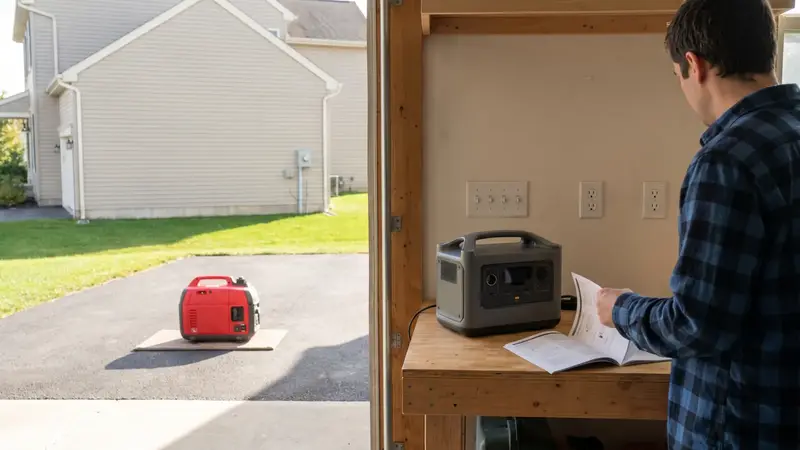 Power station vs generator: which one suits your home in an outage?A portable power station is a battery; a generator burns fuel. What that means for carbon monoxide, fuel stora…
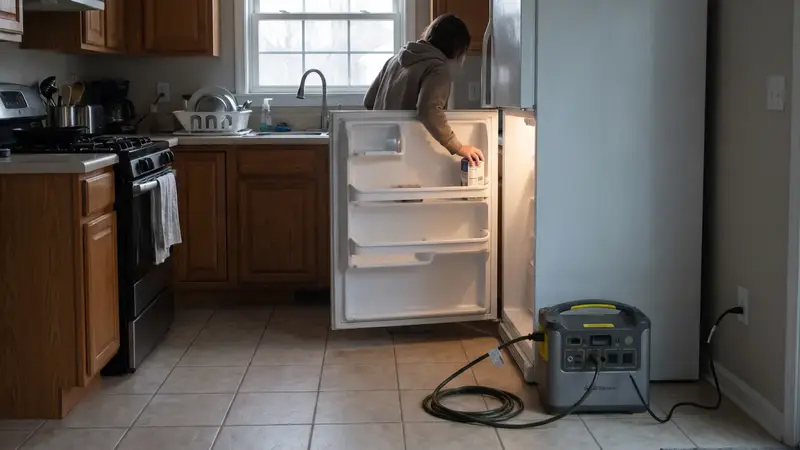 Will a portable power station run my refrigerator? Watts, surge and hours, explainedWill a portable power station run your refrigerator? How fridge wattage works at 120V, why starting surge matt…
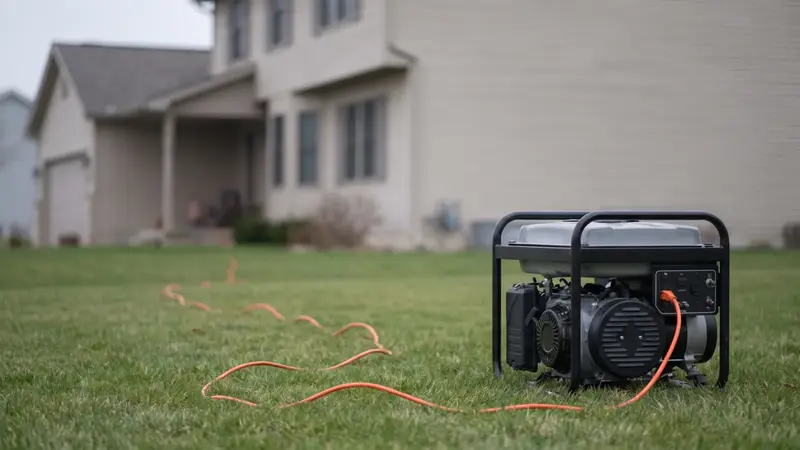 Portable generator safety: where to run it, carbon monoxide and cordsHow to use a portable generator safely in an outage: 20 feet from windows, never in a garage, CO alarms, outdo…
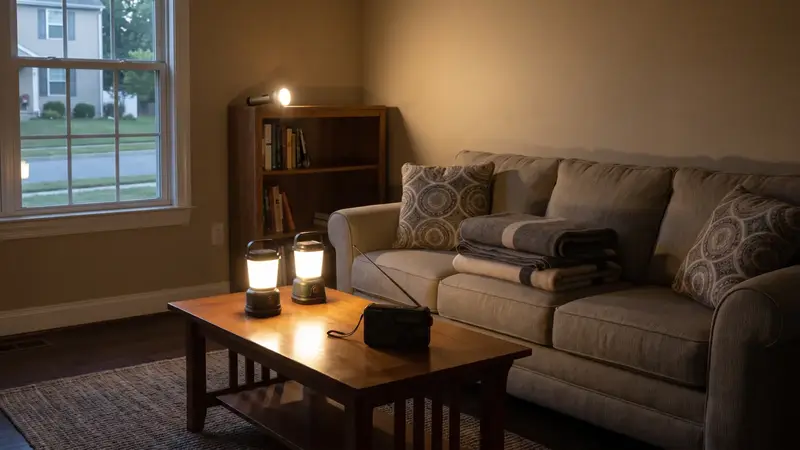 Power outage checklist: what to do before, during and afterA calm power outage checklist from Ready.gov and CDC: what to prepare, how to protect food, medicines and medi…