Bug out bag list: what to pack (and what FEMA actually recommends)
A bug out bag is a go-bag by another name. What to pack per person, mapped item by item to the Ready.gov (FEMA) and Red Cross lists, plus kids, pets, car and weight.
By Tom Calder · Updated November 4, 2026 · Sourced to Ready.gov (FEMA), the American Red Cross, CDC, FDA and USGS
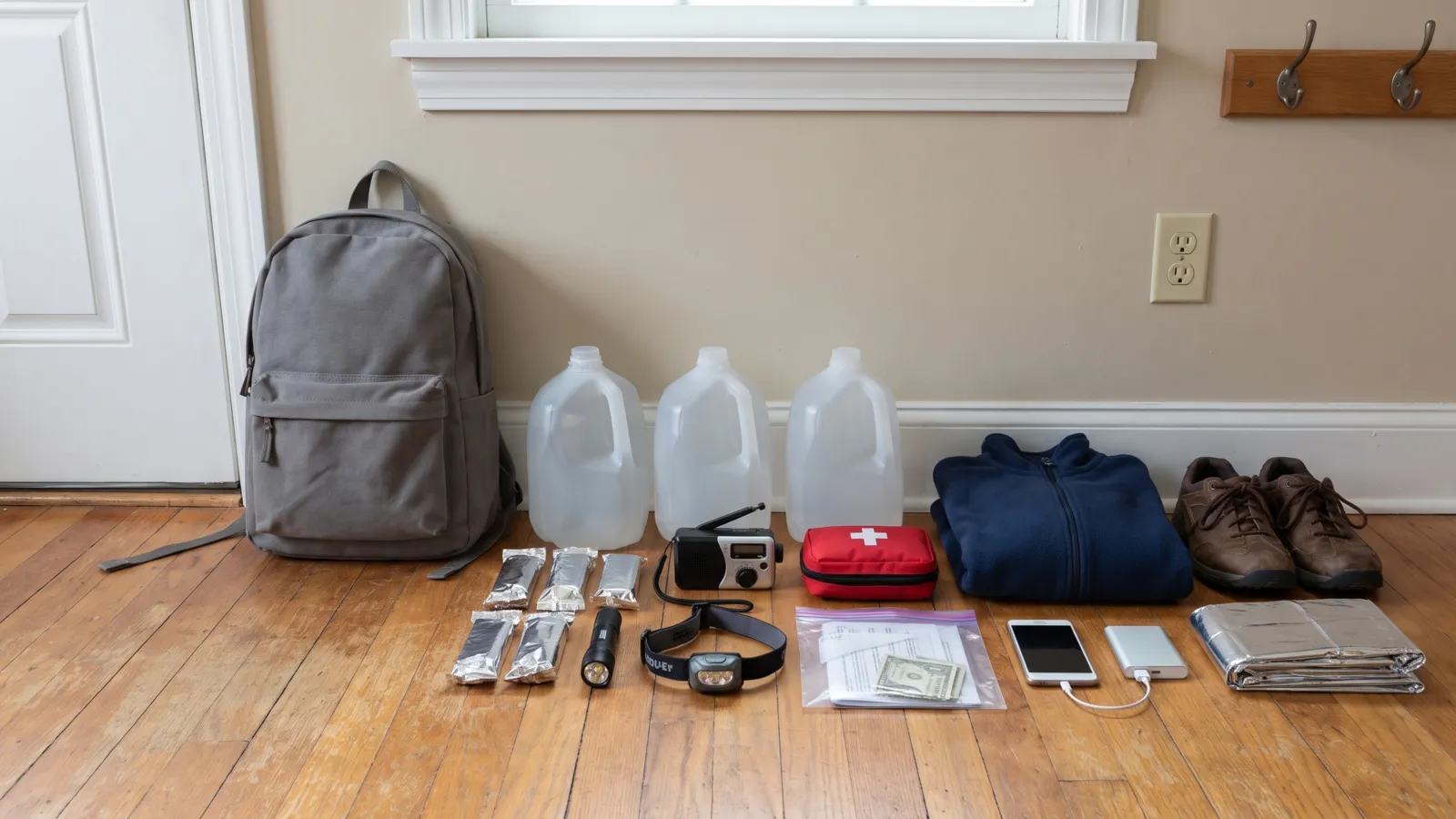
- A bug out bag, a go-bag and a 72-hour kit are the same idea: supplies you can carry if you have to leave home. Ready.gov calls it a go-bag, and the Red Cross's winter storm advice calls it a Go-Kit.
- The Red Cross says to plan a 3-day supply of water and food for evacuation, with water at one gallon per person, per day, and 7 days of medications.
- The core list is plain: water, food, a flashlight, a radio, a first aid kit, medicines, copies of documents, cash, a phone charger and backup battery, warm layers and sanitation items.
- Pack per person. Three days of water for one person is 3 gallons, about 25 pounds (our arithmetic), so plan what you carry and what rides in the car.
- The ready-made kits we compare that list their water hold far less than a gallon a person a day, and none come with your own medicines, documents or cash. Use one as a base, not a finished bag.
What is a bug out bag?
A bug out bag is a bag of supplies you can grab and carry if you have to leave home quickly. The phrase comes from prepping and outdoor circles (our note). The official lists use plainer words: Ready.gov says to prepare a "go-bag" you can carry when you evacuate on foot or by public transportation, and the Red Cross's winter storm advice calls it a Go-Kit: at least three days of supplies you can carry with you.
A 72-hour kit is the same thing measured in days. The Red Cross supply list shows a 3-day supply of water and food for evacuation and a 2-week supply for home, and the CDC says to store at least 1 gallon of water per person, per day for 3 days. So whichever name you search for, the contents are the same, and so is the official list behind them.
What a bug out bag is not: a stay-at-home kit. Ready.gov's basic list includes things like plastic sheeting, scissors and duct tape (to shelter in place) and a wrench or pliers (to turn off utilities), which belong in the home kit. Our emergency kit checklist covers that bigger list, and our go-bag checklist is a shorter version of this page.
The bug out bag list, item by item
This table maps each item to the Ready.gov (FEMA) and Red Cross lists. Where a list gives an amount, it is shown. The last column says whether to pack it for each person or once for the household. That column is our suggestion, not an agency's.
| Item | Ready.gov (FEMA) | American Red Cross | Pack |
|---|---|---|---|
| Water | 1 gallon per person per day for several days | 1 gallon per person, per day; 3-day supply for evacuation | Per person |
| Food | At least a several-day supply of non-perishable food | Non-perishable, easy-to-prepare; 3-day supply for evacuation | Per person |
| Light | Flashlight, extra batteries | Flashlight, extra batteries | Per person |
| Radio | Battery-powered or hand crank radio and a NOAA Weather Radio with tone alert | Battery-powered or hand-crank radio (NOAA Weather Radio, if possible) | Household |
| First aid | First aid kit | First aid kit | Household |
| Medicines | Prescription and non-prescription medications, glasses | Medications (7-day supply) and medical items | Per person |
| Documents | Copies of insurance policies, ID, bank records, saved electronically or in a waterproof, portable container | Copies of personal documents, family and emergency contact information | Household, with each person's ID |
| Cash | Cash or traveler's checks | Extra cash | Household |
| Phone power | Cell phone with chargers and a backup battery | Cell phone with chargers | Per phone |
| Warmth and clothes | Sleeping bag or warm blanket for each person; change of clothing and sturdy shoes | Emergency blanket; extra clothing, hat and sturdy shoes | Per person |
| Sanitation | Moist towelettes, garbage bags and plastic ties; soap, hand sanitizer | Sanitation and personal hygiene items | Per person |
| Signal and air | Whistle, dust mask | Whistle, N95 or surgical masks | Per person |
| Tools and maps | Manual can opener, local maps | Multi-purpose tool, map(s) of the area, extra car and house keys | Household |
Water and food: the heavy part
Water is the biggest item and the heaviest. The Red Cross lists one gallon per person, per day, with a 3-day supply for evacuation, and the CDC uses the same figure. The CDC says to consider storing more for pregnant women, people who are sick, pets, or if you live in a hot climate, and that unopened, commercially bottled water is the safest and most reliable source of water in an emergency.
USGS puts water at 8.33 pounds a gallon, so 3 gallons for one person weighs about 25 pounds before anything else goes in the bag (our arithmetic). Many people can't carry that comfortably on foot. A practical split, ours rather than an agency's: carry what you can in the bag, keep the rest in sealed bottles by the door or in the car, and add a way to treat water. The CDC says boiling is the best way to kill germs in water, and that portable water filters do not remove all types of germs; it says to add a chemical disinfectant after filtering. Our water filter comparison covers the options.
For food, the Red Cross says non-perishable, easy-to-prepare items, and Ready.gov adds a manual can opener. FDA says 2,000 calories a day is used as a general guide for nutrition advice, though your needs may be higher or lower. At that rate three days is 6,000 calories per person (our arithmetic). Ready-to-eat foods you already like, such as protein bars, nut butter and pouched meals, are lighter than cans. Our emergency food bar and MRE comparison shows what the ration packs hold.
Light, radio and phone power
Ready.gov's power outage page says to have flashlights for every household member, and both lists add extra batteries. A headlamp is a flashlight you don't have to hold, which helps when you are carrying a child or a bag (our note). See our headlamp comparison.
For news when the cell network is busy or down, Ready.gov lists a battery-powered or hand crank radio and a NOAA Weather Radio with tone alert, and the Red Cross says NOAA Weather Radio, if possible. Ready.gov's evacuation page says to listen to a battery-powered radio and follow local evacuation instructions. Our hand-crank radio comparison covers models that also charge a phone.
Ready.gov lists a cell phone with chargers and a backup battery, and its power outage page names a portable charger or power bank. The Red Cross's winter storm advice says to put critical backup batteries and chargers for your devices, such as a cell phone, CPAP or wheelchair, in your Go-Kit. Our power bank comparison covers the charging side.
First aid, medicines, documents and cash
The Red Cross lists a first aid kit and a 7-day supply of medications and medical items, and adds medical supplies such as hearing aids with extra batteries, glasses, contact lenses and syringes. Ready.gov adds non-prescription medications such as pain relievers, anti-diarrhea medication, antacids or laxatives. The Red Cross's winter storm page also suggests keeping a list of your medications and dosages on a small card to carry with you. Our first aid kit comparison compares ready-made kits.
For documents, Ready.gov says copies of insurance policies, identification and bank account records, saved electronically or in a waterproof, portable container. The Red Cross list adds a medication list and pertinent medical information, proof of address, a deed or lease to your home, passports and birth certificates. Ready.gov's financial page adds a Social Security card, which it says you need to apply for FEMA disaster assistance.
On cash, Ready.gov says it is important to have small bills on hand because ATMs and credit cards may not work during a disaster. Neither agency gives a dollar amount, so pick one that would cover a few days of gas, food and a motel for your household. See our guide to cash for emergencies.
Layers, shelter and sanitation
Ready.gov lists a sleeping bag or warm blanket for each person, and a complete change of clothing appropriate for your climate and sturdy shoes. The Red Cross adds an emergency blanket, and, depending on the disasters common where you live, rain gear, work gloves, extra clothing, a hat and sturdy shoes. When you leave, Ready.gov says to wear sturdy shoes and clothing that provides some protection, such as long pants, long-sleeved shirts and a hat. A foil emergency blanket weighs little and folds small; our emergency blanket comparison covers it and warmer options.
For sanitation, Ready.gov lists moist towelettes, garbage bags and plastic ties, plus soap, hand sanitizer and disinfecting wipes, and feminine supplies and personal hygiene items. Ready.gov also lists a whistle to signal for help and a dust mask to help filter contaminated air; the Red Cross says N95 or surgical masks.
Family, kids, older adults and pets
Pack per person, and give each person what they can carry. For babies, Ready.gov lists infant formula, bottles, diapers, wipes and diaper rash cream, and the Red Cross adds baby food. Both lists include something for children to do: Ready.gov says books, games, puzzles or other activities. A small backpack with a child's own snack, water bottle, flashlight and comfort item gives them a job and lightens yours (our suggestion).
For older adults, Ready.gov says to include items that meet your individual needs, such as medicines, medical supplies, batteries and chargers, to plan how you will have your assistive devices with you during an evacuation, and to make copies of Medicaid, Medicare and other insurance cards.
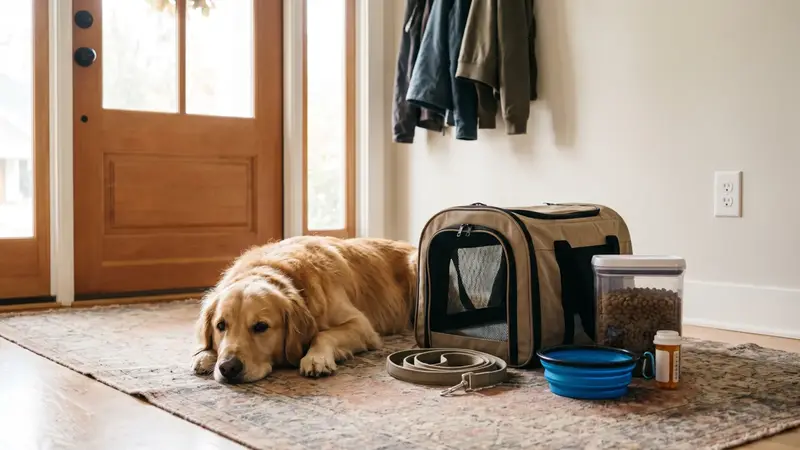
For pets, Ready.gov suggests two kits: one larger kit if you are sheltering in place and one lightweight version for if you need to evacuate. Its list includes several days of food and water, a water bowl, your pet's medicine, a collar with ID tag and a harness or leash, a carrier, sanitation supplies, and a picture of you and your pet together. Ready.gov's evacuation page says most public shelters allow only service animals, so identify a place to stay that will accept pets. Our pet emergency kit guide has the full list.
The car version
Ready.gov says to prepare a go-bag you can carry, and supplies for traveling longer distances if you have a car. If you have a car, it says to keep a half tank of gas in it at all times in case of an unexpected need to evacuate, because gas stations may be closed during emergencies and unable to pump gas during power outages, and to keep a full tank if an evacuation seems likely.
Ready.gov's car kit adds jumper cables, flares or a reflective triangle, an ice scraper, a car cell phone charger, a blanket, a map, and cat litter or sand for better tire traction. The car is also where the extra water can ride. Our car emergency kit comparison and winter car emergency kit guide cover the rest.
Ready.gov also says to always follow the instructions of local officials and remember that your evacuation route may be on foot depending on the type of disaster. That is the reason the bag itself should be one you can carry.
Weight and the backpack
Ready.gov says to store items in airtight plastic bags and put your entire kit in one or two easy-to-carry containers such as plastic bins or a duffel bag. For a bag you may carry on foot, a backpack with two padded shoulder straps and a hip belt spreads the weight better than a duffel (our advice, not an agency's). It doesn't need to be tactical or camouflage; a plain hiking or school backpack works.
None of these official lists sets a weight limit. The test we suggest: pack it, put it on and walk around the block. If that is hard, move some water and spares to the car kit or a second bag by the door, and keep the essentials that only you can replace, such as medicines, glasses, documents and phone power, in the bag on your back. Our go-bag comparison lists the weight of the ready-made bags where the listing gives it.
What to check in a pre-made survival kit
Ready-made kits can be a quick start, but read the contents list against the Ready.gov and Red Cross lists before you buy. In the kits we compare that list their rations, the water is a few small sealed pouches rather than a gallon per person per day, and the food is one or two ration bars or packs. Several listings don't say how much they hold. A 2,400-calorie bar is a little over one day at FDA's 2,000-calorie guide (our arithmetic).
A large piece count tells you how many items are in the box, not whether they are the ones on the lists. Neither Ready.gov's basic list nor the Red Cross's survival kit list includes paracord, fishing kits, fire-starting rods (both list matches), compasses or knives beyond a multi-purpose tool. None of the kits come with your prescriptions, glasses, copies of your documents, cash or a phone charger. Those are the items to add first.
Keep it ready
Ready.gov says to keep your kit in a designated place and have it ready in case you have to leave your home quickly, and to make sure all family members know where the kit is kept. Its evacuation page adds: make sure everyone knows who is responsible for it in an emergency.
To maintain it, Ready.gov says to keep canned food in a cool, dry place, store boxed food in tightly closed plastic or metal containers, replace expired items as needed, and re-think your needs every year. The CDC says to replace water you have filled yourself every 6 months, and to observe the expiration date for store-bought water. A household plan matters as much as the bag: Ready.gov says to have a meeting place and a plan to stay in touch if you become separated. Our family emergency plan guide walks through it.
Bug out bag checklist at a glance
Every item below comes from Ready.gov, the Red Cross or the CDC; the headlamp and the per-person or household split are our suggestions. Pack it for each person unless it says household.
- Water: 1 gallon per person per day for 3 days, carried or in the car, plus a way to treat more
- Food: 3 days of non-perishable, easy-to-prepare food, and a manual can opener if you pack cans
- Flashlight or headlamp for each person, and extra batteries
- Battery-powered or hand crank radio, ideally a NOAA Weather Radio (household)
- First aid kit (household), 7 days of medications, a medication list, glasses
- Copies of ID, insurance and medical information in a waterproof container; contact list (household)
- Cash in small bills (household)
- Cell phone, charger and a backup battery
- Warm blanket or emergency blanket, a change of clothes, a hat and sturdy shoes
- Moist towelettes, garbage bags, soap or hand sanitizer, hygiene items
- Whistle and a dust mask or N95
- Local map, multi-purpose tool, spare car and house keys (household)
- Baby, child, older adult and pet supplies as needed
You do not need a tactical bag or a 200-piece kit. The official list is short and mostly things you already own. A ready-made kit can save time, but it can't know your prescriptions, documents or contacts, and the ones that list their water hold far less than the Red Cross's gallon a person a day. Start with your own items, add what is missing, and check it once a year, and replace water you bottled yourself every 6 months.
Common questions
What is a bug out bag?
A bag of supplies you can carry if you have to leave home quickly. Ready.gov calls it a go-bag and the Red Cross's winter storm advice a Go-Kit; a 72-hour kit is the same idea measured in days.
What should be in a bug out bag?
Per Ready.gov and the Red Cross: water, non-perishable food, a flashlight, a battery-powered or hand crank radio, extra batteries, a first aid kit, medications (the Red Cross says a 7-day supply), copies of documents, cash, a phone with chargers and a backup battery, a blanket, a change of clothes and sturdy shoes, sanitation items, a whistle, a mask and a local map.
How much water should a bug out bag have?
The Red Cross says one gallon per person, per day, with a 3-day supply for evacuation. That is 3 gallons, about 25 pounds, for one person (our arithmetic on USGS's 8.33 pounds a gallon), so many people carry part and keep the rest in the car.
Is a bug out bag the same as a 72-hour kit?
Yes, in practice. Both mean about three days of supplies you can take with you. The Red Cross's winter storm advice calls it a Go-Kit with at least three days of supplies you can carry, and its Stay-at-Home Kit holds at least two weeks.
Are pre-made survival kits worth buying?
They can be a quick start. Compare the contents with the Ready.gov and Red Cross lists, and plan to add water, food, your medicines, documents, cash and a phone battery.
How heavy should a bug out bag be?
None of the official lists sets a limit. Pack it and walk around the block with it on. If that is hard, move water and spares to the car or a second bag and keep medicines, documents and phone power on your back.
Sources (13)
- Ready.gov: Build A Kit
- Ready.gov: Evacuation
- Ready.gov: Car Safety
- Ready.gov: Prepare Your Pets for Disasters
- Ready.gov: Older Adults
- Ready.gov: Financial Preparedness
- Ready.gov: Power Outages
- American Red Cross: Survival Kit Supplies
- American Red Cross: Winter Storm Preparedness
- CDC: How to Create an Emergency Water Supply
- CDC: Make Water Safe During an Emergency
- FDA: Calories on the Nutrition Facts Label
- USGS: Facts About Water
Get one calm email when it matters
Seasonal checklists and gear price drops. No spam, unsubscribe any time.
Keep reading
 Go-bag checklist: what to pack in case you have to evacuateWhat to pack in a go-bag: documents, medications, cash, chargers, per-person items, kids and pets, and how it …
 Emergency kit checklist: what to include, how much to keep and where to store itA plain-English emergency kit checklist built on Ready.gov's basic kit and extra items, with how many days of …
 A cheap 72-hour emergency kit from Walmart or Target: what to buy on a budgetHow to build a 72-hour emergency kit cheaply from Walmart or Target: the Ready.gov list, what to buy first, wh…
 Pet emergency kit: what to pack, where to go and what to do after a disasterHow to build a pet emergency kit and plan: what to pack, ID and microchips, what shelters and hotels allow, pe…