Why is my smoke detector chirping? How to stop it, and how to test it
Why a smoke detector chirps: low battery, end of life or a hardwired unit after an outage. How to stop it safely, find the right alarm, and test it monthly.
By Tom Calder · Updated November 4, 2026 · Sourced to the NFPA, the U.S. Fire Administration, the CPSC, the Red Cross and Kidde and First Alert's own instructions
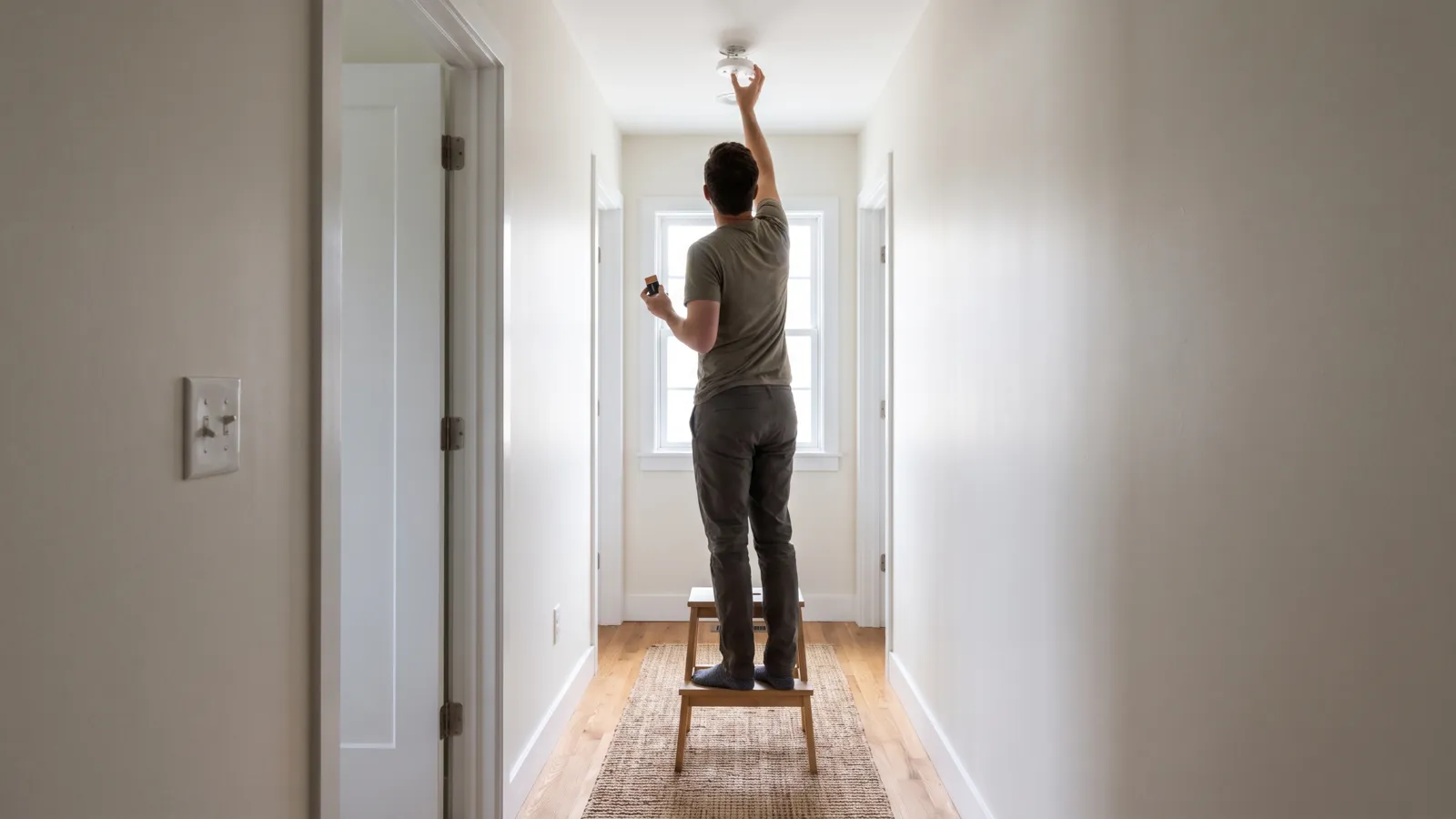
- A single chirp every 30 or 60 seconds means the battery is low. NFPA says to change it. If the chirping continues after a new battery, the alarm is at the end of its life and must be replaced.
- A loud, repeating alarm is not a chirp. Treat it as a fire: get out and call 9-1-1 from outside.
- Hardwired alarms can chirp when the power comes back after an outage. If a new battery doesn't stop it, Kidde says the alarm may be holding on to an error such as a weak battery, which a reset can clear.
- Replace every smoke alarm 10 years from the manufacture date printed on it, or replace it now if it has no date.
- Test every alarm at least once a month with the test button, and never take the battery out or disconnect the power to stop a nuisance alarm.
Chirp, alarm or end of life: what the sound means
A chirp and an alarm are different sounds. First Alert says three beeps and a pause is an emergency warning: smoke has been detected, so get everyone out and call 9-1-1 once you are safely outside. Kidde says that when an alarm detects smoke it gives a loud, continuous sound until the air clears. First Alert says never to ignore any alarm.
A chirp is the alarm asking for attention. NFPA says a single chirp every 30 or 60 seconds means the battery is low and must be changed, and that chirping that continues after the battery has been replaced means the alarm is at the end of its life and must be replaced. Kidde says a low-battery chirp comes every 30 to 60 seconds for at least seven days.
Some alarms use different chirp counts for different problems, so check the signal chart in your manual or on the alarm. On First Alert's SM300-AC hardwired alarm, for example, one chirp every minute means replace the battery, and 3 or 5 chirps every minute or so means replace the alarm. Kidde adds that an intermittent chirp with no regular pattern usually means the battery is starting to lose charge.
Why it always seems to chirp in the middle of the night
Kidde says the 3 a.m. chirp comes down to the battery's charge and the air temperature. As a battery nears the end of its life, a drop in room temperature raises its internal resistance, which can push the alarm into its low-battery chirp. Most homes are coolest between 2 a.m. and 6 a.m., so the alarm may chirp in the night and then stop when the house warms up a few degrees.
A chirp that stops by morning is still a warning. Kidde's advice is to replace the batteries in all your alarms and check how old they are: it recommends replacing all smoke alarms, battery and hardwired, every 10 years, and replacing them if you don't know their age.
How to stop a low-battery chirp
Replace the battery. The CPSC says that if your smoke alarm begins to chirp, signaling low battery power, you should replace the batteries immediately so your family is not left unprotected. Kidde says a loose or badly fitted battery is a common cause of random chirping, so check these points as you do it.
- Use the battery type the alarm calls for (it is on the alarm and in the manual).
- Snap the battery in fully so it cannot be shaken loose.
- If the contacts aren't making good contact, disconnect and reconnect the battery once or twice.
- On alarms with a front-load battery, close the battery door completely.
- Press the test button afterward to check the alarm sounds.
Still chirping after a new battery?
Two things can cause it. Kidde says the alarm's processor can hold on to an error, such as a weak battery, even after the battery is replaced, and a reset clears it (the steps are below). If a reset doesn't stop it, the alarm may simply be worn out: NFPA says chirping that continues after a new battery means the alarm is at the end of its life.
Many alarms let you quiet a chirp for a while. First Alert's SM300-AC can silence its low-battery chirp for up to 8 hours, and Kidde says newer Kidde units have a low-battery hush of up to 12 hours. These buy time to get a battery or a new alarm; they are not a fix, and the chirp comes back.
Kidde also points to the room itself. Humidity, steam and condensation can trigger random chirping, as can strong airflow from a heating or cooling register, ceiling fan or open window within three feet of the alarm. It says its smoke alarms are meant for rooms between 40°F and 95°F.
Hardwired smoke detector chirping after a power outage
Hardwired alarms run on your home's electricity and usually have a backup battery, which USFA says needs replacing once a year. The CPSC says alarms wired to the house with battery back-up still protect you during power outages, which is why the backup battery matters: during an outage it is doing all the work.
Kidde says power surges or interruptions can make a unit chirp when the power is restored. If the chirping doesn't stop after the power is back, replace the backup battery if it is replaceable, then reset the alarm using your manual's steps. Kidde adds two wiring checks: if chirping happens at the same time each day it could be a power surge, and if it starts when something else in the house is switched on, such as an exhaust fan or heater, move that device to an outlet on a different circuit or have an electrician investigate. A loose white neutral wire can also cause an echoing chirp from one unit to the next, which is a job for an electrician.
Some alarms show when they are running on the battery alone. On First Alert's SM110LED-AC, for example, the green light flashes once a minute when the unit is on battery backup.
How to reset a hardwired smoke detector
Reset steps differ by brand and model, so use the steps in your own manual. Turn off the power before you take a hardwired alarm down: First Alert's SM300-AC manual warns of an electrical shock hazard and says to turn off the power to the area where the alarm is installed before removing it from its mounting bracket.
Check your own manual first, because even Kidde's steps vary: another Kidde page says to hold the test button for five seconds, and sealed 10-year models have their own instructions. For a battery-only alarm with a removable battery, Kidde says to remove the battery, press and hold the test button, then reinstall the battery: it will chirp when the battery is first connected but should not chirp afterward. If the alarm keeps chirping after a reset, Kidde says it may be time to replace it, and to check the date code on the label on the back. Here are Kidde's steps for a hardwired alarm with a battery backup.
- Turn off the power to the smoke alarm at the circuit breaker.
- Remove the smoke alarm from its mounting bracket and disconnect the power.
- Remove the battery, then press and hold the test button for at least 15 seconds. The unit may chirp or alarm for a few seconds before going silent.
- Reconnect the power and reinstall the battery. Kidde says the unit will chirp once when the power is restored and should not chirp afterward.
Finding the right alarm on an interconnected system
When interconnected alarms go off together, only one of them sensed the smoke. Kidde says to find that initiating unit by looking for the one flashing red or green at least once every second while in alarm mode; hushing that unit silences all the others. If the alarm stopped before you could find it, Kidde says the initiating unit then flashes for 1.5 seconds every 10 seconds. First Alert's SM300-AC and SM110LED-AC have a latching alarm indicator that shows which alarms in the series were exposed to alarm levels of smoke; the manuals say this latch does not work when the alarm is running on battery power alone.
Some alarms help you find the one with a low battery. On First Alert's SM300-AC, for example, a low-battery latch flashes the green light 2 seconds on, 2 seconds off, which First Alert says is designed to help you identify which alarm needs its battery replaced. Your manual's signal chart lists what each light and chirp pattern means. On a hardwired system, Kidde says a loose white neutral wire can make a chirp echo from one unit to the next.
When you test interconnected alarms, First Alert says to test each unit individually and make sure all units sound when each one is tested.
How often to test smoke alarms
NFPA says to test smoke alarms at least once a month using the test button, and USFA, the CPSC and the Red Cross say the same. The Red Cross says the test button checks all the electronic functions and is safer than testing with matches, lighters or cigarettes. Some manufacturers ask for more: Kidde and First Alert both say to test weekly, so follow your manual if it asks for more often than monthly.
To test, press and hold the test button until the alarm sounds. First Alert says to step away when the horn starts, since the horn can harm your hearing at close range. NFPA says to replace any smoke alarm that does not alert when tested according to the manufacturer's instructions.
For batteries, USFA says to replace 9-volt batteries and hardwired alarms' backup batteries at least once every year, and the CPSC suggests doing it when you reset the clocks in the fall or spring. First Alert recommends every 6 months. Alarms with a sealed 10-year battery need no battery changes but still need testing.
Replacing smoke alarms every 10 years
NFPA says to replace all smoke alarms when they are 10 years old from the manufacture date. The date is on the outside or back of the alarm; if there is no date, replace it. Sensors wear out over time and may take longer to detect a fire, which is why NFPA says to replace alarms after 10 years, or sooner if they give an end-of-life warning.
Sealed 10-year alarms work the same way. NFPA says alarms with non-replaceable long-life batteries are designed to remain effective for up to 10 years from the date of manufacture, and that when the alarm gives an end-of-life warning you should replace the entire alarm right away. The CPSC says that after 10 years, the entire unit is disposable. First Alert's manuals say you must replace the alarm immediately once the end-of-life chirp starts; the chirp can be silenced for up to 8 hours, but it comes back.
Combination smoke and carbon monoxide alarms can wear out sooner. NFPA says to replace them according to the manufacturer's recommendations, and Kidde says its carbon monoxide and combination alarms should be replaced every 7 years. When you replace an alarm, our smoke alarm comparison lists dual-sensor, sealed 10-year and interconnected models.
Hardwired, battery or interconnected: the short version
Battery alarms run on a disposable 9-volt battery or a sealed 10-year lithium-ion battery, USFA says, and hardwired alarms run on your home's electricity with a backup battery. The CPSC says battery-only alarms are the simplest to install in older homes, and new homes typically have hardwired alarms; after 1989, new homes included hardwired, interconnected smoke alarms.
Interconnected alarms all sound when one detects smoke. NFPA recommends interconnecting all smoke alarms for the best protection, and says hardwired alarms can be interconnected by a licensed electrician, or you can install battery-powered wireless interconnected alarms instead. The CPSC says interconnected alarms are typically connected with a wire, but newer wireless technology connects them without wires. First Alert says interconnected units may give earlier warning than stand-alone units, since all of them sound when one detects smoke.
USFA says only qualified electricians should install hardwired smoke alarms, and that your city, county or state may require a specific type, so check with your local fire marshal. Where each alarm goes is in our smoke alarm placement guide.
What never to do
USFA says disabling a smoke alarm or removing the battery can be a deadly mistake. These are the official and manufacturer warnings in one place.
- Never take the battery out to stop a nuisance alarm (USFA, the Red Cross). If it chirps for a low battery, replace the battery right away (CPSC).
- Never disconnect the power from a hardwired alarm to stop an unwanted alarm: First Alert says doing so disables the unit and removes your protection.
- Never test with an open flame (First Alert). Use the test button, which the Red Cross says is safer.
- Never use the hush button if a fire is present (Kidde).
- Never paint over an alarm, and never clean it with water, cleaners or solvents (First Alert).
- Leave installing or rewiring hardwired alarms to a qualified electrician: USFA says only qualified electricians should install them.
- Never ignore an alarm. First Alert says ignoring one may result in injury or death.
If the alarm sounds for real
When a smoke alarm sounds, USFA says you may have less than 2 minutes to get everyone outside, so make and practice a home fire escape plan. First Alert's manual also says to keep at least one working fire extinguisher on every level and another in the kitchen; our fire extinguisher comparison covers the home sizes.
Three loud beeps and a pause, repeating, means smoke has been detected. Get everyone out, call 9-1-1 from outside, and don't go back in. USFA says you may have less than 2 minutes to get out.
Common questions
How do I stop my smoke detector from chirping?
Replace the battery, making sure it is the right type, fully snapped in and the battery door is closed. If it still chirps, reset it with your manual's steps. If it chirps after a new battery and a reset, or it is over 10 years old, replace the alarm.
Why is my smoke alarm chirping with a new battery?
Kidde says the alarm can hold on to a low-battery error after the battery is changed, which a reset clears. NFPA says chirping that continues after a new battery means the alarm is at the end of its life and must be replaced.
Why is my hardwired smoke detector chirping after a power outage?
Kidde says power interruptions can make an alarm chirp when the power comes back. During the outage the backup battery was running the alarm, so replace it if it is replaceable, and reset the alarm if the chirp continues.
How do I test a smoke detector battery?
Press and hold the test button until the alarm sounds. If it doesn't, follow your manual's troubleshooting steps; NFPA says to replace any alarm that does not alert when tested. A low-battery chirp is the other sign the battery needs changing.
How often should you check smoke alarms?
NFPA, USFA, the CPSC and the Red Cross say to test them at least once a month. Kidde and First Alert say weekly. Replace 9-volt and backup batteries at least once a year and the whole alarm every 10 years.
Are wireless interconnected smoke detectors as good as hardwired ones?
Both interconnect, so when one sounds they all sound. NFPA says hardwired alarms can be interconnected by a licensed electrician, or you can install battery-powered wireless interconnected alarms. Local rules may require a type, so check with your fire marshal.
Sources (11)
- NFPA: Educational Messages Desk Reference, 2026 edition (Chapter 1, Home Smoke Alarms)
- USFA: Smoke Alarms
- CPSC: Smoke Alarms, Why, Where, and Which (Pub. 559)
- Red Cross: Fire Safety Equipment
- Kidde: What Causes Intermittent Beeping or Chirping?
- Kidde: What Is Causing My Smoke Alarm to Sound, Beep, or Chirp?
- Kidde: What to Do If You Have a Nuisance or False Alarm
- Kidde: Why Do Smoke Alarms Always Chirp in the Middle of the Night?
- First Alert: Why Is My Smoke Detector Beeping
- First Alert: SM300-AC user's manual (AC powered dual sensor with battery backup)
- First Alert: SM110LED-AC user's manualAC powered with strobe light and 10-year sealed battery backup
Get one calm email when it matters
Seasonal checklists and gear price drops. No spam, unsubscribe any time.
Keep reading
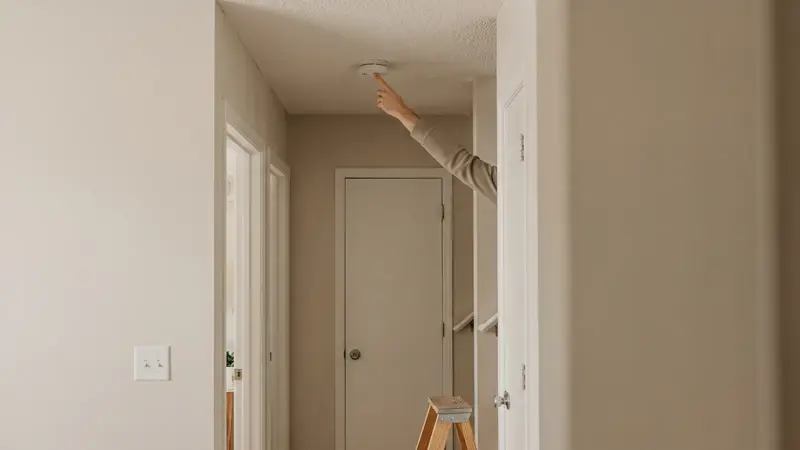 Smoke alarm placement: where to put them, how to test them and when to replace themWhere to put smoke alarms: every level, inside each bedroom and outside sleeping areas, plus testing, batterie…
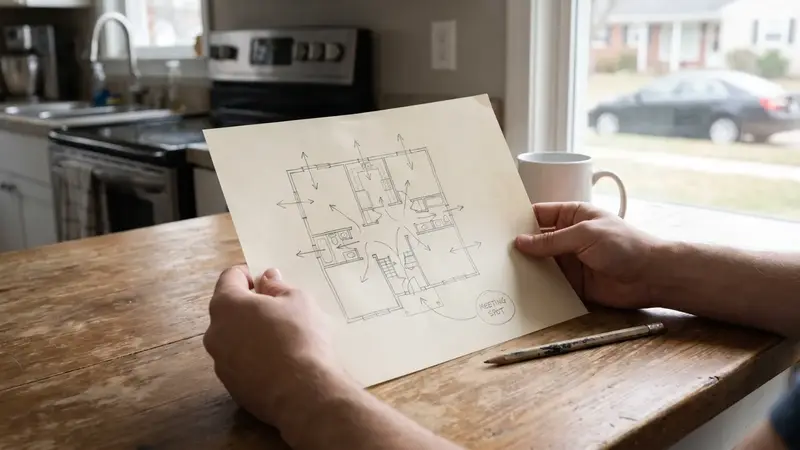 Home fire escape plan: how to make one, practice it and get out safelyHow to make a home fire escape plan: two ways out of every room, an outside meeting place, escape ladders, dri…
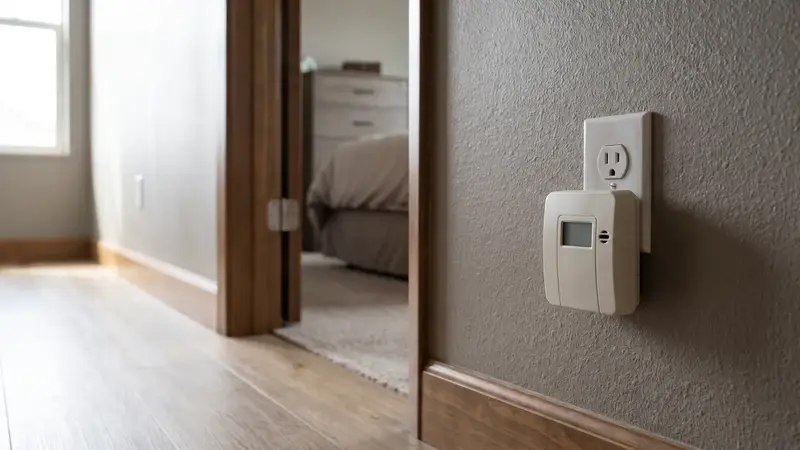 Carbon monoxide poisoning: symptoms, sources, alarms and what to doWhat CO poisoning feels like, who is most at risk, common sources in winter and outages, where to put CO alarm…
 Space heater safety: clearance, plugs and what to do in a winter power outageHow to use a space heater safely: keep it 3 feet from anything that can burn, plug it into the wall, never run…