Pennsylvania confirms its sixth measles-associated death of 2026: the facts and the home checks
Pennsylvania confirmed a sixth measles-associated death on November 4, with 1,467 cases in 45 counties. What is confirmed, and what DOH and CDC advise.
By Tom Calder · Updated November 5, 2026 · Sourced to the Pennsylvania Department of Health's November 4 release and its measles and immunization-record pages, and CDC's measles pages
- The Pennsylvania Department of Health (DOH) said on November 4, 2026 that "an unvaccinated resident of Jefferson County tested positive for measles and has died." It is the sixth confirmed measles-associated death in Pennsylvania this year. DOH counts 1,467 cases across 45 counties in 2026, and 283 hospitalizations.
- This is not the Franklin County death reported in October. DOH says it is aware of that report, but its investigation has not yet confirmed it as a measles-associated death.
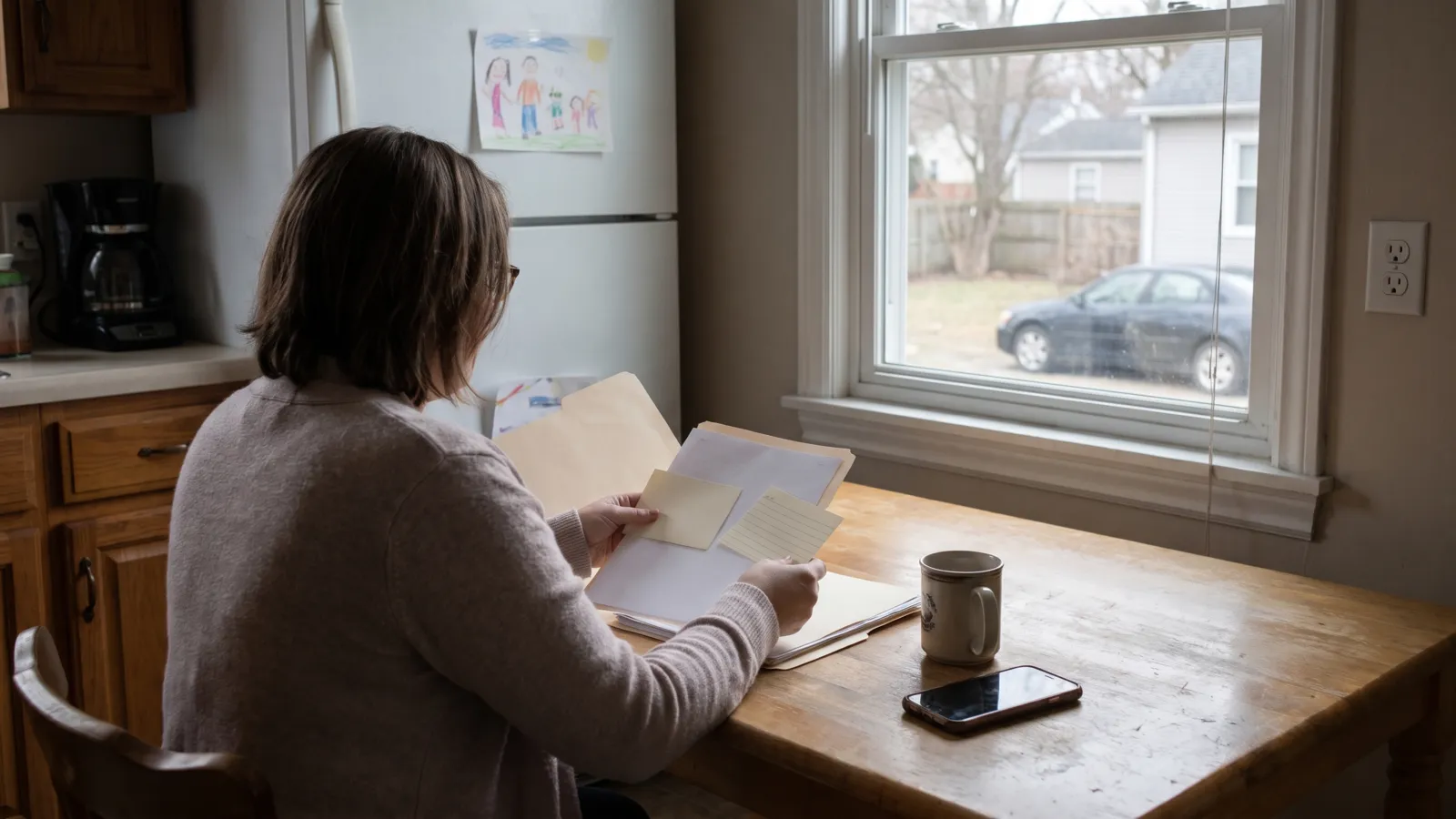
- For most households, the useful step is a records check. DOH says people with two documented doses of MMR vaccine "do not need another." If you have one dose or can't find your records, talk to a health care provider or pharmacist.
- If you think you have measles, CDC says to call a doctor or hospital right away to let them know, before going in. You don't need to buy anything.
What Pennsylvania confirmed on November 4
DOH said on November 4 that an unvaccinated Jefferson County resident who tested positive for measles has died. It says the death was reported to the Centers for Disease Control and Prevention (CDC) and added to the state's measles dashboard. To protect the family's privacy, DOH "will not release any additional details that could personally identify them," so the person's age and other details have not been published.
DOH says the six people who died this year lived in Jefferson (2), Lancaster (3) and Mifflin (1) counties. Its update lists 1,467 cases in 45 counties so far in 2026, 34 of them newly confirmed since November 2, and 283 hospitalizations. It counts 5 cases among vaccinated people, "less than 1% of cases."
What is confirmed, and what is not
In October, the Franklin County coroner made public the death of a county resident. That is a different case. DOH says it "is aware of a reported death of a Franklin County resident in October," but that as of November 4 its investigation "has not yet found any Franklin County cases meeting the required criteria to be confirmed as a measles-associated death." DOH's count of six does not include it.
To count as measles-associated under DOH's definition, a death "must occur within 30 days of symptom onset in an individual with clinical evidence of a measles infection and a positive laboratory test," and must not be due to unrelated causes, such as a car crash.
Pennsylvania's figures are the state's own. CDC's national page, last updated on October 30, counts 4,852 confirmed measles cases in the United States in 2026 as of October 29, 4,834 of them reported by 47 jurisdictions. CDC says "states have the most up-to-date information about cases and outbreaks in their jurisdictions." It says 96% of those cases are outbreak-associated, and its data show 96% of 2026 cases were unvaccinated or of unknown vaccination status.
Check your vaccine records
This is the main thing to do at home, and it costs nothing. CDC says: "If you're unsure whether you've been vaccinated, you should first try to find your vaccination records." There is no national copy: CDC says "there is no national organization that maintains vaccination records," and suggests contacting your state's health department, since some states keep registries.
In Pennsylvania, that registry is PIERS. DOH says its PIERS Public Portal lets adults, and parents or guardians of children under 18, "access, save, and print an official record" of the immunizations their providers reported to it. You sign in with a Keystone Login account.
CDC's schedule is two doses for children, at 12 to 15 months and 4 to 6 years old. Adults are recommended to have at least 1 documented dose, and some adults at higher risk 2. CDC's other evidence of immunity includes a lab test showing immunity or past measles, or birth before 1957. If you find no record and have no other evidence of immunity, CDC says "you should get vaccinated," and adds: "There's no harm in getting another dose if you may already be immune." Its records page says "it is safe to repeat vaccines."
What Pennsylvania's health department advises
DOH says two doses of MMR provide "97% lifetime protection." Its advice for residents:
- People with two documented doses of MMR "do not need another."
- Adults with only one dose, or who can't find their records, "should talk with a health care provider or pharmacist about getting vaccinated."
- Children 12 months and older with no dose "should get one now and a second dose at least 28 days later."
- For infants 6 through 11 months who live in or travel to counties flagged on the state's measles dashboard for sustained community transmission, DOH recommends an early "zero dose," which doesn't replace the two routine doses.
- MMR is available from health care providers, pharmacies, county or municipal health departments, DOH State Health Centers, Federally Qualified Health Centers and the Vaccines for Children program.
Know the signs, and call before you go in
CDC says measles usually begins with a high fever, cough, runny nose and red, watery eyes, and that the rash "appears 3 to 5 days after the first symptoms." It spreads easily: CDC says it "can live for up to 2 hours in an airspace after an infected person leaves an area," and that people can spread it from 4 days before through 4 days after the rash appears.
If you have symptoms, CDC says to "call a doctor or hospital right away" to let them know. They may make special arrangements to see you without putting other patients at risk. CDC says to "stay home until the fifth day after you develop the rash." In Pennsylvania, DOH says people who believe they were exposed and have symptoms should contact their provider or call its hotline, 877-PA-HEALTH (877-724-3258).
CDC says to go to an emergency department immediately if symptoms get rapidly worse, or for warning signs such as trouble breathing, dehydration, confusion or severe weakness, and, in young children, a blue color around the mouth, low energy or difficulty feeding. It says to have someone call ahead so the hospital knows a person with measles is coming.
If you were exposed
CDC says: "If you've been exposed to someone who has measles, immediately call your healthcare provider." Timing matters. CDC says that if you get MMR vaccine "within 72 hours" of first being exposed, you may get some protection or have milder illness, and that people at high risk of severe disease may be given immune globulin within 6 days.
If you aren't immune and don't get MMR or immune globulin after the exposure, CDC says to ask your provider when you can no longer make others sick, which "may be up to 21 days" after the exposure. During that time, it says to stay away from places such as schools, hospitals and childcare centers.
Traveling, and who should check first
CDC says anyone not vaccinated, or unsure, "should be vaccinated against measles at least 2 weeks before international travel," and that infants 6 to 11 months old should get 1 dose before international travel, then 2 more after their first birthday. After a trip, it says: "Watch your health for 3 weeks after you return."
CDC says some people should not get MMR, or should wait. It says to check with a provider first if you are or may be pregnant (CDC says to wait until after pregnancy), have a weakened immune system, or had an allergic reaction to a previous dose.
What you don't need to do
You don't need to buy anything because of this news, and you don't need a new dose if you already have two documented doses. The step that helps is finding your family's records now, so you aren't searching for them while someone is sick. If you are not in Pennsylvania, your own state health department is the place to ask about local cases and records. Our family emergency plan guide shows a simple way to keep important papers together.
We will update this story if the Pennsylvania Department of Health confirms another measles-associated death, confirms or rules out the Franklin County case, or changes its vaccine advice, or if CDC's national figures change materially. DOH's measles dashboard at pa.gov/measles and CDC's measles page are the official, current picture.
Common questions
How many measles deaths has Pennsylvania confirmed in 2026?
Six, as of November 4, 2026. The Pennsylvania Department of Health says the people who died lived in Jefferson (2), Lancaster (3) and Mifflin (1) counties. The newest, announced November 4, was an unvaccinated Jefferson County resident. DOH has not confirmed a reported death in Franklin County in October as measles-associated.
How many measles cases are there in Pennsylvania?
DOH counted 1,467 confirmed cases across 45 counties in 2026 as of its November 4 update, with 283 hospitalizations. It said 5 cases were among vaccinated people, less than 1% of cases.
How do I find my vaccine records?
CDC says there is no national record, so start with your own papers, your doctor's office and your state health department. Pennsylvania residents can use the state's PIERS Public Portal, signing in with Keystone Login, to see and print an official record of immunizations their providers reported to it.
Do adults need another MMR shot?
CDC recommends at least 1 documented dose for adults, and 2 for some adults at higher risk. Pennsylvania's health department says people with two documented doses don't need another, and adults with one dose or no records should talk to a provider or pharmacist. CDC says there's no harm in another dose if you may already be immune.
What should I do if I think I have measles?
CDC says to call a doctor or hospital right away to let them know, so they may make arrangements to see you without exposing other patients, and to stay home until the fifth day after the rash starts. Go to an emergency department immediately if symptoms get rapidly worse or for warning signs such as trouble breathing, dehydration or confusion, and have someone call ahead.
Sources (10)
- Pennsylvania Department of Health: Sixth measles-associated death and statewide update (Nov 4, 2026)
- Pennsylvania Department of Health: Measles
- Pennsylvania Department of Health: PIERS Public Portal
- CDC: Measles Cases and Outbreaks (updated Oct 30, 2026)
- CDC: Measles Vaccine Recommendations
- CDC: Measles Symptoms and Complications
- CDC: How Measles Spreads
- CDC: Caring for Yourself and Others
- CDC: Plan for Travel
- CDC: Finding and Keeping Vaccination Records
Get one calm email when it matters
Seasonal checklists and gear price drops. No spam, unsubscribe any time.
Keep reading
 How to make a family emergency plan: steps, questions and a communication planHow to make a family emergency plan: Ready.gov's four steps, the questions to ask, a communication plan, meeti…
 Home first aid kit checklist: the Red Cross list, and when to buy a ready-made kitThe American Red Cross list for a family of four, item by item, plus where to keep kits, when to check expirat…
 Emergency kit checklist: what to include, how much to keep and where to store itA plain-English emergency kit checklist built on Ready.gov's basic kit and extra items, with how many days of …
 Could bird flu on a Utah mink farm spark a pandemic? What is confirmedProPublica reports bird flu spreading on a Utah mink farm while workers go untested. What is confirmed, what e…